
Main Courses
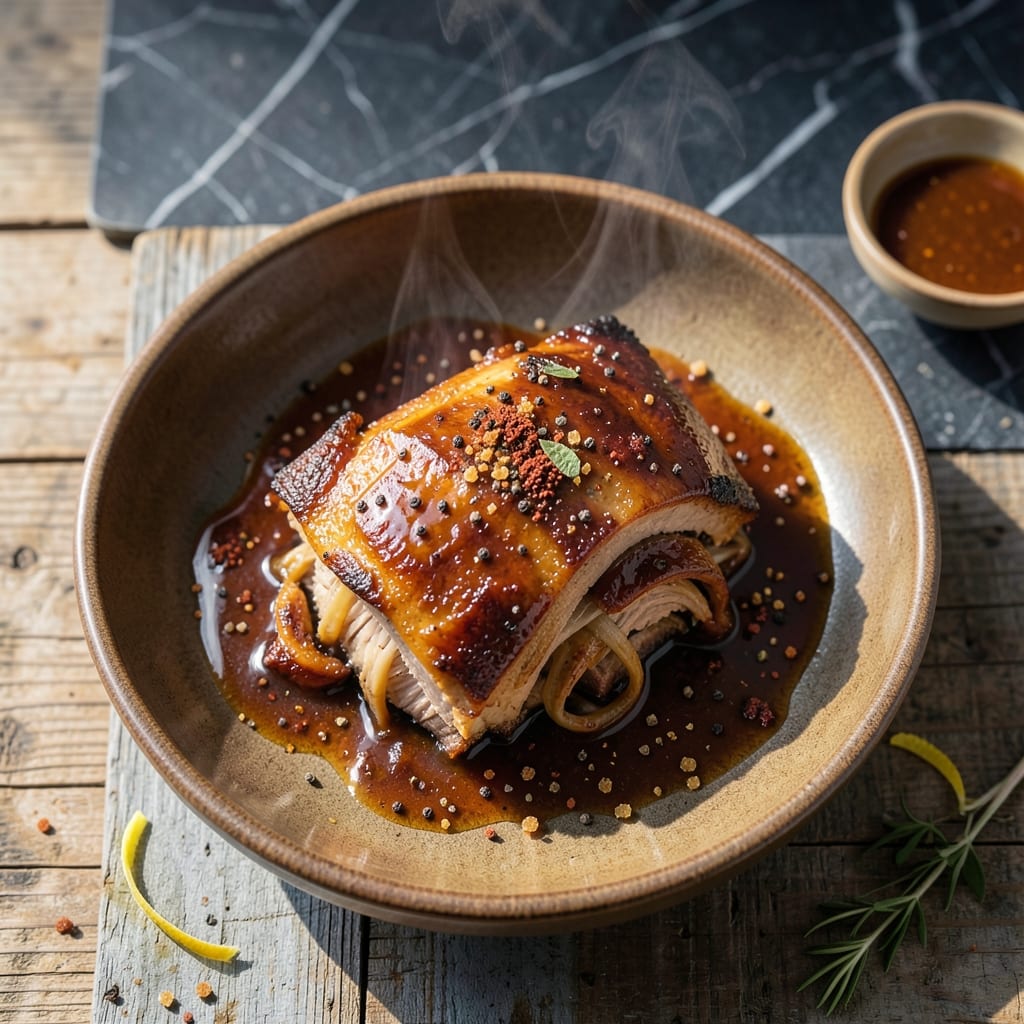
A 24 hour pork shoulder recipe transforms tough cuts into a fall-off-the-bone masterpiece through patience and precision. This method, perfected in my Charleston kitchen, delivers results that rival any pitmaster’s.
The slow roast at low heat allows connective tissue to melt into gelatin, creating moist, tender meat with a rich, caramelized exterior. No shortcuts here—just time-honored technique and careful temperature control.
What emerges is pork so tender it pulls apart with a fork, infused with deep, smoky flavor that develops over the full 24-hour cook. The crust forms a dark, flavorful bark that locks in every drop of juiciness.
Serve this centerpiece at gatherings where the meat becomes the main conversation. The wait is part of the reward, and the results always justify the time.
Ingredients for 24 hour pork shoulder
A bone-in pork shoulder and a handful of pantry spices transform into an unforgettable centerpiece.
| Ingredient | Amount | Notes |
|---|---|---|
| Pork Shoulder 🐖 | 5 lb | Bone-in, skin-on preferred |
| Kosher Salt 🧂 | ¼ cup | Diamond Crystal brand preferred |
| Coarse Black Pepper 🌶️ | 2 tbsp | Freshly ground for maximum flavor |
| Brown Sugar 🍚 | ½ cup | Light or dark variety |
| Smoked Paprika 🌶️ | 1 tbsp | Spanish variety for authentic smoke |
| Garlic Powder 🧄 | 1 tbsp | Not garlic salt substitute |
| Onion Powder 🧅 | 1 tbsp | Fine grind for even distribution |
| Dried Oregano 🍃 | 1 tbsp | Mexican oregano acceptable |
| Dried Thyme 🌿 | 1 tsp | Rubbed for better release of oils |
| Apple Cider Vinegar 🍏 | ¼ cup | For tangy balance in rub |
| Olive Oil 🫒 | 2 tbsp | For searing surface preparation |
| Yellow Mustard 🟡 | ¼ cup | Binder for dry rub adhesion |
| Low-Sodium Chicken Stock 🥣 | 1 cup | For moisture during roasting |
| Fresh Rosemary Sprigs 🌿 | 4 pieces | Whole sprigs for aromatic infusion |
The pork shoulder is non-negotiable here. Bone-in, skin-on cuts from Costco or Whole Foods yield the best bark and moisture retention. Look for good marbling—this fat renders down during the long cook, basting the meat from within. I source mine from local butchers when possible (they’ll often trim it to your specs). The Diamond Crystal kosher salt makes a difference in the dry rub’s texture and flavor penetration.
No smoked paprika? Chipotle powder at half the amount adds smoke with heat. Brown sugar can be swapped for turbinado or coconut sugar—just avoid granulated, which lacks the molasses depth. The apple cider vinegar is key for cutting through the richness, but white vinegar in a pinch works. If you’re missing fresh rosemary, dried at one-third the amount is acceptable, though less aromatic.
The dry rub can be made 24 hours ahead—store in an airtight container. Pork shoulder keeps in the fridge 3-4 days before cooking, or freeze for 6-12 months. Leftovers (if any) reheat beautifully, and the flavor deepens after a day.
Why You'll Love This Recipe
- Set and Forget: Most of the work is waiting—just rub the pork with salt, pepper, brown sugar, and smoked paprika, then let time do its magic.
- Smoky Sweet Crust: That brown sugar and smoked paprika mix caramelizes into a crust so good, I’ve caught myself sneaking bites straight from the pan.
- Feeds a Crowd: One shoulder makes enough for sandwiches, tacos, or a hearty dinner—plus leftovers that reheat beautifully.
- Budget Hero: Pork shoulder is cheap, and this recipe turns it into something that tastes like it came from a high-end smokehouse.
Step-by-step instructions for 24 hour pork shoulder
This method transforms the pork shoulder through controlled time and temperature for exceptional results.
Create and Apply the Dry Rub
In a medium bowl, combine the 0.25 cup Kosher Salt, 0.5 cup Brown Sugar, 2 tbsp Coarse Black Pepper, 1 tbsp Smoked Paprika, 1 tbsp Garlic Powder, 1 tbsp Onion Powder, 1 tbsp Dried Oregano, and 1 tsp Dried Thyme. The mixture should be uniformly colored with no visible streaks of individual spices.
Pat the 5 lb Pork Shoulder dry with paper towels, then brush it all over with the 0.25 cup Yellow Mustard—this acts as a binder for the rub. Apply the spice mixture generously, pressing it into the meat's surface to create an even coating. The mustard won't impart flavor but ensures the rub adheres during the long cooking process.
Prepare for the Overnight Rest
Place the seasoned pork shoulder in a large roasting pan or baking dish. Pour the 0.25 cup Apple Cider Vinegar into the bottom of the pan, then add the 4 pieces Fresh Rosemary Sprigs around the meat. The vinegar will mingle with the rendered fat during cooking, creating a tangy basting liquid.
Cover the pan tightly with plastic wrap or aluminum foil and refrigerate for 12-24 hours. This extended rest allows the salt to penetrate deeply, the spices to meld, and the meat to begin tenderizing through the natural enzymatic process. The longer rest also helps the pork retain moisture during the slow roast.
Begin the Slow Roasting Process
Preheat your oven to 275°F. Uncover the pork shoulder and place it in the oven, still in its pan with the accumulated liquids. Roast uncovered for 8 hours—this initial phase allows the exterior to develop a flavorful crust while the interior begins to break down.
After 8 hours, carefully add the 1 cup Low-Sodium Chicken Stock to the pan, taking care not to wash off the accumulated rub. The liquid should come about halfway up the pork. Cover the pan tightly with foil or a lid to trap moisture for the remaining cooking time.
Complete the Slow Roast to Perfection
Continue roasting the covered pork shoulder for another 12-16 hours at 275°F. The total cooking time should reach approximately 24 hours. You'll know it's ready when a fork inserted into the thickest part meets no resistance and the meat pulls apart with minimal effort.
The pork should reach an internal temperature of at least 195°F, but temperature is less important than texture at this stage. The collagen in the connective tissues will have fully rendered into gelatin, creating that signature fall-off-the-bone tenderness. The pan liquids should be reduced to a rich, flavorful sauce.
Rest and Shred the Pork
Remove the pork shoulder from the oven and let it rest in its juices for 30-45 minutes. This allows the muscle fibers to relax and reabsorb some of the cooking liquids, ensuring maximum moisture in the final dish.
Transfer the pork to a large cutting board or serving platter. Using two forks, shred the meat into large chunks, then drizzle some of the pan juices over the top to maintain moisture. The meat should separate effortlessly, with a dark, caramelized exterior and a moist, tender interior throughout.
Pro Tips For Making 24 Hour Pork Shoulder
- Dry the Shoulder: Pat the pork shoulder completely dry before seasoning—any moisture will prevent the brown sugar and spices from forming that sticky, flavorful crust.
- Low and Slow: Keep your oven or smoker at a steady 225°F; I learned this the hard way after a few batches came out tough from temperature swings.
- Don’t Rush the Rest: After 24 hours, let it rest wrapped in foil for at least 30 minutes—skipping this makes the juices run everywhere when you pull it apart.
- Pack the Rub: Press the brown sugar, salt, and smoked paprika mix into every crevice of the pork; sounds tedious, but it ensures every bite carries the flavor.
Storing and reheating this recipe
Refrigerator Storage
Let your pork shoulder cool to room temperature within 2 hours of cooking. Transfer to airtight containers with some pan juices to maintain moisture. It keeps beautifully in the fridge for 4-5 days—I've found the flavors deepen overnight. ❄️
Freezer Storage
For longer storage, portion the pork into freezer-safe bags or containers. I recommend quart-sized bags for single meals. It freezes well for up to 3 months without quality loss. Leave 1-inch headspace to prevent freezer burn.
Stovetop Reheating
This is my preferred method for maintaining texture. Place pork in a heavy pot with ¼ cup chicken stock or water. Heat over medium-low heat for 10-15 minutes, stirring occasionally. The liquid prevents drying while restoring moisture. 🔥
Oven Reheating
Preheat oven to 325°F. Place pork in an oven-safe dish with 2 tbsp pan juices or stock. Cover with foil and heat for 20-25 minutes. This method works well for larger portions and maintains that fall-apart texture.
Microwave Reheating
For quick meals, place 1-cup portions in a microwave-safe dish with a splash of liquid. Cover with a damp paper towel and heat on 70% power for 2-3 minutes, stirring halfway through. This prevents the edges from drying out.
Nutrition facts
Frequently asked questions
Do I need a bone-in cut for this?
Bone-in is ideal for flavor and moisture, but boneless works too. The bone adds depth to the cooking liquid and helps maintain structure during the long cook. If using boneless, reduce total time by 2-3 hours to prevent drying.
Can I cook it at a higher temperature to finish faster?
Not recommended. The low-and-slow method is essential for breaking down collagen. Higher heat would toughen the meat before it becomes tender. Stick to 275°F for perfect results every time.
How do I know when it’s done?
The pork is ready when it reaches 195°F internally, but texture is the true test. It should pull apart effortlessly with a fork. If it resists, give it another 1-2 hours.
Can I skip the overnight rest in the fridge?
You can, but the flavor and tenderness won’t be as deep. The rest allows the salt and spices to penetrate fully. If short on time, rest for at least 4 hours before cooking.