
Main Courses
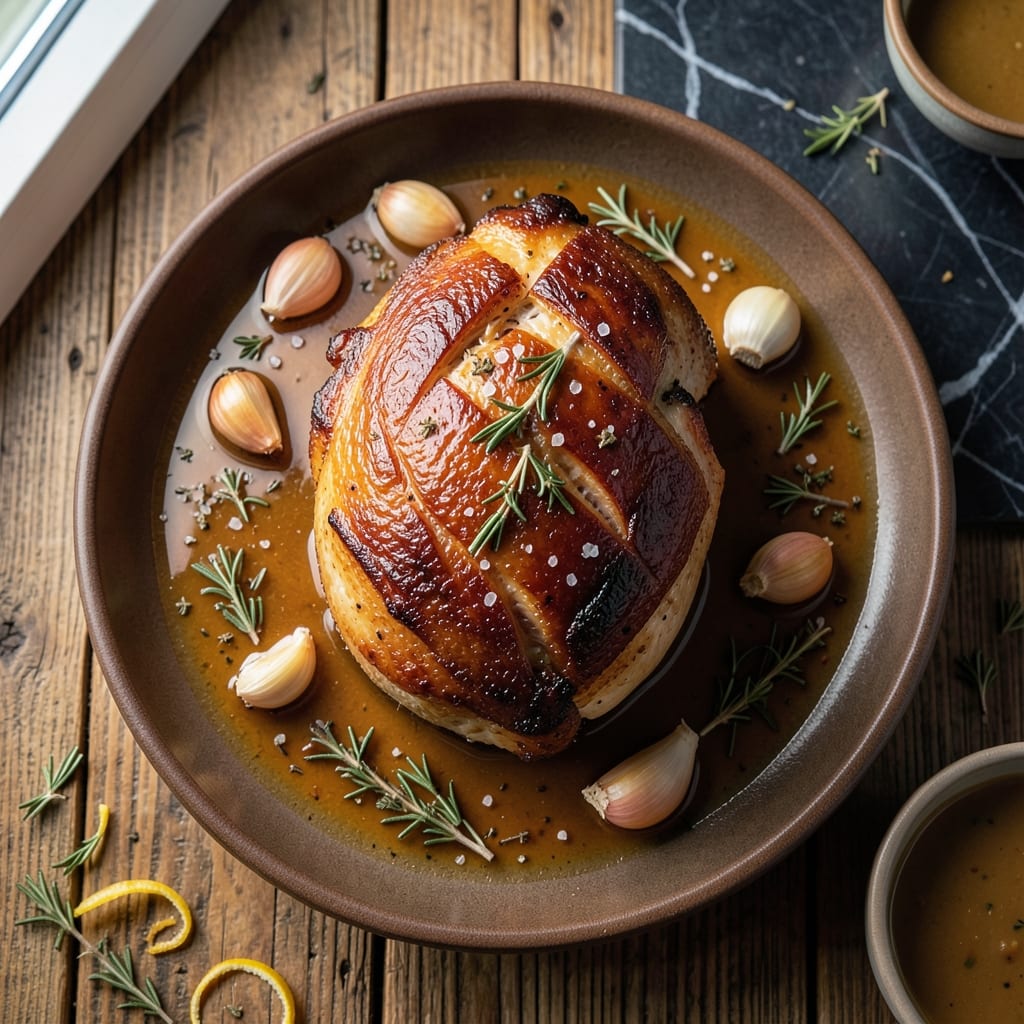
This 4 lb pork roast recipe transforms a simple cut into a tender, aromatic centerpiece worthy of any dinner table. Growing up in Georgia, I learned that pork demands slow, patient cooking to unlock its full potential.
The garlic and herb rub creates a fragrant crust that seals in juices while the meat roasts to fall-apart tenderness. At The Smoky Pig, we use this same method for our weekly whole-hog preparations, scaled down for home cooks.
Low heat and time are the secrets here—no shortcuts, just perfectly cooked pork with a golden exterior and moist interior. The aroma alone will have your kitchen smelling like a Southern BBQ joint.
Serve with roasted potatoes or green beans for a complete meal. Here’s how to achieve restaurant-quality results at home.
Ingredients for 4 lb pork roast
Pantry staples plus a quick stop at the butcher. Nothing exotic here.
| Ingredient | Amount | Notes |
|---|---|---|
| Pork Shoulder Roast 🥩 | 4 lb | Bone-in for best flavor |
| Garlic Cloves 🧄 | 8 cloves | Minced for rub |
| Coarse Kosher Salt 🧂 | 1 ½ tbsp | Diamond Crystal preferred |
| Black Pepper 🌶️ | 1 tbsp | Freshly ground |
| Dried Rosemary 🌿 | 1 tbsp | Crushed between fingers |
| Dried Thyme 🍃 | 1 tbsp | Rubbed to release oils |
| Olive Oil 🫒 | ¼ cup | For searing and rub |
| Yellow Onion 🧅 | 1 whole | Quartered for roasting |
| Carrots 🥕 | 3 whole | Cut into chunks |
| Celery Stalks 🥬 | 3 whole | Cut into 2-inch pieces |
| Chicken Stock 💧 | 1 cup | Low-sodium preferred |
| Apple Cider Vinegar 🍏 | 2 tbsp | For brightness |
| Brown Sugar 🍚 | 2 tbsp | Light or dark |
| Fresh Parsley 🌿 | ¼ cup | Chopped for garnish |
The pork shoulder is non-negotiable here. Bone-in gives you that extra depth of flavor and keeps the meat moist during the long cook. I get mine from Costco—they have great quality at a good price, but your local butcher will have even better cuts. Look for good marbling; that fat is what makes it tender. At The Smoky Pig, we always go for the bigger roasts and scale down, but 4 lbs is perfect for feeding a crowd.
No fresh rosemary or thyme? Dried works fine—just use half the amount since it's more concentrated. Out of apple cider vinegar? White wine vinegar or even lemon juice can step in. The chicken stock can be swapped for beef or vegetable if that's what you have. If you're missing brown sugar, a splash of maple syrup adds the same sweetness (just reduce the liquid a bit).
Leftovers taste even better the next day. Store in the fridge for up to 4 days or freeze for 3 months. Reheat gently in the oven with a splash of stock to keep it juicy.
Why You'll Love This Recipe
- One Pan Wonder: I just rub the pork with garlic, salt, pepper, and rosemary then let the oven do the work.
- Fallback Flavor: The rosemary and garlic crust is so good I catch myself sneaking bites straight from the pan.
- Feeds My Crew: This 4 lb roast easily serves six with leftovers for sandwiches the next day.
- Budget Hero: Pork shoulder is always affordable, and I stretch it across multiple meals without sacrificing taste.
Step-by-step instructions for slow-roasted pork shoulder
Here's my tested method for fall-off-the-bone tenderness with minimal active time.
Prepare the Garlic Herb Rub
In a small bowl, combine the 1.5 tbsp Coarse Kosher Salt, 1 tbsp Black Pepper, 1 tbsp Dried Rosemary, and 1 tbsp Dried Thyme. Crush the dried herbs between your fingers as you add them—this releases their essential oils for maximum flavor.
Mince the 8 cloves Garlic Cloves and add them to the bowl. Pour in 0.25 cup Olive Oil and mix until it forms a thick paste. I like to let this rub sit for 5-10 minutes while I prep the pork to allow the flavors to meld together.
Sear and Season the Pork
Pat the 4 lb Pork Shoulder Roast dry with paper towels—this ensures a good sear. Heat a large Dutch oven over medium-high heat and add 1 tbsp of the olive oil from your rub mixture. Sear the pork on all sides for 3-4 minutes per side until deep golden brown.
Remove from heat and rub the garlic-herb paste all over the pork, making sure to get into every crevice. The searing creates a flavorful fond in the pot that will enhance your final dish. Let the seasoned pork sit for 10 minutes while you prep the vegetables.
Add Vegetables and Braising Liquid
Scatter the 1 whole Yellow Onion (quartered), 3 whole Carrots (cut into chunks), and 3 whole Celery Stalks (cut into 2-inch pieces) around the pork in the Dutch oven. These will add depth to your braising liquid and create a bed for the meat.
Pour in the 1 cup Chicken Stock, 2 tbsp Apple Cider Vinegar, and 2 tbsp Brown Sugar. The vinegar brightens the rich flavors, while the brown sugar adds a subtle caramelized note. The liquid should come about halfway up the pork.
Slow Roast to Perfection
Cover the Dutch oven with a tight-fitting lid and transfer to a preheated 325°F oven. Roast for 3-4 hours, turning the pork every 1 hour to ensure even cooking. You'll know it's ready when the meat shreds easily with a fork and reaches an internal temperature of 195-200°F.
The house will smell incredible as the pork slow-roasts. Resist the urge to check on it too often—every time you open the oven, you lose heat and extend the cooking time. The pork is done when it's so tender it nearly falls apart when you try to lift it.
Rest and Serve
Carefully transfer the pork to a cutting board and let it rest for 15-20 minutes before shredding or slicing. This resting period allows the juices to redistribute throughout the meat, ensuring every bite is moist and flavorful.
Skim any excess fat from the cooking liquid and discard the vegetables if desired. Shred the pork using two forks, mixing in some of the cooking liquid as you go. Garnish with the 0.25 cup Fresh Parsley before serving. The parsley adds a fresh, bright finish to the rich, savory pork.
Pro Tips For Making 4 Lb Pork Roast
- Score the Fat: Cut 1/4-inch slits in the fat cap before seasoning—this lets the salt, pepper, and rosemary penetrate deep into the meat, and I learned this the hard way after wondering why my first few roasts tasted bland on the surface. ---
- Start Hot, Finish Low: Sear the pork shoulder in a 450°F oven for 20 minutes to get that crust, then drop it to 300°F for the remaining 3-4 hours. Sounds weird, but it works: this prevents tough, dry meat every time. ---
- Crush the Garlic: Smash the garlic cloves with the flat of your knife before inserting them into the slits—this releases more flavor and makes a real difference compared to just stuffing whole cloves in. ---
- Rest 30 Minutes: After pulling it from the oven, tent the roast with foil and let it sit for a full 30 minutes before slicing. I skip this when I'm in a rush, but the juices redistribute and the meat stays moist only when I wait.
Make-ahead tips for this dish
Overnight Prep
I always prep my pork rub the night before cooking. Combine the garlic, herbs, and olive oil in a bowl, cover, and refrigerate. This lets the flavors develop while you sleep. 💡
Morning Start
Take the pork out of the fridge 1 hour before cooking to bring it to room temperature. This ensures even cooking throughout. Meanwhile, prep your vegetables—this saves time when you're ready to start.
Slow Cooker Method
For hands-off cooking, use a slow cooker on low for 8-10 hours. Brown the pork first in a skillet, then transfer to the slow cooker with all ingredients. The result is just as tender as oven-roasting.
Partial Cook Ahead
Sear and season the pork, then refrigerate it in the Dutch oven with vegetables and liquid. The next day, roast at 325°F for 3-4 hours. The flavors deepen with the extra time.
Freezer-Friendly
Cooked pork freezes beautifully for up to 3 months. Shred the meat, mix with some cooking liquid, and store in airtight containers. Reheat gently on the stove with a splash of stock. ❄️
Reheating Tips
To reheat, place shredded pork in a baking dish with ½ cup cooking liquid, cover with foil, and warm at 350°F for 20-25 minutes. Stir occasionally for even heating.
Nutrition facts
Frequently asked questions
Can I use a different cut of pork?
Pork shoulder is ideal, but pork butt works too since they're similar. Avoid lean cuts like tenderloin—they'll dry out during long cooking. Stick with well-marbled roasts for best results.
How do I know when it's done?
Use a meat thermometer: it's ready at 195-200°F internally. The meat should pull apart easily with forks. Don't rely on time alone—size and oven variations affect cooking.
Can I make this in a slow cooker?
Yes! Sear the pork first, then cook on low for 8-10 hours or high for 5-6 hours. Add ½ cup extra liquid since slow cookers don't reduce like ovens.
What if my pork is dry?
Overcooking or insufficient liquid causes this. Always use a thermometer and keep the cooking liquid at least halfway up the roast. Let it rest 15-20 minutes before serving to redistribute juices.