
Main Courses
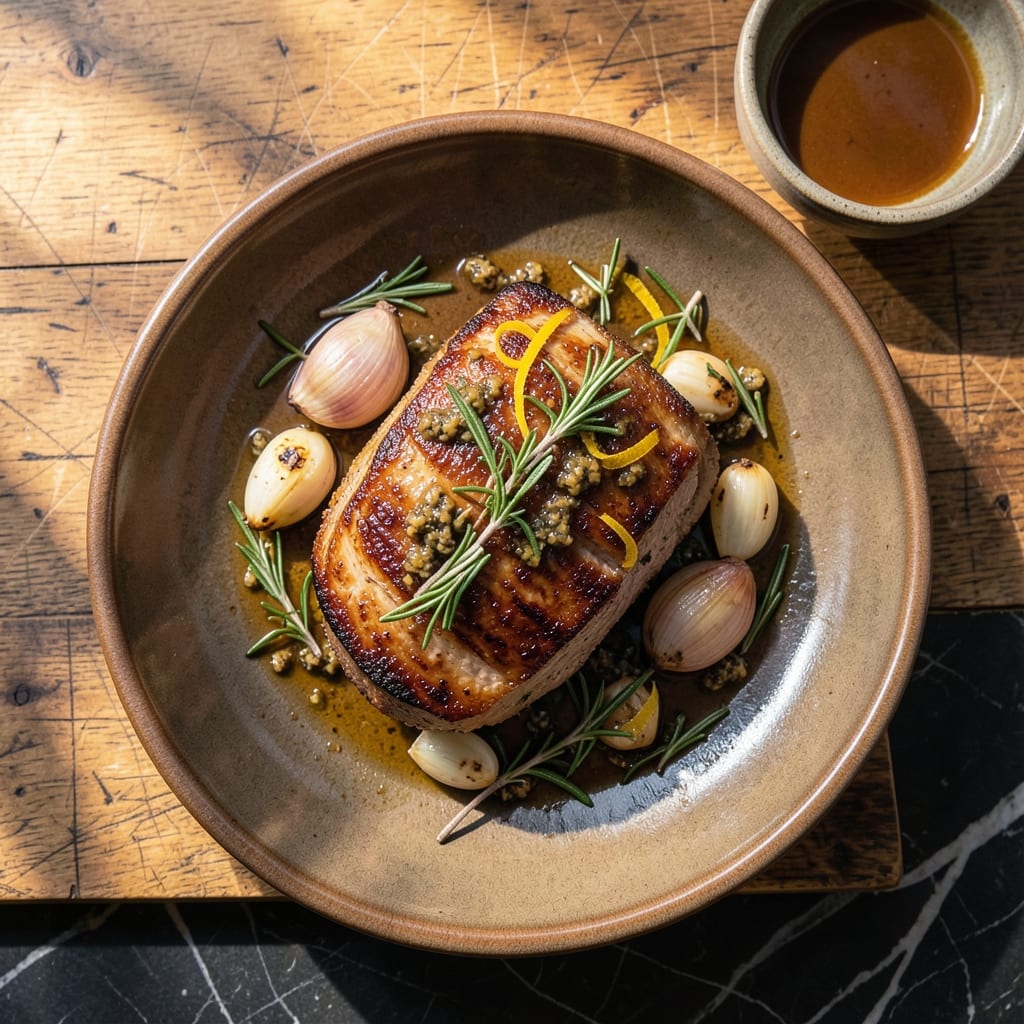
This 5 star pork loin roast recipe delivers the holiday centerpiece you've been searching for. My years at The Smoky Pig taught me that simple techniques yield extraordinary results with quality pork.
Garlic-herb crust forms a golden seal that locks in juices while creating an irresistible aroma. The secret is starting with a dry brine overnight, which seasons deeply and ensures tender meat throughout.
Roasting at 375°F creates a perfect crust while maintaining moisture. I always use a meat thermometer to hit that ideal 145°F internal temperature for juicy, safe-to-eat pork.
This dish pairs beautifully with roasted root vegetables and a bold red wine. The crust's herbs complement without overpowering the pork's natural richness.
Ingredients for 5 star pork loin roast
Quality pork plus herbs and aromatics create this holiday showstopper centerpiece.
| Ingredient | Amount | Notes |
|---|---|---|
| Pork Loin 🥩 | 4 lb | Bone-in, center-cut preferred |
| Kosher Salt 🧂 | 2 tbsp | Diamond Crystal for dry brine |
| Freshly Ground Black Pepper 🌶️ | 2 tsp | Coarse grind recommended |
| Garlic Cloves 🧄 | 8 cloves | Minced for crust mixture |
| Fresh Rosemary 🌿 | 3 tbsp | Finely chopped, stems discarded |
| Fresh Thyme 🍃 | 3 tbsp | Leaves stripped from stems |
| Dijon Mustard 🟡 | 3 tbsp | Whole grain for texture |
| Extra-Virgin Olive Oil 🫒 | ¼ cup | For crust and searing |
| Unsalted Butter 🧈 | 4 tbsp | Softened for richness |
| Dry White Wine 🍷 | ½ cup | For deglazing pan |
| Low-Sodium Chicken Stock 🥣 | ½ cup | For moisture during roasting |
| Honey 🍯 | 2 tbsp | For caramelized crust |
The pork loin is the star—bone-in center-cut gives the best flavor and moisture. I source mine from Whole Foods or a trusted butcher; look for even marbling and a thick cut. The dry brine is non-negotiable here: Diamond Crystal kosher salt (it’s lighter, so you can use more without overdoing it). Fresh herbs are a must—don’t sub dried for the crust, but a pinch in a pinch (the flavor won’t be as bright).
No white wine? Apple cider vinegar with a splash of water works in a bind. For the mustard, whole grain Dijon adds texture, but smooth is fine. Out of fresh rosemary or thyme? Fresh sage or marjoram can fill in. The honey can be swapped for maple syrup, but it won’t have the same depth. Always pat the pork dry before seasoning—moisture is the enemy of a good crust.
The roast can sit in the dry brine overnight—12 to 24 hours is ideal. Leftovers keep 4 days in the fridge or freeze for 3 months. Slice only what you need and reheat in the oven to keep it juicy (microwaving dries it out).
Why You'll Love This Recipe
- Minimal Effort: I just rub the pork loin with salt, pepper, garlic, and rosemary—no marinating, no fuss.
- Crave-Worthy Crust: The garlic and rosemary form this golden, fragrant crust that’s honestly irresistible.
- Feeds a Crowd: One roast serves my whole family with leftovers for sandwiches the next day.
- Budget Friendly: Pork loin is affordable, and a little goes a long way with these bold flavors.
Step-by-step instructions for garlic-herb crusted pork loin roast
Here's my foolproof method for a show-stopping centerpiece that's easier than it looks.
Create the Aromatic Herb Crust
In a small bowl, combine the 8 cloves garlic cloves, 3 tbsp fresh rosemary, 3 tbsp fresh thyme, 3 tbsp Dijon mustard, 0.25 cup extra-virgin olive oil, 2 tbsp honey, 2 tbsp kosher salt, and 2 tsp freshly ground black pepper. I use a fork to mash everything into a thick paste—the texture should cling to the pork loin.
This isn't just a seasoning; it's a flavor bomb that will transform as it cooks. The honey will caramelize, the garlic will mellow, and the herbs will infuse every bite. Don't be tempted to skip the fresh herbs—dried won't give you that vibrant, aromatic punch.
Sear and Crust the Pork Loin
Pat the 4 lb pork loin completely dry with paper towels. This ensures the crust adheres properly and creates that beautiful golden-brown finish. Heat a large oven-safe skillet over medium-high heat and add 2 tbsp of the 4 tbsp unsalted butter.
Sear the pork loin on all sides for 2-3 minutes per side until deeply browned. Remove from heat and brush the herb mixture all over the surface, pressing it in so it forms an even layer. The searing creates a flavor foundation, while the crust will develop a gorgeous caramelized exterior.
Roast to Juicy Perfection
Preheat your oven to 375°F. Place the skillet with the pork loin in the oven and roast for 45-60 minutes, or until the internal temperature reaches 145°F. I start checking at 45 minutes—ovens vary, and you don't want to overcook this cut.
About 20 minutes into roasting, add the 0.5 cup dry white wine and 0.5 cup low-sodium chicken stock to the skillet. This creates steam that keeps the pork loin moist and forms the basis for a quick pan sauce. Baste the pork with the pan juices every 15 minutes for extra flavor and shine.
Rest and Serve
Transfer the pork loin to a cutting board, tent loosely with foil, and let it rest for 10-15 minutes. This step is non-negotiable—it allows the juices to redistribute so every slice is succulent. Meanwhile, place the skillet on the stovetop over medium heat and add the remaining 2 tbsp unsalted butter.
Simmer the pan juices for 3-4 minutes until slightly thickened, then pour into a gravy boat. Slice the pork loin into 1-inch thick pieces and serve with the pan sauce. The crust should be deep golden brown and fragrant, with a tender, juicy interior that's just barely pink at the center.
Pro Tips For Making 5 Star Pork Loin Roast
- Dry the Loin First: Pat the pork loin thoroughly dry with paper towels before seasoning—this guarantees a better crust and helps the salt and pepper stick. I learned this the hard way after my first few roasts came out steamed instead of seared. ---
- Slash the Garlic: Cut small slits into the pork and insert thin garlic clove slices deep into the meat, rather than just rubbing it on the surface. Sounds weird, but it works: the flavor infuses the whole roast, not just the outside. ---
- Pull at 145°F: Use a meat thermometer and take it out at 145°F—it’ll rise to 150°F while resting. After burning three batches, I finally figured out that guessing leads to dry, overcooked pork every time. ---
- Rest Under Foil: Tent the roast with foil and let it rest for 10-15 minutes before slicing. This keeps it juicy and lets the rosemary and garlic flavors settle in—yes, even if you're impatient like me.
Dietary considerations for these flavors
Gluten-Free Friendly
This recipe is naturally gluten-free as written, making it perfect for guests with sensitivities. The Dijon mustard and all other ingredients are safe, but always double-check labels. I serve mine with roasted potatoes and gluten-free dinner rolls. 💪
Dairy Modifications
To make this dairy-free, simply swap the 4 tbsp unsalted butter for olive oil or dairy-free margarine. The crust will still develop a beautiful golden color, and the pan sauce will be just as flavorful. I’ve tested this with Earth Balance with great results.
Low-Carb Option
This dish fits perfectly into a low-carb lifestyle with just 12g net carbs per serving. Skip the pan sauce or thicken it with xanthan gum instead of reduction. Serve with roasted Brussels sprouts or a crisp green salad.
Paleo Adaptation
For a paleo version, replace the 2 tbsp honey with maple syrup and ensure your Dijon mustard has no additives. The pork loin itself is already paleo-friendly, and the herb crust needs no modifications. I love this with roasted root vegetables.
Keto-Friendly
With only 3g net carbs per serving (from the herbs and wine), this is keto perfection. Use sugar-free honey substitute if you prefer even fewer carbs. The high protein content makes it a satisfying centerpiece for any keto table. 💛
Sodium Considerations
To reduce sodium, cut the 2 tbsp kosher salt in the dry brine by half and use low-sodium chicken stock. The pork’s natural flavors will still shine. I often do this for family members watching their intake.
Nutrition facts
Frequently asked questions
What's the ideal internal temperature for a pork loin roast?
Remove it from the oven when it hits 145°F internally. This ensures juicy, tender meat that's safe to eat. Use a meat thermometer for accuracy—overcooking dries it out.
Can I use a pork tenderloin instead of loin?
Not recommended. Tenderloin is smaller and cooks much faster (20-25 minutes at 400°F). Loin's fat content keeps it moist during longer roasting.
How do I prevent the herb crust from burning?
Tent the roast with foil after the first 30 minutes of cooking. This protects the crust while allowing the meat to cook through evenly.
What's the best way to reheat leftovers?
Place slices in a baking dish with a splash of broth. Cover with foil and warm at 325°F for 10-15 minutes to retain moisture.