
Main Courses
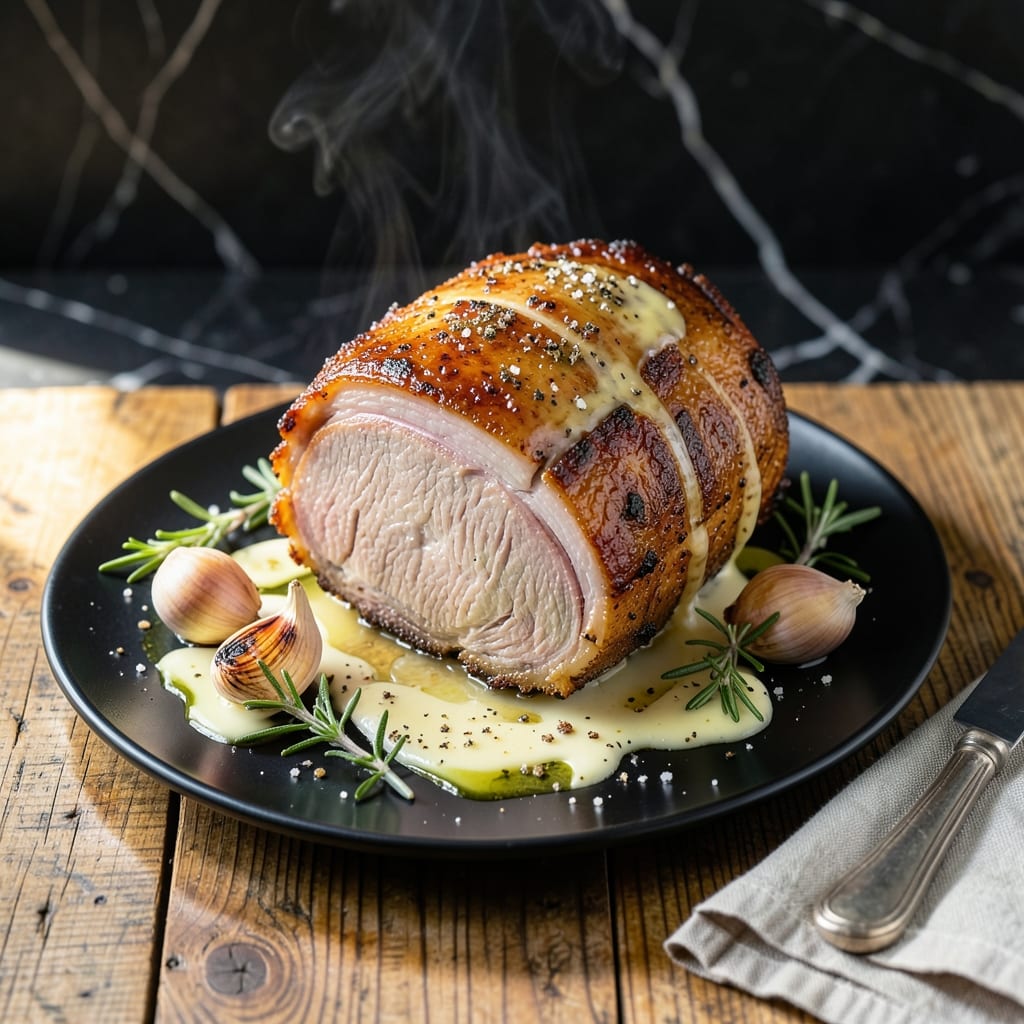
This 5 star pork roast recipe delivers the juiciest, most flavorful roast you’ll ever serve at your table. Growing up in Georgia, I learned early that great pork starts with patience and the right technique.
The secret lies in a garlic butter baste that infuses every bite with rich, aromatic depth. A slow roast at 325°F ensures tender, fall-apart meat with a golden crust that locks in moisture.
What emerges is a centerpiece worthy of any special occasion—succulent, perfectly seasoned, and irresistibly fragrant. The garlic butter creates a restaurant-quality finish that elevates this dish above the ordinary.
Serve with roasted vegetables or mashed potatoes for a meal that earns its five stars. Here’s how to make it.
Ingredients for 5 star pork roast
Pantry staples plus fresh herbs and a pork shoulder. Nothing too fancy here.
| Ingredient | Amount | Notes |
|---|---|---|
| Pork Shoulder Roast 🥩 | 3 lb | Bone-in for extra flavor |
| Unsalted Butter 🧈 | ½ cup | Softened for baste |
| Garlic Cloves 🧄 | 8 cloves | Minced for butter baste |
| Kosher Salt 🧂 | 1 ½ tbsp | For seasoning roast |
| Black Pepper 🌶️ | 1 tbsp | Freshly ground preferred |
| Dried Thyme 🌿 | 1 tsp | For herb crust |
| Dried Rosemary 🍃 | 1 tsp | Crushed between fingers |
| Fresh Parsley 🌿 | ¼ cup | Chopped for garnish |
| Olive Oil 🫒 | 2 tbsp | For searing pork |
| Chicken Broth 🥣 | 1 cup | Low-sodium preferred |
| Yellow Onion 🧅 | 1 whole | Quartered for roasting pan |
| Carrots 🥕 | 3 whole | Cut into chunks |
| Celery Stalks 🌿 | 2 whole | Cut into chunks |
The pork shoulder is non-negotiable here. Bone-in gives you that extra depth of flavor and keeps the meat moist during the long roast. I grab mine from Costco—consistent quality and the price per pound can't be beat. If your butcher has it, ask for the blade roast (same cut, just different name). Look for good marbling—this isn't the time for lean cuts.
No fresh herbs? Dried work at one-third the amount, but the fresh stuff really shines in that garlic butter baste. Out of chicken broth? Water plus bouillon cube gets you there. The butter can be salted if that's what you've got—just ease up on the kosher salt. If you're feeling fancy, European-style butter (higher fat) takes this to another level.
The roast tastes even better the next day—great for 4-5 days in the fridge. Freeze leftovers for up to 3 months (slice first for easy portions). I always make extra broth to pour over the meat when reheating.
Why You'll Love This Recipe
- One Pan Wonder: I just rub the pork shoulder with butter, garlic, salt, and pepper, then let the oven do the work.
- Feeds a Crowd: Honestly, I make this for Sunday dinner and have leftovers for sandwiches all week.
- Budget Hero: Pork shoulder is affordable, and a single roast stretches across multiple meals.
Step-by-step instructions for garlic butter basted pork roast
Here's how I make this restaurant-worthy roast with minimal effort and maximum flavor.
Season and Sear the Pork Shoulder
Pat the 3 lb Pork Shoulder Roast completely dry with paper towels. This ensures a good sear. Season it aggressively on all sides with the 1.5 tbsp Kosher Salt, 1 tbsp Black Pepper, 1 tsp Dried Thyme, and 1 tsp Dried Rosemary. I like to crush the rosemary between my fingers first to release its oils.
Heat the 2 tbsp Olive Oil in a Dutch oven over medium-high heat. When it shimmers, add the pork shoulder and sear for 4-5 minutes per side until deep golden brown. You want that rich, caramelized crust that’ll form the base of your pan sauce. Don’t rush—this builds the flavor foundation.
Prepare the Vegetable Base and Deglaze
Transfer the seared pork to a plate. In the same pot, add the 1 whole Yellow Onion (quartered), 3 whole Carrots (cut into chunks), and 2 whole Celery Stalks (cut into chunks). Let them cook for 3-4 minutes until the onion edges start to brown.
Pour in the 1 cup Chicken Broth and use a wooden spoon to scrape up all those delicious browned bits from the bottom of the pot. This step is non-negotiable—it captures all the flavor from the searing process and prevents waste. Let it simmer for 2 minutes to meld the flavors.
Add Pork and Start Roasting
Return the pork shoulder to the pot, placing it on top of the vegetables. Cover with a lid and transfer to a preheated 325°F oven. Roast for 2 hours—this low and slow approach ensures the pork becomes fall-apart tender without drying out.
At this point, the pork should be well on its way to becoming fork-tender. The house will smell incredible, and the vegetables will have started to soften and absorb the pork’s rich flavors. Resist the urge to peek too often—every time you open the oven, you lose heat and add to the cooking time.
Baste with Garlic Butter and Finish Roasting
While the pork roasts, mix the 0.5 cup Unsalted Butter (softened) with the 8 cloves Garlic Cloves (minced). After the initial 2 hours, uncover the pot and brush the pork generously with the garlic butter. This is where the magic happens—the butter browns and forms a flavorful crust.
Return the pork to the oven, uncovered, and roast for another 30-45 minutes, basting with the garlic butter every 15 minutes. You’ll know it’s done when the internal temperature reaches 195°F and the pork pulls apart easily with a fork. The skin should be dark, caramelized, and irresistibly fragrant.
Rest and Garnish
Carefully transfer the pork to a cutting board and tent loosely with foil. Let it rest for 15-20 minutes—this allows the juices to redistribute, ensuring every bite is moist and flavorful. The vegetables can stay in the pot to soak up more flavor if you’re serving them as a side.
Once rested, shred or slice the pork against the grain. Garnish with the 0.25 cup Fresh Parsley (chopped) for a pop of color and freshness. Serve with the roasted vegetables and pan juices spooned over the top. This dish is guaranteed to impress, with tender pork and a rich, garlicky sauce in every bite.
Pro Tips For Making 5 Star Pork Roast
- Dry the Pork: Pat the shoulder roast completely dry before seasoning—I learned this the hard way after wondering why my crust never crisped properly.
- Butter at Room Temp: Let the unsalted butter soften for 30 minutes before mixing with garlic; it spreads easier and clings to the meat better.
- Don’t Rush the Rest: Give the roast a full 15 minutes under foil after cooking, or the juices will spill onto the cutting board instead of staying in the meat.
- Crush the Garlic: Slice the garlic cloves lengthwise and give them a quick smash with your knife—more flavor releases into the butter without burning.
Regional styles of this dish
Southern Lowcountry Style
In Charleston, we love our pork with a mustard-based glaze that adds sweet tang. I mix ¼ cup yellow mustard with 2 tbsp honey and 1 tbsp apple cider vinegar for the last 30 minutes of roasting. The vinegar cuts through the richness beautifully. 💛
Texas Hill Country
Out west, they prefer a dry rub with chili powder and cumin. I add 1 tbsp smoked paprika to the seasoning mix for that signature Texas heat. The pork gets a deeper, earthier flavor that pairs perfectly with cornbread.
Carolina Vinegar Style
North Carolina does it with a vinegar sauce. After resting, I pull the pork and toss it with ½ cup apple cider vinegar, 1 tbsp brown sugar, and 1 tsp red pepper flakes. It's bright, tangy, and refreshingly different. 🌶️
Midwestern Comfort
In the heartland, they keep it simple with a brown sugar and ketchup glaze. I mix ¼ cup ketchup, 2 tbsp brown sugar, and 1 tbsp Worcestershire sauce for the last 20 minutes. It's sweet, sticky, and nostalgic.
Cajun Spiced
For Louisiana flair, I add 1 tbsp Cajun seasoning to the dry rub. The blend of spices gives the pork a smoky, slightly spicy kick. Serve it with dirty rice for an authentic bayou experience. The flavors are bold and unforgettable.
Nutrition facts
Frequently asked questions
Can I use pork loin instead of shoulder?
Shoulder is ideal for its fat content and connective tissue, which break down beautifully during slow cooking. Pork loin is leaner and can dry out. If you must, reduce roasting time to 1.5 hours and baste frequently.
Why rest the pork before serving?
Resting for 15-20 minutes allows juices to redistribute throughout the meat. Slicing too soon causes them to spill out, leaving your roast dry. This step ensures every bite stays moist and flavorful.
How do I know when it's perfectly done?
Use a meat thermometer—the internal temp should reach 195°F. The pork will pull apart easily with a fork, and the crust will be deep golden brown. Don’t rely on time alone.
Can I make this in a slow cooker?
Yes! Sear the pork first, then cook on low for 8-10 hours with the same seasonings. Add the garlic butter in the last 30 minutes for best results.