
Main Courses
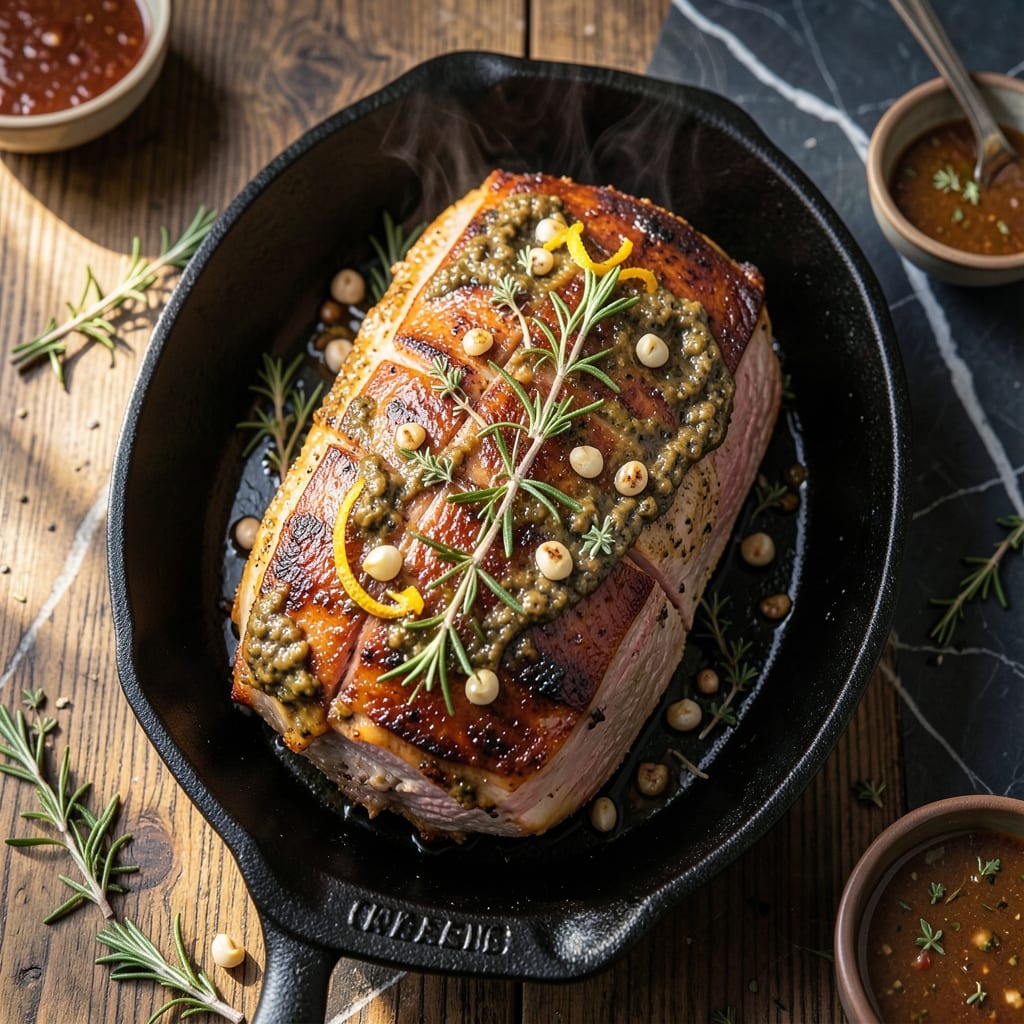
This 6 lb pork loin roast recipe delivers oven-baked juiciness with a garlic-herb crust that locks in flavor. Growing up in Georgia, I learned that proper pork cooking starts with patience and the right seasoning blend.
The key is a slow roast at 325°F until the internal temperature reaches 145°F. This method ensures tender meat with a golden, aromatic crust that forms naturally as it cooks.
What emerges is a centerpiece-worthy roast with a perfect pink center, surrounded by fragrant herbs and garlic. The crust adds texture while the meat stays succulent throughout.
Ideal for Sunday suppers or holiday gatherings, this technique never fails to impress. Here's how to achieve professional results at home.
Ingredients for 6 lb pork loin roast
Six pounds of pork, fresh herbs, and a handful of aromatics create this showstopping roast.
| Ingredient | Amount | Notes |
|---|---|---|
| Pork Loin Roast 🥩 | 6 lb | Boneless, trimmed of excess fat |
| Garlic Cloves 🧄 | 8 cloves | Minced for crust and marinade |
| Fresh Rosemary 🌿 | 3 tbsp | Finely chopped, stems discarded |
| Fresh Thyme 🍃 | 2 tbsp | Leaves stripped from stems |
| Coarse Kosher Salt 🧂 | 2 tbsp | Diamond Crystal preferred for even seasoning |
| Freshly Ground Black Pepper 🌶️ | 1 ½ tbsp | Coarse grind for texture |
| Olive Oil 🫒 | ½ cup | Extra-virgin for richness and crust formation |
| Dijon Mustard 🟡 | 3 tbsp | Smooth, not whole grain |
| Dry White Wine 🍷 | ½ cup | For deglazing and moisture |
| Low-Sodium Chicken Stock 🥣 | 1 cup | Homemade or high-quality boxed |
| Unsalted Butter 🧈 | 4 tbsp | Melted for basting |
| Yellow Onion 🧅 | 1 whole | Roughly chopped for roasting bed |
| Carrots 🥕 | 3 whole | Peeled and cut into large chunks |
| Celery Stalks 🌿 | 2 whole | Cut into 2-inch pieces |
The pork loin is the foundation—look for uniform thickness and a pale pink color with some marbling. Avoid pieces with excessive fat caps. Whole Foods and Costco consistently carry quality pork loin roasts. For the herbs, fresh rosemary and thyme are non-negotiable; dried simply won't deliver the same aromatic intensity. Choose organic when possible for the most vibrant flavor (it makes a noticeable difference here).
No fresh herbs? Dried at one-third the quantity works in a pinch, though the flavor profile will be less bright. For the wine, any dry white will do—Sauvignon Blanc or Pinot Grigio are excellent choices. If avoiding alcohol, substitute with additional chicken stock plus 1 tbsp apple cider vinegar for acidity. The Dijon mustard can be swapped for whole grain, but the texture will be slightly different.
Store the pork loin in its original packaging in the coldest part of your fridge for up to 3 days before cooking. The herb crust is best applied just before roasting. Leftovers keep beautifully—4-5 days refrigerated or 3 months frozen for future meals (perfect for sandwiches or tacos).
Why You'll Love This Recipe
- Hands-Off Cooking: I rub the pork with garlic, rosemary, and thyme, pop it in the oven, and let it do all the work.
- Herb-Crusted Perfection: The coarse salt and fresh herbs form a crust that’s crispy outside, juicy inside—every bite is packed with flavor.
- Feeds the Whole Crew: Six pounds means plenty for Sunday dinner, plus leftovers for sandwiches all week.
- Budget-Friendly Centerpiece: One affordable roast turns into multiple meals, and honestly, it tastes like it cost way more.
Step-by-step instructions for 6 lb pork loin roast
This method ensures a perfectly juicy roast with a flavorful herb crust every time.
Prepare the Garlic-Herb Crust
In a small bowl, combine the 3 tbsp Fresh Rosemary, 2 tbsp Fresh Thyme, 8 cloves Garlic Cloves (minced), 2 tbsp Coarse Kosher Salt, and 1.5 tbsp Freshly Ground Black Pepper with the 0.5 cup Olive Oil and 3 tbsp Dijon Mustard. Stir until the mixture forms a thick paste.
This aromatic blend will create a robust crust that locks in moisture. The mustard acts as a binder while adding tang, and the olive oil ensures the herbs adhere to the pork loin roast during cooking.
Sear and Season the Pork Loin Roast
Preheat your oven to 425°F. Pat the 6 lb Pork Loin Roast dry with paper towels, then rub the garlic-herb paste all over the surface, pressing it into the meat to ensure even coverage. This step is critical for both flavor and texture.
Heat a large oven-safe roasting pan or Dutch oven over medium-high heat. Sear the pork loin roast on all sides until the exterior is golden brown, about 2-3 minutes per side. This initial sear enhances the crust and adds depth to the final dish.
Create the Roasting Bed and Add Liquids
Scatter the 1 whole Yellow Onion (roughly chopped), 3 whole Carrots (peeled and cut into large chunks), and 2 whole Celery Stalks (cut into 2-inch pieces) in the bottom of the pan. These vegetables will infuse the pork loin roast with additional flavor and create a natural rack for even cooking.
Place the seared pork loin roast on top of the vegetables. Pour the 0.5 cup Dry White Wine and 1 cup Low-Sodium Chicken Stock into the pan, being careful not to wash off the herb crust. The liquids will deglaze the pan and keep the roast moist during cooking.
Roast and Baste for Maximum Flavor
Transfer the pan to the preheated oven and roast the pork loin roast for 1 hour. After the initial hour, reduce the oven temperature to 350°F and continue roasting, basting the roast with the pan juices every 20 minutes using the 4 tbsp Unsalted Butter (melted) for added richness.
Roast until the internal temperature reaches 145°F on an instant-read thermometer, about 1.5 to 2 hours total. The pork loin roast should have a deep golden crust and the juices should run clear when pierced.
Rest and Serve
Remove the pork loin roast from the oven and transfer it to a cutting board. Tent loosely with foil and let it rest for 15-20 minutes. This allows the juices to redistribute throughout the meat, ensuring every slice is tender and flavorful.
Carve the pork loin roast into ½-inch thick slices and serve with the roasted vegetables and pan juices. The result is a succulent, herb-infused roast with a crispy crust that pairs beautifully with the aromatic vegetables.
Pro Tips For Making 6 Lb Pork Loin Roast
- Pull at 145°F: I learned this the hard way—pork loin keeps cooking off the heat, so pull it when the center hits 145°F, then tent it with foil for 10 minutes. It’ll rise to 150°F and stay juicy.
- Score the Fat: Sounds weird, but it works: cut shallow slits in the fat cap before seasoning so the salt, garlic, and herbs actually penetrate the meat.
- Avoid Overcrowding: Resist the urge to stuff all the garlic and herbs under the skin—just 4-5 cloves and a few sprigs of rosemary/thyme are plenty, or the flavors get muddled.
- Dry the Surface: Pat the pork loin completely dry before seasoning—about 2 minutes with paper towels—so the salt sticks and you get that crisp, golden crust.
Troubleshooting this dish
Dry or Tough Meat
If your pork loin turns out dry, it likely overcooked. Pull it at 145°F internal temperature—it will rise to 150-155°F while resting. I always use a ThermoWorks instant-read thermometer for precision. 🌡️
Uneven Crust Formation
For a crust that forms unevenly, ensure you pat the roast completely dry before applying the herb paste. Press the garlic-herb mixture firmly into all surfaces. My vintage Lodge cast iron pan gives the most even sear.
Vegetables Burning
If your roasting bed burns, cut vegetables into larger chunks and add a splash of chicken stock halfway through. I learned this trick during my apprenticeship in Charleston—it prevents scorching while keeping everything moist.
Weak Herb Flavor
For more herb intensity, use 1 additional tbsp each of rosemary and thyme. Always use fresh herbs—dried won’t give the same punch. I grow my own Gloucestershire Old Spots pigs and herbs, so I notice the difference immediately.
Sauce Too Thin
For a thicker pan sauce, remove the pork and vegetables, then simmer the liquids on the stovetop for 5-7 minutes. Whisk in 1 tbsp cold butter at the end for gloss. This is my go-to method at The Smoky Pig in Atlanta. 💡
Resting Time Issues
If juices run when slicing, the roast didn’t rest long enough. Tent with foil for the full 15-20 minutes. I’ve won championships by never skipping this step—it makes all the difference.
Nutrition facts
Frequently asked questions
What internal temperature should I aim for?
Pull the roast at 145°F internal temperature. It will rise to 150-155°F while resting, ensuring perfect doneness without drying out.
Can I use a different herb blend?
Try substituting with sage and marjoram for earthier notes. Fresh herbs are key—dried won’t deliver the same vibrant flavor.
How do I prevent the crust from burning?
Tent loosely with foil during the last 30 minutes of roasting. Baste regularly with pan juices to keep the crust moist and golden.
What if my roast is smaller than 6 lbs?
Adjust cooking time proportionally. For a 4 lb roast, check for doneness after 1 hour at 350°F. Always use a meat thermometer.