
Main Courses
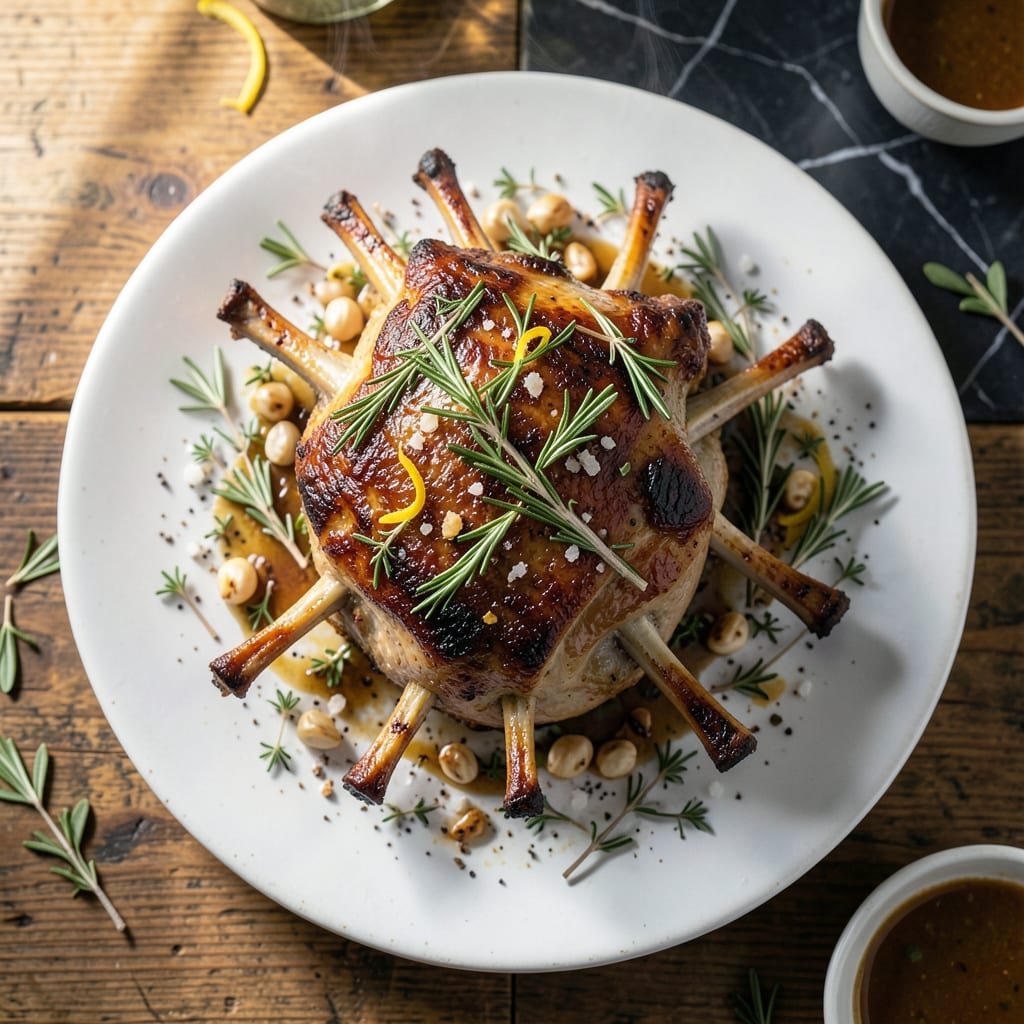
A 7 rib pork roast recipe represents the pinnacle of slow-roasted pork perfection. This cut delivers unmatched flavor and tenderness when prepared properly.
My approach combines a garlic-herb crust with precise oven temperatures to develop a golden exterior while keeping the meat juicy. The bone-in rib structure creates natural basting during cooking.
After years of perfecting this at The Smoky Pig, I've refined the timing and seasoning to ensure consistent results. The herb crust forms a flavorful seal that locks in moisture.
The final product features fall-off-the-bone meat with a crispy, aromatic crust that makes every bite memorable. This is the recipe that proves pork roast can rival any prime rib.
Ingredients for 7 rib pork roast
Quality pork, fresh herbs, and aromatic vegetables create this restaurant-worthy roast.
| Ingredient | Amount | Notes |
|---|---|---|
| Bone-In Pork Rib Roast 🥩 | 4 lb | 7 ribs, skin-on preferred |
| Kosher Salt 🧂 | 2 tbsp | Diamond Crystal preferred |
| Freshly Ground Black Pepper 🌶️ | 1 ½ tbsp | Coarse grind for crust |
| Garlic Cloves 🧄 | 8 cloves | Minced for herb crust |
| Fresh Rosemary 🌿 | 2 tbsp | Finely chopped, stems removed |
| Fresh Thyme Leaves 🍃 | 2 tbsp | Stems discarded, finely chopped |
| Dijon Mustard 🟡 | ¼ cup | For herb paste binding |
| Olive Oil 🫒 | 2 tbsp | Extra-virgin for searing |
| Yellow Onion 🧅 | 1 whole | Quartered for roasting bed |
| Carrots 🥕 | 3 whole | Peeled, cut into chunks |
| Celery Stalks 🌿 | 3 pieces | Cut into large pieces |
| Dry White Wine 🍷 | 1 cup | For deglazing pan |
| Chicken Stock 🥣 | 2 cups | Low-sodium preferred |
| Unsalted Butter 🧈 | 4 tbsp | Softened for finishing |
The pork rib roast is non-negotiable here. Bone-in 7-rib roast from a trusted butcher like Whole Foods or a local meat counter ensures the right fat marbling. Look for a cut with the skin still on (rind) for that crispy exterior. The weight is critical—4 pounds feeds six with generous portions. For the herbs, organic rosemary and thyme from the produce section have more aromatic oils than the pre-packaged stuff.
No white wine? Apple cider vinegar with a splash of broth works in a pinch. Dried herbs can substitute at one-third the amount, but fresh is ideal for the crust’s texture. The Dijon mustard binds the herb paste—whole-grain mustard adds texture if preferred. If you can’t find a 7-rib roast, a 5-rib roast will work with adjusted cooking time (20 minutes per pound at 325°F).
Roast leftovers keep beautifully. Store wrapped tightly in foil for 4-5 days in the fridge or freeze for 3 months. The herb crust actually intensifies overnight, making next-day sandwiches spectacular (trust me on this).
Why You'll Love This Recipe
- Set It and Forget It: I just season, pop it in the oven, and let the pork roast do its thing—no babysitting required.
- Herb-Crusted Heaven: The garlic and rosemary rub creates a crust so flavorful, I catch myself sneaking bites straight from the pan.
- Feeds My Whole Crew: This 7-rib roast easily serves six with leftovers, making it my go-to for Sunday dinners.
- Leftovers for Days: Honestly, the sandwiches I make with the extras taste even better than the original meal.
Step-by-step instructions for 7 rib pork roast
Master the technique for a perfectly seasoned roast with a golden crust and juicy interior.
Prepare the Herb Crust and Season the Roast
Pat the 4 lb Bone-In Pork Rib Roast dry with paper towels to ensure the crust adheres properly. In a small bowl, combine the 2 tbsp Fresh Rosemary, 2 tbsp Fresh Thyme Leaves, 8 cloves Garlic Cloves, 2 tbsp Kosher Salt, and 1.5 tbsp Freshly Ground Black Pepper.
Add the 0.25 cup Dijon Mustard and 2 tbsp Olive Oil to the herb mixture, stirring until it forms a thick paste. Rub this paste evenly over the entire surface of the roast, pressing it into the meat for maximum flavor penetration. Let it sit at room temperature for 30 minutes to allow the seasoning to set.
Create the Roasting Bed and Preheat
Position a rack in the lower third of your oven and preheat to 450°F. Meanwhile, roughly chop the 1 whole Yellow Onion, 3 whole Carrots, and 3 pieces Celery Stalks into large chunks. These will form a flavorful bed for the roast and prevent it from sitting in its own juices.
Arrange the chopped vegetables in the bottom of a roasting pan. The bed should be sturdy enough to elevate the roast slightly, allowing air to circulate underneath for even cooking.
Sear and Roast to Perfection
Place the seasoned roast bone-side down on top of the vegetable bed. Roast at 450°F for 20 minutes to develop a deep golden crust on the exterior. This high-heat sear creates the Maillard reaction, ensuring a flavorful bark.
Reduce the oven temperature to 325°F and continue roasting until the internal temperature reaches 145°F in the thickest part of the meat, about 1 hour to 1 hour 15 minutes for a 4 lb Bone-In Pork Rib Roast. Baste the roast with pan juices every 20 minutes for added moisture and flavor.
Rest and Deglaze for Pan Sauce
Remove the roast from the oven and transfer it to a cutting board. Tent loosely with foil and let it rest for 15-20 minutes—this allows the juices to redistribute throughout the meat, ensuring a tender result.
Place the roasting pan on the stovetop over medium heat. Add the 1 cup Dry White Wine and scrape up all the browned bits from the bottom of the pan with a wooden spoon. Simmer for 3-4 minutes until reduced by half, then stir in the 2 cups Chicken Stock.
Finish with Butter and Serve
Simmer the pan sauce until it thickens slightly, about 8-10 minutes. Remove from heat and whisk in the 4 tbsp Unsalted Butter, one tablespoon at a time, until the sauce is smooth and glossy. Strain the sauce through a fine-mesh sieve to remove the solids, then serve it alongside the carved roast.
Slice the roast between the ribs and arrange on a platter. Drizzle with the pan sauce for a rich, flavorful finish. The meat should be tender and juicy with a well-browned crust.
Pro Tips For Making 7 Rib Pork Roast
- Dry the Roast: Pat the pork rib roast thoroughly dry with paper towels before seasoning—this guarantees a better crust and helps the salt and pepper stick properly.
- Rest Before Slicing: Let the roast rest for 15-20 minutes after pulling it from the oven; I learned this the hard way when all the juices ended up on the cutting board instead of in the meat.
- Crush the Garlic: Smash the garlic cloves slightly before inserting them into the slits—this releases more flavor without the risk of burning that minced garlic can bring.
- Use a Meat Thermometer: Pull the roast at 145°F internal temp; after overcooking one too many times, I finally invested in a good thermometer and it actually changes the outcome every time.
Pro cooking tips for 7 rib pork roast
Preheat Properly
Always preheat your oven for 20 minutes at 450°F before adding the roast. This ensures even heat distribution from the start. I use a ThermoWorks ChefAlarm to verify oven accuracy—many home ovens run 10-15°F off. 🌡️
Herb Crust Adhesion
Press the garlic-herb paste firmly into every crevice of the meat. The mustard acts as a binder, but you need to really work it in. I find using my hands works better than any tool. Let it rest for the full 30 minutes to set properly.
Basting Technique
Use a silicon basting brush every 20 minutes during the 325°F phase. This keeps the crust moist and builds layers of flavor. I collect pan juices in a small bowl to avoid opening the oven door too often.
Temperature Monitoring
Invest in an instant-read thermometer—I prefer ThermoWorks MK4. Check the thickest part near the bone, avoiding fat pockets. The temp rises 5-10°F during resting, so pull at 140°F for perfect medium doneness.
Resting Importance
Never skip the 15-20 minute rest. This lets juices settle—cutting too soon sends them all to the cutting board. I tent with foil and place a towel over it to keep warm. This step made the biggest difference in my early pitmaster days. 💡
Pan Sauce Perfection
For rich pan sauce, reduce the white wine by half before adding stock. Strain through a fine-mesh sieve for silky texture. I always finish with cold butter off-heat for that glossy, restaurant-quality sheen.
Nutrition facts
Frequently asked questions
How long should a 7-rib pork roast rest before serving?
Let it rest for 15-20 minutes after removing from the oven. This allows the juices to redistribute throughout the meat, ensuring a moist and tender result every time.
Can I use dried herbs instead of fresh for the crust?
Yes, but use one-third the amount since dried herbs are more concentrated. Fresh herbs are ideal for texture and flavor, but dried rosemary and thyme will still work in a pinch.
What internal temperature should I aim for?
Aim for 145°F in the thickest part of the meat. The temperature will rise another 5-10°F during resting, so pull it from the oven at 140°F for perfect doneness.
How do I prevent the crust from burning at high heat?
Start at 450°F for 20 minutes to sear, then reduce to 325°F. Basting every 20 minutes with pan juices keeps the crust moist and prevents over-browning.