
Main Courses
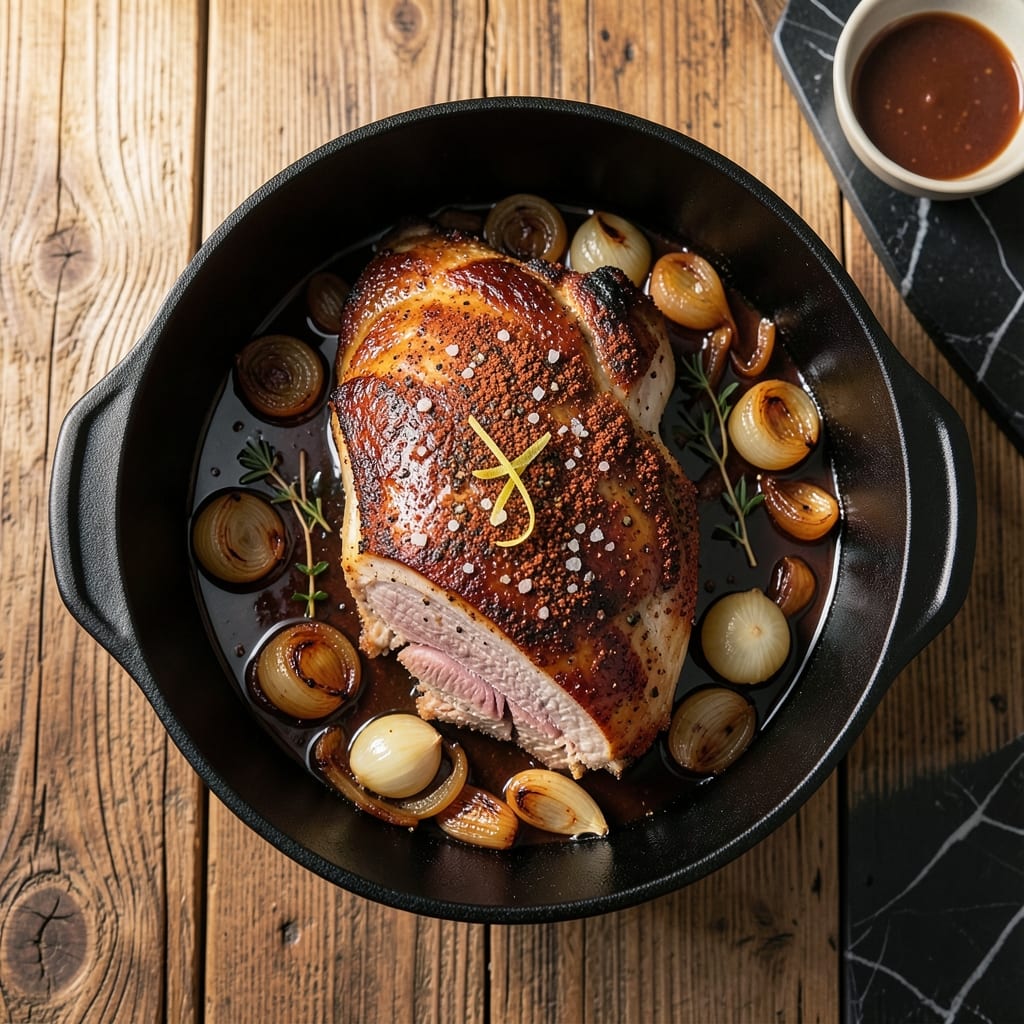
This 8 lb pork shoulder roast recipe delivers slow-roasted Carolina-style perfection with minimal effort. Growing up in Georgia, I learned that great pork requires patience and the right technique.
Low and slow is the only way to achieve that fall-apart tenderness. A simple dry rub of salt, pepper, and smoked paprika enhances the meat's natural flavors without overpowering it.
The result is juicy, flavorful pork with a beautiful bark on the outside. This method works every time, whether you're feeding a crowd or meal prepping for the week.
Serve with classic sides like coleslaw and cornbread to complete the experience. Here's how to make it right.
Ingredients for 8 lb pork shoulder roast
Eleven ingredients transform an 8 lb pork shoulder into Carolina-style perfection with minimal effort.
| Ingredient | Amount | Notes |
|---|---|---|
| Pork Shoulder 🥩 | 8 lb | Bone-in, skin-on preferred for bark |
| Kosher Salt 🧂 | 2 tbsp | Diamond Crystal preferred for even seasoning |
| Black Pepper 🌶️ | 2 tbsp | Freshly ground coarse |
| Smoked Paprika 🌶️ | 2 tbsp | Sweet or hot variety |
| Garlic Powder 🧄 | 1 tbsp | Not garlic salt |
| Onion Powder 🧅 | 1 tbsp | Fresh ground preferred |
| Brown Sugar 🧈 | ½ cup | Light or dark variety |
| Apple Cider Vinegar 🍏 | ½ cup | For bark development |
| Olive Oil 🫒 | ¼ cup | For rub binding |
| Yellow Mustard 🟡 | ½ cup | For binder and tang |
| Chicken Stock 🍗 | 2 cups | Low-sodium preferred |
The pork shoulder is non-negotiable here. Bone-in, skin-on yields the best bark and moisture. Costco or Sam's Club sell these in bulk—perfect for feeding a crowd. Look for good marbling; avoid anything gray or with an off smell. If buying from a butcher, ask for the Boston butt cut. The fat cap on top self-bastes during the long cook.
No smoked paprika? Regular paprika plus a pinch of cayenne works in a pinch. Brown sugar can be swapped with honey or maple syrup (reduce liquid slightly). Apple cider vinegar is ideal, but white vinegar at half the amount does the job. For the stock, vegetable broth is a fine vegetarian swap. The mustard binder can be Dijon or whole grain if that's what you have.
The rub keeps in a jar for 1 month. Pork shoulder freezes beautifully for up to 6 months—thaw overnight in the fridge. Leftovers hold for 4-5 days refrigerated, or freeze in portions for easy pulled pork sandwiches later.
Why You'll Love This Recipe
- Set and Forget: I toss the pork shoulder with salt, pepper, smoked paprika, and garlic powder, then let the oven do the work for hours.
- Smoky, Garlicky Bite: The smoked paprika and garlic powder give it that deep, rich flavor that makes every bite irresistible.
- Feeds the Whole Crew: An 8-pound shoulder means plenty for a big family dinner, with leftovers for sandwiches the next day.
- Budget-Friendly Feast: Pork shoulder is one of the most affordable cuts, and it turns into something extraordinary with just a few spices.
Step-by-step instructions for slow-roasted pork shoulder
Here's the method. Straightforward, tested, works every time.
Prepare the Dry Rub and Season the Pork
In a small bowl, combine the 2 tbsp Kosher Salt, 2 tbsp Black Pepper, 2 tbsp Smoked Paprika, 1 tbsp Garlic Powder, 1 tbsp Onion Powder, and 0.5 cup Brown Sugar. Stir until evenly blended—this creates your flavor foundation.
Pat the 8 lb Pork Shoulder dry with paper towels, then rub it all over with the 0.5 cup Yellow Mustard. The mustard acts as a binder for the rub and adds a subtle tang. Coat the pork completely with the dry rub, pressing it into the meat so it adheres well.
Sear the Pork for Bark Development
Heat the 0.25 cup Olive Oil in a large Dutch oven over medium-high heat. When the oil shimmers, add the pork shoulder and sear on all sides for 3-4 minutes per side until deeply browned. You're building the foundation for a rich, caramelized bark.
Don't rush this step—let the pork develop a deep, golden crust. The rendered fat and browned bits in the pan will contribute immense flavor to the finished dish. Once seared, transfer the pork to a plate temporarily.
Deglaze and Begin the Slow Roast
Pour the 0.5 cup Apple Cider Vinegar into the hot Dutch oven, scraping up all the browned bits from the bottom. This deglazing step captures all the concentrated pork flavor and prevents it from burning. Let the vinegar reduce by half, which takes about 2-3 minutes.
Return the pork to the Dutch oven and add the 2 cups Chicken Stock around the meat, not over it. The liquid should come about halfway up the pork. This creates a moist environment for the long cooking process while still allowing the top to develop a bark.
Roast Low and Slow to Perfection
Cover the Dutch oven with its lid and transfer it to a preheated 300°F oven. Roast for 6-7 hours, turning the pork every 2 hours to ensure even cooking and bark development. The pork is done when it's fork-tender and the internal temperature reaches 195-203°F.
Check the liquid level occasionally—if it reduces too much, add a little water to maintain moisture. The meat should pull apart easily with a fork when it's ready, and the bark should be dark, sticky, and caramelized. This slow cooking process transforms the tough cut into melt-in-your-mouth tenderness.
Rest and Shred the Pork
Carefully remove the pork from the Dutch oven and transfer it to a large cutting board or serving platter. Let it rest for 30 minutes before shredding—this allows the juices to redistribute throughout the meat, ensuring it stays moist.
Using two forks, shred the pork into large chunks. Discard any large pieces of fat or bone. Skim excess fat from the cooking liquid and pour some of the juices over the shredded pork to keep it moist. Serve immediately or keep warm in a low oven until ready to serve.
Pro Tips For Making 8 Lb Pork Shoulder Roast
- Dry the Meat: Pat the pork shoulder completely dry with paper towels before seasoning—this helps the rub stick better and gives you a better crust.
- Season Generously: Use about 1 tablespoon each of kosher salt and black pepper for an 8 lb shoulder, plus 1 tablespoon of smoked paprika and garlic powder; it sounds like a lot but big cuts need bold seasoning.
- Low and Slow: Cook at 275°F until internal temp hits 195-203°F, which for an 8 lb shoulder can take 10-12 hours—rushing it with higher heat makes the meat tough.
- Rest Before Pulling: Let the pork rest for at least 30 minutes wrapped in foil after cooking; I learned this the hard way when my first few attempts lost all the juices when I carved too soon.
Troubleshooting great 8 lb pork shoulder roast
Stall Phase Struggles
The stall happens when evaporative cooling slows your cook around 160-170°F. Don't panic—I wrap mine in pink butcher paper with ½ cup chicken stock to push through. This Carolina trick adds 2-3 hours of moisture without steaming the bark. 💡
Bark Won't Form
If your bark stays pale, check your sear temperature. My Lodge Dutch oven needs medium-high heat for 4 minutes per side to caramelize properly. Also ensure your rub includes brown sugar—it's the secret to that sticky crust.
Dry Pork Problems
Overcooking is the usual culprit. Pull at 203°F internal and rest 30 minutes before shredding. I always add ¼ cup cooking liquid back into the meat after pulling to restore moisture.
Uneven Cooking
Rotate your 8 lb pork shoulder every 2 hours in the oven. The bone-in side cooks slower—I place it facing the oven's hot spot. Also check that your Dutch oven lid fits tight to maintain even heat.
Liquid Too Salty
If your cooking liquid tastes harsh, dilute with 1 cup water and reduce by half. I learned this the hard way during my first Charleston competition. The pork itself absorbs salt, so taste before adjusting.
Fat Cap Issues
Leave the fat cap on for self-basting, but trim excess if it's over ½ inch thick. I score mine in a crosshatch pattern to help render fat and create more bark surface area. ⚡
Nutrition facts
Frequently asked questions
What internal temperature should I aim for?
Pull the pork when it reaches 195-203°F internally. This range ensures tender, pull-apart meat. Use a probe thermometer for accuracy.
Can I cook this in a slow cooker instead?
Yes! Sear first, then cook on low for 8-10 hours or high for 6-7 hours. Add 1 cup liquid and monitor the bark development.
How long should I rest the pork before serving?
Always rest for at least 30 minutes. This lets juices redistribute for maximum moisture. Skipping this step risks dry meat.
Why does my bark stay pale?
Increase searing time to 4 minutes per side on medium-high heat. Ensure your rub includes brown sugar for caramelization.