
Main Courses
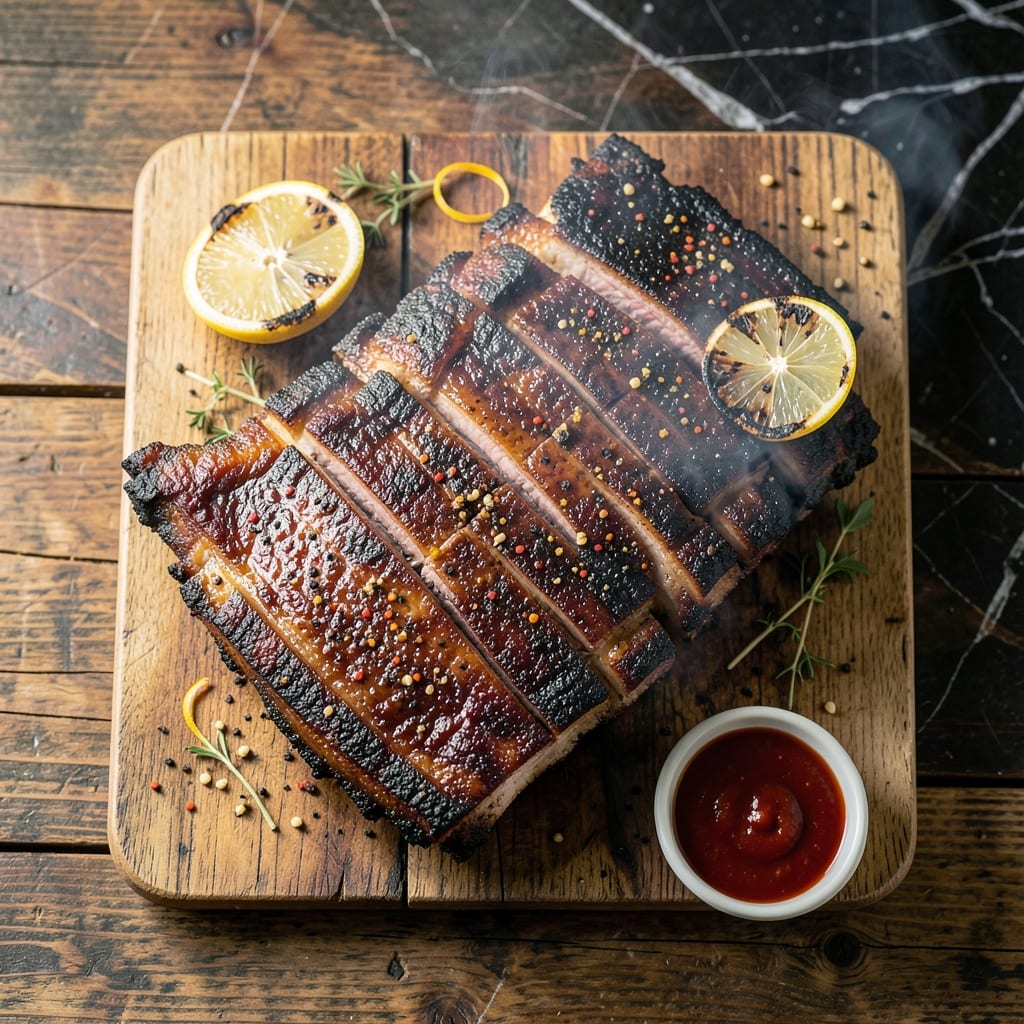
This Aaron Franklin pork ribs recipe delivers Texas-style smoked perfection every time. My years on the Southeast BBQ circuit taught me the value of patience and precision with pork.
What sets this method apart is the low-and-slow smoking technique that transforms tough ribs into tender, fall-off-the-bone masterpieces. The dry rub creates a flavorful bark that locks in moisture during the long cook.
You'll achieve competition-level results with just a few simple ingredients and proper temperature control. The smoke penetrates deeply, infusing every bite with that signature Texas flavor profile.
Perfect for weekend cookouts or impressing guests at your next gathering. This is the recipe that made me a believer in the power of good BBQ.
Ingredients for aaron franklin pork ribs
Texas-style perfection requires quality pork and a well-balanced dry rub. Simple but precise.
| Ingredient | Amount | Notes |
|---|---|---|
| Pork Spareribs 🍖 | 4 lb | Full rack, membrane removed |
| Kosher Salt 🧂 | ¼ cup | Diamond Crystal preferred |
| Coarse Black Pepper 🌶️ | ¼ cup | Freshly ground for bark |
| Granulated Garlic 🧄 | 2 tbsp | Fine powder consistency |
| Granulated Onion 🧅 | 2 tbsp | Uniform texture essential |
| Paprika 🌶️ | 2 tbsp | Sweet variety for color |
| Cayenne Pepper 🔥 | 1 tbsp | Adjust heat to preference |
| Brown Sugar 🫙 | ¼ cup | Light or dark acceptable |
| Yellow Mustard 🟡 | ¼ cup | Binder for dry rub |
| Apple Cider Vinegar 🍏 | ¼ cup | For spritzing during cook |
| Hickory Wood Chunks 🪵 | 4 pieces | For authentic smoke flavor |
| Apple Juice 🍎 | 1 cup | For moisture in spritz |
The ribs are everything. Spareribs deliver the classic Texas profile—avoid baby backs for this method. Source from a reputable butcher or Costco for consistent quality. Look for good marbling and meaty racks. The membrane must be removed completely (use a paper towel for grip). Diamond Crystal kosher salt is the professional standard—its coarse texture adheres better than table salt.
No hickory? Pecan or oak work well for smoke. Mustard binder can be substituted with olive oil, but yellow mustard creates the best bark adhesion. For the rub, freshly ground spices always outperform pre-ground. The cayenne can be reduced or omitted for milder heat. Apple juice in the spritz can be replaced with water, but the sugar content helps build bark.
Store ribs refrigerated, uncovered, for 12-24 hours before cooking to dry the surface. The dry rub mix keeps in an airtight container for 6 months. Cooked ribs hold at room temperature for 2 hours or refrigerate for 4 days.
Why You'll Love This Recipe
- Set It and Forget It: I rub the ribs with salt, pepper, garlic, and onion powder the night before, then let the smoker do the work. No babysitting required.
- Smoky, Savory Perfection: Honestly, the crust from that simple dry rub and slow smoke makes every bite ridiculously good.
- Feeds a Hungry Crowd: Between us, these ribs disappear faster than I can slice them, whether it's a backyard BBQ or a lazy Sunday dinner.
- Leftovers? Even Better: I'll be real—they taste just as spot-on reheated the next day, if they last that long.
Step-by-step instructions for Texas-style smoked pork ribs
Master the process that separates good ribs from legendary ones with precision timing and technique.
Apply the Signature Dry Rub
Begin by combining the 0.25 cup Kosher Salt, 0.25 cup Coarse Black Pepper, 2 tbsp Granulated Garlic, 2 tbsp Granulated Onion, 2 tbsp Paprika, 1 tbsp Cayenne Pepper, and 0.25 cup Brown Sugar in a bowl. I whisk these thoroughly to ensure even distribution—this is your bark foundation.
Paint the 4 lb Pork Spareribs with 0.25 cup Yellow Mustard as a binder, coating all surfaces completely. The mustard won’t add flavor but creates the perfect adhesion for your rub. Press the dry rub mixture generously onto every inch of the ribs, including the bone side. The rub should form a visible crust.
Prepare the Smoker and Establish the Fire
Set up your smoker for indirect heat using the 4 pieces Hickory Wood Chunks. I maintain a consistent 225-250°F throughout the cook—this low-and-slow approach renders fat and breaks down collagen without drying the meat. Position a water pan in the smoker to stabilize temperature and add moisture.
Once the smoker reaches temperature and produces thin blue smoke, you’re ready. Avoid thick white smoke, which tastes bitter. Place the ribs bone-side down on the grate, spacing them at least 2 inches apart for even airflow. Close the lid and resist opening it for at least 2 hours to maintain steady heat.
Spritz and Wrap for Tenderness
After 3 hours of smoking, mix the 0.25 cup Apple Cider Vinegar and 1 cup Apple Juice in a spray bottle. Lightly spritz the ribs every 45-60 minutes to keep the surface moist and enhance bark formation. I focus the spritz on the meaty side where the rub can absorb the liquid.
At the 5-hour mark, when the ribs develop a dark mahogany color, wrap them tightly in pink butcher paper. This Texas crutch method speeds up the cooking process while preserving moisture. Return the wrapped ribs to the smoker and continue cooking until probe-tender, typically another 2-3 hours.
Test for Doneness and Rest
The ribs are finished when an instant-read thermometer inserted into the thickest part reads 200-205°F, but I rely more on the probe test. Insert a toothpick or thermometer probe between the bones—it should slide in with no resistance, like butter. If it meets resistance, give them more time.
Remove the ribs from the smoker and let them rest in the butcher paper for at least 1 hour. This rest period allows the juices to redistribute and the collagen to fully convert to gelatin. I often wrap them in a towel and place them in a cooler to hold heat while finishing other dishes.
Slice and Serve
Unwrap the ribs and transfer them to a cutting board. Slice between the bones to separate into individual ribs. Each cut should reveal meat that pulls back from the bone slightly, exposing the smoke ring. The exterior should have a firm, flavorful bark with a slight sheen from the spritz.
Serve immediately while warm. Texas-style ribs should have a perfect balance of smoke, spice, and tenderness, with each bite offering a clean pull from the bone. The bark should provide a satisfying resistance before giving way to the juicy meat beneath.
Pro Tips For Making Aaron Franklin Pork Ribs
- Trim the Fat: Leave about 1/8 inch of fat on the ribs—any more and it won’t render properly, any less and they’ll dry out. I learned this the hard way after my first batch came out greasy.
- Season Generously: Don’t be shy with the salt and pepper—these ribs need a heavy hand to build that signature bark. Sounds like a lot, but it balances out after the long cook.
- Keep It Low: Maintain your smoker or grill at 225°F to 250°F—higher heat will toughen the meat before it gets tender. After ruining a rack by rushing, I finally got the patience for this.
- Wrap Tightly: When wrapping in foil for the final push, fold it like a burrito to trap every drop of juice. This isn’t the prettiest method, but it’s the tastiest.
Creative variations of this dish
Kansas City Sweet
Swap the dry rub for a sweeter profile with ½ cup brown sugar and ¼ cup molasses mixed into your base spices. I learned this variation on the Southeast circuit—it adds a sticky, caramelized crust. Brush with Kansas City-style sauce during the final 30 minutes of cooking. 💛
Memphis Dry Rub
Increase the paprika to ¼ cup and add 1 tbsp celery salt for that signature Memphis flavor. Skip the wrap entirely and let the ribs cook uncovered for the full 6-7 hours. The result is a firmer bark that’s packed with flavor.
St. Louis Style
Use St. Louis-cut spareribs (trimmed square) for a more uniform presentation. Add 1 tsp cumin and 1 tsp chili powder to the rub for a slightly earthier taste. I love serving these with a tangy vinegar-based mop sauce on the side.
Competition Style
For extra tenderness, inject the ribs with a mixture of apple juice, apple cider vinegar, and Worcestershire sauce before applying the rub. This is a trick I picked up from pitmasters in Charleston. Wrap in foil instead of butcher paper for maximum moisture retention. 🔥
Spicy Southern Kick
Double the cayenne pepper and add 1 tbsp chipotle powder to the rub. Spritz with a mix of apple juice and hot sauce for an extra layer of heat. This variation always gets requests at my Atlanta pop-ups.
Heritage Farm Twist
Use ribs from my Gloucestershire Old Spots pigs for richer marbling and flavor. Reduce the salt in the rub by half since heritage pork has a more concentrated natural flavor. The meat will be so tender it nearly melts in your mouth.
Nutrition facts
Frequently asked questions
What's the ideal smoker temperature for this method?
Maintain a steady 225-250°F throughout the cook. This range breaks down collagen slowly while keeping the meat moist. Avoid temperature spikes above 275°F which can dry out the ribs.
Can I use baby back ribs instead of spareribs?
Yes, but adjust cooking time to 5-6 hours total. Baby backs cook faster due to their smaller size. The technique remains the same, but watch for doneness at the 4-hour mark.
How do I know when the ribs are done?
Use the probe test: insert a toothpick between bones. It should slide in like butter with no resistance. Internal temp should reach 200-205°F in the thickest part.
What if my ribs are tough?
They likely need more time. Wrap in butcher paper and return to the smoker for another 1-2 hours. Toughness means the collagen hasn't fully rendered into gelatin yet.