
Soups & Stews
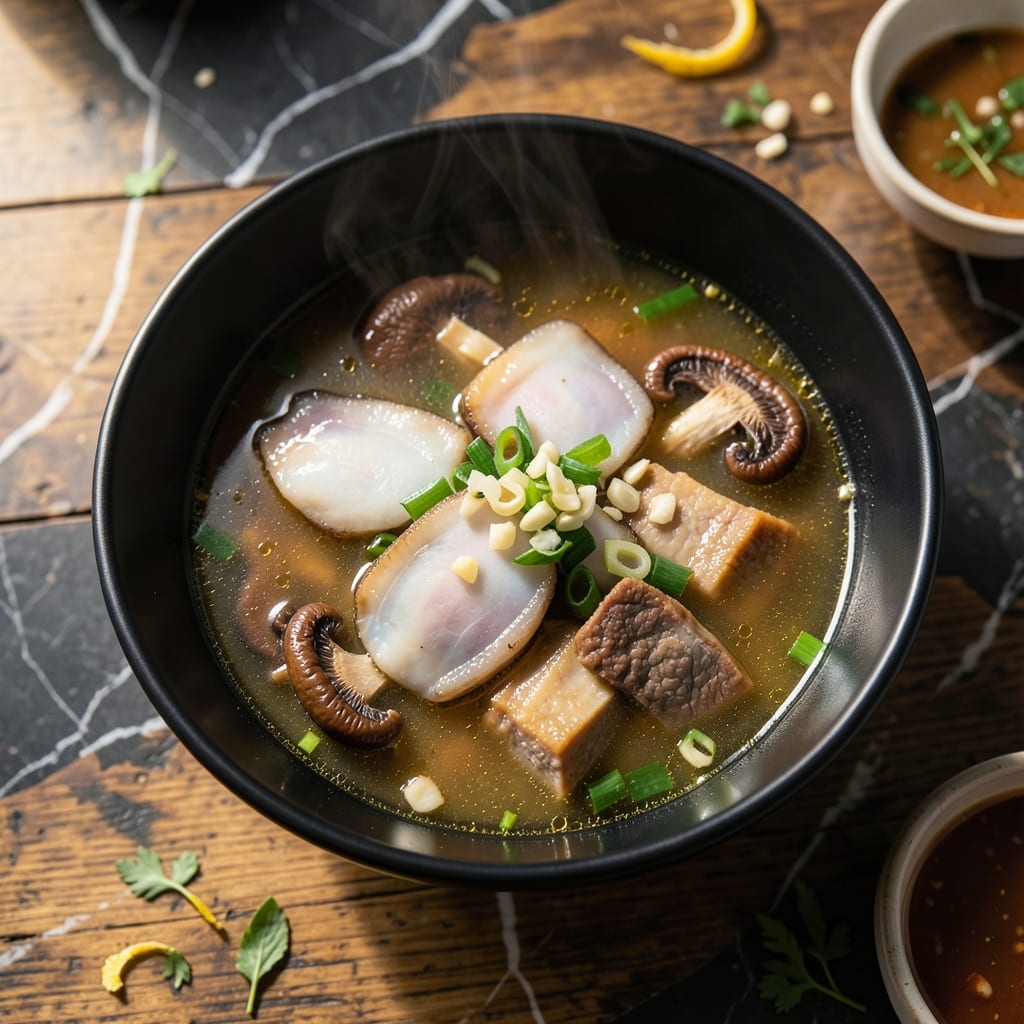
This abalone pork soup recipe delivers a silky broth with layers of oceanic depth and tender meat. I perfected this dish during my Charleston apprenticeship, learning to balance land and sea flavors.
The secret lies in slow-simmering fresh abalone with pork bones to extract rich, gelatinous broth. Canned or fresh abalone both work, though fresh offers superior texture. A touch of ginger and scallions brightens the pot without overpowering.
What emerges after 2 hours is a clear, fragrant soup where each ingredient shines. The abalone becomes tender yet slightly chewy, while the pork adds heartiness to every spoonful.
Serve piping hot with a drizzle of soy sauce for added umami depth.
Ingredients for abalone pork soup
Fresh abalone, pork bones, and aromatics build this rich, layered soup base.
| Ingredient | Amount | Notes |
|---|---|---|
| Fresh Abalone 🐚 | 1 lb | Cleaned and sliced, or canned |
| Pork Bones 🍖 | 2 lb | Neck or femur for gelatin |
| Fresh Ginger 🌿 | 2 whole | Peeled and sliced thick |
| Scallions 🧅 | 4 whole | White and green parts separated |
| Garlic Cloves 🧄 | 4 cloves | Lightly smashed |
| Dried Shitake Mushrooms 🍄 | 4 pieces | For umami depth |
| Soy Sauce 🫒 | ¼ cup | Plus extra for serving |
| Shaoxing Wine 🍶 | 2 tbsp | Or dry sherry substitute |
| Water 💧 | 8 cups | For simmering broth |
| Rock Sugar 🍬 | 1 oz | Or 2 tsp granulated sugar |
| Salt 🧂 | 1 tsp | Adjust to taste |
| White Pepper 🌶️ | ½ tsp | Freshly ground |
| Cilantro 🌿 | ¼ cup | Fresh, for garnish |
The abalone is key—fresh from an Asian market gives the best texture, but canned works in a pinch (look for whole abalone, not shredded). Pork bones with lots of connective tissue (neck or femur) make the broth silky and gelatinous. For ginger and scallions, fresh is non-negotiable—dried won’t give the same bright, clean flavors. I grab my pork bones from local butchers who know to leave the skin on for extra richness.
No Shaoxing wine? Dry sherry at equal amount is the closest swap. Rock sugar can be substituted with regular sugar (use a bit less). Short on time? Pork shoulder bones work too, though they’re leaner. If you can’t find fresh abalone, canned abalone in water (not oil) is your next best bet—just rinse it well before using to remove any brininess.
Broth keeps in the fridge for 3-4 days and freezes beautifully for 3 months. Store abalone in the coldest part of your fridge if using fresh, and use within 2 days. The flavors deepen overnight, so it’s even better the next day.
Why You'll Love This Recipe
- One Pot Wonder: I just toss everything—the abalone, pork bones, and aromatics—into a single pot and let it simmer. Minimal cleanup, maximum flavor.
- Umami Bomb: The combo of abalone and pork bones creates this deep, savory richness that’s honestly hard to beat. The ginger and garlic? Pure comfort in a bowl.
- Meal Prep Magic: I make a big batch on Sunday, and it reheats beautifully for quick lunches all week. My kids even ask for it in their thermoses.
- Budget Stretcher: A little abalone goes a long way, and pork bones are cheap. One pot feeds us for days without breaking the bank.
Step-by-step instructions for abalone pork soup
This method builds deep flavor layer by layer for a broth that's rich and silky.
Parboil the Pork Bones for Clarity
Place the 2 lb Pork Bones in a large pot and cover with cold water. Bring to a boil over high heat, then reduce to a simmer for 5 minutes. You'll see foam and impurities rise to the surface—this is the key to a clear, clean broth.
Drain the bones and rinse them under cold water to remove any remaining residue. This step might seem tedious, but it prevents a cloudy soup and ensures the final broth has that beautiful, translucent quality that makes this dish special.
Build the Flavor Base with Aromatics
In the same pot, add the parboiled 2 lb Pork Bones, 8 cups Water, 2 whole Fresh Ginger (sliced thick), 4 whole Scallions (white parts only), 4 cloves Garlic Cloves (lightly smashed), and 4 pieces Dried Shitake Mushrooms. Bring to a boil over high heat.
Once boiling, reduce to a gentle simmer. Skim off any foam that rises to the top during the first 10 minutes. The aromatics should release their fragrance into the water, creating a solid foundation for the broth. You'll start to smell the ginger and garlic as they infuse.
Simmer and Develop Depth
Add the 1 lb Fresh Abalone, 2 tbsp Shaoxing Wine, 0.25 cup Soy Sauce, 1 oz Rock Sugar, 1 tsp Salt, and 0.5 tsp White Pepper. Stir gently to combine. Cover the pot and maintain a low simmer for 2 to 2.5 hours.
Check occasionally to ensure the liquid stays at a gentle simmer—bubbles should be small and lazy. The pork bones will release collagen, giving the broth a silky texture, while the abalone absorbs the rich flavors. The broth should turn a light amber color as it deepens in flavor.
Finish and Adjust Seasoning
After simmering, taste the broth and adjust the seasoning if needed. The Soy Sauce and Rock Sugar should balance the savory and sweet notes, but you can add a pinch more Salt or a splash of Soy Sauce if it tastes flat.
Remove the pork bones, ginger, scallion whites, and shitake mushrooms—they've given all their flavor to the broth. The abalone should be tender and infused with the rich, aromatic liquid.
Garnish and Serve Hot
Ladle the hot soup into bowls, ensuring each serving has a few pieces of abalone. Garnish with the remaining Scallions (green parts, thinly sliced) and a sprinkle of 0.25 cup Cilantro. The fresh herbs add a bright contrast to the deep, savory broth.
Serve immediately while hot. The abalone should be tender but still slightly chewy, and the broth should coat your spoon with a velvety texture. This is comfort in a bowl, with every sip offering layers of oceanic and umami depth.
Pro Tips For Making Abalone Pork Soup
- Blanch the Bones: Always parboil pork bones for 5-10 minutes first to remove impurities—I learned this the hard way after skimming scum from my broth for an hour.
- Score the Abalone: Lightly score the abalone in a crosshatch pattern before cooking; it helps the meat stay tender and absorb more flavor from the soup.
- Skip the Overcrowding: Don’t dump all ingredients in at once—add abalone and aromatics later to prevent them from turning mushy or bitter.
- Use Cold Water: Start pork bones in cold water and bring to a boil slowly; it draws out impurities more effectively than hot water ever could.
Perfect pairings for this dish
Beverage Pairings
I love serving this with a crisp Sake like Gekkeikan Horin—its clean, slightly sweet profile complements the oceanic depth. A light Pinot Grigio from Northern Italy also works beautifully, cutting through the richness without overwhelming the delicate abalone. 🍶
Side Dish Ideas
Steamed jasmine rice is the perfect neutral base to soak up that silky broth. For texture contrast, try stir-fried greens like bok choy or gai lan with garlic. I often add a quick cucumber salad with rice vinegar for a refreshing bite.
Umami Boosters
A drizzle of chili oil or toasted sesame oil at the table lets guests customize their heat and depth. Pickled vegetables like radish or mustard greens add a tangy crunch that brightens each spoonful. These small additions make the soup feel even more special.
Dessert Follow-Up
End the meal with something light like lychee in syrup or mango pudding to cleanse the palate. The sweetness balances the savory notes from the soup. I often serve these chilled for a refreshing finish. ✨
Nutrition facts
Frequently asked questions
Can I use canned abalone instead of fresh?
Yes, canned works well—just choose whole pieces in water, not oil. Rinse thoroughly to remove any brininess before adding to the broth.
How do I know when the abalone is done?
After 2 to 2.5 hours of simmering, it should be tender but still slightly chewy. If it’s rubbery, simmer 30 more minutes on low heat.
Can I make this soup in a slow cooker?
Follow the same steps but use the low setting for 6-8 hours. Skim foam in the first hour for clarity.
Why is my broth cloudy?
Skimming impurities during the first 10 minutes is key. If missed, strain through a fine-mesh sieve or cheesecloth.