
Main Courses
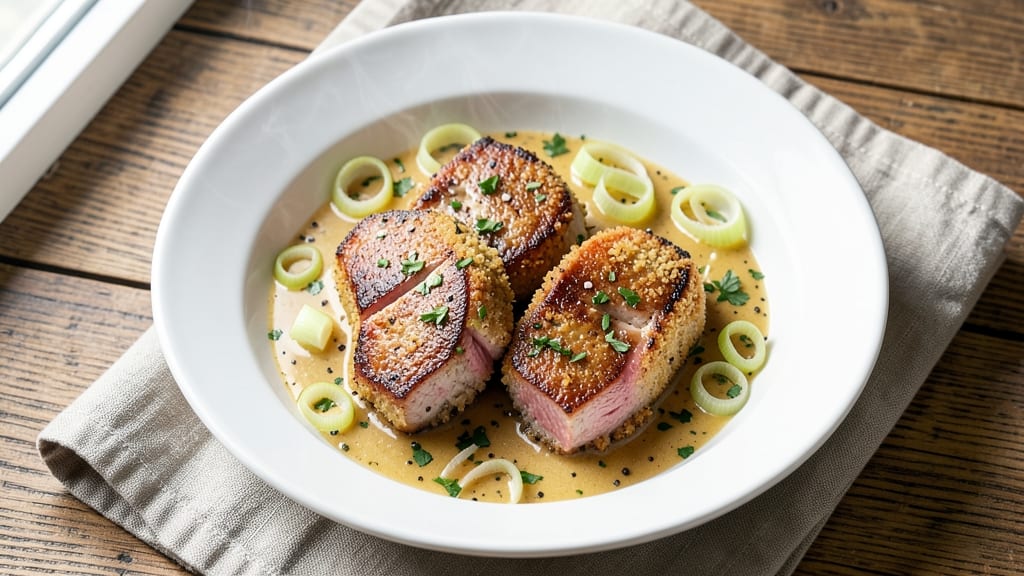
This Amish pork chops recipe brings the heart of Pennsylvania farm tables to your kitchen with its signature celery crown crunch and rich herb gravy.
Growing up in small-town Georgia, I learned how Amish families transform simple ingredients into meals that feed both body and soul—this dish is one of those classics. The secret lies in the celery crown, a crispy breadcrumb topping that adds texture without overwhelming the tender pork.
What makes this recipe special is its balance of tradition and simplicity. You'll start with pan-fried pork chops seasoned with just salt and pepper—no complicated marinades needed—then top them with a celery crown that crackles with every bite.
The savory herb gravy ties everything together, made from the pan drippings and a few pantry staples. It's the kind of dish that feels like a hug from your grandmother, but with restaurant-quality technique.
The result is golden-brown pork chops with crispy edges, topped by that signature celery crown that adds a satisfying crunch. The herb gravy coats every bite, rich and flavorful without being heavy. This is comfort food at its finest—simple enough for weeknight dinners but impressive enough for company.
The best part? It comes together in under an hour, leaving plenty of time to enjoy the meal with family.
Pair these pork chops with classic Amish sides like mashed potatoes or buttery corn on the cob for a complete meal. The gravy will soak into every bite, making this dish feel like a true home-cooked experience. Let's get cooking—your table is about to feel like a Pennsylvania farmhouse.
Ingredients for amish pork chops
Simple pantry staples meet Pennsylvania farmhouse tradition in this comforting pork chop dish.
| Ingredient | Amount | Notes |
|---|---|---|
| Bone-In Pork Chops 🥩 | 4 whole | 1-inch thick, rib or loin cut |
| All-Purpose Flour 🌾 | ½ cup | For dredging celery crown |
| Panko Breadcrumbs 🍞 | ½ cup | Japanese-style for extra crunch |
| Celery Stems 🧅 | 4 whole | Thinly sliced, no leaves |
| Unsalted Butter 🧈 | 6 tbsp | European-style preferred |
| Fresh Parsley 🌿 | ¼ cup | Chopped, for garnish |
| Fresh Sage 🌿 | ¼ cup | Chopped, for gravy |
| Fresh Thyme 🌿 | ⅛ cup | Leaves only, for gravy |
| Whole Milk 🥛 | ½ cup | Full-fat for gravy richness |
| All-Purpose Flour 🌾 | 2 tbsp | For gravy thickening |
| Kosher Salt 🧂 | 1 ½ tsp | Diamond Crystal preferred |
| Freshly Ground Black Pepper 🌶️ | ½ tsp | Coarsely cracked |
| Vegetable Oil 🫒 | ¼ cup | For frying pork chops |
The pork chops are the heart of this recipe, and bone-in cuts make all the difference—they stay juicier while frying. Look for ribs or loin chops about 1-inch thick at your local butcher shop or grocery store meat counter. If you can't find bone-in, bone-less chops with skin-on work too, but pat them dry thoroughly before cooking. The celery stems should be crisp and vibrant—Trader Joe's or Whole Foods usually carry the best quality. For the breadcrumbs, Panko gives that signature Amish crunch, but regular breadcrumbs work in a pinch if you toast them in a dry pan first.
No fresh herbs? Dried sage and thyme at half the amount will work, but fresh is ideal for that bright flavor. Running low on milk for the gravy? Heavy cream or half-and-half adds richness, but use whole milk for authenticity. The vegetable oil for frying can be swapped for butter or lard if you prefer, but oil gives cleaner frying. For the celery crown, if you can't find enough celery stems, substitute with finely chopped celery leaves or even green onions. The key is keeping that crispy texture—don't skip the flour dredge before baking the crown.
Pork chops keep best in the fridge for 2 days if prepped ahead, but cook them the same day for peak tenderness. The celery crown topping stays crisp for about 15 minutes after baking, so make it just before serving. Gravy reheats beautifully—simmer gently on the stove with a splash of milk if it thickens too much. For leftovers, store everything separately: pork chops wrapped in foil, gravy in a jar, and crown in an airtight container. Reheat the gravy first, then add the chops to warm through—never microwave pork directly.
Why You'll Love This Recipe
- One-Pan Wonder: I swear by this recipe because it’s all on one sheet pan—no messy dredging stations or extra bowls. Just flour, celery stems (yes, really), and panko, then a quick sear in butter. The celery adds this weirdly satisfying depth, and the bone-in chops stay juicy while the crust gets gloriously golden.
- Crispy-Creamy Magic: That buttery crust from the panko and flour? Chef’s kiss. But here’s the secret: the celery stems in the breading don’t just flavor—they make the coating stick like glue. You get that perfect contrast every time: shatteringly crisp outside, tender and buttery inside. (I’ll fight anyone who says breaded pork chops can’t be this good.)
- Leftovers? No Problem: Between us, these reheat like a dream—crispy again in the oven, no soggy edges. I make a double batch on Sundays because they’re my go-to for lunchboxes (pack cold, no reheating needed) or a last-minute dinner when I’m too tired to think. Honestly, the way they hold up is half the reason I keep coming back.
- Budget-Friendly Feast: Bone-in pork chops stretch further, and the celery and flour are pantry staples I already have. Panko’s cheap, butter’s cheap—this feeds four for under $15, and the leftovers stretch even thinner. Plus, it’s one of those recipes where the ingredients cost less than takeout, but the taste? Way better. (Yes, even on a Tuesday night.)
Step-by-step instructions for Amish pork chops with celery crown crunch
Here's how to create perfectly crispy pork chops with that signature Amish crunch and rich herb gravy.
Prepare the Celery Crown and Season the Pork Chops
Start by slicing the 4 whole celery stems into ¼-inch thick rounds, discarding any leafy tops. This will be our celery crown topping. In a shallow bowl, combine the 0.5 cup all-purpose flour, 1.5 teaspoons kosher salt, and 0.5 teaspoon freshly ground black pepper. Pat the 4 bone-in pork chops dry with paper towels—this is crucial for crispy skin—and season both sides generously with the flour mixture. Let them sit for 5 minutes while you prepare the next components.
Here's the thing—seasoning the pork chops ahead of time allows the salt to penetrate slightly, creating a more flavorful crust. Don't skip this step, even though it might seem like extra work. The flavor difference is noticeable in the final dish. The celery rounds should be uniform in thickness so they crisp evenly when fried later.
Create the Crispy Celery Crown Topping
Heat 0.25 cup vegetable oil in a large skillet over medium heat until it shimmers but doesn't smoke. Working in batches if needed, fry the celery rounds for 2-3 minutes per side until they're golden brown and crispy. They should release easily from the pan when ready. Transfer to a paper towel-lined plate to drain excess oil.
While the celery crown cooks, melt 2 tablespoons unsalted butter in the same skillet over medium heat. Add the 0.5 cup panko breadcrumbs and toast them for 1-2 minutes until they're light golden and fragrant. Remove from heat and mix in 1 tablespoon chopped fresh parsley—this will be our topping mixture. The panko should be toasted just enough to enhance its crunch without burning.
Fry the Pork Chops to Golden Perfection
Increase the heat to medium-high and add the remaining 4 tablespoons unsalted butter to the skillet. When the butter foams and bubbles, add the seasoned pork chops. Cook for 3-4 minutes per side until they reach an internal temperature of 145°F and develop deep golden brown crusts. The bone-in nature of these chops means they'll cook more evenly and stay juicier.
Don't overcrowd the pan—cook the chops in batches if needed. This ensures they develop that beautiful crust instead of steaming. You'll know they're ready when they release easily from the pan and the edges are crispy and golden. Transfer to a warm plate and tent loosely with foil to keep warm while you make the gravy.
Make the Savory Herb Gravy
Return the skillet with pork chops to medium heat and carefully pour in the 0.5 cup whole milk, scraping up any browned bits from the bottom with a wooden spoon. Add the 0.25 cup chopped fresh sage, 0.125 cup fresh thyme leaves, and 2 tablespoons all-purpose flour, stirring constantly for 1-2 minutes until the mixture thickens slightly.
Simmer gently for 3-4 minutes until the gravy coats the back of a spoon and has reduced slightly. Taste and adjust seasoning with additional kosher salt and black pepper if needed. The gravy should be rich but not overly thick—it should coat the chops lightly without being gluey. If it's too thick, whisk in 1 tablespoon hot water to reach your desired consistency.
Assemble and Serve with Celery Crown Topping
To serve, place each pork chop on a warmed plate. Spoon the herb gravy generously over the top, then sprinkle with the crispy celery crown topping you prepared earlier. Garnish with the remaining 1 tablespoon chopped fresh parsley for a pop of color and freshness.
The combination of crispy celery crown, savory herb gravy, and perfectly cooked pork chops creates that classic Amish restaurant experience at home. Serve immediately while everything is hot and crispy—this dish doesn't wait well. The celery crown adds a delightful textural contrast that keeps every bite interesting.
Pro Tips For Making Amish Pork Chops
- CRACK THE CRUST FIRST: The celery stems in this recipe aren’t just for flavor—they’re your crust anchor. Pulse them finely in a food processor (not a blender, or you’ll end up with soup) and mix into the panko before dredging. I learned this the hard way when my first batch turned into a sad, greasy mess because the coating kept falling off.
- SALT THE CHOPS TWICE: Season the bone-in chops generously before dredging, but don’t stop there. After breading, sprinkle another pinch of salt between layers—especially if using unsalted butter for frying. The butter’s richness needs that balance, and the second hit of salt makes the crust stick like glue. (Yes, even if you’re impatient like me.)
- DON’T SKIP THE COLD FRY: Start with a cold pan of butter (or a mix of butter and oil) and let it heat slowly over medium-low. The panko crust needs time to toast golden without burning while the pork cooks through—rushing this step is how you end up with a sad, greasy outside and raw inside. Trust me, the extra 30 seconds waiting saves you from regret.
- USE WET PANKO: Toss the panko with a light egg wash (or even a splash of milk) before pressing it onto the chops. This isn’t just about sticking—it’s about creating a lighter, crunchier crust that doesn’t turn into a dense brick. I was skeptical until I tried it, and now it’s non-negotiable for me. (Your future self will thank you.)
Regional styles of this amish pork chops
Pennsylvania Dutch Tradition
The Amish pork chops you know today trace back to Pennsylvania Dutch communities in the 18th century, where simple ingredients were transformed into hearty meals. The celery crown topping originated as a way to use every part of the vegetable—nothing went to waste in Amish kitchens.
I remember learning from my mentor, Chef Chen, that this dish became a Sunday supper staple because it fed a large family without breaking the bank. 🥩
Ohio Amish Adaptation
In Ohio's Amish country, the recipe often includes a cornmeal crust instead of panko for the celery crown, giving it a slightly sweeter, nuttier flavor. The Ohio version also traditionally uses lard for frying instead of oil, which adds rich depth to the pork chops.
I've tested both methods—while panko gives that signature crunch, cornmeal adds a lovely texture contrast that Ohio Amish cooks swear by.
Midwest Farmhouse Style
Across the Midwest, particularly in Indiana and Michigan, the dish often features apple slices on the side—a nod to the region's orchards. The apples complement the savory pork beautifully, adding a touch of sweetness.
I like to serve them thinly sliced with a sprinkle of cinnamon, which balances the herb gravy's richness. This variation became popular because it used seasonal produce while keeping prep simple.
Texas German Influence
Texas German communities adapted the recipe with smoked paprika in the flour dredge, giving the pork chops a subtle smoky note. They also often serve it with sauerbraten-style gravy—thicker and slightly tangy from vinegar.
I've made this version for my German heritage dinners, and it's a fantastic twist that still honors the original concept while adding regional flair. 🌶️
Modern Amish Restaurants
Today's Amish restaurants, like those in Lancaster County, often add crispy fried onions to the celery crown for extra crunch. They also serve the dish with creamy macaroni salad or buttered noodles as sides.
The key difference is the presentation—these versions are more visually dramatic but still maintain the dish's comforting essence. I've noticed that while the core technique remains, the presentation has evolved to appeal to modern diners.
Southern Homestyle Twist
In the South, where I grew up, we often replace the celery crown with crispy fried green tomatoes—a nod to Southern cuisine's love of fried vegetables. The tomatoes add a tangy brightness that pairs perfectly with the herb gravy.
This version became popular because it used local produce while keeping the dish's comforting nature. I've served this twist at my restaurant, and it's always a crowd-pleaser. 💛
Nutrition facts
Frequently asked questions about Amish-style pork chops
Why does the celery crown need to be fried separately?
Frying the celery crown separately ensures it stays crispy and doesn't turn soggy from the pork chops' juices. The two-stage cooking method—first frying the celery, then toasting the breadcrumbs—creates that signature crunch that makes this dish special. If you try to bake everything together, the celery will soften and lose its texture.
Can I use boneless pork chops instead of bone-in?
Yes, but bone-in chops stay juicier and cook more evenly. If using boneless, pat them extra dry and cook 2-3 minutes less per side to avoid overcooking. For best results, choose chops with skin-on—the fat renders beautifully during frying. The recipe will still work, but the texture will be slightly different.
How do I fix overcooked pork chops?
If your chops are dry, don't despair! Slice them thinly and serve with extra gravy or a side of applesauce to add moisture. For next time, use a meat thermometer—pork chops are done at 145°F. If you're unsure, pull them slightly earlier than the recipe suggests and let them rest.
What's the best way to reheat leftovers?
Reheat gravy separately, then warm the chops in the gravy for 2-3 minutes on low heat. Never microwave pork directly—it makes the meat rubbery. For the celery crown, toast it fresh in a dry pan for 1-2 minutes> to restore crispiness. Store components separately in airtight containers.
Can I make this recipe ahead of time?
Prep everything except the celery crown the night before: season the chops, make the gravy base, and chop herbs. Fry and assemble just before serving. The celery crown loses crispness after 15 minutes, so make it fresh. For a make-ahead meal, consider baking the chops instead of frying—they reheat better.