
Main Courses
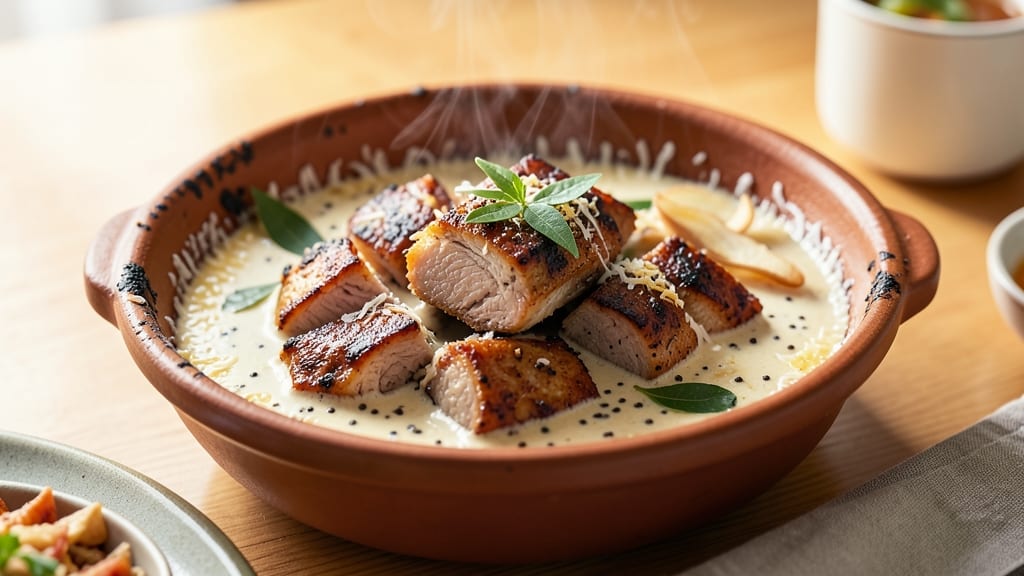
This Angamaly pork recipe transports you to Kerala’s coastal heartland, where tender pork simmers in coconut milk and aromatic spices until it falls apart. The secret lies in slow-braising—transforming tough cuts into melt-in-your-mouth perfection with every bite.
I first tasted this dish in a tiny roadside restaurant near Kochi, where the scent of curry leaves and black pepper lingered in the air like a promise of comfort.
The magic begins with a marinade of mustard seeds, curry leaves, and grated coconut, which infuses the pork with layers of flavor before it braises for hours. Traditional Angamaly cooking relies on patience—low heat, minimal water, and a tight lid to trap the steam and develop deep, complex tastes.
The result? Rich, velvety pork that clings to the bone, balanced by the creamy tang of coconut milk and the warmth of spices like cinnamon and cardamom.
What makes this dish truly special is its versatility—serve it with steamed rice for a hearty meal or pair it with crispy appam for a Kerala-style breakfast. The slow-cooked pork keeps well, making it perfect for meal prep or feeding a crowd.
Each bite carries the essence of Kerala’s coastal cuisine, where spices and coconut milk create harmony in every dish.
The recipe delivers restaurant-quality results with simple ingredients and a method that’s foolproof once you master the timing. Whether you’re cooking for family or sharing the flavors of Kerala with friends, this dish will become a staple in your repertoire. Let’s bring Angamaly to your kitchen.
Ingredients for angamaly pork
Sixteen ingredients for a dish that tastes like Kerala's coastal heartland.
| Ingredient | Amount | Notes |
|---|---|---|
| Pork Shoulder 🥩 | 3 lb | Bone-in for flavor, cut into 2-inch chunks |
| Coconut Milk 🥥 | 2 cans | Full-fat, unsweetened (13.5 oz each) |
| Mustard Seeds 🌶️ | 1 tbsp | Whole, yellow variety preferred |
| Curry Leaves 🌿 | ½ cup | Fresh, tightly packed |
| Grated Coconut 🥥 | 1 cup | Freshly grated, unsweetened |
| Ginger Root 🧄 | 2 tbsp | Freshly grated, not minced |
| Garlic Cloves 🧄 | 6 cloves | Peeled, roughly chopped |
| Green Chili Peppers 🌶️ | 2 whole | Slit lengthwise, seeds removed |
| Cinnamon Sticks 🌿 | 2 whole | 2-inch pieces, lightly crushed |
| Cardamom Pods 🌿 | 6 whole | Lightly crushed, seeds exposed |
| Black Peppercorns 🌶️ | 1 tbsp | Crushed, not ground |
| Bay Leaves 🌿 | 2 whole | Dried, standard size |
| Salt 🧂 | 1 ½ tsp | Kosher or sea salt |
| Vegetable Oil 🫒 | ½ cup | For searing pork |
| Water 💧 | 1 cup | For braising liquid |
The pork shoulder is non-negotiable—bone-in gives the most flavor, and Costco or your butcher will have the best cuts. Look for good marbling, not too lean. Coconut milk matters too: Thai Kitchen or Goya brands are reliable, but nothing beats fresh coconut milk from a Latin market. For curry leaves, Indian grocery stores are your best bet—they sell them fresh in bundles. If you can't find them, substitute 1 tbsp dried curry powder, but it won't be the same. The ginger and garlic? Fresh only—no shortcuts here.
No mustard seeds? Swap for 1 tbsp ground mustard, but toasting them whole first adds that nutty depth. Green chilies too spicy? Use 1 red bell pepper, diced—it'll be milder but still bright. Cardamom pods too expensive? Ground cardamom at half the amount works, but the whole pods infuse better. For the coconut, if you're using dried flakes, soak them in warm water for 10 minutes first to rehydrate. And that water? Don't throw it out—it's full of coconut flavor. Save it for smoothies or curries.
This dish tastes even better the next day, so double the batch if you can. Store in the fridge for 4-5 days in an airtight container, or freeze for 3 months. I like to portion it into containers with rice—just reheat with a splash of water. The spices keep well too: whole spices last 6-12 months in a dark cupboard, ground spices 3-4 months. The pork will stay moist and tender, just like that first bite in Kochi.
Why You'll Love This Recipe
- One-Pot Magic: I swear by this—just toss pork shoulder, coconut milk, and curry leaves into one pot, and let it simmer. No chopping mountains of veggies, no fussy layers, just hands-off cooking while you handle the rest.
- Taste Like Home: That first bite of tender pork in rich, spiced coconut milk with mustard seeds popping like tiny fireworks? It’s the kind of flavor that makes you pause mid-bite. The grated coconut at the end adds this textural crunch that’s pure satisfaction.
- Lunchbox Hero: Between us, this is my go-to for meal prep. Reheat slices with rice or naan, and it’s a full, hearty lunch—no sad office salads here. Honestly, I’ve packed this for three days straight and never tired of it.
- Budget-Friendly Feast: Pork shoulder stretches far, and coconut milk adds depth without breaking the bank. I’ve fed four people for under $12, and the leftovers? Even better the next day. Not the prettiest, but the taste makes up for it every time.
Step-by-step instructions for Angamaly pork recipe
Here's how to transform simple ingredients into rich, aromatic pork that's fall-apart tender.
Sear the Pork Shoulder for Deep Flavor
Heat the 0.5 cup vegetable oil in a heavy Dutch oven over medium-high heat until shimmering. Working in batches to avoid crowding, add the 3 lb pork shoulder cut into 2-inch chunks, letting each piece sear undisturbed for 3-4 minutes until deep golden brown on all sides. This step develops that irresistible caramelized crust while locking in juices.
Real talk: Don't rush this. You'll see the edges start to crisp—that's your signal to flip. Once all pieces are seared, transfer them to a plate and set aside. You'll want to keep the rendered pork fat in the pot for building the braising liquid later.
Build the Spice Base and Braising Liquid
In the same Dutch oven, reduce heat to medium and add the 1 tbsp mustard seeds. Toast them for 30 seconds until they begin to pop and release their nutty aroma. Add the 0.5 cup curry leaves, 2 tbsp ginger root, 6 cloves garlic cloves, 2 whole green chili peppers, 2 whole cinnamon sticks, 6 whole cardamom pods, 1 tbsp black peppercorns, and 2 whole bay leaves. Stir everything together for 1 minute until the spices are fragrant and slightly toasted.
Here's where it gets fun—pour in the 1 cup water and scrape up all those delicious browned bits from the bottom of the pot. This deglazing step captures all that meaty flavor you worked so hard to create. Let the liquid bubble gently for 2 minutes until it reduces slightly and the spices have infused their magic into the liquid.
Layer the Coconut Milk and Grated Coconut
Open both cans of 2 cans coconut milk and pour 1 can into the Dutch oven, stirring to combine with the spice mixture. Let it simmer gently for 3 minutes until the coconut milk begins to thicken slightly. Then add the remaining 1 can coconut milk and the 1 cup grated coconut, stirring well to distribute the coconut evenly throughout the liquid.
This is the moment that matters: The coconut milk should be hot but not boiling—you want to preserve its creamy texture while allowing it to meld with the spices. If you see any coconut oil separating on top, that's normal and actually adds to the rich texture of the final dish.
Braise Until Fork-Tender
Return the seared pork shoulder to the Dutch oven, nestling the chunks into the spiced coconut mixture. Add the 1.5 tsp salt and bring everything to a gentle simmer. Here's the key part: Cover the pot tightly with a lid and transfer it to a 325°F oven. Braise for 3 hours, then check for doneness by inserting a meat thermometer into the thickest piece—it should read 205°F and the meat should pull apart easily with a fork.
If the pork isn't quite tender after 3 hours, don't worry—just add another 30-45 minutes of cooking time. The beauty of this method is that it's forgiving. The coconut milk will keep the meat moist and flavorful even if it takes a little extra time. I know it seems like a long wait, but trust me, the results are worth every minute.
Rest and Serve with Coconut Magic
Once the pork is fork-tender, remove it from the oven and let it rest for 10 minutes before serving. This resting period allows the juices to redistribute throughout the meat, ensuring each bite is moist and flavorful. While it rests, you can skim off any excess coconut cream that has risen to the top—though I always leave some for that extra-rich texture.
Serve the pork hot, ladling the coconut milk and spice mixture over the top. The dish should be rich, aromatic, and bursting with complex flavors from the spices and coconut. For an authentic touch, garnish with additional grated coconut and serve with steamed rice or crusty bread to soak up all that delicious sauce.
Pro Tips For Making Angamaly Pork
- Sear the Pork Hard: Get that pork shoulder screaming hot in a dry pan first—no oil needed at the start. The crust from the initial sear locks in flavors when the coconut milk later bathes it, and skipping this step means you’ll end up with mushy meat instead of tender, caramelized bites.
- Toast Mustard Seeds Low: Pop those mustard seeds over low heat with curry leaves—high heat burns them before they sing. I learned this the hard way when my first batch tasted bitter instead of nutty. Let them sizzle gently for 30 seconds until they just begin to jump, then add the onions.
- Strain the Coconut Milk: Even "thick" canned coconut milk has grit—strain it through a fine-mesh sieve before using. The difference in texture is night and day: no sandy mouthfeel, just creamy richness. (Yes, it’s extra work, but your future self will notice.)
- Finish with Fresh Coconut: Save a handful of grated coconut for the end, not the start—it burns easily and loses its crunch. Stir it in during the last 2 minutes of cooking so it stays bright and adds that final textural punch. (Pro move: Toast it briefly in a separate pan first if you’re impatient.)
Serving suggestions for this dish
Steamed Rice Pairing
Nothing complements Angamaly pork like perfectly steamed basmati rice—its long grains soak up the coconut-spiced sauce beautifully. I use 1 cup basmati rice to 2 cups water, cooked in a rice cooker for 15 minutes until fluffy.
For extra authenticity, add ½ tsp cardamom pods to the cooking water—they infuse a subtle floral note that mirrors the pork’s spices. 💫
Crispy Appam
For a Kerala-style breakfast or brunch, serve your pork with appam—thin, lacy coconut pancakes that add a delightful crunch.
Mix 1 cup rice flour, ½ cup coconut milk, 1 egg, and ½ tsp salt, then cook in a special appam pan (or nonstick skillet) over medium heat until golden. The crispy edges contrast perfectly with the tender pork. I make a double batch—they disappear fast!
Cucumber Raita
A cooling cucumber raita balances the richness of the pork. Grate 1 large cucumber, mix with ½ cup plain yogurt, 1 tbsp chopped mint, ½ tsp cumin powder, and ½ tsp salt.
Chill for 30 minutes before serving. The yogurt’s tang cuts through the coconut’s creaminess, while the cucumber adds refreshing crunch. Pro tip: Use full-fat yogurt for the best texture. ✨
Spicy Pickled Onions
Add a tangy kick with quick-pickled onions—slice 1 large onion into thin rings, then toss with ½ cup white vinegar, 1 tbsp sugar, ½ tsp red chili powder, and ½ tsp salt.
Let sit for 20 minutes before serving. The bright acidity and heat elevate every bite of pork. I like to scatter them generously over the dish right before eating for maximum crunch.
Warm Flatbreads
For a heartier meal, serve with paratha or roti—whole wheat flatbreads that soak up the coconut sauce like a dream.
Roll out 1 cup whole wheat flour mixed with 2 tbsp yogurt and ½ tsp ajwain seeds, then cook in a hot skillet with 1 tbsp ghee until puffed and golden. The ghee adds a luxurious touch that pairs perfectly with the pork’s spices. 🔥
Garnish Like a Pro
Finish your plate with fresh cilantro and extra grated coconut for color and texture. I also like a sprinkle of toasted mustard seeds—just heat 1 tsp seeds in a dry pan for 30 seconds until fragrant.
The nutty crunch and aroma tie everything together. Trust me, these little touches make all the difference between "good" and "restaurant-quality."
Nutrition facts
Frequently asked questions
What makes Angamaly pork different from other Kerala pork dishes?
Angamaly pork stands out for its slow-braised technique using coconut milk as the base, creating a rich, velvety sauce that tenderizes the meat. Unlike quicker stir-fries or curries, this dish relies on 3 hours of oven braising at 325°F, which develops deep, complex flavors from spices like mustard seeds and curry leaves. The result is melt-in-your-mouth pork with a signature creamy texture that's uniquely comforting.
Can I substitute bone-in pork with boneless cuts?
Yes, but expect slightly less flavor depth. Bone-in pork shoulder adds natural collagen that enriches the braising liquid, creating a more complex sauce. If using boneless cuts, look for pork butt or pork shoulder roast—they have more connective tissue to break down. For best results, increase braising time by 30-45 minutes to compensate for the lack of bones.
How do I know when the pork is fully tender?
The pork is ready when it reaches an internal temperature of 205°F and falls apart easily with a fork. Test by inserting a meat thermometer into the thickest piece—if it reads 205°F and the meat pulls apart cleanly, it's perfect. For extra assurance, look for a glossy sauce coating the pork and a rich aroma when you lift the lid.
Can I make this recipe in a slow cooker?
Sear the pork first, then transfer everything to a 6-quart slow cooker on Low heat for 6-7 hours or High heat for 4-5 hours. The slow cooker's gentle heat mimics oven braising, keeping the pork moist and tender. Just add ½ cup water to help create the sauce. The texture will be slightly softer than oven-braised, but still delicious.
What's the best way to reheat leftovers?
Reheat in a skillet over low heat with 2-3 tablespoons of water or coconut milk to prevent drying. Stir occasionally for 5-7 minutes until warmed through. For microwave reheating, cover with a damp paper towel and heat in 30-second intervals until hot. Leftovers taste even better the next day—the flavors deepen as the spices meld further.