
Main Courses
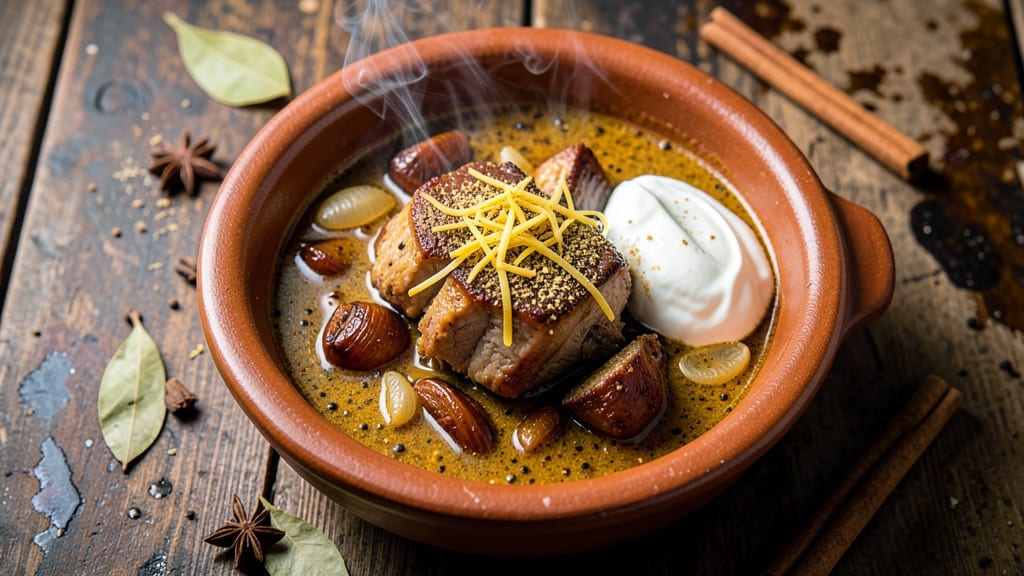
This Anglo-Indian pork curry brings the bold fusion of British colonial and Indian flavors to your kitchen—where tender pork simmers in a complex gravy of tamarind, tomatoes, and aromatic spices. 🌟 The secret lies in balancing tangy tamarind with sweet-spiced pork, creating a sauce that’s both vibrant and deeply satisfying.
I’ve perfected this recipe over years of cooking for crowds, ensuring every bite delivers that signature harmony of heat, acidity, and richness.
The magic starts with marinating the pork in yogurt and a blend of garam masala, turmeric, and ginger, which tenderizes the meat and infuses it with flavor. As the curry simmers, the tamarind and tomatoes develop a deep, caramelized richness, while onions and garlic build a fragrant base.
The result? A dish that’s hearty enough for a weeknight dinner but elegant enough for guests—with layers of flavor that keep evolving as it rests.
By the time you serve it, you’ll have a restaurant-quality curry with melt-in-your-mouth pork swimming in a glossy, tangy gravy. The aroma alone—spiced, smoky, and slightly sweet—will have everyone at the table anticipating the first bite.
Serve it with steamed basmati rice, warm naan, or a side of pickled onions to cut through the richness.
This recipe is a celebration of history and flavor, where British colonial techniques meet Indian spice traditions. Whether you’re cooking for family or hosting a dinner party, this curry delivers depth, warmth, and a taste of the past—all in 45 minutes. Let’s make it.
Ingredients for anglo indian pork curry
Sixteen ingredients, one unforgettable curry—where British comfort meets Indian spice in 45 minutes.
| Ingredient | Amount | Notes |
|---|---|---|
| Pork Shoulder 🥓 | 2 ½ lb | Cut into 1.5-inch chunks |
| Plain Yogurt 🥛 | 1 cup | Full-fat for creaminess |
| Garam Masala 🌶️ | 1 tbsp | Freshly ground preferred |
| Ground Turmeric 🧂 | 1 tsp | Bright yellow color |
| Fresh Ginger 🌿 | 2 tbsp | Grated, aromatic |
| Yellow Onions 🧅 | 2 whole | Finely chopped |
| Garlic Cloves 🧄 | 6 cloves | Minced finely |
| Canned Tomato Sauce 🍅 | 1 ½ cups | San Marzano preferred |
| Tamarind Paste 🍈 | 2 tbsp | Adjust for tanginess |
| Olive Oil 🫒 | ½ cup | Extra-virgin for richness |
| Fresh Cilantro 🌿 | ¼ cup | Chopped, for garnish |
| Ground Cumin 🌶️ | 1 tsp | Toasted for depth |
| Salt 🧂 | 1 ½ tsp | Kosher or sea salt |
| Black Peppercorns 🌶️ | ½ tsp | Freshly cracked |
| Cayenne Pepper 🔥 | ¼ tsp | Adjust for heat |
The pork shoulder is your secret weapon here—it stays tender while absorbing all those spices. Look for well-marbled cuts at the butcher counter or pre-cut pork shoulder from Whole Foods or Trader Joe's if you're short on time. Fresh ginger and garlic are non-negotiable; frozen just won't cut it for that authentic aroma. The garam masala? Penzeys or the spice aisle at Indian grocery stores have the best blends—look for vibrant colors, not dusty old jars. Tamarind paste can be tricky to find, but Asian markets usually stock it in blocks or paste form.
No garam masala? Mix 1/2 tsp each of cinnamon, cardamom, cloves, and coriander for a quick substitute. Tamarind paste unavailable? Lemon juice plus 1 tsp brown sugar mimics the tang-sweet balance. Fresh cilantro not an option? Dried cilantro at half the amount works in a pinch, though it lacks that bright punch. The yogurt should be plain and full-fat—Greek yogurt works too—and the tomato sauce? San Marzano cans from Whole Foods or Amazon are worth the splurge for that sweet, rich flavor. Skip the pre-made curry pastes—they're packed with sugar and preservatives.
This curry tastes even better the next day, so double the batch if you're feeding a crowd. Store leftovers in airtight containers for 4-5 days or freeze for 3 months. I like to portion into meal prep containers with a side of rice—just reheat with a splash of water. The sauce thickens as it cools, so thin with water or broth if needed. Garnish with extra cilantro and a drizzle of cream if you're feeling fancy.
Why You'll Love This Recipe
- One-Pot Magic: I swear by this—just brown the pork, toss in the yogurt and spices, and let it slow-cook. No fancy steps, no extra pots, and honestly? That garam masala and turmeric do all the heavy lifting while you sip tea.
- Flavor Bomb: The yogurt keeps it creamy, the ginger adds a zing, and that garam masala? It’s like a warm hug for your taste buds. The pork gets fall-apart tender, and the spices cling to every bite—no blandness here.
- Weeknight Hero: Between us, this is my go-to when I’m exhausted but still want something special. Serve it with naan for a quick dinner, or double the batch and freeze half for lazy Sundays. (Yes, even on a Tuesday night.)
- Budget Win: Pork shoulder is affordable, and a little goes a long way—this recipe feeds four for under $15. Plus, leftovers taste even better the next day, so you’re basically getting two meals for the price of one. Smart, right?
Step-by-step instructions for Anglo Indian pork curry
Here's how to create a rich, tangy pork curry with bold spices and smoky depth.
🔥 Step 1: Marinate the Pork Shoulder
In a large bowl, combine the 2.5 lb pork shoulder cut into 1.5-inch chunks, the 1 cup plain yogurt, 1 tbsp garam masala, 1 tsp ground turmeric, and 1.5 tsp salt. Mix gently with your hands until the yogurt coats the pork evenly. Cover and refrigerate for at least 30 minutes—this tenderizes the meat and builds deep flavor.
I like to press the marinade into the meat, especially around the edges, because that's where the spices really cling. If you're short on time, 1 hour of marinating still works well, but longer is better. The yogurt will start to thicken slightly—this is normal and helps create a silky sauce later.
🍳 Step 2: Sear the Pork for Maximum Flavor
Heat 0.25 cup olive oil in a heavy-bottomed Dutch oven over medium-high heat. Working in batches, add the marinated pork and sear for 3-4 minutes per side until deeply golden brown. You want that beautiful crust—it's the foundation of the curry's rich flavor. Don't crowd the pan or the pork will steam instead of brown.
As you sear, the pork will release juices that caramelize in the pan. These browned bits, called fond, are packed with flavor. Once all pork is browned, remove it from the pan and set aside. You'll use that precious fond to build your sauce.
👨🍳 Step 3: Build the Spiced Base
In the same Dutch oven, reduce heat to medium and add 2 tbsp fresh ginger and 6 cloves garlic cloves. Sauté for 1-2 minutes until fragrant and just starting to color. Add 2 whole yellow onions chopped finely and cook for 5 minutes until soft and translucent.
Stir in 1 tsp ground cumin, 0.25 tsp cayenne pepper, and 0.5 tsp black peppercorns. Toast the spices for 30 seconds until aromatic—this releases their essential oils and deepens the flavor profile. Here's the thing—don't walk away. Spices burn quickly, and you want them to sing without turning bitter.
🥘 Step 4: Simmer the Tangy Tomato Sauce
Pour in 1.5 cups canned tomato sauce and 2 tbsp tamarind paste, stirring to scrape up all those flavorful browned bits from the bottom of the pan. Bring to a gentle simmer and cook uncovered for 10 minutes, stirring occasionally, until the sauce thickens slightly and the raw tomato taste mellows.
The tamarind paste is where the magic happens—it adds that signature Anglo-Indian tang. If you taste the sauce now and it's too sharp, add a pinch more salt. Too sweet? A splash of water or a tiny bit more tamarind paste will balance it. This is your chance to adjust before adding the pork back in.
🔥 Step 5: Finish and Garnish
Return the seared pork to the Dutch oven along with any accumulated juices. Add enough water to just cover the pork (about 1 cup), then bring to a gentle simmer. Cover and cook for 30-35 minutes until the pork is fork-tender and the sauce has thickened to your desired consistency. The pork should pull apart easily with minimal resistance.
Stir in 0.25 cup chopped fresh cilantro just before serving. The bright herb cuts through the richness of the pork and spices beautifully. Serve immediately with steamed basmati rice or crusty naan bread. The curry will continue to deepen in flavor as it sits, so don't wait too long to enjoy it!
Pro Tips For Making Anglo Indian Pork Curry
- SEAR THE PORK FIRST: Don’t skip the initial sear—cut the pork shoulder into 2-inch chunks, pat them very dry, and hit them with a hot pan (no oil needed at first). Let them brown deeply for 2-3 minutes per side before adding oil; this locks in flavor and keeps the meat from turning mushy later. I used to rush this, and the curry always tasted flat until I learned better.
- GRATE THAT GINGER FINE: Use a microplane or the smallest holes on a box grater for the ginger—you want it almost paste-like, not chunky. Too many big pieces means you’ll taste raw ginger in your curry, and that’s a vibe no one asked for. Trust me, the smoother the prep, the richer the sauce.
- LOW AND SLOW AFTER YOGURT: Once you add the yogurt, immediately drop the heat to lowest possible and let the curry simmer gently. Skipping this step curdles the yogurt or makes the pork rubbery. I’ve burned this sauce more times than I’d admit—just keep it at a bare simmer, and the flavors will meld like they’re supposed to.
- TOAST THE GARAM MASALA: Dry-toast the whole garam masala spices (cinnamon, cardamom, cloves, etc.) in the same pan you seared the pork—just 30 seconds until fragrant. This wakes up their oils and makes the curry taste way more complex than if you just dump it in raw. Yes, it’s an extra step, but it’s the thing that matters most.
Dietary considerations for this anglo indian pork curry
Vegetarian Adaptations
Swap the pork for extra-firm tofu or chickpeas to create a satisfying vegetarian version. Press the tofu to remove excess water, then cube and marinate in the yogurt-spice blend for 30 minutes. Sear the tofu in the same way, then proceed with the recipe.
Chickpeas work best when tossed in the marinade and simmered directly in the sauce for 20 minutes—they absorb the flavors beautifully. 💫
Gluten-Free Considerations
This curry is naturally gluten-free, but always double-check your garam masala and tamarind paste labels for hidden gluten. I recommend Penzeys or Spicewalla for certified gluten-free spice blends.
The yogurt and tomato sauce should also be gluten-free. For extra safety, use a dedicated pot if you've previously cooked gluten-containing dishes in it.
Spice Sensitivity Adjustments
Reduce the cayenne pepper to ¼ tsp or omit entirely if you're sensitive to heat. For a milder garam masala, mix ½ tsp each of cinnamon and coriander instead of the full blend.
The yogurt marinade helps mellow the spices, so don't skip it—it naturally tempers the heat while keeping the flavors vibrant. 🌶️
Allergy-Friendly Swaps
For nut allergies, ensure your garam masala doesn't contain ground nuts (some blends include them). Dairy-free? Use coconut yogurt instead of plain yogurt in the marinade. The tamarind and tomato base will still deliver that signature tangy depth. Always verify ingredient sources—cross-contamination is a real concern with spices and sauces.
Protein Alternatives
Try chicken thighs for a lighter option—they cook faster than pork and stay juicy. For seafood lovers, firm white fish like cod or halibut works beautifully. Use the same marinade and reduce simmering time to 12-15 minutes to avoid overcooking.
The sauce will adapt perfectly to any protein, keeping that rich, tangy character intact.
Dietary Balance Notes
This curry is naturally rich in protein, iron from spices, and vitamin C from tomatoes. For a lighter meal, serve with cauliflower rice instead of basmati. The yogurt marinade adds probiotics, while the tamarind provides fiber.
Balance the meal with a side of steamed greens or a fresh cucumber salad to round out the nutrition. 💪
Nutrition facts
Frequently asked questions
Can I substitute chicken for pork in this Anglo-Indian curry?
Chicken thighs work beautifully—they cook faster than pork and stay juicy. Use the same marinade and reduce simmering time to 12-15 minutes to avoid overcooking. The sauce will adapt perfectly, keeping that rich, tangy character intact. For extra flavor, add ½ tsp smoked paprika to the marinade.
What makes this curry different from regular Indian pork curries?
The key lies in the tamarind paste and the British-Indian fusion technique. Unlike traditional Indian curries, this one uses a yogurt marinade with garam masala and simmers with tomatoes to create a tangy-sweet balance that's uniquely Anglo-Indian. The slow cooking in a Dutch oven builds deeper layers of flavor than quick-stirred Indian curries.
How do I adjust the heat level in this curry?
Start by reducing the cayenne pepper to ¼ tsp or omit it entirely for a mild version. For a milder garam masala, mix ½ tsp each of cinnamon and coriander instead of the full blend. The yogurt marinade naturally tempers the heat while keeping flavors vibrant. If you want more heat later, add ½ tsp red chili flakes at the end.
Can I make this curry in a slow cooker?
Yes! Follow the same marinade and searing steps, then transfer everything to a slow cooker. Add ½ cup water and cook on low for 6-7 hours or high for 3-4 hours. The slow cooking enhances the pork's tenderness and lets flavors meld beautifully. Stir occasionally and adjust thickness with water or broth if needed.
What's the best way to store and reheat leftovers?
Store in airtight containers for 4-5 days in the fridge or freeze for 3 months. To reheat, add a splash of water or broth and simmer on low heat for 5-10 minutes until heated through. The curry actually tastes better the next day as flavors deepen. Never microwave—it ruins the texture.