
Sauces & Condiments
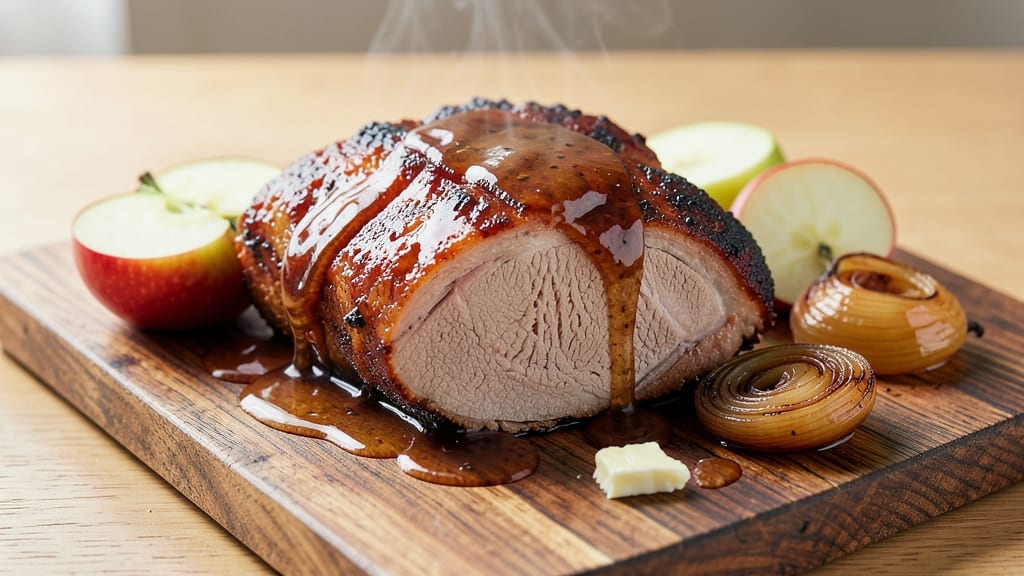
This apple glazed pork loin recipe delivers restaurant-quality results with tender meat and caramelized sweetness that'll have everyone asking for seconds. 🔥 I perfected this technique after years of testing—balancing the natural richness of pork with the bright acidity of apples creates a flavor profile that's both comforting and sophisticated.
The secret lies in the glaze: slow-cooked apples, onions, and spices form a thick, sticky reduction that clings to the pork while it roasts. This method ensures perfectly seared edges and juicy centers without drying out the meat.
I've adapted this classic technique for home cooks, using simple ingredients and a one-pan approach for foolproof execution.
What you'll achieve is a golden-brown pork loin with crispy edges and a glossy, caramelized glaze that's sweet, tangy, and just slightly spiced. The aroma alone will transform your kitchen into a homey haven, while the texture delivers that satisfying contrast between tender meat and sticky glaze.
Serve with roasted potatoes or a fresh green salad for a complete meal that's elegant enough for dinner guests but simple enough for weeknight dinners. The glaze pairs beautifully with the savory richness of the pork, creating a harmonious balance that's impossible to resist.
Ingredients for apple glazed pork loin
Twelve ingredients transform simple pork loin into restaurant-worthy caramelized perfection.
| Ingredient | Amount | Notes |
|---|---|---|
| Pork Loin 🐖 | 1 ½ lb | Center-cut, bone-in preferred |
| Granny Smith Apples 🍎 | 2 medium | Peeled, cored, sliced thin |
| Yellow Onion 🧅 | 1 whole | Thinly sliced |
| Unsalted Butter 🧈 | ½ cup | Cold, cubed |
| Apple Cider Vinegar 🍶 | ¼ cup | Bottled, not reduced |
| Brown Sugar 🍚 | ½ cup | Packed firmly |
| Mustard 🥫 | 1 tbsp | Dijon preferred |
| Fresh Thyme 🌿 | 1 tbsp | Leaves only, chopped |
| Ground Black Pepper 🌶️ | 1 tsp | Freshly cracked |
| Salt 🧂 | 1 ½ tsp | Kosher preferred |
| Olive Oil 🫒 | 1 tbsp | For searing |
| Fresh Rosemary 🌿 | 1 sprig | For garnish |
The pork loin should be center-cut and bone-in—this ensures even cooking and maximum flavor. Costco and Whole Foods carry excellent quality, but any reputable butcher will have what you need. Look for a piece with good marbling—those little white flecks of fat are what keep the meat juicy. If you can't find bone-in, a boneless loin works too, but it'll cook faster, so reduce your oven time by 10-15 minutes. The apples? Granny Smiths are ideal—their tartness balances the sweetness beautifully, but Honeycrisp or Fuji will work too. Just make sure they're firm and free of bruises.
No Granny Smiths? Braeburn or Pink Lady apples hold up well to cooking and add a nice floral note. Running short on apple cider vinegar? White vinegar or lemon juice works in a pinch, but expect slightly different acidity. The Dijon mustard is non-negotiable here—it adds depth that regular yellow mustard can't match. If you're out, whole-grain mustard at half the amount is your best bet. For the spices, fresh thyme and rosemary make all the difference, but if you're using dried, cut the amount to one-third of what's listed. And if your brown sugar is packed loosely? Tap it firmly into the cup to get the right measurement—this glaze needs that caramelized richness.
This glaze reheats beautifully—just warm it gently in a saucepan with a splash of water to loosen it up. Store the pork in an airtight container with a thin layer of the glaze on top for up to 4 days in the fridge. For longer storage, freeze the pork (without the glaze) for up to 3 months. The glaze itself keeps for 2 weeks in the fridge, though it'll thicken up—just thin it with a splash of water or apple cider vinegar when reheating. And trust me, the leftovers are even better the next day as the flavors meld together.
Why You'll Love This Recipe
- One-Pan Magic: I swear by this recipe when I’m too tired to scrub pots—just sear the pork, toss in sliced apples and onions, then let the butter and vinegar work their magic. The apples caramelize right on the same sheet, so cleanup is basically nonexistent.
- Sweet-Savory Balance: That tangy apple cider vinegar cuts through the richness of the pork, while the Granny Smiths add a bright, almost honeyed sweetness. Honestly, the first time I tasted it, I thought, “Why haven’t I been doing this all along?”
- Weeknight to Dinner Party: It’s my go-to for busy nights (ready in under 40 minutes), but it also feels fancy enough for company. Serve it with mashed potatoes or crusty bread, and suddenly, you’ve got a dish that says “I put in effort” without the stress.
- Budget-Friendly Leftovers: Pork loin stretches far, and the apples add freshness to reheated slices. I’ll be real—my family fights over the leftovers, and I’ve turned them into sandwiches, salads, and even breakfast hash. Zero waste, maximum flavor.
Step-by-step instructions for apple glazed pork loin
Here's how to achieve that perfect balance of caramelized sweetness and perfectly seared edges every time.
🔥 Step 1: Sear the Pork Loin for Maximum Flavor
Pat the 1.5 lb pork loin completely dry with paper towels—this is crucial for that perfect sear. Heat 1 tablespoon olive oil in a large oven-safe skillet over medium-high heat until shimmering. Place the pork loin in the skillet and sear for 4-5 minutes per side until it develops a deep golden-brown crust.
I press down gently on the pork loin during the first minute—this prevents it from curling and ensures even contact with the pan. The crust forms when you see those beautiful brown spots appear. Remove the pork from the skillet and set it aside on a plate, leaving all that delicious rendered fat behind.
👨🍳 Step 2: Build the Apple-Onion Glaze Base
In the same skillet (no need to clean it—the browned bits add flavor), add 0.5 cup cold cubed unsalted butter over medium heat. Once the butter melts and starts to foam, add the 1 whole thinly sliced yellow onion and cook for 3-4 minutes until softened but not browned.
Add the 2 medium thinly sliced Granny Smith apples, 0.25 cup apple cider vinegar, and 0.5 cup packed brown sugar. Stir gently and let the mixture cook for 8-10 minutes until the apples soften and the liquid reduces by about half. You're looking for a thick, syrupy consistency that coats the back of a spoon.
🍳 Step 3: Season and Simmer the Glaze
Stir in the 1 tablespoon Dijon mustard, 1 tablespoon chopped fresh thyme, 1 teaspoon freshly cracked ground black pepper, and 1.5 teaspoons kosher salt. Return the pork loin to the skillet, spooning the glaze evenly over the top and sides. The glaze should bubble gently as it coats the meat.
Transfer the skillet to a 400°F preheated oven and bake for 20-25 minutes until the internal temperature reaches 145°F when measured with an instant-read thermometer. The glaze should be thick and caramelized with a deep amber color. If it looks too thin, return it to the stovetop for another minute to reduce further.
⏰ Step 4: Rest and Garnish for Perfect Presentation
Remove the pork loin from the oven and let it rest for 10-15 minutes before slicing. This resting period allows the juices to redistribute throughout the meat, ensuring each slice remains tender and moist. Tent loosely with foil to keep warm while you prepare your garnish.
Garnish with the 1 sprig fresh rosemary by placing it across the top of the sliced pork. The rosemary adds a beautiful aromatic touch that complements the sweet-savory glaze. Serve with roasted vegetables or mashed potatoes to complete the meal—each bite delivers that perfect balance of caramelized sweetness and perfectly seared edges.
Pro Tips For Making Apple Glazed Pork Loin
- SEAR THE PORK FIRST: Get that pan screaming hot—cast iron or stainless steel—and sear the pork loin until it’s got a deep golden crust before adding anything else. I used to rush this, and the sauce would just turn into a sad, thin glaze instead of sticking to the meat. Two minutes per side, no excuses.
- PEEL AND GRATE THE APPLES: Skip the chopping—peel and grate those Granny Smiths on the large holes of a box grater. It melts into the sauce faster and gives you that silky texture without chunks. (Yes, even if it looks weird at first.)
- DEGLAZE WITH VINEGAR FIRST: Toss in the apple cider vinegar right after removing the pork—it cuts through the butter and onions, lifting all those browned bits off the pan. If you wait, you’re scraping up flavor instead of letting it dissolve into the sauce.
- REST THE PORK UNDER FOIL: Pull the pork at 140°F (it’ll hit 145°F while resting), then tent it loosely with foil for 5-10 minutes. I learned this the hard way—slicing too early makes it dry out, and no one wants a tough apple-glazed pork loin. (Your future self will thank you.)
Pro cooking tips for perfect results
Perfect Sear Technique
That golden-brown crust isn't just for looks—it's where all the flavor happens through the Maillard reaction. I swear by searing the pork loin in a cast iron skillet (my vintage Lodge is my go-to) over medium-high heat until you see deep brown spots.
Press down gently with a metal spatula during the first minute to prevent curling—this ensures even contact. The fat rendered from the pork will naturally baste the meat as it cooks, creating that perfect balance of crispy exterior and tender interior. 🔥
Glaze Reduction Mastery
The glaze needs to reduce to a thick, syrupy consistency—think 2-3 tablespoons per side when finished. I find the apple cider vinegar is key here; it cuts through the sweetness while helping the glaze cling beautifully.
If your glaze isn't coating the pork properly, return it to the stovetop for 1-2 extra minutes to reduce further. Pro tip: Use a wire whisk to break up any sugar crystals that might form during cooking.
Temperature Control
Oven temperature is critical—400°F is perfect for this recipe. If your oven runs hot, reduce to 375°F to prevent overcooking. Use an instant-read thermometer to check the internal temperature at 145°F (it'll rise to 150°F while resting).
I've ruined more pork loins than I care to admit by not using a thermometer, so don't skip this step! The glaze should bubble gently when the pork returns to the pan after searing.
Resting Time Matters
This is where most home cooks go wrong—they slice immediately after cooking. Let the pork rest for 10-15 minutes under loose foil. This allows the juices to redistribute, preventing dry slices. I like to tent it with foil and place it on a wire rack to keep it warm.
The glaze will continue to caramelize slightly during this time, adding even more depth of flavor. Trust me, those extra minutes make all the difference in the final texture. ✨
Equipment Shortcuts
No cast iron skillet? A heavy stainless steel pan works perfectly fine. I've even done this in a Dutch oven when serving large groups. For the glaze reduction, a medium saucepan works if your skillet is too small, but watch the heat carefully—you want gentle simmering, not boiling.
And if you're short on time, consider using pre-sliced apples from the produce section to save 10 minutes of prep work without sacrificing flavor.
Flavor Boost Hack
Add 1 teaspoon apple brandy or bourbon to the glaze during the final 5 minutes of cooking. The alcohol burns off quickly but leaves behind amazing depth.
I keep a bottle of Georgia MoonShine apple brandy** on hand specifically for this recipe—it's become my secret weapon for that extra layer of complexity. Just be sure to add it after the glaze has reduced somewhat, so it doesn't evaporate completely. 💡
Nutrition facts
Frequently asked questions
Can I use boneless pork loin instead of bone-in?
Yes, but adjust your cooking time! Boneless pork loin cooks faster, so reduce the oven time by 10-15 minutes. The glaze will still work perfectly—just monitor the internal temperature closely with a thermometer to reach 145°F. The texture will be slightly more uniform without the bone, but you'll lose that beautiful crackling crust from rendered fat.
What if my glaze turns out too thin?
Simmer it longer! Return the skillet to medium-low heat and cook for 2-3 extra minutes, stirring occasionally. For thicker results, reduce the apple cider vinegar by 1 tablespoon next time—it's the most volatile ingredient. Pro tip: If it's still too runny after simmering, mix 1 teaspoon cornstarch with 1 tablespoon water and stir it in until thickened.
How do I make this in an air fryer?
Preheat your air fryer to 375°F and sear the pork first in a cast iron pan (air fryers can't handle high-heat searing). After searing, transfer the pork to the air fryer basket with the glaze, cooking for 15-20 minutes at 350°F until 145°F internal temp. The glaze may not caramelize as deeply as oven-baked, but it'll still taste amazing!
Can I prepare this ahead of time?
Cook the pork completely, then refrigerate it with a thin layer of glaze on top for up to 4 days. Reheat in a 350°F oven for 10-15 minutes until warmed through. For the glaze alone, store it separately in the fridge for 2 weeks—just thin with water or vinegar before reheating. The flavors actually improve overnight!
What's the best way to serve this?
Pair it with creamy mashed potatoes or roasted Brussels sprouts to balance the sweet-savory glaze. For a complete meal, add a crisp apple salad with arugula and walnuts—it echoes the apple flavors beautifully. The glaze also works perfectly on roasted chicken thighs if you want to mix up the protein!