
Sauces & Condiments
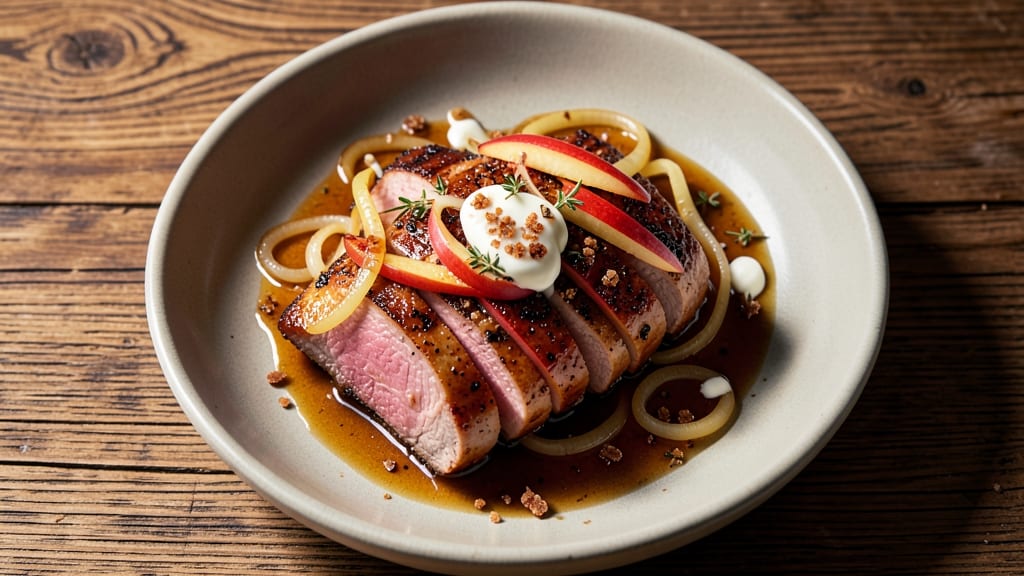
This apple glazed pork tenderloin recipe transforms simple pork into a showstopper with caramelized apples and buttery richness. The secret lies in slow-braised apples and onions that create a glossy glaze with just the right balance of sweet and tangy.
After years of perfecting this dish at The Smoky Pig, I can tell you this method guarantees tender meat with a crisp edge every time.
The process starts with a simple marinade to tenderize the pork, followed by searing to lock in juices. While the pork rests, you'll build the glaze by caramelizing onions and apples until they're deep golden and fragrant.
A splash of apple cider and a pat of butter finish the sauce, creating that perfect balance of sweetness and savory depth that makes this dish unforgettable.
What you'll end up with is succulent pork tenderloin sliced into perfect medallions, each topped with a glossy apple glaze that's both sweet and slightly tart. The texture contrast between the tender meat and crisp apple pieces makes every bite satisfying.
This dish pairs beautifully with roasted potatoes or a crisp green salad, creating a complete meal that's restaurant-quality at home.
One of the things I love about this recipe is its versatility—it works equally well for weeknight dinners or special occasions. The technique is straightforward once you understand the key steps, and the flavors develop as you cook, making it even more rewarding.
Let's get started on creating this crowd-pleaser that'll have everyone asking for seconds.
Ingredients for apple glazed pork tenderloin
Pantry staples plus a few fresh ingredients for restaurant-quality pork tenderloin.
| Ingredient | Amount | Notes |
|---|---|---|
| Pork Tenderloin 🐖 | 1 ½ lb | Center-cut for even cooking |
| Granny Smith Apples 🍎 | 2 medium | Peeled, sliced into 1/4-inch strips |
| Yellow Onion 🧅 | 1 large | Thinly sliced for even caramelization |
| Unsalted Butter 🧈 | 4 tbsp | Cold for caramelizing |
| Apple Cider 🍏 | ½ cup | Unfiltered for best flavor |
| Brown Sugar 🍚 | 2 tbsp | Light or dark variety |
| Dijon Mustard 🍯 | 1 tbsp | For marinade depth |
| Olive Oil 🫒 | 2 tbsp | For searing pork |
| Fresh Thyme 🌿 | ½ tsp | Leaves only, chopped |
| Garlic Cloves 🧄 | 3 cloves | Minced for marinade |
| Salt 🧂 | 1 tsp | Kosher or sea salt |
| Black Pepper 🌶️ | ½ tsp | Freshly ground preferred |
| Balsamic Vinegar 🍷 | 1 tbsp | For glaze balance |
The pork tenderloin is your star—look for a center-cut piece with good marbling. Costco or local butchers usually have the best quality, but the regular supermarket cut works too. Granny Smith apples are ideal for their tartness, but Honeycrisp or Fuji work well too. The key is to peel and slice them evenly so they caramelize at the same rate. For the onions, yellow or red both work, but yellow has a sweeter finish that pairs perfectly with the apples. If you're short on time, baby bella mushrooms sliced thin mimic the texture beautifully.
No apple cider? Substitute with apple juice or even white grape juice—it won't be identical, but it'll work in a pinch. Short on brown sugar? Maple syrup or honey at half the amount gives a similar depth. The Dijon mustard is non-negotiable for that tangy kick, but if you're out, whole-grain mustard works too. For the butter, European-style unsalted has more flavor, but regular unsalted works fine. The balsamic vinegar adds that perfect tang—if you've got aged balsamic glaze, use half the amount for instant richness. Fresh thyme is ideal, but dried thyme at one-third the amount gets you close.
Pork tenderloin keeps best in the fridge for 2 days before cooking, but you can freeze it for 3 months. The apples and onions can be prepped ahead and stored in the fridge for 1 day before cooking—just don't slice them until ready to use. The finished dish reheats beautifully—just warm in a skillet with a splash of apple cider. Leftovers keep for 4 days in the fridge or 3 months frozen. I always make extra because it's that good.
Why You'll Love This Recipe
- No-Fuss Roast: I swear by this for nights when I’m too tired to fuss. Just sear the pork, toss in sliced apples and onions, pour on the cider, and let the oven do the work—no flipping, no basting, no stress. The apples caramelize right into that glaze, so you’re basically getting a shortcut to restaurant-quality.
- Sweet-Savory Magic: That tangy Granny Smith sweetness cutting through the rich pork? Chef’s kiss. The butter and cider create this glossy, slightly sticky glaze that’s not too sweet—just enough to make every bite feel like a little celebration. Honestly, the first time I tasted it, I immediately texted my butcher for more tenderloin.
- Weeknight to Dinner Party: Same recipe, totally different vibes. Serve it sliced over mashed potatoes for a lazy Tuesday, or platter it with crusty bread and a simple salad for guests. The leftovers? Even better cold the next day—great for lunchboxes or a quick reheat. Between us, this is the dish I pull out when I don’t want to think too hard.
- Budget-Friendly Crowd-Pleaser: Pork tenderloin is lean but packs serious flavor, and apples stretch the meal without breaking the bank. A single tenderloin feeds four, and the glaze makes it feel luxurious. I’ll be real: my grocery budget stays happy, and my family eats it up—no one skips seconds, even my picky teenager. Win-win.
Step-by-step instructions for apple glazed pork tenderloin
Here's how to create melt-in-your-mouth pork with a perfect caramelized apple glaze.
Prepare the Pork with Marinade
Pat the 1.5 lb pork tenderloin completely dry with paper towels—this ensures a good sear. In a small bowl, whisk together the 2 tbsp olive oil, 1 tbsp Dijon mustard, 1 tsp salt, 0.5 tsp black pepper, 0.5 tsp fresh thyme, and 3 minced garlic cloves. Rub this marinade all over the pork, making sure it coats every surface evenly. Let it sit at room temperature for 15 minutes while you prep the apples and onions.
I always use a center-cut tenderloin for this recipe—it's more uniform and cooks through evenly. The marinade not only adds flavor but also helps create a barrier that keeps the meat juicy during cooking. Don't skip this step, even though it's short—it makes a big difference in the final texture.
Sear the Pork to Lock in Juices
Heat a large oven-safe skillet over medium-high heat until it's very hot. Add the 2 tbsp olive oil (if not already in the pan) and carefully place the pork tenderloin in the skillet. Sear for 3-4 minutes per side until it develops a deep golden-brown crust. You'll know it's ready when it releases easily from the pan—this is your signal that the surface is properly sealed.
Here's the thing—searing creates that beautiful caramelized crust we want, but it also helps lock in juices. If you see the pork starting to smoke, just reduce the heat slightly to medium and let it cook gently. The internal temperature should reach about 145°F after searing, but we'll finish cooking it in the oven.
Caramelize Apples and Onions
In the same skillet (no need to clean it—the browned bits add flavor), add 2 tbsp unsalted butter and let it melt completely. Add the 1 large thinly sliced yellow onion and cook for 5-6 minutes until softened and starting to caramelize. Add the 2 medium peeled, sliced Granny Smith apples and cook for another 5 minutes, stirring occasionally.
Now add the 2 tbsp brown sugar and cook for 2-3 minutes until the apples soften and the mixture becomes slightly sticky. This is where the magic happens—the sugar helps caramelize the apples and onions, creating that beautiful glaze. If the mixture starts to stick, add 1-2 tablespoons of apple cider to deglaze and keep it moving.
Glaze and Finish the Pork
Transfer the pork tenderloin to the skillet with the apple-onion mixture. Pour the 0.5 cup apple cider and 1 tbsp balsamic vinegar over the pork and apples. Spoon the mixture over the pork to coat it completely. Cover the skillet with a lid (or foil) and transfer it to a 400°F preheated oven.
Bake for 20-25 minutes or until the pork reaches an internal temperature of 145°F and the glaze has thickened and caramelized. The glaze should be glossy and sticky, clinging beautifully to the pork. If it's not caramelized enough, you can uncover it and broil for 1-2 minutes at the end to finish it off.
Rest and Serve
Remove the pork from the oven and let it rest on a cutting board for 10 minutes before slicing. This resting period allows the juices to redistribute throughout the meat, ensuring each slice is perfectly tender. While it rests, spoon any extra glaze from the pan over the top of the pork to keep it moist and flavorful.
Slice the pork tenderloin into ½-inch thick medallions and serve with the caramelized apple glaze spooned over the top. The contrast of tender, juicy pork with the sweet-tart apple glaze is what makes this dish so special. Serve with roasted potatoes or a fresh green salad to complete the meal.
Pro Tips For Making Apple Glazed Pork Tenderloin
- SEAR THE PORK HARD: High heat for 2-3 minutes per side—don’t skimp. I used to rush this, and the meat ended up gray inside no matter how long I cooked it later. Let those crusty brown bits form before you even think about adding apples.
- COARSE APPLE SLICES: Cut the Granny Smiths into ¼-inch strips, not paper-thin rounds. Thicker slices hold up better in the pan and release juice that caramelizes instead of turning to mush. (Yes, even if it looks less "fancy.")
- DEGLAZE WITH CIDER: After searing the pork, splash in the apple cider immediately—don’t wait for the pan to cool. The residual heat reduces the liquid faster, giving you a thicker, richer glaze. Just 30 seconds of scraping matters.
- REST THE PORK UNDER FOIL: Transfer the cooked pork to a plate, tent loosely with foil, and let it sit for 5-10 minutes. I learned this the hard way—slicing too soon means dry, stringy meat. The foil traps heat without steaming it into oblivion.
Flavor customization for this dish
Sweet-Savory Balance
Adjust the glaze sweetness by modifying the sugar-to-acid ratio. For a more pronounced tartness, increase the balsamic vinegar to 2 tbsp and reduce brown sugar to 1 tbsp. Conversely, for a sweeter glaze, add 1 tbsp honey or 1 tsp maple syrup to the caramelizing apples.
I often adjust based on the apple variety—Honeycrisp needs less sugar than tart Granny Smith. 🍎
Spicy Kick Options
Add heat by stirring ½ tsp smoked paprika or ¼ tsp cayenne pepper into the glaze during the final oven stage. For a smoky depth, swap ½ cup apple cider for ½ cup apple cider + 1 tbsp chipotle powder.
My go-to is a pinch of freshly cracked black pepper on top—it brightens the sweetness beautifully. 🌶️
Herb Variations
Swap thyme for rosemary (½ tsp chopped) for a piney aroma, or add 1 tsp fresh sage during the last 5 minutes of baking. For a bright finish, garnish with chopped chives or cilantro. I love rosemary with Honeycrisp apples—it pairs like a classic Southern holiday dish. 🌿
Cheesy Twist
Stir ¼ cup crumbled goat cheese or 2 tbsp cream cheese into the glaze during the final 5 minutes of baking. The tang cuts through the sweetness while adding richness.
For extra decadence, top with toasted pecans before serving. This works especially well with Fuji apples—their mild sweetness balances the creaminess. 🧀
Umami Depth
Boost savory notes by adding 1 tbsp soy sauce or 1 tsp Worcestershire sauce to the marinade. For a deeper flavor, swap ½ cup apple cider for ½ cup apple cider + 1 tbsp mushroom broth.
I also love adding 1 tsp fish sauce to the glaze—it enhances the pork’s natural richness without overpowering. 🍜
Seasonal Adaptations
In fall, use pears instead of apples—their floral notes complement the pork perfectly. For winter, add cinnamon (½ tsp) and nutmeg (¼ tsp) to the glaze.
In spring, swap apples for rhubarb (peeled and sliced) and reduce sugar to 1 tbsp. Each season brings a unique twist to this classic dish. 🍂
Nutrition facts
Frequently asked questions
Can I use pork chops instead of pork tenderloin?
You can adapt this recipe for bone-in pork chops (about 1-inch thick) by increasing the cooking time to 30-35 minutes at 400°F. The key difference is that chops have more fat, so you may want to reduce the butter in the glaze to 3 tbsp instead. For boneless chops, use the same method as tenderloin but adjust the marinade time to 20 minutes.
What if my apple glaze isn't caramelized enough?
If the glaze lacks depth, uncover the skillet during the last 2-3 minutes of baking and broil on high heat until bubbly and golden. For extra caramelization, add 1 tbsp brown sugar and 1 tsp butter to the pan before broiling. The glaze should be glossy and sticky—if it's watery, simmer it uncovered on the stovetop for 3-5 minutes to thicken.
How do I make this recipe ahead of time?
Cook the pork completely as directed, then let it cool. Store in an airtight container in the fridge for up to 4 days. Reheat in a skillet with 1 tbsp apple cider over medium-low heat for 5-7 minutes. For the glaze, make it fresh before serving—it reheats well but loses its caramelized texture. Freeze the cooked pork (without glaze) for 3 months.
Can I substitute apple cider vinegar for the regular vinegar?
Yes, but use only ½ the amount (about ½ tbsp) since it's much stronger. Apple cider vinegar adds depth, but regular balsamic vinegar works better for balancing sweetness. For the best flavor, stick with the original recipe—it's designed to complement the pork's natural richness. The vinegar helps cut through the sweetness, so don't skip it entirely.
Why did my pork turn out dry?
Overcooking is the most common cause—pork tenderloin is lean and dries out quickly. Use a meat thermometer and remove it at 145°F (not 160°F). Let it rest for 10 minutes before slicing, and don't skip the marinade—it helps retain moisture. If you prefer medium-well doneness, increase the marinade time to 30 minutes and reduce the oven temperature to 375°F.