
Salads
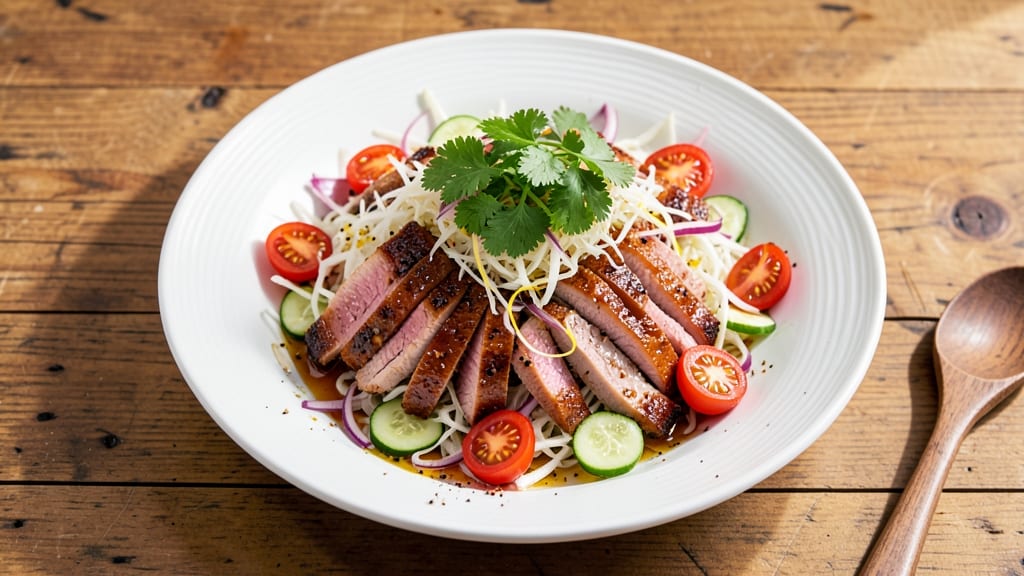
This Asian pork salad recipe delivers the perfect balance of crispy textures and bold flavors in every bite. The secret lies in a simple yet effective marinade that transforms tender pork into slices with just the right amount of char and tenderness.
I've been perfecting this dish for years, and it's become a staple at my restaurant—now you can recreate it at home with ease.
The dish starts with pork slices marinated in a blend of soy sauce, rice vinegar, and a touch of ginger, then quickly seared to achieve that signature crispy exterior. Fresh rice noodles add a satisfying chew, while a tangy peanut dressing ties everything together with its creamy, nutty depth.
The combination of textures and flavors makes this salad hearty enough to stand alone or light enough for a refreshing lunch.
What sets this salad apart is the balance of heat and sweetness from the dressing, which complements the savory pork beautifully. The assembly is straightforward—just toss the cooked ingredients together and drizzle with the dressing—but the result is anything but basic.
Each bite offers a mix of crispy pork, tender noodles, and a creamy, slightly spicy peanut sauce that keeps you reaching for more.
Serve this salad at room temperature for the best texture, or enjoy it immediately while the pork is still warm. It pairs perfectly with grilled shrimp or steamed dumplings for a complete meal.
The flavors develop even better as they sit, making it an ideal dish for meal prep or entertaining guests. Let's get started!
Ingredients for asian pork salad
Here's what you need to make this crispy, restaurant-style Asian pork salad at home.
| Ingredient | Amount | Notes |
|---|---|---|
| Boneless Pork Loin 🥩 | 1 ½ lb | Thinly sliced, 1/4-inch thick |
| Rice Vinegar 🍶 | ½ cup | For marinade and dressing |
| Soy Sauce 🍶 | ⅓ cup | Low-sodium preferred |
| Fresh Ginger 🧄 | 2 tbsp | Grated, aromatic |
| Brown Sugar 🍯 | 2 tbsp | Light or dark variety |
| Sesame Oil 🫒 | 1 tbsp | Toasted for flavor |
| Rice Noodles 🍜 | 8 oz | Medium-width, uncooked |
| Peanut Butter 🥜 | ½ cup | Creamy, unsweetened |
| Peanut Oil 🫒 | ¼ cup | For frying pork |
| Red Chili Flakes 🌶️ | 1 tbsp | Adjust for heat preference |
| Lime Juice 🍋 | 2 tbsp | Freshly squeezed |
| Fresh Cilantro 🌿 | ¼ cup | Chopped, for garnish |
| Green Onions 🧅 | 3 whole | Thinly sliced, white and green parts |
| Salt 🧂 | 1 ½ tsp | Kosher or sea salt |
| Black Pepper 🌶️ | ½ tsp | Freshly ground |
The pork is the star, so boneless loin is your best bet—it stays tender when sliced thin. I grab mine from the butcher counter at Whole Foods when I can, but the regular supermarket package works fine too. Look for slices that are about 1/4-inch thick—any thicker and they won't crisp up right. If you can't find pre-sliced pork, ask the butcher to cut it for you. For the rice noodles, Thai Kitchen brand is my go-to—they're always consistent and easy to find. Store them in a cool, dry place and use within 6 months for best texture.
No sesame oil? Neutral vegetable oil plus a pinch of toasted sesame seeds works in a pinch. The peanut butter should be creamy, not crunchy—Skippy or Jif are reliable brands. For extra heat, swap chili flakes for fresh red chili, minced (use half the amount). The marinade keeps for 3 days in the fridge, so make extra if you're prepping ahead. If you can't find rice vinegar, apple cider vinegar works too, though it'll have a slightly different tang. The dressing can be made a day ahead—just stir before using.
The pork marinade can sit for up to 4 hours before cooking—longer if you're short on time. Store it in an airtight container in the fridge. Cooked pork stays crispy for about 2 days if kept in the fridge, but the noodles soften over time, so I recommend making this fresh. The dressing keeps for 5 days in the fridge, and the noodles last 1 week uncooked in a sealed container. For meal prep, store components separately and assemble just before serving—this keeps everything at its best.
Why You'll Love This Recipe
- Pork Cuts in Minutes: The boneless pork loin slices faster than takeout delivery. Thin strips cook in under 10 minutes—no fancy techniques, just a hot pan and a sharp knife.
- Sweet-Savory Magic: That ginger-soy glaze? It’s the secret weapon. Brown sugar caramelizes while the pork sears, giving you crispy edges and tender meat with every bite.
- Lunchbox Hero: Pack it cold or at room temp—it’s perfect for work lunches or picnics. The flavors stay bold, and you’ll actually look forward to eating leftovers instead of dreading them.
- Budget-Friendly Feast: Pork loin stretches far, and the pantry staples (soy, vinegar, sugar) cost pennies. Feed four for under $15, and you’ll still feel like you’re dining out.
Step-by-step instructions for crispy rice noodles with tangy peanut dressing
Let's create a perfect balance of textures and flavors with this vibrant Asian pork salad.
Marinate and Slice the Pork Loin
In a large bowl, combine the 0.5 cup rice vinegar, 0.33 cup soy sauce, 2 tbsp brown sugar, 2 tbsp grated fresh ginger, 1.5 tsp salt, and 0.5 tsp black pepper. Mix well until the sugar and salt dissolve completely. Add the 1.5 lb boneless pork loin and ensure it's fully coated in the marinade. Cover and refrigerate for at least 30 minutes (or up to 4 hours for deeper flavor).
After marinating, remove the pork from the fridge and let it sit at room temperature for 15 minutes. Using a sharp knife, slice the pork into ¼-inch thick strips against the grain. This thin slicing ensures tender bites and maximum crispiness when cooked. Keep the sliced pork in the marinade until ready to cook.
Cook the Crispy Pork
Heat 0.25 cup peanut oil in a large skillet over medium-high heat until it shimmers but doesn't smoke. Working in batches to avoid overcrowding, add the sliced pork and cook for 2-3 minutes per side until the edges are deep golden brown and crispy. The pork should be cooked through but still slightly tender.
Transfer the crispy pork to a paper towel-lined plate to drain excess oil. Sprinkle with 1 tbsp red chili flakes while still hot to infuse the heat into the pork. Keep the pork warm while you prepare the remaining components.
Prepare the Tangy Peanut Dressing
In a small bowl, whisk together the 0.5 cup creamy peanut butter, 2 tbsp lime juice, 1 tbsp toasted sesame oil, and 1 tbsp brown sugar. Add 2-3 tablespoons of hot water from the skillet (to thin the peanut butter) and mix until smooth. The dressing should be thick but pourable. Taste and adjust seasoning with additional soy sauce or lime juice if needed.
This dressing is the heart of the salad—its creamy richness balances the crispy pork perfectly. If the dressing thickens as you work, simply whisk in a splash of rice vinegar to maintain the right consistency.
Cook the Rice Noodles
Bring a large pot of water to a rolling boil. Add the 8 oz rice noodles and cook according to package instructions (typically 3-5 minutes) until al dente. The noodles should be tender but still slightly firm to the bite. Drain immediately and rinse under cold water to stop the cooking process and prevent sticking.
Toss the noodles with 1 tbsp sesame oil to prevent them from drying out while you assemble the salad. The noodles should be glossy and separate, ready to soak up the flavors of the dressing and pork.
Assemble the Salad
In a large serving bowl, combine the cooked rice noodles, crispy pork, and 3 whole green onions (thinly sliced). Drizzle the tangy peanut dressing generously over the top and toss gently to coat everything evenly. Garnish with 0.25 cup chopped fresh cilantro just before serving.
Serve immediately while the pork is still crispy and the noodles are warm. The contrast of textures—crispy pork, tender noodles, and creamy dressing—makes every bite exciting. If you prefer extra heat, add more red chili flakes to taste.
Pro Tips For Making Asian Pork Salad
- Slice Thin, Sear Fast: Cut the pork loin against the grain into ¼-inch slices—thinner than you think—and sear in a screaming-hot pan for 30 seconds per side. I learned this the hard way: thicker slices turn chewy, and low heat makes them dry out before they brown. High heat. Seriously, crank it up.
- Grate Ginger Fine: Use a microplane or the smallest holes on a box grater for the ginger—no chunks, no paste. Freshly grated ginger releases its flavor instantly in the marinade, while pre-minced or chopped pieces leave you with that weird, unintegrated texture. (Yes, even if you’re impatient like me.)
- Marinate Cold: Let the pork sit in the rice vinegar-soy-brown sugar mix for at least 30 minutes in the fridge—no exceptions. I used to rush it, thinking more time wouldn’t help, but cold marinating tenderizes the meat and lets the flavors seep in evenly. Skip this, and you’ll taste raw edges.
- Balance the Sweet-Sour: After mixing the dressing, taste it before tossing with the pork—you need equal parts tang (rice vinegar) and depth (soy + brown sugar). If it’s too sweet, add a splash more vinegar; too sharp? A pinch of sugar fixes it. Trust your tongue, not the recipe’s measurements.
Essential equipment for this dish
Skillet Essentials
For the crispy pork, I swear by a 12-inch cast iron skillet—it retains heat beautifully and gives that perfect sear. My favorite is a Lodge pre-seasoned skillet because it's already ready to use straight out of the box.
If you don't have cast iron, a stainless steel skillet works too, but you'll need to preheat it longer to get the same crispiness. 🔥
Use a heat-resistant silicone spatula to flip the pork without losing any slices. A wire whisk comes in handy for emulsifying the peanut dressing smoothly. For measuring liquids, a liquid measuring cup with clear markings ensures precision—especially important for the peanut oil and rice vinegar.
Marinade Tools
I always use a large mixing bowl with high sides to hold the pork while marinating. A sharp chef's knife is essential for slicing the pork to ¼-inch thickness—ask your butcher to slice it for you if you're not confident.
A microplane makes quick work of grating the fresh ginger, and a fine-mesh strainer helps drain excess marinade if needed.
Noodle Prep
For cooking the rice noodles, a large pot with a tight-fitting lid speeds up boiling time. I recommend a 3-quart stainless steel pot—it's durable and heats evenly. A slotted spoon makes draining the noodles easy, and a colander with small holes prevents the noodles from breaking apart.
Keep a small bowl of ice water nearby to shock the noodles and stop cooking immediately.
Serving Gear
A large serving bowl with high sides keeps everything contained while tossing. I love a ceramic bowl for serving—it keeps the salad warm longer and looks beautiful on the table.
For garnishing, a small knife for chopping cilantro and a mandoline for thinly slicing green onions (if you're feeling fancy) work perfectly. Don't forget a small pitcher to hold extra dressing on the side.
Budget-Friendly Swaps
If you're just starting out, a nonstick skillet works fine for the pork—just avoid overheating the oil to prevent sticking. For the marinade, a small glass jar with a lid keeps everything contained in the fridge.
A measuring spoons set is a game-changer for precise measurements of spices and oils. And if you don't have a microplane, a grater will do in a pinch for the ginger.
Nutrition facts
Frequently asked questions about Asian pork salad
Can I use chicken instead of pork in this recipe?
Swap the pork for boneless chicken breast or thigh slices and adjust the marinating time to 20-30 minutes (chicken absorbs flavors faster). Use the same marinade ratio and cook until the internal temperature reaches 165°F. The texture will be slightly different but still delicious.
How do I prevent the rice noodles from getting mushy?
Cook the noodles 1 minute less than package instructions suggest, then immediately drain and rinse with ice water for 30 seconds. Toss with 1 tbsp sesame oil right away to coat and prevent sticking. For extra insurance, store uncooked noodles in the fridge for 1-2 hours before cooking to firm them up.
What if I don't have peanut butter?
Try a hoisin sauce or sesame tahini base instead. For hoisin, mix 2 tbsp hoisin with 1 tbsp soy sauce, 1 tbsp rice vinegar, and 1 tsp sesame oil. For tahini, whisk 3 tbsp tahini with 2 tbsp lime juice and 1 tbsp honey until smooth. Both alternatives add rich depth without peanuts.
Can I make this salad ahead of time?
Yes, but with a few tweaks. Cook the pork and noodles separately, then store in airtight containers in the fridge for up to 2 days. Keep the dressing separate until serving—it thickens when chilled. Reheat pork in a skillet for 1-2 minutes to restore crispiness before assembling. The flavors actually meld better after resting!
Why does my pork turn out chewy instead of crispy?
Overcrowding the pan or undercooking are the usual culprits. Cook in single layers with medium-high heat and avoid flipping too soon. For extra crispiness, pat the pork dry before cooking and use peanut oil (its higher smoke point helps). If using pork shoulder, slice ⅛-inch thick and cook 1 minute per side at most.