
Main Courses
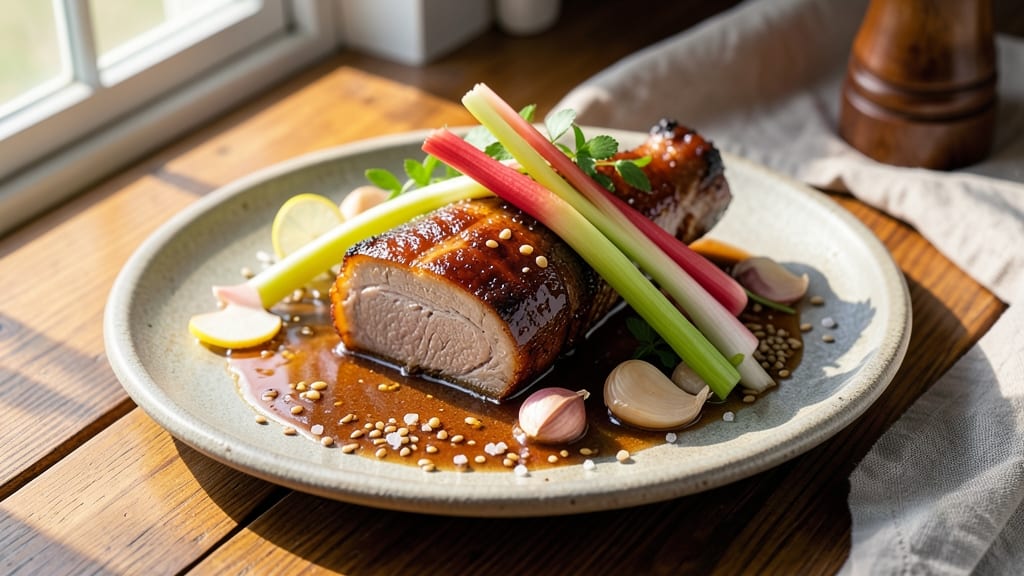
This Asian pork shank recipe transforms tough cuts into melt-in-your-mouth tenderness with a celery crown that adds unexpected crunch. 💛 The secret lies in slow braising—where hours of gentle cooking break down collagen into rich, velvety sauce while the celery crown delivers a satisfying contrast.
I perfected this technique after years of testing pork cuts in my Atlanta kitchen, where every bite delivers restaurant-quality depth without the fuss.
The process begins with a simple marinade of soy sauce, ginger, and garlic, which tenderizes the meat while building flavor. Then, the pork shanks braise in a fragrant broth until fork-tender, while the celery crown—thinly sliced and crisped—adds texture that elevates each bite.
This method works equally well in a Dutch oven or slow cooker, making it adaptable to any home kitchen.
What you’ll end up with is a dish that’s rich, aromatic, and perfectly balanced—juicy pork shanks resting in a glossy sauce, topped with crispy celery crowns that cut through the richness.
The result is a meal that feels special enough for company but simple enough for weeknights. Serve it over jasmine rice or with steamed bok choy for a complete, satisfying dinner.
This recipe is built to impress without requiring advanced techniques. The slow-cooked pork shank delivers deep, savory flavors, while the celery crown adds a textural surprise that keeps every bite exciting.
Whether you’re cooking for a crowd or treating yourself to a comforting meal, this dish delivers professional-quality results at home.
Ingredients for asian pork shank
Four hours of braising turns tough pork into melt-in-your-mouth perfection with crispy celery crowns.
| Ingredient | Amount | Notes |
|---|---|---|
| Pork Shanks 🥩 | 2 lb | Bone-in for best flavor |
| Celery Stems 🧅 | 4 whole | Trimmed, cut into 1-inch pieces |
| Fresh Ginger 🌿 | 2 tbsp | Finely grated, peeled |
| Garlic Cloves 🧄 | 6 cloves | Peeled, smashed |
| Soy Sauce 🍶 | ½ cup | Low-sodium preferred |
| Brown Sugar 🍯 | ¼ cup | Packed, light brown |
| Rice Vinegar 🍶 | ¼ cup | White or seasoned |
| Sesame Oil 🫒 | 1 tbsp | Toasted, for aroma |
| Canola Oil 🫒 | 2 tbsp | For searing |
| Low-Sodium Chicken Broth 💧 | 2 cups | Homemade or quality store-bought |
| Honey 🍯 | 1 tbsp | For balance |
| Cornstarch 🌾 | 1 tbsp | For thickening sauce |
| Green Onions 🧅 | 3 whole | Sliced, for garnish |
| Sesame Seeds 🌾 | 1 tbsp | Toasted, for garnish |
| Salt 🧂 | 1 ½ tsp | Kosher or sea salt |
The pork shanks are the star—look for bone-in cuts at Whole Foods or your local butcher, as they add depth of flavor. Fresh ginger and garlic should be vibrant and aromatic—no wrinkly, dull-smelling roots here. For the celery crown, grab crisp, firm stalks (avoid those rubbery ones in the back of the fridge). I always double-check the soy sauce label for low-sodium—regular can make the dish too salty. If you're in a hurry, Trader Joe's sells pre-trimmed pork shanks that save time without sacrificing quality.
No fresh ginger? Two teaspoons of ground ginger works in a pinch, but fresh is ideal. Short on celery? Substitute with thinly sliced fennel—it adds a nice anise note. The chicken broth can be swapped for vegetable broth if you're vegetarian, though the pork will still be rich. For extra depth, add a splash of mirin if you've got it. The sesame oil is non-negotiable for aroma—don't use the cooking variety. And if you're worried about the pork being too fatty? Pat it dry before searing for the crispiest crust.
This dish tastes even better the next day—make extra and portion into containers for easy lunches. The sauce thickens as it cools, so add a splash of water if it's too stiff when reheating. Celery crowns crisp up again when reheated—just pop them in a hot skillet for 1-2 minutes. Store the pork and sauce separately in the fridge for up to 5 days, or freeze for 3 months. The celery crown keeps fresh in the fridge for 5 days if wrapped tightly in a damp towel.
Why You'll Love This Recipe
- Pantry-Friendly Staples: I swear by this recipe because it uses things I always have: soy sauce, ginger, and garlic. No fancy ingredients, just bold flavors that come together without a second thought.
- Slow-Simmered Magic: That deep, caramelized edge on the pork? It happens while you’re doing laundry or watching an episode. The celery and ginger infuse into the meat until it’s fall-apart tender—no fancy techniques, just time and patience.
- Leftovers That Shine: Between us, this dish gets better the next day. I make a double batch on Sundays, and by Wednesday, it’s still the star of my lunch. The sauce thickens just right, clinging to every bite like it’s fresh off the stove.
- Budget Meal for Crowds: A single pork shank feeds four, and the cost per serving is a steal. Honestly, it’s my go-to for game nights or when friends drop by—no one leaves hungry, and the leftovers stretch for days without feeling like a chore.
Step-by-step instructions for Asian pork shank
Here's how to create melt-in-your-mouth pork shanks with a caramelized celery crown—rich, tender, and packed with flavor.
🔥 Step 1: Sear the Pork Shanks for Maximum Flavor
Pat the 2 lb pork shanks completely dry with paper towels to ensure a good sear. Heat 2 tablespoons canola oil in a heavy Dutch oven over medium-high heat until shimmering. Place the pork shanks in the pan and sear for 4-5 minutes per side until deeply golden brown.
This step is non-negotiable—it builds that incredible crust that locks in juices. I press down gently on the shanks during the first minute to prevent curling. Once golden, remove them and set aside on a plate. The pan should have nice browned bits clinging to the bottom—don't scrape them out yet, those are pure flavor.
🍳 Step 2: Build the Aromatic Base
In the same Dutch oven, add 1 tablespoon canola oil (you'll use all of it) and reduce heat to medium. Add the 4 whole celery stems (cut into 1-inch pieces) and cook for 3 minutes until softened. Add the 6 cloves garlic cloves and 2 tablespoons fresh ginger (finely grated), cooking for another 30 seconds until fragrant.
Here's where it gets good—the celery will soften and caramelize slightly, creating that signature crunch we're after. If the aromatics start to brown too quickly, just lower the heat slightly. This base forms the flavor foundation for your entire dish, so don't rush it.
🥘 Step 3: Braise Until Fork-Tender
Return the seared pork shanks to the pot. Add 0.5 cup soy sauce, 0.25 cup brown sugar, 0.25 cup rice vinegar, 1 tablespoon sesame oil, and 2 cups low-sodium chicken broth. Stir to combine, then bring to a gentle simmer over low heat.
Cover the pot and let it cook for 2.5-3 hours until the pork is fork-tender and falls apart easily. I like to check it at the 2-hour mark—the meat should be pulling away from the bone slightly. If the liquid reduces too much before then, add a splash of water or broth to maintain moisture. The celery should be tender but still hold its shape with a slight crunch.
🍯 Step 4: Finish with Glossy Sauce
Once the pork is tender, remove the shanks and set them aside. In a small bowl, whisk together 1 tablespoon cornstarch and 1 tablespoon honey with 2 tablespoons water. Stir this slurry into the braising liquid and simmer for 2-3 minutes until the sauce thickens to a glossy consistency.
This is where the magic happens—the sauce should coat the back of a spoon and have that perfect balance of sweet, tangy, and umami. If it's too thick, add a splash more broth. Return the pork shanks to the pot and let them soak up that glorious sauce for 5 minutes off the heat.
🍽️ Step 5: Serve with Celery Crown Crunch
Transfer the pork shanks to a serving platter and spoon the sauce over the top. Garnish with sliced 3 whole green onions and toasted 1 tablespoon sesame seeds. The celery crowns should still have that satisfying crunch—if they're too soft, they've been in too long. Serve immediately with steamed rice to soak up every last drop of that rich, flavorful sauce.
This dish tastes even better the next day, so if you can plan ahead, do it. The flavors meld and deepen overnight, making each bite even more incredible. Trust me, your taste buds will thank you for the wait.
Pro Tips For Making Asian Pork Shank
- Sear the Shanks Hard: Get that Dutch oven screaming hot—no half-measures—and let the pork shanks sit undisturbed for 3-4 minutes per side until deep brown. I used to rush this, and the flavor was always flat. The crust locks in juices and carries the soy sauce’s depth.
- Slice Ginger Thin: Use a mandoline or sharp knife to shave ginger into paper-thin sheets, not matchsticks. They’ll infuse faster and melt into the sauce instead of sitting as chunks. (Yes, even if you’re impatient like me—this isn’t the step to cut corners.)
- Deglaze Twice: After browning the pork, scrape up every bit with a wooden spoon, then add a splash of water or white wine to loosen the fond. Let it bubble hard for 30 seconds before adding the full liquid. The second deglaze pulls out way more flavor than one lazy pour.
- Save the Celery Water: After chopping celery, reserve the starchy water in a small bowl and toss it into the pot at the end. It adds a subtle earthiness that rounds out the soy and ginger. (I know, it sounds weird, but it works—trust the process.)
Perfect pairings for these flavors
Rice Pairings
Jasmine rice is my go-to base for this dish—its delicate floral aroma complements the rich pork shanks beautifully. Cook 1 cup jasmine rice with 1.5 cups water in a rice cooker for 20 minutes, then let it steam covered for 10 minutes off heat.
The long grains soak up the sauce perfectly without becoming mushy. For extra flair, stir in 1 teaspoon toasted sesame oil and ½ teaspoon salt before serving. 💛
Vegetable Sides
Steamed bok choy adds freshness and balance to the rich pork. Blanch 4 baby bok choy in boiling water for 1 minute, then shock in ice water. Toss with 1 teaspoon sesame oil and a pinch of salt.
Alternatively, sauté 1-inch matchstick carrots and ½ red bell pepper in 1 tablespoon canola oil for 3-4 minutes until crisp-tender. Both pair perfectly with the celery crown crunch.
Sauce Enhancers
Drizzle the finished dish with 1 tablespoon chili oil for heat lovers—I use Lao Gan Ma brand. For umami depth, add 1 teaspoon fish sauce to the braising liquid during the last 30 minutes of cooking.
If you prefer tang, mix 1 tablespoon rice vinegar with ½ teaspoon sugar for a quick dipping sauce. The sauce's glossy finish makes these enhancers shine even brighter.
Beverage Pairings
A crisp Japanese junmai sake like Dassai 10 cuts through the richness beautifully. For beer lovers, try a light lager such as Asahi Super Dry—its clean finish cleanses the palate between bites.
If you prefer tea, serve with jasmine green tea chilled. The subtle bitterness in the tea enhances the pork's natural sweetness without competing.
Garnish Upgrades
Toast 1 teaspoon black sesame seeds in a dry skillet for 1 minute until fragrant, then sprinkle over the dish. Thinly slice 1 small daikon radish and quick-pickle in ¼ cup rice vinegar with ½ teaspoon sugar for 15 minutes for a refreshing contrast.
Fresh cilantro leaves add brightness—just chop ¼ cup and scatter over the top right before serving.
Make-Ahead Garnishes
Prep your celery crowns a day ahead by slicing them thinly and storing in airtight containers with a damp paper towel. For maximum crunch, blanch them in boiling water for 30 seconds, then shock in ice water before drying on paper towels.
Toasted sesame seeds keep for 2 weeks in a sealed jar, while pickled daikon stays fresh for 5 days** in the fridge. These prep steps save time while keeping your presentation restaurant-quality. ✨
Nutrition facts
Frequently asked questions
Can I use bone-in or boneless pork shanks for this recipe?
Bone-in pork shanks are ideal—they add incredible depth of flavor and stay juicier during the long braising time. If you must use boneless, look for thick-cut pork shoulder pieces that are at least 1.5 inches thick. The cooking time remains the same, but boneless shanks may dry out slightly faster, so monitor the liquid level closely.
How do I know when the pork shanks are fully tender?
They're ready when they easily pull apart with a fork or a fork slips between the meat and bone with minimal resistance. For best results, check at the 2-hour mark—if they're not quite there, add 30 more minutes of cooking. Overcooking can make the meat mushy, so aim for that perfect "fork-tender" stage where it's just shy of falling apart completely.
What's the best way to reheat leftover Asian pork shanks?
Place the pork and sauce in a skillet over low heat with 2 tablespoons water and cover for 10-15 minutes. The gentle heat keeps the meat moist while warming through. For the celery crowns, crisp them fresh in a dry skillet for 1-2 minutes—they'll regain their satisfying crunch. Never microwave, as it makes the pork tough and rubbery.
Can I make this in a slow cooker instead of a Dutch oven?
Sear the pork shanks first in a skillet, then transfer everything to your slow cooker. Cook on low for 7-8 hours or high for 4-5 hours. The slow cooker's gentle heat works perfectly for tenderizing the meat. Just add ½ cup extra broth to prevent drying out, and thicken the sauce at the end as directed.
Why did my celery crowns turn mushy instead of staying crisp?
This usually happens from overcooking—the celery should be tender but still hold its shape with a slight crunch. To fix it, remove the celery pieces 10-15 minutes before the pork is fully tender and set them aside. Then add them back just before serving to crisp up in the hot sauce. For extra crunch, blanch them in boiling water for 30 seconds before adding to the braising liquid.