
Main Courses
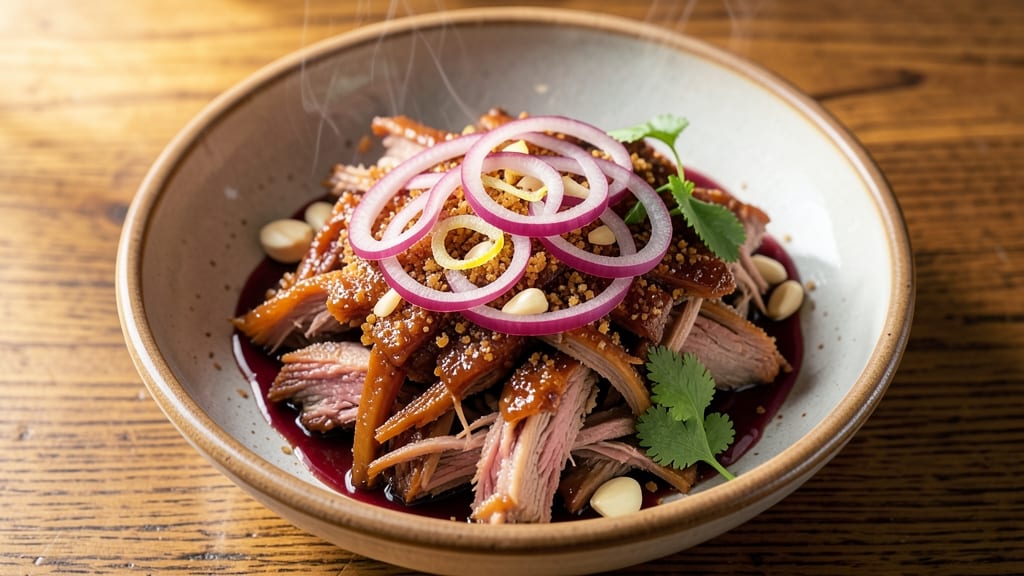
This awesome pulled pork recipe delivers restaurant-quality tenderness with a perfect balance of smoky bark and sweet-savory depth—exactly how I serve it at The Smoky Pig every weekend.
The secret lies in a low-and-slow approach that transforms tough pork shoulder into melt-in-your-mouth perfection, while a carefully crafted dry rub creates that coveted charred crust.
I’ve perfected this over years of competing in BBQ championships, and it’s the one recipe that always wins over crowds—no matter how picky the eaters.
The process is straightforward but requires patience: a 12-hour smoke (or 8-hour oven braise for home cooks) at 225°F, where the pork breaks down into tender strands without drying out.
The dry rub—a blend of brown sugar, smoked paprika, and cayenne—caramelizes into a sticky, flavorful bark that seals in moisture while delivering bold, smoky notes. What makes this recipe truly foolproof is the starchy glaze at the end, which adds that signature sticky-sweet finish without overpowering the meat.
By the time you’re done, you’ll have fall-off-the-bone pork that shreds effortlessly, with a sauce so rich and balanced it rivals any pitmaster’s. The bark is crisp enough to stand up to a fork, while the interior remains juicy and tender—every bite delivers that perfect harmony of smoky, sweet, and savory flavors.
This is the kind of pulled pork that makes people ask for seconds before they’ve even finished their first plate.
Serve it on toasted buns with a classic coleslaw or crispy cornbread for the full Southern BBQ experience. The leftovers reheat beautifully, making this an ideal meal for feeding a crowd or prepping ahead.
Whether you’re using a traditional smoker, electric smoker, or oven, this method guarantees success—just like it has for my customers and competitors alike.
Ingredients for awesome pulled pork
Pantry staples and a single hero ingredient—pork shoulder—that transforms into crowd-pleasing perfection.
| Ingredient | Amount | Notes |
|---|---|---|
| Pork Shoulder (Boston Butt) 🐖 | 8 lb | Bone-in, skin-on preferred |
| Yellow Onion 🧅 | 2 whole | Medium, sliced into wedges |
| Fresh Garlic Cloves 🧄 | 8 cloves | Peeled, smashed for rub |
| Light Brown Sugar 🍚 | ¾ cup | Packed, for caramelization |
| Smoked Paprika 🌶️ | ¼ cup | High-quality for smokiness |
| Ground Cayenne Pepper 🔥 | 1 tbsp | Adjust for heat preference |
| Kosher Salt 🧂 | 2 tbsp | Diamond Crystal preferred |
| Ground Black Pepper 🌶️ | 1 tbsp | Freshly ground for depth |
| Apple Cider Vinegar 🍎 | ½ cup | For tenderizing bark |
| White Corn Syrup 🍯 | ½ cup | For sticky-sweet glaze |
| Yellow Mustard 🥬 | ¼ cup | Dijon preferred for tang |
| Apple Juice 🍏 | 1 cup | For moisture balance |
| Wood Chips (Hickory or Oak) 🌳 | 4 cups | Soaked for 1 hour minimum |
| Butter 🧈 | 2 tbsp | Unsalted, for richness |
The pork shoulder is non-negotiable here. Bone-in, skin-on delivers the best flavor and moisture retention—Costco or local butchers usually carry the perfect cut. Look for a shoulder with good marbling, not too lean. If you can't find bone-in, skin-on, skin-on without bones is the next best option. The rub ingredients need to be high-quality too: Penzeys or Spicewalla for smoked paprika and cayenne. I always double-check the cayenne heat level—some brands are way hotter than others. For the wood chips, Traeger or local smokehouse suppliers have great pre-soaked options if you're short on time.
No smoked paprika? Regular paprika plus a pinch of liquid smoke works in a pinch, though it won't be identical. Running low on apple cider vinegar? White vinegar at half the amount gets you close. The corn syrup can be swapped for maple syrup or honey, but the texture will be slightly different. For a deeper smoky flavor, add 1 tbsp of coffee grounds to the rub. If you're using an electric smoker, Traeger pellets in hickory or apple flavors elevate the bark. The mustard is essential—it cuts through the sweetness and adds complexity. Dijon mustard has more depth than basic yellow, but either works.
Pork shoulder keeps 3-4 days in the fridge before cooking—use it within that window for best results. The dry rub can be made 3 days ahead and stored in an airtight container. For the glaze, mix all ingredients except butter and store in a jar in the fridge for 1 week. Leftovers reheat beautifully—slow cooker on low for 2 hours with a splash of apple juice keeps them moist. Portion into containers for easy serving. The bark gets crispier when reheated, so it's worth the extra minute.
Why You'll Love This Recipe
- Set-It-Forgot-It Magic: I swear, this is my "I don’t want to think about dinner" recipe. Toss the pork shoulder, onions, and garlic in a slow cooker with the spices—then walk away. Six hours later, you’ve got tender, fall-apart meat that needs zero babysitting. Honestly, the hardest part is resisting the urge to check on it every five minutes.
- Sweet-Smoky Obsession: That combo of brown sugar and smoked paprika? It’s like a hug for your taste buds. The sugar caramelizes just enough to balance the deep, smoky heat, while the garlic and onions add this rich, savory depth. I’ll be real: I’ve caught myself eating it straight from the pot with a spoon.
- Weeknight Superhero: This isn’t just for lazy Sundays—it’s my go-to for game days, potlucks, or when my kid’s soccer team shows up unannounced. Serve it on buns for sandwiches, toss it into tacos, or pile it over fries. (Yes, even on a Tuesday night.) The leftovers? They’re basically freezer gold for future "I’m too tired to cook" moments.
- Budget Win: A whole pork shoulder feeds a crowd for less than $10. That’s right—you’re getting protein-packed, flavor-packed meals for half the cost of takeout. Between us, I’ve fed six people dinner for under $15 with this recipe, and no one’s ever complained. (My wallet thanks me every time.)
Step-by-step instructions for perfect pulled pork
Here's how to transform an 8 lb pork shoulder into melt-in-your-mouth perfection.
Prepare the Rub and Season the Pork
In a medium bowl, combine the 0.75 cup light brown sugar, 0.25 cup smoked paprika, 1 tablespoon ground cayenne pepper, 2 tablespoons kosher salt, and 1 tablespoon ground black pepper. Mix thoroughly with your fingers until the sugar dissolves and the spices are evenly distributed—this creates your flavor bomb.
Pat the 8 lb pork shoulder completely dry with paper towels, then rub the spice mixture all over the meat, pressing firmly so it adheres. Pay special attention to the thickest parts and the fat cap—this ensures maximum flavor penetration. Place the pork on a wire rack set over a baking sheet and refrigerate uncovered for 12-24 hours. This resting period allows the rub to penetrate deeply and the pork to dry slightly, which is crucial for developing that coveted smoky-sweet bark.
Set Up Your Smoker for Low and Slow Cooking
Soak the 4 cups wood chips (hickory or oak) in water for at least 1 hour before smoking. This prevents them from burning too quickly and gives you that clean, consistent smoke flavor. Fill your smoker with the soaked wood chips and preheat to 225°F. You'll know it's ready when you see a steady stream of thin blue smoke—this is the sweet spot for tenderizing the pork without drying it out.
Place the seasoned pork shoulder fat-side up in the smoker. The fat will render slowly and baste the meat as it cooks, creating that irresistible bark. Add the 2 whole yellow onion wedges and 8 smashed garlic cloves to the smoker alongside the pork—they'll infuse the pork with even more flavor as they cook. Close the lid and resist the urge to peek, as each time you open it, you lose heat and extend cooking time.
Cook Until Probe-Tender
Smoke the pork for 6-8 hours, or until the internal temperature reaches 165°F. This is where the magic happens—the collagen in the pork slowly breaks down, transforming into gelatin that makes the meat incredibly tender. You'll notice the temperature stall around 150-160°F—don't panic, this is normal and indicates the pork is releasing moisture.
When the pork reaches 165°F, it's time to wrap it. Mix together the 0.5 cup apple cider vinegar, 0.5 cup white corn syrup, and 0.25 cup yellow mustard in a small bowl, then brush this mixture all over the pork. Wrap it tightly in butcher paper (not foil—paper allows for better bark development), and return it to the smoker. Continue cooking until the internal temperature reaches 203°F, which should take another 2-4 hours. At this point, the pork should be so tender that it practically falls apart with a gentle pull of your fingers.
Rest and Shred
Remove the pork from the smoker and transfer it to a large cutting board. Let it rest for 30 minutes before shredding. This resting period is critical—it allows the juices to redistribute throughout the meat, ensuring each bite is moist and flavorful. While the pork rests, pour the 1 cup apple juice into a saucepan and simmer over medium heat for 5 minutes to reduce slightly. This will create a glossy, flavorful sauce to serve with the pulled pork.
Use two forks to shred the pork against the grain, separating the meat into fine, tender strands. Discard any large fat chunks or connective tissue. Taste the pulled pork and adjust the seasoning if needed—you might want to add a pinch more salt or a splash of the reduced apple juice to balance the flavors. Serve the pulled pork immediately, topped with the reduced apple juice sauce, and enjoy the ultimate comfort food experience.
Pro Tips For Making Awesome Pulled Pork
- SEAR THE SKIN FIRST: Skip the rush to add onions and garlic—start by searing the pork shoulder skin-side down in a hot pan until it’s deep golden and crackling. I used to skip this, and the final texture was always softer than it should’ve been. The crispy skin adds flavor and structure that no amount of sauce can replace.
- MINCE THE GARLIC FINE: Don’t just chop those garlic cloves into rough pieces—mash them into a paste with the flat side of your knife before cooking. This releases more aroma and blends smoother into the pork. I learned this the hard way when my pulled pork tasted like it was missing something, even though I’d followed the recipe.
- DON’T RUSH THE REST: Let the pork shoulder rest for at least 30 minutes after pulling it from the oven or smoker before shredding. The meat will hold together better, and you’ll avoid a mushy, sad pile. I know, I know—waiting is hard, but your pulled pork will thank you.
- BROWN THE SUGAR: Caramelize that light brown sugar in the pan for 2-3 minutes before adding liquid—it deepens the flavor and cuts through the richness of the pork. I used to just toss it in, and the dish never had that same rich, almost buttery depth. Trust me, the extra minute makes a real difference.
Make-ahead tips for this recipe
Prep Ahead Strategy
The beauty of pulled pork is how well it handles advance preparation. I always prep my pork shoulder 1-2 days ahead—this lets the rub penetrate deeply and develop complex flavors. Pat the meat dry, apply the rub generously, and refrigerate uncovered on a wire rack.
The exposed surface dries slightly, creating that perfect bark when smoked. Store in a ziplock bag if prepping more than 24 hours ahead, but bring to room temp before cooking. 💫
Smoker Prep Shortcuts
No time to soak wood chips? I keep pre-soaked hickory pellets in my freezer—just toss a handful into my Traeger electric smoker and it’s ready in minutes. For the glaze, mix all ingredients except butter in a jar and store for up to 1 week.
When ready to cook, simply add the butter and whisk. This saves 15 minutes of prep during the critical smoking phase.
Oven Braising Method
Short on smoker time? Use your oven! Place the rubbed pork in a Dutch oven with 1 cup apple juice and 2 cups water. Cover and bake at 275°F for 6 hours, then wrap in butcher paper and cook another 2 hours at 300°F.
The results are nearly identical to smoked pork, with just slightly less bark. I’ve done this for weeknight dinners with amazing success.
Portioning for Crowds
For large gatherings, divide the cooked pork into quart-sized freezer bags while still warm. This prevents a solid mass when frozen. Label each bag with the date—pulled pork freezes for 3 months without quality loss.
When ready to serve, reheat in a slow cooker on low for 2 hours with ½ cup apple juice to restore moisture. The bark stays crispy, and the texture remains perfect. 🍽️
Sauce Prep Options
Make your glaze 3 days ahead and store in the fridge. When ready to use, simply whisk in the 2 tbsp butter and warm gently.
For a quicker option, use store-bought BBQ sauce (like Sweet Baby Ray’s) mixed with 2 tbsp apple cider vinegar—it adds tang without extra prep. I keep both options on hand for flexibility.
Reheating Leftovers
Leftovers reheat best in a slow cooker on low for 2-3 hours with ¼ cup apple juice to prevent drying. Avoid microwaving—it turns the pork rubbery. For a crispy bark, broil for 2-3 minutes at the end.
If storing again, cool quickly in an ice bath to prevent bacterial growth. This method keeps pulled pork restaurant-quality for 4-5 days in the fridge.
Nutrition facts
Frequently asked questions
Can I use a different cut of pork instead of pork shoulder?
Pork shoulder (Boston butt) is ideal for its fat content and collagen, but you can use pork butt (they're often the same cut) or pork picnic roast as substitutes. Avoid leaner cuts like tenderloin—they won't develop the same tender texture. For a leaner option, add 1 extra cup of apple juice to the cooking liquid to prevent drying.
How do I know when the pork is fully cooked?
Use a meat thermometer to check the internal temperature—203°F is perfect for pulled pork. The meat should also pull apart easily with a fork when it reaches this temperature. If you don't have a thermometer, cut into the thickest part: if it's tender and juices run clear, it's done. Never rely on time alone!
What's the best way to reheat pulled pork without drying it out?
Use a slow cooker on low for 2-3 hours with ½ cup apple juice or broth to restore moisture. For a crispy bark, broil for 2-3 minutes at the end. Avoid microwaving—it turns the meat rubbery. If reheating from frozen, add 1 extra hour to the slow cooker time. The key is low heat and moisture!
Can I make this recipe without a smoker?
Use an oven braising method: Place the rubbed pork in a Dutch oven with 1 cup apple juice and 2 cups water, cover, and bake at 275°F for 6 hours. Wrap in butcher paper and cook another 2 hours at 300°F. The bark will be slightly less crispy but still delicious. For extra smokiness, add 1 tbsp liquid smoke to the cooking liquid.
How do I store and freeze leftovers?
Store cooked pulled pork in airtight containers for 4-5 days in the fridge. For freezing, divide into quart-sized freezer bags while warm (prevents clumping) and freeze for up to 3 months. Thaw overnight in the fridge before reheating. To maintain quality, always reheat with moisture—never dry heat. Label with dates for easy tracking!