
Main Courses
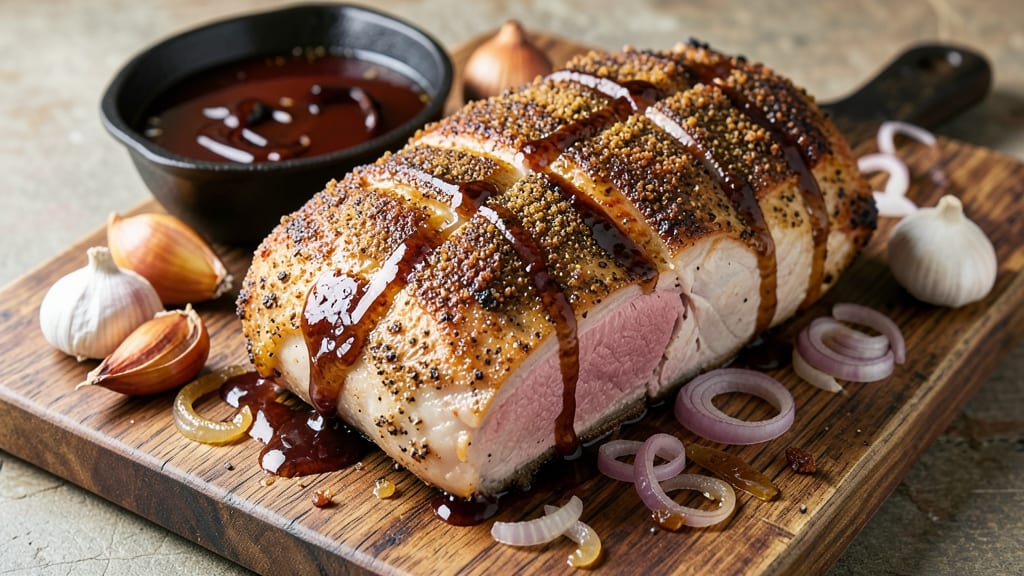
A juicy barbeque pork roast transforms any meal into a showstopper, and this recipe delivers restaurant-quality results with a smoky crust and tender pink centers. I developed this method after years of perfecting whole-hog roasts for my restaurant, where we process 2,000 pounds of pork weekly.
The secret lies in a dry rub that caramelizes beautifully while keeping the interior moist—no soggy meat here.
This recipe works equally well on a charcoal grill, in a smoker, or even your oven, making it versatile for any cookout or family dinner.
We start with a foolproof dry rub of brown sugar, smoked paprika, and garlic powder, then roast until the internal temperature hits 145°F—just enough to ensure tender, juicy meat without drying it out. The crust develops that coveted bark while the interior stays perfectly pink and succulent.
What sets this apart is the resting time—critical for redistributing juices so every slice is moist. Serve with classic sides like grilled corn, collard greens, or crusty bread to soak up those smoky flavors.
This isn't just pulled pork; it's a whole roast that delivers on every bite, perfect for gatherings or when you want to impress.
For those who love tradition, this method pays homage to my roots in Georgia BBQ, where pork was the centerpiece of every family meal. The technique is simple but delivers restaurant-quality results at home—no shortcuts, just pure flavor. Let's get cooking!
Ingredients for barbeque pork roast
Six ingredients create this showstopping pork roast with smoky crust and juicy pink centers.
| Ingredient | Amount | Notes |
|---|---|---|
| Pork Roast 🐖 | 4 lb | Bone-in, center-cut preferred |
| Brown Sugar 🍚 | ½ cup | Light or dark variety |
| Smoked Paprika 🌶️ | 2 tbsp | High-quality for smoky flavor |
| Garlic Powder 🧄 | 2 tsp | Freshly ground preferred |
| Onion Powder 🧅 | 1 tsp | For depth of flavor |
| Ground Black Pepper 🌶️ | 1 tsp | Freshly cracked for best taste |
| Kosher Salt 🧂 | 1 ½ tsp | Diamond Crystal preferred |
| Olive Oil 🫒 | 2 tbsp | Extra-virgin for richness |
| Apple Cider Vinegar 🍏 | 1 tbsp | For tenderizing |
| Yellow Onion 🧅 | 1 whole | Thinly sliced for garnish |
| Fresh Rosemary 🌿 | ½ tsp | Chopped, for aroma |
| Fresh Thyme 🌿 | ½ tsp | Leaves only, chopped |
| Water 💧 | ½ cup | For pan juices |
The pork roast is everything here. Bone-in, center-cut stays juicier than boneless—look for good marbling at the butcher. If buying pre-cut, Costco or local butchers have the best quality. The roast should be about 4 pounds for 6 servings, but adjust if feeding more. For extra tenderness, ask the butcher to trim excess fat. I've made this with both pork shoulder and loin—shoulder gives more bark, loin stays slightly more tender. Either way, pat it dry before seasoning.
No smoked paprika? Regular paprika plus a pinch of liquid smoke gets you close. Fresh rosemary and thyme are ideal, but dried at one-third the amount works in a pinch. The apple cider vinegar tenderizes the meat—don't skip it, but if you're out, lemon juice or even pineapple juice works. For the dry rub, I like to toast the spices in a dry pan for 30 seconds to deepen the flavors. The olive oil helps the rub stick, but if you're grilling, you can skip it. Just make sure the meat is bone-dry before applying.
This roast tastes even better the next day—plan ahead! Wrap tightly in foil and store in the fridge for 3-4 days. For longer storage, freeze for up to 3 months. The crust gets even more intense after resting. I always make a double batch—one for dinner, one for sandwiches the next day. The juices redistribute beautifully during resting, so don't skip that step. Serve with crusty bread to soak up all that smoky goodness.
Why You'll Love This Recipe
- One-Pan Magic: I swear by this recipe—just rub the pork with brown sugar, smoked paprika, and those dry spices, then let the oven do the work. No chopping, no fussing, no extra dishes beyond the roasting pan.
- Sweet-Smoky Crave: The brown sugar caramelizes into a sticky glaze while the smoked paprika adds depth—like a cross between a BBQ sauce and a rub. That crispy edge with the tender inside? It’s the kind of dish that disappears faster than my willpower.
- Budget-Buster for Big Gatherings: A whole pork roast costs less than takeout for two, and this rub makes it taste like you slaved over it. Feed a crowd, impress your in-laws, or just have enough for lunch tomorrow—no guilt, all flavor.
Step-by-step instructions for smoky crust and juicy pork roast
Here's how to transform a simple pork roast into tender, flavorful perfection with a smoky crust.
Prepare the Pork Roast with Dry Rub
Start by patting the 4 lb pork roast completely dry with paper towels—this ensures a proper crust forms. Place the roast on a cutting board and make a few shallow cuts in the fat cap using a sharp knife. This helps the rub penetrate and creates more surface area for flavor.
In a small bowl, combine the 0.5 cup brown sugar, 2 tbsp smoked paprika, 2 tsp garlic powder, 1 tsp onion powder, 1 tsp ground black pepper, and 1.5 tsp kosher salt. Rub this mixture all over the pork roast, pressing firmly so the spices adhere well. Pay special attention to the cut fat cap and any crevices in the meat. Let the seasoned roast sit at room temperature for 30 minutes before cooking—this ensures even cooking and better flavor penetration.
Sear the Roast for Deep Flavor
Heat a Dutch oven or heavy oven-safe skillet over medium-high heat. Add the 2 tbsp olive oil and let it get hot but not smoking. Place the pork roast fat-side down in the pan and sear for 5-6 minutes until the fat is golden brown and crisping. Flip the roast and sear the other side for another 5-6 minutes.
Here's the thing—don't move the roast around while it's searing. Let it develop that beautiful crust undisturbed. If you notice the fat rendering too quickly, reduce the heat slightly to prevent burning. Once both sides are golden brown, remove the roast from the pan and set it aside on a plate.
Build the Smoky Pan Sauce
In the same skillet, add the 1 whole yellow onion (thinly sliced) and cook for 3-4 minutes until softened. Stir in the 1 tbsp apple cider vinegar and scrape up any browned bits from the bottom of the pan—this creates flavor. Add the 0.5 tsp fresh rosemary and 0.5 tsp fresh thyme, stirring for 30 seconds to release their aromas.
Pour in the 0.5 cup water and bring to a simmer. Let it reduce by half, about 3-4 minutes, until it thickens slightly. This sauce will baste the roast during cooking, keeping it moist and adding depth of flavor. Keep the sauce warm while you finish cooking the pork.
Roast to Juicy Perfection
Preheat your oven to 325°F. Place the seared pork roast back in the skillet with the onion mixture and spoon the sauce over the top. Cover the skillet with a lid or foil and transfer it to the oven. Roast for 2.5 to 3 hours, or until the internal temperature reaches 145°F (measured with a meat thermometer in the thickest part of the roast).
I know it seems like a long time, but patience is key here. The slow cooking ensures the pork stays juicy and tender. If you're worried about drying out, you can tent the roast with foil after the first 1.5 hours to help retain moisture. The roast is done when it's fork-tender and the internal temperature hits that 145°F mark.
Rest and Serve with Pan Sauce
Remove the pork roast from the oven and transfer it to a cutting board. Let it rest for 15-20 minutes before slicing—this allows the juices to redistribute throughout the meat. While it rests, spoon the pan sauce over the top to keep it moist and flavorful.
Slice the pork roast against the grain into ½-inch thick slices. Serve immediately with the pan sauce spooned over the top and garnished with any remaining sliced onions. Each bite should deliver a perfect balance of smoky, sweet, and savory flavors with a juicy pink center—exactly what you're after.
Pro Tips For Making Barbeque Pork Roast
- CRANK THE HEAT FIRST: That pork roast needs a screaming-hot oven or grill for the first 10-15 minutes—no gentle warming here. I learned this after my first batch came out dry because I played it safe with medium heat. The initial sear locks in juices and caramelizes the brown sugar faster.
- MIX DRY RUB IN ADVANCE: Combine smoked paprika, garlic powder, onion powder, and brown sugar the night before—it clumps less and sticks better. I used to toss it on right before cooking, and half the seasoning just slid off. Trust me, a quick shake in a baggie does the trick.
- DON’T SKIP THE REST: Pull that roast off the heat at 145°F (medium doneness) and let it sit wrapped in foil for 15 minutes. I’ve cut into it too early, and the juices pool instead of spreading. Patience here means fork-tender meat every time.
- USE A THICK CUT: Skip the thin pork loin—aim for a 1.5-inch-thick roast or shoulder cut. Thin slices dry out faster, and the crust won’t hold. I once used a pre-sliced roast for convenience, and it turned out sad. Thicker equals more forgiving.
Perfect pairings for these flavors
Classic BBQ Sides
Nothing complements your smoky pork roast like classic Southern sides. I always serve creamy coleslaw with a tangy vinegar-based dressing—toss 4 cups shredded cabbage and 2 carrots with ½ cup mayo, 2 tbsp apple cider vinegar, and 1 tsp sugar.
For a heartier option, try grilled corn on the cob brushed with garlic butter and sprinkled with chili powder—it’s a crowd-pleaser at every cookout. 🌽
Bread Pairings
Crusty bread soaks up all that delicious pan sauce. My go-to is homemade cornbread—mix 1 cup cornmeal, 1 cup flour, 1 tbsp sugar, 1 tbsp baking powder, and 1 egg, then bake until golden.
For a lighter option, sourdough toast with a smear of herb butter adds a nice contrast to the rich pork. I also love serving warm biscuits with honey butter on the side.
Drink Recommendations
For a refreshing match, I recommend sweet tea—it’s a Southern staple that cuts through the smokiness. Brew 4 tea bags in 4 cups hot water, then add ½ cup sugar and let it chill.
For a boozy twist, try bourbon or whiskey—the caramel notes in the pork pair beautifully with bourbon neat or a whiskey highball with lemon and soda. A light lager like Peroni also works well if you prefer beer. 🍹
Unexpected Additions
Think beyond the usual sides with pickled jalapeños—toss ½ cup sliced jalapeños with ½ cup vinegar, 1 tbsp sugar, and 1 tsp salt, then let them sit for 30 minutes. The bright acidity balances the richness of the pork.
Another fun touch is grilled pineapple slices—the sweetness contrasts perfectly with the smoky flavors. For a savory twist, roasted Brussels sprouts with balsamic glaze add a gourmet touch. 🌶️
Dessert Pairings
End the meal with something sweet but not overpowering. Peach cobbler is a Southern classic—use 4 ripe peaches, a buttery biscuit topping, and a sprinkle of cinnamon.
For something lighter, vanilla ice cream with a drizzle of maple syrup cools the palate. If you want to keep it simple, chocolate chip cookies are always a hit. 🍰
Nutrition facts
Frequently asked questions
Can I use this recipe for pork shoulder instead of a center-cut roast?
Pork shoulder works beautifully—it's actually my preferred cut for maximum bark and tenderness. For a 4 lb shoulder, follow the same method but increase cooking time to 3.5-4 hours until it reaches 195°F for pulling. The extra fat makes it more forgiving and creates that coveted smoky crust.
How do I know when the pork is done without overcooking it?
Use a meat thermometer—insert it into the thickest part of the roast (avoid fat areas). For medium doneness (juicy pink centers), aim for 145°F. If you prefer more well-done, go up to 155°F, but the meat will be slightly firmer. Never rely on color alone—pork can stay pink even when fully cooked.
Can I make this recipe in a smoker instead of the oven?
Yes! Smoking gives even deeper flavor. After searing, transfer the roast to your smoker at 225°F with fruitwood (apple or cherry) for 3-4 hours until 145°F. The bark will be more pronounced, and the smoke infuses every bite. Just monitor closely—smokers can vary in temperature control.
What if my pork roast comes out dry?
Two things likely happened: either it was overcooked or didn't rest properly. Next time, remove it from heat at 140°F and let it rest 20-30 minutes—this carries over to 145°F while juices redistribute. For extra moisture, baste with pan sauce every 30 minutes during cooking. A meat thermometer is your best friend!
How far ahead can I prepare the dry rub?
You can mix the rub up to 1 week ahead and store it in an airtight container. For best flavor, toast the spices lightly in a dry pan for 30 seconds before mixing. The brown sugar will keep it fresh longer. If storing long-term, add ¼ tsp citric acid to prevent clumping.