
Main Courses
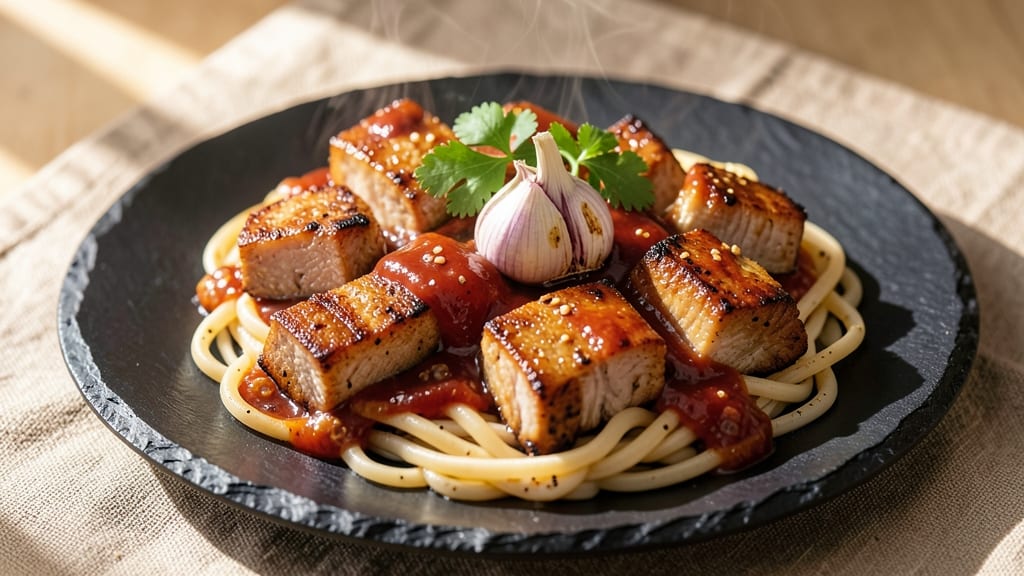
This BBQ pork noodle recipe delivers the perfect balance of smoky, sweet glaze and tender pork that clings to every noodle strand like it was made for you.
Growing up in Georgia, I learned how pork transforms any meal into something special—especially when paired with the right sauce and al dente noodles. The secret lies in marinating the pork overnight and building layers of flavor through slow cooking, ensuring each bite is packed with depth.
The process starts with a simple marinade of soy sauce, brown sugar, and spices that tenderizes the pork while infusing it with flavor.
As it cooks, the sauce caramelizes into a glossy glaze that sticks effortlessly to the noodles, creating a dish that's both restaurant-quality and surprisingly easy to recreate at home. No fancy techniques required—just patience and attention to balance.
By the time you assemble everything, you'll have a dish that's rich, aromatic, and impossible to resist. The smoky-sweet glaze coats the tender pork and clings to the noodles, while optional garnishes like green onions and sesame seeds add freshness.
This recipe scales beautifully, making it perfect for weeknight dinners or feeding a crowd.
Whether you're using fresh or dried noodles, the method remains the same—quick-cooking, flavor-packed, and designed to impress. Let's get started on a dish that brings the soul of Southern BBQ to your table.
Ingredients for bbq pork noodle
Pork shoulder, al dente noodles, and a smoky-sweet glaze that sticks like magic.
| Ingredient | Amount | Notes |
|---|---|---|
| Boneless Pork Shoulder 🥓 | 1 ½ lb | Cut into 1-inch cubes |
| Egg Noodles 🍜 | 12 oz | Dried or fresh, al dente preferred |
| Soy Sauce 🍶 | ½ cup | Low-sodium preferred |
| Brown Sugar 🍚 | ½ cup | Packed, light or dark |
| Apple Cider Vinegar 🍏 | ¼ cup | For tangy depth |
| Garlic Cloves 🧄 | 6 cloves | Minced, fresh preferred |
| Yellow Onion 🧅 | 1 whole | Diced, medium size |
| Ground Black Pepper 🌶️ | 1 tsp | Freshly cracked |
| Smoked Paprika 🌶️ | 1 tbsp | For smoky flavor |
| Green Onions 🧅 | 3 whole | Sliced, for garnish |
| Sesame Seeds 🌾 | 1 tbsp | Toasted, optional |
| Vegetable Oil 🫒 | 2 tbsp | For searing pork |
| Kosher Salt 🧂 | 1 ½ tsp | Adjust to taste |
| Honey 🍯 | 2 tbsp | For extra sweetness |
The pork shoulder is the star—look for one with good marbling at Costco or your local butcher. It's worth the extra time to cube it evenly, about 1-inch pieces. If you're short on time, pre-cut pork cubes from the grocery store work too. The egg noodles? Barilla or De Cecco are my go-tos—they hold up perfectly to the sauce. Fresh noodles cook faster but dried give you more texture. For the soy sauce, Kikkoman or Lee Kum Kee are reliable, but any good-quality brand will do. The brown sugar should be packed—light or dark, your call, but light has a milder flavor if you're watching carbs.
No apple cider vinegar? Substitute with rice vinegar or even a splash of white vinegar. Fresh garlic and onion are ideal, but jarred minced garlic works in a pinch. If you're making this ahead, marinate the pork overnight—it makes all the difference. The smoked paprika adds that signature BBQ flavor, but if you can't find it, regular paprika plus a pinch of liquid smoke gets you close. For the honey, any variety works, but avoid the ultra-processed kinds—they can make the glaze taste artificial. The sesame seeds are optional but add a nice crunch—toast them in a dry pan for 30 seconds before sprinkling.
This glaze keeps well—store leftovers in the fridge for up to 5 days. The pork gets even more tender as it sits, so reheat gently with a splash of water to keep it moist. For the noodles, cook them just shy of al dente—they'll finish cooking in the sauce. Freezes beautifully too: portion the sauce separately from the pork and noodles, then thaw and reheat together. Double the batch if you're feeding a crowd—this recipe scales perfectly.
Why You'll Love This Recipe
- No Chopping Needed: I swear, the pork shoulder is the star here—just cube it, toss it in a pot with soy sauce, brown sugar, and vinegar, then let it slow-cook while you boil noodles. Minimal prep, maximum reward.
- Sweet-Savory Magic: That caramelized brown sugar and tangy vinegar glaze? It turns tough pork into melt-in-your-mouth bites. The noodles soak up all the sticky, smoky goodness—no dry bites in sight.
- Lunchbox Hero: Pack it cold or reheat it—this dish holds up perfectly for leftovers. My kids grab it for school lunches, and honestly? It’s way better than anything from the cafeteria.
- Budget Stretch: Pork shoulder is cheap, noodles are cheap, and a little vinegar and sugar make it taste like a restaurant dish. For under $10, you feed four people a meal that’ll have them begging for seconds.
Step-by-step instructions for BBQ pork noodle recipe
Here's how to create a rich, smoky-sweet glaze that clings perfectly to every noodle strand.
Sear the Pork Shoulder for Maximum Flavor
Heat the 2 tablespoons vegetable oil in a large skillet over medium-high heat until shimmering. Add the 1.5 lb boneless pork shoulder, cut into 1-inch cubes, and sear undisturbed for 3-4 minutes until golden brown on all sides. You want that beautiful crust to form—this is where all the flavor starts.
Once browned, transfer the pork to a plate and set aside. Don't drain the oil—those browned bits are pure flavor gold. Here's the thing: searing first locks in juices and builds a flavor foundation that the sauce will cling to later. If your pork releases easily from the pan, it's ready to move on.
Build the Smoky-Sweet Glaze
In the same skillet (with all that delicious browned pork fat), add the 1 whole yellow onion, 6 cloves minced garlic, 1 tablespoon smoked paprika, and 1 teaspoon ground black pepper. Cook for 5-6 minutes until the onions soften and the garlic becomes fragrant—this should take about 2-3 minutes after the paprika deepens in color.
Now it's time for the sauce magic. Pour in the 0.5 cup soy sauce, 0.5 cup packed brown sugar, 0.25 cup apple cider vinegar, and 2 tablespoons honey. Stir well and bring to a gentle simmer. Let it cook uncovered for 8-10 minutes until the mixture thickens slightly and reduces by about one-third. You'll know it's ready when it coats the back of a spoon and smells intensely sweet with just a hint of tang.
Simmer the Pork Until Tender
Return the seared pork to the skillet and pour in just enough water to barely cover the bottom (about ½ cup). Bring to a simmer, then reduce heat to low, cover, and let it cook for 30-40 minutes until the pork is fork-tender. Here's where patience pays off—the pork should pull apart easily with minimal resistance when pierced with a fork.
If the liquid reduces too much before the pork is tender, add 1-2 tablespoons water at a time to keep it moist. The goal is tender, flavorful pork that absorbs all that glorious sauce. Real talk: don't peek too often—the steam helps tenderize the meat, and every time you lift the lid, you lose heat and moisture.
Cook the Noodles Al Dente
While the pork simmers, cook the 12 oz egg noodles according to package directions until 1 minute shy of al dente. Reserve 1 cup of pasta water before draining—this starchy liquid is crucial for binding the sauce later. Drain and set aside, but don't rinse. The surface starch helps the sauce cling beautifully to each strand.
Here's the trick: slightly undercooking the noodles ensures they finish perfectly when combined with the hot pork and sauce. If they're fully cooked now, they'll turn mushy when mixed with the hot pork mixture. Trust me—this small adjustment makes a huge difference in texture.
Combine and Garnish for the Perfect Bowl
Add the cooked noodles to the pork and sauce mixture. Toss everything together gently, adding splashes of reserved pasta water as needed to loosen the sauce to your preferred consistency. The mixture should coat the noodles and pork evenly without being watery. Taste and adjust seasoning with additional soy sauce or salt if needed.
To serve, divide the noodles among bowls and garnish with 3 whole sliced green onions and 1 tablespoon toasted sesame seeds. The sesame seeds add a beautiful crunch and nutty depth, while the green onions bring freshness that cuts through the richness. Each bite should deliver tender pork, perfectly al dente noodles, and that irresistible smoky-sweet glaze clinging to every strand.
Pro Tips For Making Bbq Pork Noodle
- CRANK THE HEAT FIRST: That pork shoulder needs a screaming-hot pan to render fat fast and sear the edges before you even think about sauce. I used to simmer it gently, and the meat would turn out greasy instead of caramelized—now I blast the pan for 3-4 minutes until the pork releases its own juices like a fountain.
- DON’T SKIP THE VINEGAR REST: Add apple cider vinegar to the sauce early, then let the whole thing sit off the heat for 10 minutes. I learned this after my sauce tasted sharp and unfinished—turns out the acid needs time to mellow and marry with the sugar. (Yes, even if you’re impatient like me.)
- CUT PORK IN EVEN CHUNKS: Uneven pieces cook at wildly different rates, leaving you with some overdone rubber and some raw centers. Aim for 1-inch cubes—big enough to stay tender but small enough to absorb the sauce. My first batch had a few giant hunks that turned out chewy, and I’ve been obsessive about size ever since.
- SAVE THE NOODLE WATER: Boil your egg noodles in salted water, then reserve a cup of that starchy liquid before draining. Toss the noodles with the sauce and a splash of the water—it’ll make the whole dish silkier than plain broth ever could. I used to ignore this, and the texture always felt dry.
Troubleshooting great bbq pork noodle
Pork Too Tough
If your pork ends up tough instead of tender, you likely didn't cook it long enough or used the wrong cut. Pork shoulder should be cooked until it reaches an internal temperature of 203°F—this is the only way to guarantee tenderness.
If you're short on time, try using pork tenderloin instead, but it won't have the same rich flavor as shoulder. I've found that slow-cooking at 300°F for 2-3 hours with a little extra liquid (like broth) helps break down the collagen for that melt-in-your-mouth texture. 💪
Sauce Too Thin
The glaze needs to coat the noodles and pork perfectly, but if it's too thin, it won't stick. If this happens, simply simmer the sauce uncovered for an extra 5-10 minutes to reduce it further.
For a quicker fix, mix 1 tablespoon cornstarch with 2 tablespoons cold water, stir it into the sauce, and cook for another 2 minutes until thickened. Trust me, this trick works every time—even when I've accidentally added too much liquid. 🍲
Noodles Turning Mushy
Overcooking the noodles is the most common mistake, and it ruins the texture. Always cook them 1 minute less than the package instructions suggest, then finish cooking in the sauce.
If they still feel too soft after combining, try using fresh egg noodles next time—they hold up better than dried ones. I also recommend draining the noodles well and tossing them immediately with a little oil to prevent sticking before adding to the pork mixture. 🍜
Flavor Too Sweet
If the glaze tastes overwhelmingly sweet, balance it with a splash of apple cider vinegar or rice vinegar—about 1-2 teaspoons should do the trick. For extra depth, add a pinch of black pepper or a dash of liquid smoke to enhance the smoky notes.
I've learned to taste the sauce as it simmers so I can adjust early—this way, you avoid ending up with a dessert instead of a savory dish. 🌶️
Pork Too Dry
If your pork ends up dry, it likely didn't have enough moisture during cooking.
Glaze Won't Stick
The sauce needs starch to cling properly, so if it's sliding off the noodles, you likely didn't reserve enough pasta water. Always keep ½ cup pasta water on hand and add it gradually to the mixture while tossing. Another trick? Toss the cooked noodles with 1 tablespoon cornstarch before adding them to the pork—this creates a natural adhesive for the sauce. I've even seen chefs use a little egg wash (beaten egg) for extra stickiness in a pinch. ✨
Nutrition facts
Frequently asked questions about BBQ pork noodles
Can I use pork tenderloin instead of pork shoulder?
You can substitute pork tenderloin, but expect a different texture. Tenderloin cooks faster and stays more delicate, so it won't have the same rich, fall-apart quality as shoulder. For best results, cut it into ½-inch thick slices and reduce cooking time to 15-20 minutes after searing. The flavor will be milder, so consider adding an extra ½ teaspoon smoked paprika to the glaze.
How do I make this recipe spicier?
Add heat by increasing the smoked paprika to 2 tablespoons and adding ½ teaspoon cayenne pepper or 1 teaspoon chili flakes to the sauce. For extra kick, stir in 1 tablespoon sriracha or 1 chopped fresh chili (like jalapeño) when tossing with the noodles. Always taste first—you can adjust as needed!
Can I make this ahead of time?
Cook the pork and sauce completely, then store them together in the fridge for up to 3 days. Reheat gently with a splash of water to prevent drying. For the noodles, cook them fresh before serving or store them separately and reheat with a little oil. The flavors actually improve overnight as they meld together.
What's the best way to reheat leftovers?
Reheat in a skillet over medium-low heat with 2 tablespoons water to prevent drying. Stir frequently and add more water if needed. For microwave reheating, cover with a damp paper towel and heat in 30-second intervals, stirring between each. The sauce will thicken again as it reheats, so add a splash of water if it becomes too stiff.
Can I use a different type of noodle?
Egg noodles work best for their texture, but you can substitute with udon, ramen, or even rice noodles (though they'll be softer). For gluten-free options, use chickpea or brown rice noodles. Just remember: fresh noodles hold up better than dried when mixed with the sauce. Cook them 1 minute less than package instructions for best results.