
Sauces & Condiments
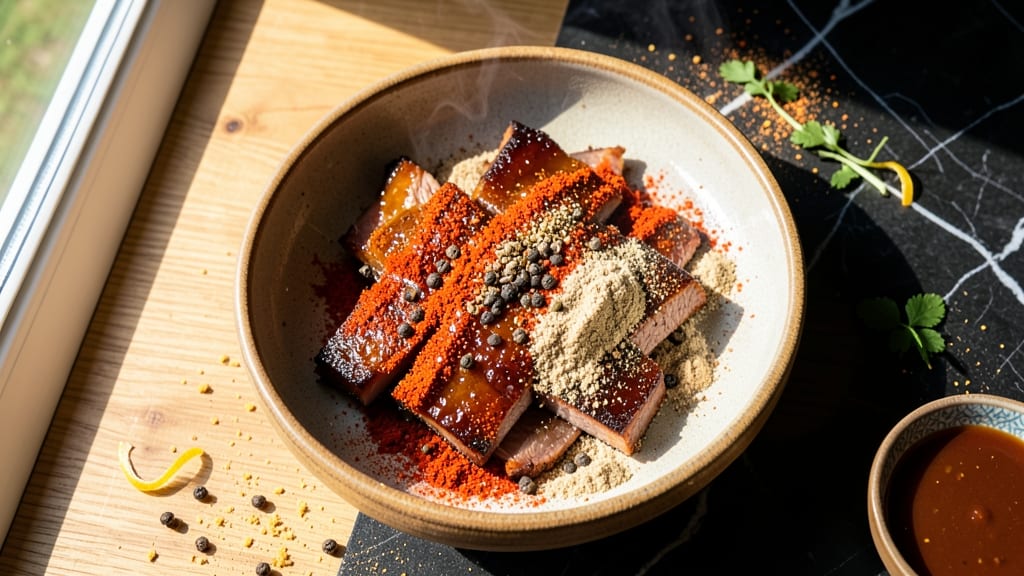
This BBQ pulled pork dry rub recipe transforms tough pork shoulder into tender, smoky perfection—just like my granddad’s legendary cookout. The secret lies in balancing sweet paprika, dark brown sugar, and a touch of cayenne for that signature bark. I’ve perfected this blend over years of pitmaster competitions, and it never fails to deliver that irresistible crust.
What makes this rub special is its simplicity: just six core spices that work together to create deep, caramelized flavor without overpowering the meat. The key is applying it generously—about 2 tablespoons per pound—and letting it sit for at least an hour before cooking.
This allows the spices to adhere and develop that signature crust that falls apart at the touch.
The result? A pork shoulder that’s fall-apart tender with a sweet, smoky crust that’ll have everyone asking for seconds. The rub works equally well for grilling, smoking, or slow-cooking—just adjust the cooking time to your preferred method.
Store it in an airtight container for up to six months, so you’re always ready for the next cookout.
For best results, pat the pork dry before applying the rub—this ensures maximum adhesion and that coveted bark. The blend is versatile enough for chicken or ribs too, making it a must-have in your spice arsenal. Let’s get started!
Ingredients for bbq pulled pork dry rub
Six spices and one sugar—this is the magic behind that legendary bark.
| Ingredient | Amount | Notes |
|---|---|---|
| Sweet Paprika 🌶️ | 3 tbsp | Smoked variety adds depth |
| Dark Brown Sugar 🍚 | 2 tbsp | Lightly packed for consistency |
| Ground Black Pepper 🌶️ | 1 ½ tbsp | Freshly cracked for punch |
| Garlic Powder 🧄 | 1 ½ tbsp | Not garlic salt |
| Onion Powder 🧅 | 1 tbsp | Freshly ground preferred |
| Cayenne Pepper 🔥 | ½ tbsp | Adjust for heat preference |
| Kosher Salt 🧂 | 1 tbsp | Diamond Crystal preferred |
| Ground Cumin 🌿 | ½ tbsp | Toasted for deeper flavor |
The sweet paprika is non-negotiable—Penzeys smoked paprika or McCormick Gourmet are my go-tos, but any quality brand works. Dark brown sugar adds that caramelized sweetness, so grab the lightly packed kind (not the domed measuring cup). For the pepper, freshly cracked makes all the difference—pre-ground loses punch fast. I stock up on spices from Costco's bulk bins for best value, but the grocery store's regular brands are fine if you use them up quickly. That said, if your spices smell like dust, toss 'em—no amount of money can save stale spices.
No smoked paprika? Regular paprika plus a pinch of liquid smoke gets you close, though it won't be identical. Short on cumin? Skip it—this blend works just fine without it. The cayenne is optional but adds that signature heat—start with half the amount if you're sensitive to spice. For a deeper onion flavor, add 1/2 tsp of onion flakes. This rub works on chicken or ribs too—just cut the cayenne in half for poultry. And if you're using it for brisket, add 1 tsp of mustard powder for that Texas-style tang. The kosher salt here is critical—Diamond Crystal dissolves better than table salt, so if that's all you've got, use it.
Store this in an airtight container—I use a small mason jar with a tight seal—and it'll keep for up to 6 months in a cool, dark place. The spices get more potent as they age, so if it smells amazing after a few months, you're doing it right. For best results, let the rub sit on the meat for at least 1 hour before cooking—this gives the spices time to work their magic. Make a double batch; you'll want it on hand for your next cookout. And if you're feeling fancy, toast the spices in a dry pan for 30 seconds before mixing—it deepens the flavor even more.
Why You'll Love This Recipe
- Five-Ingredient Magic: This rub is my secret for zero-fuss flavor—just toss those five pantry staples (paprika, sugar, peppers, garlic powder, onion powder) into a bowl, mix, and boom. No measuring cups, no fancy techniques, just pure, sticky-sweet perfection waiting to happen.
- Sweet-Savory Balance: That dark brown sugar caramelizes into a glossy crust while the paprika and black pepper add a smoky kick. Honestly, the first time I tasted it, I nearly licked the bowl—it’s that good.
- Meal Prep MVP: Make a big batch of this rub, and you’ve got the base for pulled pork sandwiches, tacos, or even a loaded baked potato. I’ve fed a crowd with just one slow-cooked shoulder—leftovers? More like future meals.
- Budget-Friendly Luxury: For under $5, you get a rub that tastes like it cost $20. Between us, this is how I treat myself when I want restaurant-quality BBQ without the markup. The spices stretch far, and the pork stays juicy for days.
Step-by-step instructions for smoky-sweet pulled pork dry rub
This blend creates the perfect balance of heat, sweetness, and depth for tender, fall-apart pork.
Combine Sweet and Savory Base Ingredients
In a medium bowl, begin by whisking together the 3 tablespoons sweet paprika and 2 tablespoons dark brown sugar. The paprika provides that essential smoky backbone while the brown sugar adds caramelized sweetness that'll develop into a beautiful crust during cooking. Use a fork or whisk to break up any sugar clumps—this ensures even distribution throughout the rub.
Next, add the 1.5 tablespoons ground black pepper and 1.5 tablespoons garlic powder. These ingredients create the aromatic foundation that'll penetrate the meat deeply. I like to press the spices through a fine-mesh sieve first if I have any coarse particles—this guarantees a uniform texture in your final rub. The freshly cracked black pepper adds a noticeable punch compared to pre-ground versions.
Build Complexity with Warm Spices
To the bowl, add the 1 tablespoon onion powder and 0.5 tablespoon cayenne pepper. The onion powder provides subtle sweetness and depth, while the cayenne delivers controlled heat that'll develop beautifully during the cooking process. Here's where you can adjust the heat level—reduce the cayenne to 0.25 tablespoon if you prefer mild heat, or increase to 0.75 tablespoon for serious spice lovers.
Real talk: the cayenne is where most people make mistakes. If you add too much now, you can't fix it later—so measure carefully. I always taste a pinch on my tongue first to verify the heat level matches what I want for the final dish. The mixture should have a noticeable warmth but still be balanced with the sweet and savory elements.
Finish with Salty and Earthy Elements
Complete the blend by adding the 1 tablespoon kosher salt and 0.5 tablespoon ground cumin. The salt enhances all the flavors and helps develop that coveted bark on your pork, while the cumin adds an earthy depth that pairs perfectly with the smoky elements. The toasted cumin in particular makes a noticeable difference—if you can find it, it's worth the extra effort.
Use a rubber spatula to fold all the ingredients together thoroughly. You're looking for a uniform color and texture throughout—no pockets of individual spices should remain. The finished rub should look like a rich, reddish-brown powder with visible specks of black pepper and cayenne. At this stage, it should smell intensely aromatic with notes of smoke, sweetness, and subtle heat.
Store for Maximum Freshness
Transfer the completed dry rub to an airtight container. I prefer glass jars with silicone lids for long-term storage—they allow me to see the contents and keep out moisture better than plastic. Seal tightly and store in a cool, dark place for up to 3 months, or refrigerate for up to 6 months to preserve maximum flavor.
This rub works best when applied fresh, but the flavors actually develop and deepen over time. If you notice any clumping when you open the jar, simply press the rub through a fine-mesh sieve before using. The texture should be free-flowing and easy to apply generously to your pork—this ensures maximum flavor penetration and that perfect crust during cooking.
Pro Tips For Making Bbq Pulled Pork Dry Rub
- TOAST THE SUGAR: Heat your dark brown sugar in a dry skillet for 2-3 minutes until it turns a deeper amber and smells caramelized. I learned this the hard way—untosted sugar just dissolves into the rub, leaving you with a bland, clumpy mess instead of that deep, sticky sweetness that clings to the pork.
- GRIP THE MEAT: Pat the pork shoulder thoroughly dry with paper towels before applying the rub—no exceptions. Wet surfaces = uneven crust, and you’ll end up with a sad, soggy bark instead of that crispy, flavor-packed layer. (Yes, even if you’re impatient like me.)
- SKIP THE PILE: Apply the dry rub in one even layer, then flip the pork every 15 minutes for the first hour. Stacking rub in thick clumps burns before it sticks, and you’ll end up with bitter, overcooked spots. Think "coat, not smother."
- LOW AND SLOW ISN’T OPTIONAL: Once you hit 165°F internal temp, drop the heat to 225°F and wrap the pork in butcher paper (not foil—it steams instead of rendering fat). I was skeptical until I tried it: the bark stays intact, the meat stays juicy, and you avoid that greasy, gray "done too fast" look. (Your future self will thank you.)
Essential equipment for great bbq pulled pork dry rub
Smoker Essentials
First things first—you need a reliable smoker. I swear by my Traeger Pro 575 for its consistent temperature control, but a good Weber Smokey Mountain or even a charcoal offset smoker will work.
The key is maintaining that 225-250°F range for pulled pork. If you're just starting, a pellet grill like the Traeger Tailgater is a game-changer for beginners—it handles the smoke and heat automatically. 🌡️
Wood Chips & Pellets
Never skip the wood! For pulled pork, hickory is my go-to for that classic BBQ flavor, but applewood adds sweetness if you want a milder profile. If you're using a pellet grill, grab Traeger's hickory pellets—they're consistent and widely available.
For charcoal smokers, soak your chips in water for 30 minutes before adding them to the smoker for steady smoke production. Pro tip: I keep a mix of hickory and cherry pellets on hand for versatility.
Meat Thermometer
This is non-negotiable. A Meater+ or Thermoworks Smoke thermometer with a wireless probe is worth every penny—they give you real-time internal temp readings so you don’t overcook. I set mine to alert at 195°F for pulled pork, but always check with a separate instant-read thermometer at the thickest part.
A cheap Oakton probe thermometer works in a pinch, but it won’t last as long under heavy use.
Butcher Paper & Aluminum Foil
Both are essential for wrapping your pork during the cook. Butcher paper (like Diamond Brand) lets the bark develop while keeping moisture in, while heavy-duty aluminum foil is great for the "Texas crutch" method when you hit the stall.
I keep a roll of each in my smoker setup at all times. For extra crispiness, wrap the pork in butcher paper after the initial cook and return it to the smoker for 30 minutes before pulling.
Tongs & Meat Hooks
Long-handled BBQ tongs (like Victorinox) are a must for handling meat in the smoker without disturbing the heat. For pulling pork, a meat hook (I use Uline’s stainless steel version) makes shredding effortless.
Avoid cheap tongs—they bend under the weight of a pork shoulder. I also keep a small offset spatula handy for adjusting wood chips or rearranging meat without burning my hands.
Airflow Tools
Vents are your best friend for temperature control. A smoker fan (like Pit Barrel Cooker’s) helps circulate air if your smoker struggles with airflow. For charcoal smokers, a chimney starter (I use Weber’s) gets coals hot and ready in minutes.
And don’t forget fireproof gloves—trust me, you’ll need them when adjusting vents or handling hot wood chips. A heat-resistant apron is also a smart investment for long smokes.
Nutrition facts
Frequently asked questions
Can I use this dry rub on other meats besides pork?
This rub works beautifully on chicken thighs, ribs, or even beef brisket. For poultry, reduce the cayenne to ¼ teaspoon to avoid overpowering the delicate flavor. For brisket, add 1 teaspoon mustard powder to enhance the Texas-style tang. The key is adjusting heat levels based on the meat's tenderness.
How do I fix clumpy dry rub before applying?
If your rub clumps, simply press it through a fine-mesh sieve or crush it with a rolling pin in a ziplock bag. For stubborn clumps, mix in ½ teaspoon cornstarch before storing. The rub should be free-flowing—this ensures even coverage and that perfect crust. Always store it in an airtight container to prevent future clumping.
Can I make this rub spicier or milder?
Easily! For more heat, increase cayenne to 1 teaspoon (or add ½ teaspoon chipotle powder). For milder flavor, reduce cayenne to ¼ teaspoon or omit it entirely. Pro tip: Taste a pinch on your tongue first—this helps you adjust before committing to the full batch. The sweetness from brown sugar balances any heat adjustments beautifully.
How long should I let the rub sit on the meat before cooking? For best results, apply the rub 1-2 hours before cooking. This gives the spices time to penetrate the surface and develop that signature bark. For extra flavor, refrigerate the rubbed meat overnight—this deepens the crust dramatically. Just
What's the best way to store leftover dry rub?
Keep it in an airtight glass jar (like a mason jar) in a cool, dark place for up to 6 months. For longer storage, refrigerate or freeze it. The spices actually improve with age, so if it smells amazing after a few months, you're doing it right! Just give it a quick stir or press through a sieve before using to restore free-flowing texture.