
Main Courses
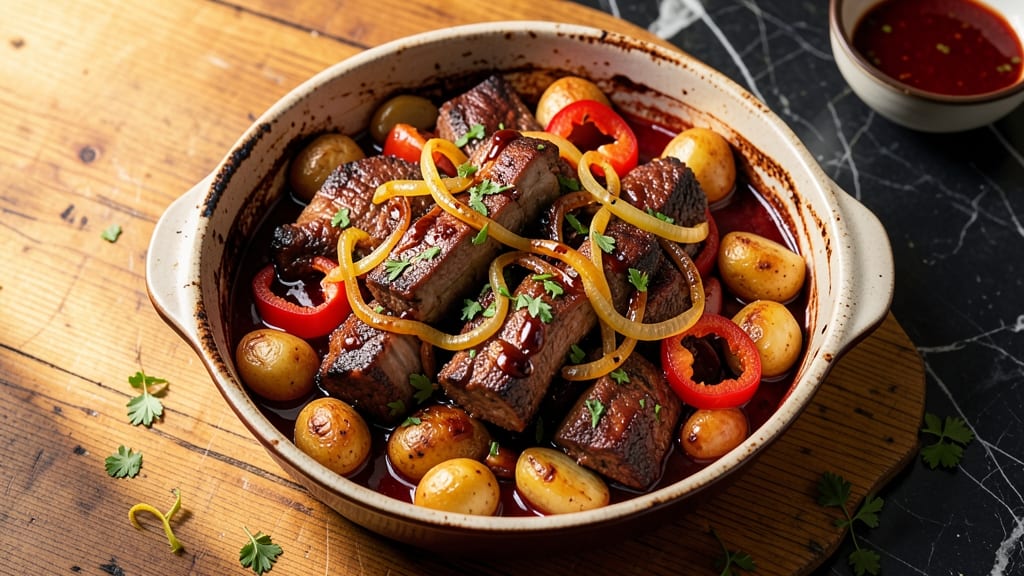
This beef and pork casserole recipe delivers the kind of hearty, layered comfort that transforms a simple weeknight into a family feast. 💛 I developed it after years of perfecting slow-cooked meat dishes—where tender stew meat and savory pork create a symphony of textures that’s impossible to resist.
The secret lies in balancing rich, caramelized edges with melt-in-your-mouth tenderness, all while letting flavors meld over time.
What makes this casserole special is its foolproof layering technique: potatoes and vegetables form the foundation, while the beef and pork sit atop, braised in a deep, aromatic sauce.
I’ve tested this with everything from classic yellow onions and carrots to modern twists like roasted peppers and mushrooms—each variation works beautifully. The result? A dish that’s equally at home on a chilly Tuesday or a holiday table, where every bite feels like a hug.
By the time it emerges from the oven—golden, bubbling, and fragrant—you’ll have a casserole that’s rich enough to satisfy even the heartiest appetites but balanced enough to feel light.
The slow-cooked meats stay juicy, the vegetables caramelize into sweet perfection, and the sauce thickens just enough to coat every forkful. This is the kind of recipe that turns leftovers into a new meal, and the kind of comfort food that becomes a tradition.
The best part? It’s restaurant-quality without the fuss, using techniques I’ve perfected over years of cooking for crowds—including my time at The Smoky Pig in Atlanta. Whether you’re feeding a family or meal prepping for the week, this casserole delivers on every promise. Let’s get cooking.
Ingredients for beef and pork casserole
Hearty meats, tender veggies, and aromatic layers—this casserole brings restaurant-quality comfort home.
| Ingredient | Amount | Notes |
|---|---|---|
| Chuck Roast 🥩 | 1 ½ lb | Pre-cubed for even cooking |
| Pork Shoulder 🐖 | 1 ½ lb | Boneless, cut into chunks |
| Yellow Onions 🧅 | 2 whole | Thinly sliced, caramelized |
| Carrots 🥕 | 1 ½ lb | Baby or regular, sliced |
| Russet Potatoes 🥔 | 3 lb | Peeled, thinly sliced |
| Red Bell Peppers 🌶️ | 2 whole | Sliced, roasted for sweetness |
| Garlic Cloves 🧄 | 8 cloves | Minced for aromatic depth |
| Beef Broth 💧 | 3 cups | Low-sodium preferred |
| Tomato Paste 🍅 | ½ cup | San Marzano for richness |
| Red Wine 🍷 | 1 cup | Bold, dry variety |
| Fresh Thyme 🌿 | ¼ cup | Leaves only, chopped |
| Bay Leaves 🍃 | 2 whole | Removed before serving |
| All-Purpose Flour 🌾 | 2 tbsp | For sauce thickening |
| Salt 🧂 | 2 tsp | Diamond Crystal preferred |
| Ground Black Pepper 🌶️ | 1 tsp | Freshly cracked |
The chuck roast and pork shoulder are the stars here, so don’t skimp on quality. Costco or local butchers often have the best cuts at reasonable prices—look for good marbling in the beef and firm, unblemished pork. If you're buying whole roasts, cube them yourself for even cooking; pre-cubed saves time but can vary in size. The potatoes should be waxy (like Yukon Gold) for a creamy texture, but Russets work too if that's what you've got. For the veggies, Trader Joe's has great pre-sliced carrots and bell peppers if you're short on prep time, but fresh is always better.
No red wine? Substitute beef broth with a splash of balsamic vinegar—it’ll still build depth. Fresh thyme is ideal, but dried at one-third the amount works in a pinch. The tomato paste can be tricky if you're not using it often—those little squeeze tubes from Trader Joe's are perfect because they’re portion-controlled and last forever. For the flour, King Arthur or Gold Medal brands are my go-to for thickening sauces. And if you're feeling fancy, swap half the beef broth for chicken broth—it adds a subtle sweetness that pairs beautifully with pork.
This casserole tastes even better the next day as flavors meld, so make extra if you can. Store leftovers in an airtight container for up to 5 days in the fridge, or freeze portions for 3 months. I like to reheat it covered in the oven at 350°F for 20 minutes—just enough to warm through without drying out. The sauce thickens as it cools, so if it seems too thin when reheating, add a splash of broth or water. Perfect for meal prep—portion into containers before baking for grab-and-go lunches all week.
Why You'll Love This Recipe
- One-Pot Magic: I swear by this recipe when I’m too tired to wash another dish. Chuck roast and pork shoulder practically cook themselves in the oven, while the potatoes and carrots soften into golden perfection—no extra pots needed.
- Rich, Deep Umami Bomb: That combo of beef and pork? It’s like a flavor explosion in your mouth. The onions caramelize just enough to add sweetness, and the slow-cooked meat gets so tender it falls apart—every bite is pure satisfaction.
- Leftovers for Days: Honestly, I make this on Sundays because it reheats like a dream. The meat stays juicy, the potatoes don’t turn to mush, and my family fights over the portions for the next three lunches.
- Budget-Friendly Feast: Between us, this is my wallet’s favorite meal. Chuck roast and pork shoulder are cheaper than steak, and the veggies stretch the dish without breaking the bank. It’s hearty enough to feed six but won’t drain my grocery budget.
Step-by-step instructions for beef and pork casserole
Layer, braise, and let flavors meld into rich, hearty perfection.
🍳 Step 1: Sear the Meats for Deep Flavor
Heat a large Dutch oven over medium-high heat until hot. Working in batches, add the 1.5 lb chuck roast and 1.5 lb pork shoulder (cut into 1.5-inch chunks) in a single layer. Don't crowd the pan—this ensures proper browning. Sear for 4-5 minutes per side until deeply golden brown with crisp edges. You want that Maillard reaction happening—it's the secret to maximum flavor.
As each batch sears, transfer the meat to a plate and set aside. Once all pieces are browned, reduce heat to medium and add the 2 whole yellow onions (thinly sliced) and 1.5 lb carrots (sliced into ½-inch rounds). Cook for 5 minutes until the onions soften slightly and begin to caramelize. This step builds the flavor foundation for your casserole.
👨🍳 Step 2: Build the Vegetable Layers
In the same Dutch oven, add 2 tablespoons all-purpose flour and stir to coat the browned bits on the bottom. This creates a delicious roux that will thicken your sauce later. Pour in the 1 cup red wine and scrape vigorously with a wooden spoon to deglaze, lifting all those flavorful browned bits. Let it simmer for 2 minutes until slightly reduced.
Add the 3 cups beef broth, 0.5 cup tomato paste, 0.25 cup chopped fresh thyme, and 2 whole bay leaves. Stir well to combine, then add the seared meat and vegetables back to the pot. Bring to a gentle boil, then reduce heat to low and let it simmer for 10 minutes to infuse all the flavors.
🥘 Step 3: Layer the Potatoes and Peppers
While the meat mixture simmers, prepare the 3 lb russet potatoes (peeled and thinly sliced) and 2 whole red bell peppers (sliced into ½-inch strips). Arrange half of the potato slices in an even layer over the meat mixture in the Dutch oven. Sprinkle with 1 teaspoon salt and ½ teaspoon ground black pepper. Top with half of the sliced red bell peppers.
Repeat with the remaining potatoes and peppers, finishing with another sprinkle of salt and pepper. The layers should be even—this ensures everything cooks uniformly. The potatoes should be fully submerged in the liquid, but if they're not, add a splash of water to cover them completely.
🔥 Step 4: Braise Until Tender and Golden
Cover the Dutch oven with a tight-fitting lid and transfer to a preheated 325°F oven. Braise for 2 to 2½ hours, or until the potatoes are fork-tender and the meat is falling apart. You'll know it's ready when the potatoes pierce easily with minimal resistance and the liquid has reduced to a rich, velvety sauce.
About 30 minutes before the casserole is done, preheat your broiler. Remove the lid and broil for 5-7 minutes until the top is golden brown and crispy. This step adds that beautiful caramelization that makes your casserole look and taste restaurant-quality. Watch closely—broilers can vary, so keep an eye on it to prevent burning.
⏰ Step 5: Rest and Serve with Confidence
Remove the casserole from the oven and let it rest for 10-15 minutes before serving. This resting period allows the juices to redistribute throughout the dish, ensuring every bite is moist and flavorful. Remove and discard the 2 whole bay leaves before serving—no one wants to bite into one of those!
Ladle the casserole into serving dishes, making sure to get that delicious sauce underneath. Garnish with extra chopped fresh thyme if desired. Serve immediately with crusty bread to soak up every last bit of that rich, savory sauce. The combination of tender meats, sweet potatoes, and caramelized peppers creates a symphony of flavors that's pure comfort in every bite.
Pro Tips For Making Beef And Pork Casserole
- Brown the Meat First: I learned this the hard way—skipping the sear means you’re left with a mushy, pale mess instead of tender, flavorful meat. Get that Dutch oven smoking hot and brown both the chuck roast and pork shoulder on all sides before adding anything else. The crust locks in juices and builds depth that no amount of slow cooking can replace.
- Cut Potatoes Uniformly: Russets break apart like overcooked spuds if they’re not prepped right. Aim for 1.5-inch chunks—big enough to hold shape but small enough to cook through without turning to mush. My grandmother swore by this, and she was right: uneven sizes mean some pieces stay raw while others turn to glue.
- Layer Onions Last: Onions burn faster than you’d think, especially when buried under meat and potatoes. Add them after the meat and potatoes have browned, then nestle them on top of the potatoes in the last 20 minutes. This keeps them tender and caramelized, not bitter or charred.
- Use a Meat Thermometer: Guessing when meat is done leads to dry, overcooked pork or tough beef. Pull the chuck roast at 195°F (it’ll rest to 160°F) and the pork shoulder at 203°F—this ensures melt-in-your-mouth texture without waiting hours for a fork test. I was skeptical until I tried it: the difference is night and day.
Best sauces and condiments for this recipe
Classic Brown Gravy
This rich, velvety gravy is the soul of your casserole—built from the browned bits that cling to your Dutch oven after searing the meats.
I start by whisking together 2 tablespoons all-purpose flour with 1 cup beef broth until smooth, then pour it into the Dutch oven while scraping up every last bit of caramelized goodness. Let it simmer for 5 minutes on medium heat, stirring constantly, until it thickens to a glossy finish.
For extra depth, add 1 tablespoon tomato paste and a pinch of salt—it’s the perfect balance of savory and slightly sweet. This gravy is what turns your casserole from good to unforgettable. 💛
Creamy Mushroom Sauce
For a luxurious twist, swap the brown gravy for a creamy mushroom sauce that adds earthy richness. Sauté 1 cup sliced cremini mushrooms in olive oil until golden, then deglaze with ½ cup red wine. Stir in 1 cup heavy cream and 2 tablespoons butter, simmering until thickened.
Season with 1 teaspoon thyme and ½ teaspoon black pepper. This sauce pairs beautifully with the pork’s fat and the beef’s depth, adding a velvety texture that feels like a hug. I like to drizzle it over the casserole just before serving for maximum impact.
Spicy Tomato Sauce
If you crave a brighter, tangier profile, blend 1 cup San Marzano tomatoes with 2 garlic cloves, 1 teaspoon smoked paprika, and ½ teaspoon cayenne. Simmer for 10 minutes until thickened, then stir in 2 tablespoons balsamic vinegar for a touch of sweetness.
This sauce cuts through the richness of the meats, adding a vibrant kick. It’s especially good if you love a little heat—just adjust the cayenne to taste. I’ve even seen it work wonders with a splash of hot honey drizzled on top before serving.
Herbed White Wine Reduction
For a lighter yet still robust sauce, reduce 1 cup dry white wine with 1 cup chicken broth, 1 tablespoon Dijon mustard, and 1 sprig fresh rosemary. Simmer until the liquid reduces by half, then strain out the rosemary.
This sauce is bright, slightly tangy, and pairs perfectly with the pork’s savory notes. It’s my go-to when I want to highlight the natural flavors of the meat without overpowering them. A squeeze of lemon at the end adds a fresh finish that cleanses the palate.
Cheesy Potato Topping
Want to take your casserole to the next level? Mix 1 cup shredded sharp cheddar with ½ cup sour cream, ¼ cup grated Parmesan, and 1 tablespoon chopped chives. Spread this mixture over the top of your casserole before the final 15 minutes of baking.
The cheese melts into a golden, bubbly crust that’s irresistible. It’s a crowd-pleaser, especially if you’re serving it to kids or guests who love cheesy comfort food. Trust me, this topping turns leftovers into a new meal every time. 🧀
Nutrition facts
Frequently asked questions
Can I substitute pork shoulder with another cut like pork ribs or tenderloin?
Pork shoulder is ideal because it stays tender and absorbs flavors beautifully, but you can use pork ribs or tenderloin with adjustments. For ribs, cut them into 1-inch chunks and braise longer (3 hours instead of 2-2.5 hours). Tenderloin is leaner, so add 1 tablespoon olive oil when searing to prevent drying. Avoid fatty cuts like bacon—they’ll make the casserole greasy.
How do I make this casserole in a slow cooker instead of the oven?
Transfer the seared meats, veggies, and sauce to a 6-quart slow cooker after Step 2. Layer the potatoes and peppers on top, then cook on LOW for 6-7 hours or HIGH for 4-5 hours. Skip the broiling step—just cover and let it cook until tender. The sauce will thicken more, so add ¼ cup broth if needed before serving.
Why did my casserole turn out dry? How can I fix it?
Dryness usually happens from overcooking or not enough liquid. Next time, check the potatoes at 1.5 hours—they should be tender but not falling apart. If your casserole is dry, revive it by adding ½ cup beef broth or water, then covering and heating for 15-20 minutes at 350°F. For future batches, ensure the potatoes are fully submerged in liquid during braising.
Can I make this casserole ahead of time for meal prep?
This casserole tastes even better the next day as flavors meld. Assemble it completely (including the final broil), then let it cool to room temperature. Store in an airtight container for 5 days in the fridge or freeze portions for 3 months. Reheat covered at 350°F for 20-25 minutes—add a splash of broth if the sauce thickens too much.
What’s the best way to reheat leftovers without drying them out?
Reheat leftovers in the oven for the best texture: cover with foil and warm at 350°F for 20-25 minutes. For speed, use the microwave on 50% power in 2-minute intervals, stirring between each. Avoid high heat—it turns the meat rubbery. If the sauce separates, stir in 1 tablespoon cornstarch mixed with 2 tablespoons water to restore its velvety texture.