
Main Courses
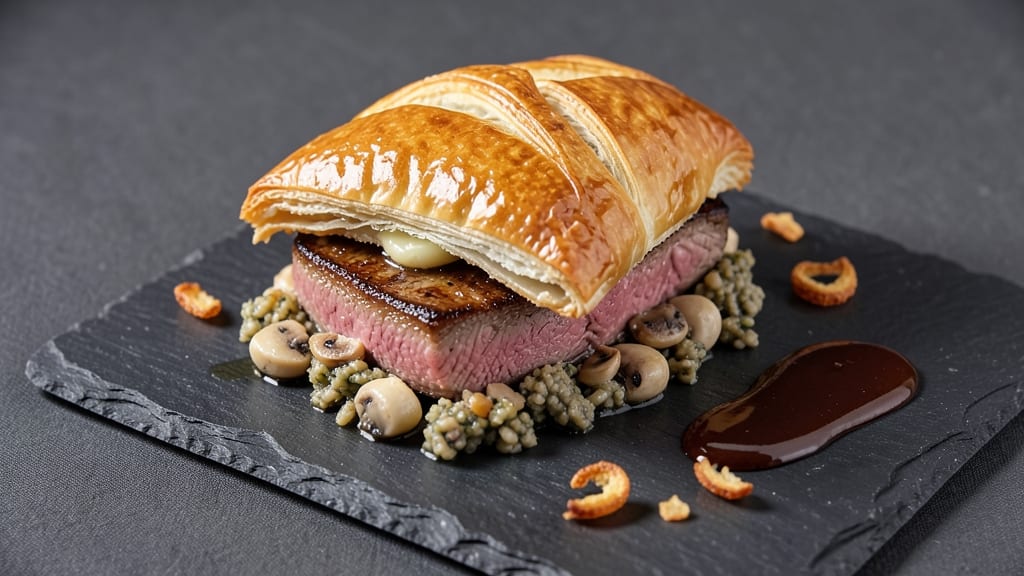
This beef Wellington no pork recipe delivers all the show-stopping elements of the classic—juicy pink center, rich mushroom duxelles, and crisp pastry—without a single pork product. The secret lies in a high-quality beef fillet wrapped in a delicate mushroom-pastry envelope that bakes to golden perfection. After years of perfecting this technique in professional kitchens, I've adapted it for home cooks who want restaurant-worthy results without the pork.
The foundation begins with a properly prepared beef fillet—thinly sliced mushrooms create the signature duxelles that adds earthy depth, while a well-sealed pastry ensures a crisp exterior and tender interior.
What sets this version apart is the pork-free approach: we use a high-fat beef pastry instead of lard-based dough, and seal it with egg wash for that signature golden finish. This method preserves all the traditional flavors while accommodating dietary preferences.
By the time it emerges from the oven, you'll have a dish that looks and tastes like it belongs on a fine-dining menu—juicy pink beef at the center, surrounded by fragrant mushroom duxelles and encased in a crisp, golden pastry shell.
The aroma alone will have everyone gathering around the table, and each bite delivers that perfect balance of textures and flavors that makes Beef Wellington legendary. This is the version I've been perfecting for years, now adapted for home cooks.
The beauty of this recipe is its versatility—it works equally well for special occasions or weeknight dinners when you want to impress.
The key is proper preparation: resting the beef, carefully sealing the pastry, and baking at the right temperature to ensure both the crust is crisp and the center remains perfectly pink. Here's how to achieve that restaurant-quality result at home, step by step.
Ingredients for beef wellington no pork
Juicy beef tenderloin meets earthy mushroom duxelles in this refined no-pork Wellington, wrapped in golden pastry perfection.
| Ingredient | Amount | Notes |
|---|---|---|
| Beef Tenderloin 🥩 | 1 ½ lb | Center-cut, 1.5-inch thick |
| White Button Mushrooms 🍄 | 16 oz | Finely chopped, stems reserved |
| Shallots 🧅 | 3 whole | Minced, 2 tbsp total |
| Garlic Cloves 🧄 | 4 cloves | Minced, peeled |
| Unsalted Butter 🧈 | ½ cup | Cold, cubed |
| All-Purpose Flour 🌾 | ½ cup | For duxelles thickening |
| Dijon Mustard 🍯 | 1 tbsp | High-quality, grainy |
| Fresh Thyme Leaves 🌿 | ¼ cup | Chopped, stems removed |
| Fresh Parsley Leaves 🌿 | ¼ cup | Chopped, for garnish |
| Puff Pastry 🍞 | 1 sheet | High-fat, store-bought preferred |
| Large Eggs 🥚 | 1 whole | For egg wash |
| Diamond Crystal Kosher Salt 🧂 | 1 ½ tsp | For seasoning |
| Freshly Ground Black Pepper 🌶️ | ½ tsp | Coarsely ground |
| Dry White Wine 🍷 | ¼ cup | For deglazing |
The beef tenderloin is non-negotiable—center-cut, 1.5-inch thick ensures even cooking and that signature juicy pink center. Most butchers will trim it for you, but if you're buying pre-trimmed, look for high-fat content around the edges for extra richness. For mushrooms, white button variety works best, but cremini adds deeper flavor if you prefer. The key is finely chopping them—food processor with a blade attachment saves time here. Store-bought puff pastry like Pepperidge Farm or Dufour delivers professional results without the fuss, though homemade layers up the authenticity.
No Dijon mustard? Whole-grain mustard works perfectly, but avoid smooth varieties—they lack the texture needed to bind the duxelles. Fresh thyme and parsley can be swapped for dried at one-third the amount, though fresh delivers brighter flavor. The wine is purely for deglazing—dry white like Sauvignon Blanc or Pinot Grigio prevents bitterness. For a pork-free pastry, high-fat content is critical—check the label for at least 20% fat. If using store-bought mushrooms, trim and chop stems separately for maximum flavor extraction. The butter should be cold and cubed when added to the mushrooms to prevent overcooking.
Beef should rest at room temperature for 30 minutes before cooking for even doneness. Store mushrooms in a paper bag in the fridge for up to 5 days, but use them fresh for best texture. Leftover pastry can be wrapped tightly and frozen for up to 2 months. The assembled Wellington keeps in the fridge for 24 hours before baking—ideal for prepping ahead. Once baked, it reheats beautifully in a 350°F oven for 10 minutes, though it's best served fresh from the oven for that signature crisp crust.
Why You'll Love This Recipe
- Here’s what sold me: the slices reheat like a dream. Cold cuts for sandwiches? Yes. Salad toppers? Absolutely. Even my picky teen asks for seconds—because the flavor holds up, and the butter keeps it rich without drying out.
- No Fuss Prep: I swear, the hardest part is slicing the mushrooms—and honestly, that’s just a quick chop. The tenderloin stays whole, the shallots get minced while you sauté, and the butter melts in minutes. No rolling dough, no fussing with pastry.
- Mushroom Magic: Between us, the earthy mushrooms and shallots caramelized in butter? That’s where it all happens. The garlic cloves hit just right, and the crust—when you sear that beef—is crispy enough to make you forget it’s not the classic version.
- Weeknight to Dinner Party: Same recipe, two vibes. Toss it together for a lazy night with crusty bread, or dress it up with a side salad and red wine for company. The tenderloin feeds four but feels fancy, so it works for both.
Step-by-step instructions for beef Wellington with mushroom-duxelles crust
A perfect balance of technique and precision ensures tender beef with a golden, buttery crust.
Prepare the Beef Tenderloin
Begin by removing the beef tenderloin from the refrigerator and patting it dry thoroughly with paper towels. This step is critical—any moisture on the surface will prevent proper searing and lead to a less flavorful crust. Using a sharp boning knife, trim any silver skin or excess fat from the surface, leaving a clean, even surface for the duxelles to adhere.
Place the trimmed beef on a cutting board and score the surface in a diamond pattern, making cuts about ½-inch deep and 1-inch apart. This scoring creates channels for the mushroom duxelles to nestle into, ensuring maximum flavor infusion during roasting. Season generously with 1.5 teaspoons Diamond Crystal kosher salt and 0.5 teaspoon freshly ground black pepper, pressing the seasoning into the scored surface. Let the beef sit at room temperature for 30 minutes before proceeding—this ensures even cooking throughout.
Create the Mushroom-Duxelles Filling
Heat a large skillet over medium heat and add 0.25 cup unsalted butter. Once the butter has melted and begins to foam, add the 16 ounces finely chopped white button mushrooms and cook, stirring occasionally, for 8-10 minutes until all moisture has evaporated and the mushrooms are deeply golden. This process, called rendering, concentrates their flavor and removes excess liquid.
Add the 3 minced shallots and 4 minced garlic cloves to the skillet, cooking for another 2-3 minutes until the shallots are translucent and the garlic is fragrant. Remove the skillet from heat and stir in 0.5 cup all-purpose flour, 1 tablespoon Dijon mustard, 0.25 cup chopped fresh thyme leaves, and 0.25 cup chopped fresh parsley leaves. Mix well to combine, then spread the mixture evenly on a parchment-lined baking sheet and let it cool completely. This duxelles will form the flavorful base between the beef and pastry.
Assemble the Wellington
Preheat your oven to 400°F and roll out the 1 sheet puff pastry on a lightly floured surface to a ⅛-inch thickness, creating a rectangle large enough to wrap around the beef tenderloin with room to spare. Place the cooled duxelles mixture in the center of the pastry, forming a log that matches the length of the beef. Using a pastry brush, lightly coat the duxelles with 0.25 cup dry white wine to add moisture and depth of flavor.
Lay the beef tenderloin on top of the duxelles, centering it so the pastry can wrap evenly around it. Using the parchment paper, carefully roll the pastry around the beef, sealing the edges tightly to encase the entire package. Transfer the wrapped Wellington to a parchment-lined baking sheet and brush the exterior generously with the 1 beaten large egg, reserving a little for later. This egg wash will create a golden, crispy crust. Chill the assembled Wellington in the refrigerator for 20 minutes to firm up before baking.
Bake to Juicy Perfection
Place the chilled Wellington in the preheated 400°F oven and bake for 25-30 minutes, rotating the baking sheet halfway through for even browning. The Wellington is done when the pastry is deep golden brown and an instant-read thermometer inserted into the thickest part of the beef reads 125-130°F—this ensures the beef will carry over to a perfect 135°F when rested.
Remove the Wellington from the oven and tent loosely with foil. Let it rest for 10-15 minutes before slicing. This resting period allows the juices to redistribute, ensuring each slice is moist and tender. To serve, slice the Wellington into ½-inch thick pieces, brushing each slice with a little reserved egg wash for extra shine and richness. The result should be a beautifully presented dish with a crispy, buttery crust and juicy, pink beef at its heart.
Pro Tips For Making Beef Wellington No Pork
- Sear the Beef First: I learned this the hard way—skipping the sear makes the whole dish taste flat. Pat the tenderloin very dry, then hit it with high heat in a screaming-hot pan for 2-3 minutes per side before roasting. The crust locks in flavor and prevents the butter from turning into soup.
- Slice Mushrooms Thin: Thick, uneven slices? That’s how you end up with a mushy duxelles. Use a sharp knife and cut the mushrooms paper-thin—almost like shaving them—so they cook down fast and absorb the butter without turning to mush. (Yes, it takes a few minutes, but it’s worth it.)
- Don’t Overmix the Duxelles: After chopping shallots and garlic, toss them with mushrooms and butter, then stop. Overworking the mix turns it into a paste that releases too much moisture when wrapped around the beef. A rough, chunky texture stays crisp and clings better.
- Rest the Meat Properly: Cutting into the beef right after roasting is how you ruin the juices. Transfer it to a cutting board, tent loosely with foil, and let it sit for a solid 10 minutes—no peeking. The internal temp will drop 5-10°F, and every slice will be buttery, not dry. (I know, I know—waiting is hard.)
Best sauces and condiments for this beef wellington no pork
Classic Red Wine Jus
This rich, velvety sauce captures all the flavors from the pan after searing the beef—what we chefs call a jus. Deglaze the roasting pan with ½ cup dry red wine (like Cabernet Sauvignon or Merlot) immediately after removing the Wellington.
Add 1 cup beef stock and simmer until reduced by half. Finish with 1 tbsp cold butter, whisked in for silkiness. Serve immediately alongside each slice—it's the perfect vehicle for the beef's juices. 🍷
Mushroom Gravy Upgrade
For a deeper connection to the Wellington's flavors, make a mushroom gravy using the leftover duxelles from your prep. Sauté 2 tbsp reserved duxelles in 1 tbsp butter until fragrant, then deglaze with ¼ cup white wine.
Add ½ cup beef stock and simmer until thickened. Finish with a pinch of fresh thyme and a splash of Dijon mustard for brightness. This gravy adds earthy depth that complements the beef perfectly.
Red Wine Reduction
Take your red wine jus to the next level by reducing it further into a glaze. After the initial reduction, strain through a fine-mesh sieve to remove any solids, then reduce the liquid by 75% on high heat.
Finish with 1 tbsp butter and a pinch of kosher salt. This glossy reduction drizzled over the Wellington slices adds restaurant-quality elegance. I keep a small saucepan dedicated to reductions—it's worth the investment for special occasions. 💫
Herb Butter Sauce
For a lighter but equally flavorful option, make a compound herb butter. Mix ½ cup softened butter with 1 tbsp chopped parsley, 1 tsp chopped thyme, and a pinch of black pepper. Roll into a log, chill until firm, then slice into pats.
Place a small pat on each plate and let it melt over the hot Wellington slices. The butter's richness contrasts beautifully with the crisp pastry and juicy beef.
Red Wine Pan Sauce
This is my go-to for weeknight dinners when I want maximum flavor with minimal effort. After removing the Wellington, deglaze the pan with ¼ cup red wine and ¼ cup beef stock. Add 1 tsp Dijon mustard and 1 tsp cold butter, then whisk vigorously.
The mustard adds a subtle tang that cuts through the richness. Serve immediately—this sauce thickens as it cools, so don't wait too long. 🔥
Nutrition facts
Frequently asked questions
Why does the recipe call for beef tenderloin instead of other cuts?
The beef tenderloin is essential for this dish because it's one of the most tender cuts available, with minimal connective tissue that could make the meat tough. Its mild flavor lets the mushroom duxelles and pastry shine while delivering that signature juicy pink center when cooked to 135°F. Thinner cuts like sirloin won't provide enough volume for proper wrapping, and leaner cuts risk drying out.
Can I substitute store-bought duxelles for homemade?
Store-bought duxelles won't work here because they're often pre-cooked with water or oil, which dilutes the flavor and texture needed for this recipe. The homemade version must be finely chopped and rendered dry to create that perfect earthy, buttery paste that clings to the beef. If you're short on time, you could make a quick version by sautéing finely chopped mushrooms with butter and flour, but fresh is always better.
What's the best way to seal the pastry edges without pork fat?
Instead of traditional pork fat, use a high-fat beef pastry (at least 20% fat content) and seal edges with a simple egg wash. For extra security, press the edges with a fork or use a bit of reserved duxelles as a "glue" before rolling. The key is to chill the assembled Wellington for 20 minutes before baking—this firms up the pastry and prevents leaks.
Can I make this ahead of time?
Yes! Assemble the Wellington and refrigerate it for up to 24 hours before baking. For longer storage, wrap the assembled (unbaked) Wellington tightly in plastic and freeze it for up to 2 months. Thaw overnight in the fridge before baking. The pastry will be slightly softer after freezing, so handle it gently when rolling.
How do I fix an overcooked Wellington?
If your beef comes out too dry, try this: Slice the Wellington and quickly sear the slices in a hot pan with a splash of beef stock and butter for 1-2 minutes per side. The residual heat will help redistribute juices. For presentation, serve with a rich red wine jus or mushroom gravy to mask any dryness. Prevention is key—always use a meat thermometer and pull the beef at 125-130°F internal temp.