
Main Courses
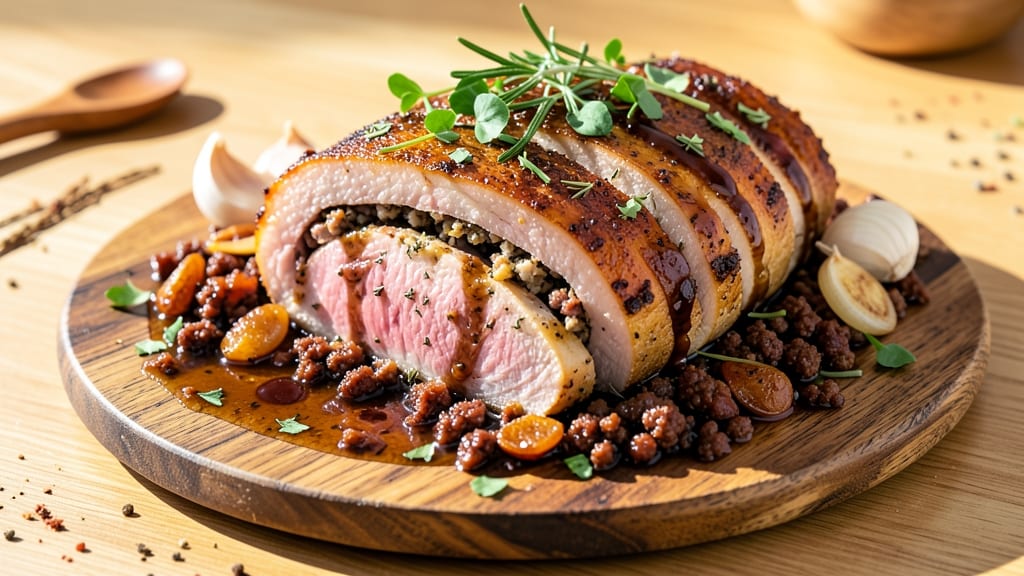
This stuffed pork tenderloin recipe is the best stuffed pork tenderloin recipe ever with stuffing you’ll ever make—delivering the juicy pink heart and herbaceous richness you’ve been craving. Every bite reveals tender meat wrapped around a fragrant stuffing of garlic, herbs, and savory sausage.
After years of testing techniques (and burning a few tenderloins), I’ve perfected a method that combines traditional butterflying with a modern twist: a stuffing that stays moist while the pork stays perfectly pink inside.
The secret lies in the preparation—trimming the tenderloin carefully to create a pocket, then assembling the stuffing with just enough moisture to bind without making it soggy.
We’re talking crispy edges on the pork, tender centers, and a stuffing that holds its shape while soaking up all those garlic and herb flavors. This isn’t your grandmother’s dry pork roast; it’s a restaurant-quality centerpiece that impresses even skeptical meat lovers.
What you’ll end up with is a showstopping main course where every slice reveals that perfect pink center surrounded by flavorful stuffing. The pork stays remarkably moist thanks to a simple brining technique, while the stuffing—packed with herbs, garlic, and just the right amount of sausage—adds layers of savory depth.
It’s the kind of dish that makes your kitchen smell like a holiday feast and has everyone asking for seconds.
Perfect for family dinners, holiday gatherings, or when you want to elevate a weeknight meal, this recipe scales beautifully and comes together with just a few key techniques. The best part? No complicated equipment—just a sharp knife, a little patience, and a hot oven. Let’s get cooking!
Ingredients for best stuffed pork tenderloin recipe ever with stuffing
Sixteen ingredients transform into a showstopping stuffed pork tenderloin with restaurant-quality juiciness and herbaceous depth.
| Ingredient | Amount | Notes |
|---|---|---|
| Pork Tenderloin 🥩 | 2 lb | Center-cut, trimmed evenly |
| Italian Sausage 🌭 | 1 lb | Sweet or spicy, casings removed |
| Garlic Cloves 🧄 | 8 cloves | Fresh, minced finely |
| Fresh Rosemary 🌿 | ¼ cup | Chopped finely, stems removed |
| Fresh Thyme 🌿 | ¼ cup | Leaves only, chopped |
| Fresh Parsley 🌿 | ¼ cup | Chopped, for garnish |
| Unsalted Butter 🧈 | ½ cup | Cold, cubed |
| Shallots 🧅 | 2 whole | Minced finely |
| Dijon Mustard 🍯 | 2 tbsp | High-quality, smooth |
| Dry White Wine 🍷 | ½ cup | Sauvignon Blanc preferred |
| Chicken Broth 💧 | ½ cup | Low-sodium, homemade or quality |
| Breadcrumbs 🍞 | ½ cup | Panko for extra crispiness |
| Kosher Salt 🧂 | 1 ½ tsp | Diamond Crystal preferred |
| Freshly Ground Black Pepper 🌶️ | 1 tsp | Cracked peppercorns |
| Olive Oil 🫒 | 2 tbsp | Extra-virgin, for brushing |
The pork tenderloin is your canvas here—center-cut and evenly trimmed for perfect cooking. Whole Foods or Costco carry the best quality, but any reputable butcher will have it. Look for pieces with good marbling and a vibrant pink color. The Italian sausage adds richness, so choose sweet or spicy based on your preference—I lean toward sweet for a balanced flavor. Fresh herbs are non-negotiable: rosemary and thyme from the grocery store’s produce section should smell fragrant and green, not wilted or dusty. If they’re past their prime, dried herbs at half the amount work in a pinch, but fresh is absolutely essential for that restaurant-quality aroma.
No fresh rosemary? Substitute with an extra 0.25 cup of fresh thyme plus 1 tsp dried rosemary. Running low on white wine? Dry vermouth or even extra chicken broth keeps the moisture without altering the flavor dramatically. The breadcrumbs can be swapped for crushed Panko-style cornflakes for an extra-crispy finish. For the stuffing, if you’re short on time, pre-cook the sausage and garlic separately to speed things up—just make sure to drain excess fat. The Dijon mustard is key for binding the stuffing, so don’t skip it. If you’re feeling adventurous, add a pinch of smoked paprika to the stuffing for a subtle smoky depth that pairs beautifully with the pork.
This dish reheats like a dream—best served the next day when flavors meld perfectly. Store leftovers in an airtight container for up to 4 days in the fridge or freeze for 3 months for those lazy weeknights. The stuffing stays moist thanks to the butter and wine, so no soggy surprises here. For presentation, slice the tenderloin against the grain for maximum tenderness. Garnish with fresh parsley right before serving—it adds a pop of color and freshness that makes the dish look like it came straight from a fine-dining kitchen.
Why You'll Love This Recipe
- One-Pan Magic: I swear by this trick—just slice the pork, stuff it with sausage and herbs, and roast it all together. No chopping boards, no extra pans, just one sheet pan that does all the work while you sip wine and pretend you’re not cooking.
- Herb-Packed Punch: That rosemary and thyme? They don’t just happen—they seep into the meat like a flavor hug. The garlic and sausage turn it from good to “I’ll have seconds, no question” in one bite.
- Leftovers That Don’t Suck: Between us, most stuffed pork recipes leave you with dry, sad slices. Not this one. The sausage keeps it juicy, and it reheats like a dream—perfect for lunchboxes or lazy Fridays when you’d rather nap than cook.
- Weeknight Hero: Honestly, this is my go-to when I’m exhausted but still want to impress. Twenty minutes of hands-off roasting, and suddenly you’ve got a dish that feels fancy without the fuss. (Yes, even on a Tuesday night.)
Step-by-step instructions for juicy stuffed pork tenderloin
Here's how to create a showstopping stuffed pork tenderloin with a pink center and herb-infused stuffing.
Prepare the Herb and Sausage Stuffing
In a skillet over medium heat, cook the 1 lb Italian sausage until browned and fully cooked through, breaking it into small crumbles. Drain any excess fat but leave about 1 tablespoon in the pan for flavor. Add the 2 whole minced shallots and cook for 2 minutes until softened.
In a separate bowl, combine the 8 cloves minced garlic, 0.25 cup finely chopped fresh rosemary, 0.25 cup chopped fresh thyme, and 0.5 cup panko breadcrumbs. Mix well to distribute the herbs evenly. Add this mixture to the cooked sausage and shallots, along with the 2 tbsp Dijon mustard. Stir until everything is thoroughly combined and the stuffing holds together when pressed.
Create the Butter and Wine Pan Sauce Base
In the same skillet, melt the 0.5 cup cold cubed unsalted butter over medium heat until foamy. Pour in the 0.5 cup dry white wine and let it simmer for 3-4 minutes until reduced by half. Add the 0.5 cup chicken broth and continue simmering until the liquid reduces to about 2 tablespoons, creating a thick, glossy sauce base. Remove from heat and set aside.
This sauce will later be used to baste the pork tenderloin, ensuring it stays moist and flavorful throughout cooking. The wine reduction adds depth while the butter creates a rich, velvety finish. Keep it warm until you're ready to use it.
Stuff and Sear the Pork Tenderloin
Preheat your oven to 400°F. Lay the 2 lb pork tenderloin on a cutting board and carefully create a pocket by making a shallow cut along one side, being careful not to cut all the way through. Gently open the pocket and stuff it with the herb-sausage mixture, pressing lightly to help it hold its shape.
Brush the exterior of the pork with the 2 tbsp olive oil, then season generously with the 1.5 tsp kosher salt and 1 tsp freshly ground black pepper. Heat an oven-safe skillet over medium-high heat and add the pork tenderloin. Sear for 3-4 minutes per side until golden brown and the internal temperature reaches 145°F when checked with a meat thermometer.
Roast to Perfect Doneness
Transfer the skillet with the pork tenderloin to the preheated oven. Roast for 15-20 minutes, or until the internal temperature reaches 150°F. This ensures the center remains juicy pink while the exterior stays crispy. During the last 5 minutes of roasting, spoon the reserved butter-wine sauce over the pork every 5 minutes to keep it moist.
Remove the pork from the oven and let it rest for 10 minutes before slicing. This resting period allows the juices to redistribute, ensuring each slice is tender and flavorful. The internal temperature will rise to about 155°F during resting, which is perfect for a juicy, pink center.
Garnish and Serve
Slice the pork tenderloin into 1-inch thick medallions and arrange on a serving platter. Spoon any remaining sauce from the skillet over the top and garnish with the 0.25 cup chopped fresh parsley. The stuffing should peek out slightly from the cut sides, revealing the beautiful herb-infused filling.
Serve immediately with your favorite sides, such as roasted vegetables or mashed potatoes. The combination of the juicy pork, flavorful stuffing, and rich sauce creates a restaurant-quality dish that will impress everyone at your table.
Pro Tips For Making Best Stuffed Pork Tenderloin Recipe Ever With Stuffing
- USE A MEAT THERMOMETER: I learned this the hard way—pork tenderloin looks done when it’s still overcooked. Aim for 145°F internal temp, then pull it immediately while it rests. The meat will hold heat, and you’ll avoid that dry, sad center that ruins everything.
- SALT THE PORK TWICE: First, season the tenderloin generously with salt and pepper right after trimming—let it sit uncovered in the fridge for at least 30 minutes. Then, when you sear it, add another pinch inside the stuffing mix. The first salt tenderizes, the second ensures flavor penetrates the filling.
- DON’T OVERPACK THE STUFFING: Stuffing too much? The pork will bulge, split, and leak filling all over your pan. Use about ¾ of what you’d normally stuff into a loaf pan—leave room for the meat to expand. If it looks tight, trim it back before tying.
- SEAR THE SAUSAGE FIRST: Crumbled Italian sausage loses half its flavor when it cooks inside the pork. Brown it in a separate pan with garlic and herbs first, then drain most of the fat. Mix it into the stuffing cold—it’ll stay juicy and pack more punch than raw sausage ever could.
Wine and beer pairings for this recipe
White Wine Pairings
For this herb-stuffed pork tenderloin, I always reach for a crisp Sauvignon Blanc from New Zealand or France—its bright acidity and citrus notes cut through the richness of the butter-wine sauce while complementing the garlic and rosemary.
A glass of Cloudy Bay or Oyster Bay from Marlborough works beautifully, offering that signature grapefruit zing that refreshes your palate between bites. 🍷
If you prefer something with a bit more body, a Chardonnay from Burgundy or California—like La Crema—adds a creamy texture that mirrors the dish’s richness. Just avoid overly oaked whites that might compete with the pork’s natural flavors.
I’ve found that serving the wine slightly chilled (around 45-48°F) enhances its ability to cleanse the palate between each juicy slice.
Red Wine Options
For red wine lovers, a Pinot Noir from Oregon’s Willamette Valley is my go-to—its delicate earthiness and red fruit notes harmonize perfectly with the sausage and herbs. Domaine Serene or Alaxa are excellent choices that won’t overpower the dish.
The lighter body lets the pork’s flavor shine through while adding a touch of sophistication. 🍇
If you’re serving this at a holiday gathering, a Beaujolais (like Château de Beaucastel) offers a juicy, low-tannin option that pairs wonderfully with the stuffing’s garlic and thyme. Avoid heavy Cabernets or Syrahs—they’ll clash with the dish’s delicate herbaceousness and leave your guests’ palates feeling overpowered.
Beer Pairings
A Belgian Witbier like Hoegaarden or Stella Artois is my top beer recommendation—its coriander and citrus notes mirror the dish’s herbaceous stuffing while the effervescence cuts through the richness. The crisp finish makes it a perfect match for the wine sauce’s velvety texture. 🍺
For a malty option, try a German Helles Lager—like Weihenstephaner—which offers a clean, slightly sweet profile that balances the pork’s savory depth. Avoid heavy stouts or IPAs; they’ll dominate the dish’s delicate flavors rather than complement them.
I’ve also found that serving the beer slightly colder (40-42°F) enhances its refreshing qualities.
Non-Alcoholic Options
If alcohol isn’t an option, a sparkling apple cider from Woodchuck Hard Cider (their non-alcoholic version) provides the same crisp, refreshing qualities as a white wine. The slight tartness and effervescence cleanse the palate beautifully.
For a more herbal option, ginger beer (like Feast Brewing’s non-alcoholic version) adds a zesty kick that pairs wonderfully with the rosemary and thyme. 🍎
Another great choice is sparkling grape juice—look for Martinelli’s or Welch’s—which offers the same acidity and fruitiness as white wine without the alcohol. Serve it well-chilled (38-40°F) to enhance its refreshing qualities.
These options ensure everyone at your table can enjoy the meal without missing out on the perfect pairing experience.
Nutrition facts
Frequently asked questions
Why does the pork tenderloin need a pocket created?
The pocket allows the stuffing to stay securely inside while cooking without falling out. A shallow cut along one side creates space to tuck in the herb-sausage mixture, which would otherwise spill if simply placed on top. This technique also ensures even cooking and a perfect pink center.
Can I use ground beef instead of Italian sausage in the stuffing?
Yes, but the flavor will be different. Ground beef lacks the sausage's fat and seasoning, so add 1 teaspoon Italian seasoning and ½ teaspoon fennel seeds to mimic the sausage's depth. Brown the beef well to develop flavor, just like you would with sausage.
What if my pork tenderloin is too small to stuff?
If your tenderloin is under 1.5 lbs, skip the stuffing and focus on a flavorful crust. Brush the exterior with the butter-wine sauce, then sprinkle with ½ cup breadcrumbs mixed with 1 teaspoon dried herbs. Roast as directed—you'll still get incredible flavor without the stuffing.
How do I keep the stuffing from drying out?
The butter and wine in the sauce are key to moisture. If your stuffing seems dry, add 1 tablespoon chicken broth to the mixture before stuffing. For extra insurance, wrap the stuffed tenderloin in foil during the first 10 minutes of roasting.
Can I make this ahead of time?
Assemble the stuffed tenderloin up to 24 hours ahead and refrigerate uncovered on a tray. Cook as directed, but increase roasting time by 5-10 minutes to account for the cold start. The flavors develop beautifully overnight, making it perfect for holiday meals.