
Main Courses
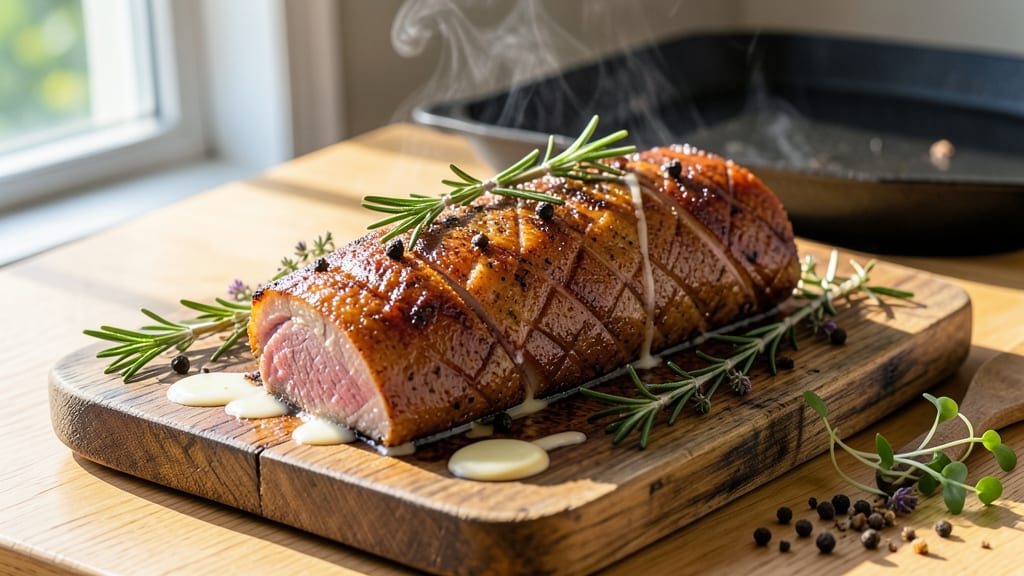
This Blackstone griddle pork loin recipe transforms a simple cut into a showstopper with a caramelized crust and tender interior. After years of perfecting pork on cast iron—from my time at The Smoky Pig to my own farm—I've cracked the code for restaurant-quality results at home.
The secret lies in high-heat searing and proper resting, techniques that elevate even basic pork loin to something extraordinary.
What sets this apart is the Blackstone's ability to create that coveted crust while keeping the meat juicy inside. You'll start by preheating your griddle until it's screaming hot—this isn't just cooking, it's about building flavor through proper heat control.
A simple dry brine overnight enhances the texture, while a pat of butter and fresh herbs at the end add that final touch of elegance that makes this dish feel special.
The result is pork loin with a deep mahogany crust that flakes apart at the touch of a fork, revealing perfectly pink, tender meat underneath. The caramelized edges pack layers of flavor that'll have your guests asking for seconds.
This isn't just dinner—it's the kind of meal that makes people remember why they love home cooking.
Pair it with griddle potatoes for a complete cast iron feast, or serve alongside a simple green salad to balance the richness. The beauty of this recipe is its versatility—equally at home for weeknight dinners or weekend gatherings. Let's get cooking.
Ingredients for blackstone griddle pork loin
The secret to restaurant-quality pork loin lies in these simple yet powerful ingredients.
| Ingredient | Amount | Notes |
|---|---|---|
| Pork Loin 🥓 | 2 lb | Bone-in, center-cut preferred |
| Kosher Salt 🧂 | 2 tbsp | Diamond Crystal preferred |
| Black Peppercorns 🌶️ | 1 tbsp | Freshly cracked preferred |
| Unsalted Butter 🧈 | ½ cup | Cold, cut into 8 pieces |
| Fresh Rosemary 🌿 | ¼ cup | Chopped, stems removed |
| Fresh Thyme 🌿 | ¼ cup | Leaves only, stems removed |
| Garlic Cloves 🧄 | 6 cloves | Smashed, not minced |
| Olive Oil 🫒 | 2 tbsp | High smoke point |
| Vegetable Oil 🫒 | ½ cup | For griddle preheating |
| Fresh Parsley 🌿 | ¼ cup | Chopped, for garnish |
| Honey 🍯 | 1 tbsp | For finishing (optional) |
The pork loin is non-negotiable here—bone-in, center-cut cuts develop that coveted crust better than boneless. Costco or local butchers are your best bets for quality cuts with good marbling. If you can't find bone-in, don't stress—just add 15 minutes to your cooking time. The salt and pepper are your dry brine; Diamond Crystal kosher dissolves better than table salt. I always buy fresh rosemary and thyme from the grocery store's produce section—they stay fresher longer than the dried stuff, and you'll use them in other dishes too. For the garlic, peel and smash the cloves with the flat side of your knife—this releases more flavor than mincing.
No fresh herbs? Dried rosemary at one-third the amount works in a pinch, but fresh is worth hunting down. Running low on butter? Ghee works equally well for high-heat searing. The vegetable oil is just for preheating—you won't use all of it. If you're feeling fancy, swap the honey for a drizzle of balsamic glaze at the end. For the olive oil, avoid extra-virgin (it burns too easily)—stick with light or refined olive oil for high-heat cooking. The key is getting that griddle screaming hot before the pork hits the surface—this isn't the time to skimp on heat control.
The pork keeps best in the fridge for 3 days if you brine it overnight, but use it within 2 days if you're cooking it fresh. Fresh herbs? Wrap them in damp paper towels and store in a sealed container for up to 5 days. The butter should stay cold in the fridge until you're ready to use it—don't let it soften prematurely. Leftovers reheat beautifully in a skillet with a splash of water or broth. I always make extra because this pork disappears fast—great for sandwiches or salads the next day.
Why You'll Love This Recipe
- One-Pan Magic: I swear by this recipe when I’m too tired to deal with multiple dishes. Just season the pork loin with salt, pepper, and rosemary, then let the Blackstone do the work—no flipping pans, no stress.
- Rosemary Butter Bliss: That crispy crust on the outside? Pure satisfaction. The butter basting with fresh rosemary melts into the meat, giving it a rich, herby depth that makes it taste like a restaurant cut.
- Weeknight or Weekend: Serve it sliced thin for a quick weeknight dinner or let it rest and shred for sandwiches the next day. Honestly, it’s my go-to for game day, potlucks, or even a lazy Sunday brunch.
- Budget-Friendly Feast: Pork loin stretches further than you’d think, especially when you slice it against the grain. Leftovers reheat beautifully, and the ingredients won’t break the bank—just salt, pepper, butter, and a sprig of rosemary.
Step-by-step instructions for Blackstone griddle pork loin
Here's how to transform simple ingredients into a showstopping pork loin with a caramelized crust.
Prep and Season the Pork Loin
Start by patting the 2 lb pork loin completely dry with paper towels—this ensures maximum crispiness. Place it on a cutting board and score the surface in a diamond pattern with a sharp knife, cutting about ½-inch deep. This creates channels for the seasoning to penetrate and the butter to render beautifully.
In a small bowl, combine 2 tbsp kosher salt and 1 tbsp freshly cracked black peppercorns. Rub this mixture all over the pork loin, pressing firmly so the seasoning sticks. Then, in another bowl, mix 0.25 cup chopped fresh rosemary, 0.25 cup fresh thyme leaves, and the 6 smashed garlic cloves. Sprinkle this herb mixture evenly over the salted pork. Let it sit at room temperature for 30 minutes while you preheat the griddle.
Preheat the Griddle and Render the Butter
Heat your Blackstone griddle over medium-high heat for 10 minutes until it's screaming hot. Add 0.5 cup vegetable oil and spread it evenly with a paper towel—this prevents sticking and helps create that perfect crust. Once the oil is shimmering, reduce heat to medium and add the 0.5 cup cold unsalted butter cut into pieces. Let it melt completely, about 2-3 minutes, until the butter foams and turns golden.
Here's the thing—don't rush this step. The butter needs to render fully and create a flavorful, aromatic base. If you see browned bits forming, that's actually good—it means you're building flavor. Once the butter is fully melted and the griddle is ready, carefully place the pork loin on the griddle, fat-side up.
Sear the Pork Loin to Perfection
Cook the pork loin for 8-10 minutes on the first side, pressing down gently with a metal spatula to ensure even contact with the griddle. You'll know it's ready to flip when the edges are deep golden brown and the bottom releases easily from the griddle. Flip the pork loin and cook for another 8-10 minutes, again pressing down gently to prevent curling.
During the last 2 minutes of cooking, add the 2 tbsp olive oil around the pork loin. This helps create a glossy finish and adds another layer of flavor. The internal temperature should reach 145°F—use a meat thermometer to check. If it's not quite there, continue cooking for another 1-2 minutes per side.
Rest and Finish with Honey
Transfer the pork loin to a cutting board and tent loosely with aluminum foil. Let it rest for 10-15 minutes—this is crucial for redistributing the juices. Real talk: Skipping this step means dry meat. While it rests, preheat your oven to 200°F if you want to finish it in the oven for even cooking, or simply slice and serve as is.
For that caramelized edge, brush the top of the pork loin with the 1 tbsp honey and place it under the broiler for 1-2 minutes until the honey is bubbly and slightly caramelized. Garnish with the 0.25 cup chopped fresh parsley for a pop of color and freshness. Slice against the grain into ½-inch thick pieces and serve immediately.
Pro Tips For Making Blackstone Griddle Pork Loin
- CRANK THE HEAT FIRST: Blackstone griddles love high heat for that perfect crust—get yours screaming hot (450°F+) before adding the pork. I used to start medium and wondered why my butter never browned properly. Once you see smoke, it’s ready—just don’t walk away.
- SALT THE MEAT 40 MINUTES EARLY: Toss that pork loin with salt and pepper before you even think about the griddle. The salt needs time to work its magic into the surface, and skipping this step means flavor that’s just… meh. (Yes, even if you’re impatient like me.)
- USE COLD BUTTER: Chill that unsalted butter solid before slicing it into pats—it melts slower and bastes the pork like a pro. I learned this after watching mine pool away too fast, leaving dry spots. Cold butter = better sear.
- STOP AT 145°F, REST 10 MINUTES: Your pork’s done at 145°F internal temp, but don’t cut into it yet—let it rest under foil for a solid 10 minutes. I was skeptical until I tried it, and now I never skip it. The juices redistribute, or you’ll end up with sad, dry slices.
Make-ahead tips for this dish
Overnight Brining
I swear by brining pork loin overnight for the juiciest results. Place the 2 lb pork loin in a shallow dish and sprinkle with 2 tbsp kosher salt and 1 tbsp black pepper.
Cover and refrigerate for 12-24 hours. This method works especially well if you're prepping ahead—just store the brined pork in an airtight container. The salt penetrates deeply, ensuring moisture retention during cooking. 💪
Partial Cooking
For busy weekends, cook the pork loin almost all the way through, then finish it later. Sear the pork as directed until it reaches 130°F internal temperature—about 12-14 minutes per side. Let it rest, wrap tightly in aluminum foil, and refrigerate for up to 3 days.
To finish, reheat in a 350°F oven for 10-15 minutes until it hits 145°F. This saves time while keeping the meat incredibly tender.
Herb Prep Ahead
Chop all your fresh herbs—rosemary, thyme, and parsley—and store them in separate airtight containers in the fridge. They'll stay fresh for 5 days this way. I like to portion them into small containers so I can grab just what I need.
For the garlic, peel and smash the cloves, then store them in a sealed container with a paper towel to absorb any moisture. This keeps them ready for quick assembly when you're ready to cook. 🌿
Butter Prep
Cut the 0.5 cup unsalted butter into pieces and store it in a small container in the fridge. Keep it cold until you're ready to render it on the griddle. I like to portion it into 8 equal pieces so I can distribute them evenly across the hot griddle.
This ensures even browning and maximum flavor infusion. Pro tip: Let the butter sit at room temperature for 10 minutes before using for easier melting.
Griddle Prep Shortcut
Preheat your Blackstone griddle the night before if you're cooking the next day. Store it covered to maintain heat retention. In the morning, just add a fresh coat of vegetable oil and let it heat up quickly.
This saves you 10 minutes of waiting time on cook day. I also keep a small bottle of oil nearby for quick touch-ups if needed. This method is a game-changer for weekend brunches or family dinners. ⏰
Make-Ahead Sides
Prep your sides ahead of time to create a complete meal. Roast potatoes or asparagus in advance and store them in the fridge. Reheat them in the oven alongside your pork loin for a 10-minute finish.
I often make a simple arugula salad with lemon dressing the night before—it keeps well in the fridge and adds a fresh contrast to the rich pork. This way, you're not scrambling on cook day. 🥔
Nutrition facts
Frequently asked questions
Can I use boneless pork loin instead of bone-in?
Yes, but expect slightly different results. Boneless pork loin will cook faster and won't develop the same deep crust as bone-in cuts. If using boneless, reduce cooking time by 2-3 minutes per side and monitor closely to avoid overcooking. The meat thermometer is your best friend here—aim for 145°F internal temperature regardless of bone status.
What if my Blackstone griddle isn't hot enough?
If your griddle isn't screaming hot, the pork will steam instead of sear, resulting in a pale crust. Preheat your griddle over medium-high heat for 10-15 minutes until it's too hot to touch for 3 seconds. Look for shimmering oil—this confirms proper heat. If you're still struggling, try using a lighter or turning up the heat to high for an extra 5 minutes.
How do I prevent the pork loin from curling?
Pork loin naturally wants to curl during cooking. To prevent this, press down gently with a metal spatula during the first 2 minutes of searing. Also, score the surface in a diamond pattern before seasoning—this creates tension points that help keep the meat flat. If it starts curling, simply press it back down and continue cooking.
Can I make this recipe without fresh herbs?
Use 1 tbsp dried rosemary and 1 tbsp dried thyme instead of fresh. For best results, toast the dried herbs in a dry skillet over low heat for 1 minute to enhance their flavor. The garlic can be minced instead of smashed, though smashed cloves release more flavor. The dish will still taste amazing—just slightly more herb-forward.
What's the best way to reheat leftovers?
Reheat pork loin leftovers in a skillet over medium-low heat with a splash of water or broth to prevent drying out. Cover the pan and cook until warmed through (5-7 minutes). For extra crispiness, finish under the broiler for 1-2 minutes. Never microwave pork loin—it'll turn rubbery. Leftovers keep well in the fridge for 3-4 days or can be frozen for up to 3 months.