
Main Courses
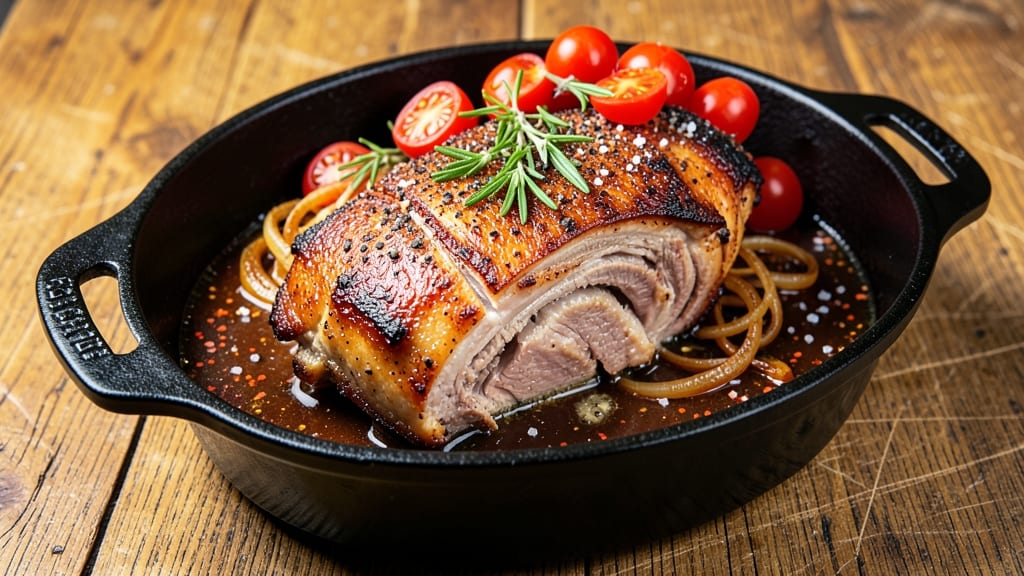
This bone-in pork shoulder roast Dutch oven recipe delivers crispy bark and juicy pink magic—all in one pot. After years of perfecting slow-cooked pork, I've cracked the code for tender meat with a golden crust that falls apart at the touch.
The secret lies in high-heat searing followed by low-and-slow braising, where the bone infuses flavor into every bite.
The Dutch oven method transforms tough pork into melt-in-your-mouth perfection by trapping steam and rendering fat back into the meat. Start with a dry rub of salt, pepper, and smoked paprika for that signature bark, then sear until golden before adding just enough liquid to create a rich, flavorful bath.
This technique ensures restaurant-quality results without requiring fancy equipment or hours of babysitting.
What makes this recipe truly special is the balance of textures—crispy edges that shatter when cut, and tender, pink centers that practically melt. The bone-in cut adds depth of flavor while keeping the meat juicy, and the Dutch oven handles all the work for you.
Serve with roasted potatoes or braised greens for a complete meal that feels indulgent yet simple to prepare.
For maximum flavor, I recommend marinating the pork overnight, but even a quick salt rub works in a pinch. The beauty of this method is its flexibility—whether you're feeding a crowd or meal prepping for the week, this pork shoulder delivers foolproof tenderness every time. Let's get cooking!
Ingredients for bone in pork shoulder roast recipe dutch oven
Six ingredients transform tough pork into melt-in-your-mouth perfection with crispy bark and juicy pink centers.
| Ingredient | Amount | Notes |
|---|---|---|
| Bone-In Pork Shoulder 🐖 | 5 lb | With fat cap intact for flavor |
| Kosher Salt 🧂 | 2 tbsp | Diamond Crystal preferred |
| Ground Black Pepper 🌶️ | 1 tbsp | Freshly cracked preferred |
| Smoked Paprika 🌶️ | 1 tbsp | For authentic smoky flavor |
| Garlic Powder 🧄 | 1 tsp | Not garlic salt |
| Onion Powder 🧅 | 1 tsp | For depth of flavor |
| Apple Cider Vinegar 🍏 | ¼ cup | For tenderizing |
| Beef Broth 🍲 | 2 cups | Low-sodium preferred |
| Yellow Onion 🧅 | 1 whole | Chopped into large pieces |
| Carrots 🥕 | 3 whole | Cut into 2-inch chunks |
| Fresh Thyme 🌿 | 4 sprigs | Or 1 tsp dried thyme |
| Fresh Rosemary 🌿 | 2 sprigs | For aromatic depth |
| Olive Oil 🫒 | 2 tbsp | For high-heat searing |
| Dutch Oven 🍲 | 1 whole | 5-7 quart capacity |
The pork shoulder is the star—bone-in with fat cap ensures maximum flavor and moisture. Most butchers will cut this for you, but if buying whole, look for a 5-7 lb shoulder with good marbling. Costco and Whole Foods often carry high-quality cuts, but your local butcher shop will have the freshest options. The fat cap is non-negotiable—it renders down during cooking, creating a flavorful crust. If your pork comes without it, trim a thin layer of fat from another cut and press it onto the surface before searing. For restaurant-quality results, marinate overnight in apple cider vinegar—it tenderizes while adding brightness.
No beef broth? Chicken broth or vegetable broth works in a pinch, though beef adds depth. Short on fresh thyme and rosemary? Dried works at one-third the amount, but fresh is ideal for that aromatic punch. The smoked paprika is essential—Penzeys or Gourmet Garden brands deliver consistent quality. For the dry rub, mix all spices together in a bowl before applying. If you're prepping ahead, you can make the rub a day in advance and store it in an airtight container. The Dutch oven is your secret weapon here—if you don't have one, a heavy oven-safe pot with a lid will do, though it may not get quite as crispy.
Pork keeps beautifully for 3-4 days in the fridge once cooked, though it's best on day 2 when flavors meld. For meal prep, portion into containers with some of the cooking juices—freezes for up to 3 months. The rendered fat in the Dutch oven can be saved and reused for cooking (strain and store in the fridge). If you're serving a crowd, double the recipe—this method scales perfectly. Leftovers reheat wonderfully in the oven at 300°F until warmed through, about 15-20 minutes, covered with foil to retain moisture.
Why You'll Love This Recipe
- Dutch Oven Magic: I swear by this method—just sear the bone-in shoulder in the same pot where it’ll slow-roast, then cover it with foil and let the oven do the work. No flipping, no fuss, and that bone? It renders down into flavor gold.
- Smoky Depth Fast: The smoked paprika and garlic powder cling to the meat like a hug—no fancy marinade needed. Between us, that first bite of caramelized crust with the tender fall-off-the-bone texture? It’s the kind of flavor that makes you pause mid-chew.
- Leftovers That Win: This roast practically begs to be made extra. Shred it for tacos, sandwiches, or even breakfast hash the next day. My freezer is stocked with portions because I can’t resist making a double batch—it’s that good.
- Budget Feast: A bone-in pork shoulder stretches across meals without breaking the bank. Honestly, it’s my go-to for gatherings: one roast feeds six, and the leftovers turn into meals that cost next to nothing. Plus, the bone adds richness for free.
Step-by-step instructions for bone-in pork shoulder roast in Dutch oven
Master this one-pot technique for restaurant-quality pork with perfect crust and melt-in-your-mouth tenderness.
Prepare and Season the Pork Shoulder
Remove the bone-in pork shoulder from the refrigerator and pat it completely dry with paper towels. This step is critical—any moisture on the surface prevents that beautiful crispy bark from forming. I like to work in a well-ventilated area because pork fat can splatter when heated.
In a small bowl, combine the 2 tbsp kosher salt, 1 tbsp ground black pepper, 1 tbsp smoked paprika, 1 tsp garlic powder, and 1 tsp onion powder. Rub this mixture generously over all sides of the pork shoulder, pressing it into the meat so it adheres well. The fat cap should be well-coated but not buried under a thick layer of seasoning.
Place the seasoned pork shoulder on a plate and let it sit at room temperature for 30 minutes before cooking. This allows the meat to come to room temperature, which promotes even cooking throughout. Don't skip this step—it makes a noticeable difference in the final result.
Sear the Pork Shoulder in the Dutch Oven
Place the Dutch oven over medium-high heat until it's preheated for 5 minutes. Add the 2 tbsp olive oil and let it get hot enough to shimmer slightly. Place the pork shoulder fat-side down in the Dutch oven and let it sear undisturbed for 8-10 minutes until a deep golden-brown crust forms.
Here's the thing—don't touch it during this initial searing. You'll know it's ready to flip when the fat cap releases easily from the pan with a gentle nudge. Flip the pork shoulder and sear the other side for another 8-10 minutes until it develops an equally beautiful crust. This high-heat sear locks in juices and creates that coveted bark.
Real talk: If you see smoke, reduce the heat slightly. You want a good sear, not a fire. Once both sides are beautifully browned, remove the pork shoulder from the Dutch oven and set it aside on a plate.
Build the Flavor Base in the Dutch Oven
In the same Dutch oven, add the 1 whole yellow onion cut into large pieces and the 3 whole carrots cut into 2-inch chunks. Cook them for 5 minutes, stirring occasionally, until they begin to soften slightly. Add the 4 sprigs fresh thyme and 2 sprigs fresh rosemary, letting them sizzle for 30 seconds to release their aromatic oils.
Pour in the 0.25 cup apple cider vinegar and scrape up any browned bits from the bottom of the pan with a wooden spoon. This deglazing step captures all those flavorful fond particles that would otherwise go to waste. Let the vinegar simmer for 1-2 minutes until it reduces by about half and the aromatics are fragrant.
Add the 2 cups beef broth to the Dutch oven and bring it to a gentle simmer. The liquid should come about halfway up the sides of the pork shoulder when you place it back in. This creates the perfect environment for slow cooking without submerging the meat completely.
Slow Cook to Tender Perfection
Return the seared pork shoulder to the Dutch oven, placing it fat-side up. The rendered fat will baste the meat as it cooks, adding to the flavor and moisture. Cover the Dutch oven tightly with a lid and transfer it to a preheated 325°F oven.
Cook for 3 hours, then check the internal temperature using a meat thermometer. You're looking for 160-165°F in the thickest part of the meat. This is where the magic happens—the pork shoulder will become fork-tender and develop that beautiful pink center we all love. If you don't have a meat thermometer, you can use the "finger test": press your finger into the meat—it should feel like pressing into a ripe avocado.
I know it seems like a long wait, but this slow cooking process breaks down the connective tissue, transforming tough muscle into succulent, pull-apart meat. Don't be tempted to rush it—patience is key here.
Rest and Slice for Maximum Juiciness
Once the pork shoulder reaches the target temperature, remove it from the oven and transfer it to a cutting board. Tent loosely with aluminum foil and let it rest for at least 1 hour before slicing. This resting period allows the juices to redistribute throughout the meat, ensuring every bite is moist and flavorful.
While the pork shoulder rests, you can skim any excess fat from the cooking liquid in the Dutch oven and reduce it slightly for a pan sauce if desired. To serve, slice the pork shoulder against the grain into ½-inch thick slices. The meat should pull apart easily with a fork, and each slice should be juicy with a beautiful pink center.
Serve immediately with the pan juices spooned over the top. The result should be a perfect balance of crispy exterior and tender, juicy interior—exactly what you promised yourself when you started this recipe. Enjoy with your favorite sides like roasted potatoes or crusty bread to soak up those delicious juices.
Pro Tips For Making Bone In Pork Shoulder Roast Recipe Dutch Oven
- CRANK THE HEAT FIRST: Start your Dutch oven over medium-high heat—yes, even if you’re nervous about burning. The first 5 minutes of searing at 375°F (190°C) build that deep crust that locks in flavor, not just moisture. (I used to low-and-slow from the start, and the meat always tasted bland.)
- SALT THE NIGHT BEFORE: Pat the pork shoulder dry, then season it generously with kosher salt (about 1 tablespoon per pound) and let it sit uncovered in the fridge for 12–24 hours. This breaks down proteins for tender meat and guarantees a better crust when you sear. (I skipped this once and paid for it with a sad, soggy exterior.)
- DON’T SKIP THE REST: Pull the pork from the oven at 195°F (90°C) internal temp—yes, it’ll still look pink—and tent it loosely with foil for 10 minutes. This lets juices redistribute instead of pooling out when you slice. (Your future self will thank you.)
- USE A THERMOMETER: Guessing doneness with a knife is a fool’s game. Invest in a cheap instant-read thermometer and check the thickest part of the shoulder—it should hit 203°F (95°C) for pull-apart perfection. (I’ve had both overcooked leather and undercooked rubber—neither is ideal.)
Perfect pairings for this recipe
Classic Sides
Serve your Dutch oven pork shoulder with garlic mashed potatoes—I make mine with New potatoes boiled whole, then mashed with butter, cream, and roasted garlic. The creaminess contrasts perfectly with the crispy pork.
For a lighter option, try roasted baby carrots with honey and thyme—toss them in 1 tbsp honey, 1 tsp fresh thyme, and salt, then roast at 400°F for 20 minutes. 🥕
Bread Pairings
A crusty baguette is my go-to for soaking up those pork juices. Warm it in the oven for 5 minutes at 350°F, then slice and serve with herb butter (mix softened butter with chopped parsley, garlic, and lemon zest).
For a heartier option, try sourdough with a sprinkle of flaky sea salt—the tangy crust cuts through the richness. 🥖
Vegetable Sides
Braised red cabbage adds a tangy contrast. Sauté ½ head of red cabbage with 1 apple (peeled and chopped), 1 tbsp apple cider vinegar, and 1 tsp caraway seeds until tender. For a fresh side, shaved Brussels sprouts with balsamic glaze—toss them with 1 tbsp balsamic vinegar and 1 tsp olive oil, then roast at 425°F for 15 minutes. 🥬
Sauce Enhancements
For extra flavor, reduce the pork juices in the Dutch oven with 1 tbsp apple cider vinegar and 1 tsp Dijon mustard until thickened. A drizzle of spicy brown mustard (like French’s Original) adds a tangy kick.
For a creamy touch, stir in 2 tbsp sour cream at the end—just enough to lighten the sauce without overpowering the pork. 🍯
Drink Pairings
An amber ale like Fat Tire complements the smoky, savory flavors beautifully. For wine lovers, a Cabernet Sauvignon (like Louis Martini) balances the richness with its bold tannins. A crisp Sauvignon Blanc (such as Kim Crawford) works too if you prefer white.
For non-alcoholic options, sparkling apple cider with a cinnamon stick adds a festive touch. 🍺
Make-Ahead Sides
Prep sides the night before for stress-free serving. Roasted potatoes (tossed in olive oil, salt, and rosemary) can be par-cooked at 375°F for 20 minutes, then finished under the broiler for 5 minutes before serving. Braised greens (like kale or collards) cook ahead in the same Dutch oven as the pork—just add them during the last 30 minutes of cooking. 📅
Nutrition facts
Frequently asked questions
Why does the recipe call for a bone-in pork shoulder?
The bone adds incredible depth of flavor while keeping the meat juicy during cooking. The marrow releases into the Dutch oven, creating a rich, savory broth that bastes the pork. Plus, bone-in cuts stay moist longer than boneless—perfect for slow cooking.
Can I use a regular pot instead of a Dutch oven?
You can try, but a Dutch oven's heavy lid traps steam better, creating that perfect moist environment. For best results, use a heavy oven-safe pot with a tight lid. The pork will still turn out tender, though the bark might not be as crispy.
What's the best way to check doneness without a meat thermometer?
Use the "finger test": press your finger into the thickest part of the meat—it should feel like pressing into a ripe avocado. The meat should also pull apart easily with a fork. For visual cues, look for a golden-brown crust and slightly pink, tender interior.
How do I prevent the pork from drying out?
Never skip the resting period—at least 1 hour before slicing lets juices redistribute. Also, avoid overcooking: pull the pork at 160-165°F internal temp. The Dutch oven's lid helps retain moisture, and the fat cap acts as a natural basting agent.
Can I make this recipe in a slow cooker instead?
Sear the pork first, then transfer to a slow cooker with all ingredients. Cook on low for 6-8 hours or high for 4-5 hours. The texture will be more tender than crispy, but still delicious. Just add 1 cup extra broth since slow cookers evaporate more liquid.