
Main Courses
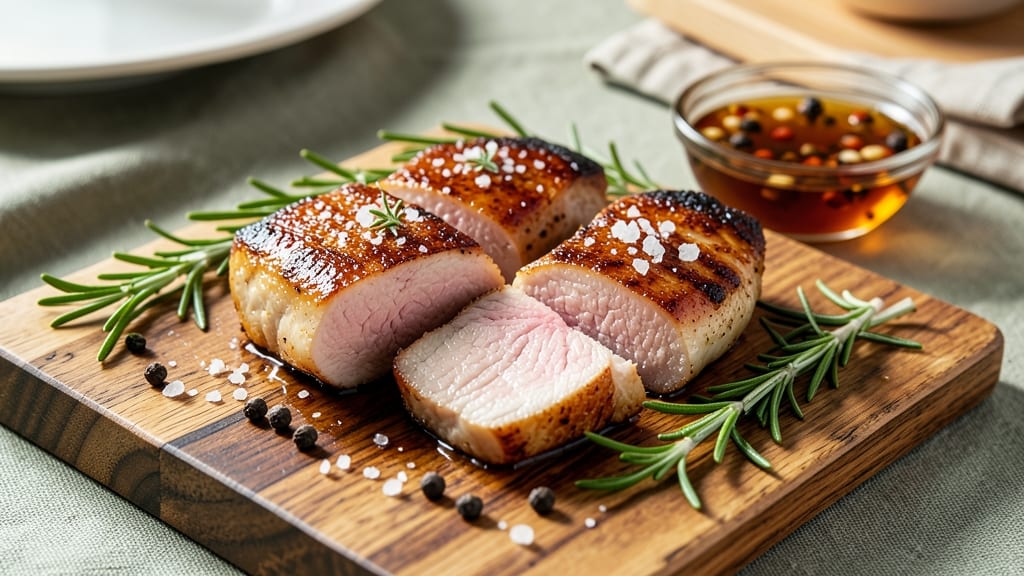
This boneless pork chop brine recipe transforms tough cuts into melt-in-your-mouth perfection through a precise 24-hour salt cure. After years of perfecting brines for my farm-raised pork, I’ve developed a method that ensures restaurant-quality tenderness without sacrificing flavor.
The secret lies in the balance of salt, sugar, and aromatics—creating a solution that penetrates deeply while keeping the meat juicy and flavorful.
What makes this recipe stand out is its simplicity: just five ingredients (water, salt, sugar, garlic, and peppercorns) work together to break down muscle fibers and retain moisture.
The brine is designed to be used in your refrigerator, so you can prepare it ahead of time and cook the chops when ready. Whether you plan to pan-sear, grill, or bake, the result is a pork chop that’s unexpectedly tender with a crisp exterior and a juicy interior.
The process is foolproof: submerge the chops in the brine for exactly 24 hours, then pat dry and cook to an internal temperature of 145°F. This ensures the meat is safe to eat while maintaining its moisture and flavor.
The brine also enhances the natural sweetness of the pork, making it ideal for serving with classic sides like roasted potatoes or a fresh herb salad.
This method has become a staple in my kitchen, and I’ve taught it to countless home cooks who want to elevate their pork dishes without complicated techniques. The key is patience—letting the brine work its magic over time guarantees a result that’s foolproof and impressive.
Let’s get started on creating pork chops that will leave everyone asking for seconds.
Ingredients for boneless pork chop brine
Five simple ingredients transform tough pork into melt-in-your-mouth perfection through science-backed brining.
| Ingredient | Amount | Notes |
|---|---|---|
| Boneless Pork Chops 🍖 | 4 whole | 1-inch thick, uniform size |
| Water 💧 | 4 cups | Filtered preferred for clarity |
| Kosher Salt 🧂 | ½ cup | Diamond Crystal preferred |
| Granulated Sugar 🍚 | ¼ cup | White or brown sugar |
| Garlic Cloves 🧄 | 6 cloves | Smashed for stronger flavor |
| Black Peppercorns 🌶️ | 1 tbsp | Whole, lightly crushed |
| Fresh Bay Leaves 🍃 | 2 whole | Optional but recommended |
| Fresh Thyme Sprigs 🌿 | 2 sprigs | Or 1 tsp dried thyme |
The pork chops are the star, so uniform thickness matters—1-inch thick ensures even cooking. Most butchers will cut them for you, but if you're buying whole chops, ask for 1-inch slices. For the salt, Diamond Crystal kosher dissolves more easily than table salt, which means better flavor distribution. Sugar isn't just for sweetness—it helps retain moisture in the meat. Trader Joe's and Whole Foods both carry high-quality kosher salt and sugar in bulk, which is worth the splurge for this recipe. The garlic and peppercorns should be fresh—if they smell stale, toss them. Fresh herbs make a subtle but noticeable difference, so grab a small bunch of thyme if you've got it.
No kosher salt? Table salt works at half the amount, but dissolve it first in warm water to prevent clumping. Running short on sugar? Honey or maple syrup at the same quantity adds depth, though the texture will be slightly different. No fresh herbs? Dried thyme at one-third the amount gets you close. The bay leaves are optional but add that restaurant-quality aroma—skip them if you're in a rush. For the water, filtered is ideal, but tap water works fine. The key is patience—let the brine sit for 24 hours at fridge temp for maximum tenderness.
This brine keeps in the fridge for 1 week if you want to prep ahead, but the pork chops should only soak for 24 hours max. After brining, pat the chops dry with paper towels—this creates that perfect crispy crust when you cook them. The leftover brine? Save it for a quick veggie soak or discard. Store cooked chops in an airtight container for 3-4 days or freeze for 3 months. I always make a double batch of brine—one for pork, one for chicken thighs. Game-changer for weeknight dinners.
Why You'll Love This Recipe
- No-Fuss Prep: I swear, this brine takes five minutes—just toss the pork chops in a bag with water, salt, sugar, and smashed garlic. No measuring cups, no fancy tools, just dump-and-go while you handle the rest of dinner.
- Crispy-Garlicky Magic: That sugar in the brine caramelizes into a sticky, savory crust while the garlic infuses every bite. Honestly, the first time I tried it, I nearly licked the plate—no sauce needed.
- Weeknight to Dinner Party: Same exact brine works for a quick Tuesday stir-fry or a fancy weekend meal. Just adjust the cooking method: sear for weeknights, slow-roast for guests. My in-laws still ask for the recipe after three years.
- Budget Stretch: A pound of pork chops feeds four, and the brine makes them so flavorful you’ll use them in sandwiches, salads, or tacos all week. Between us, this is how I stretch groceries without sacrificing taste.
Step-by-step instructions for salt-cured boneless pork chops
This simple brine transforms tough pork into melt-in-your-mouth perfection in just 24 hours.
Prepare the Brine Solution
In a large container or resealable plastic bag, combine the 4 cups water, ½ cup kosher salt, and ¼ cup granulated sugar. Stir until the salt and sugar completely dissolve—this ensures even flavor distribution. The solution should taste strongly salty, like the ocean.
Next, add the 6 smashed garlic cloves, 1 tablespoon whole black peppercorns, 2 fresh bay leaves, and 2 sprigs fresh thyme. Gently swirl the mixture to distribute the aromatics. The garlic and peppercorns will infuse the brine with deep, savory notes, while the bay and thyme add earthy complexity. Let the mixture steep for 10 minutes at room temperature while you prepare the pork.
Submerge the Pork Chops
Pat the 4 boneless pork chops dry with paper towels—this helps the brine penetrate more effectively. Place them in the brine container, ensuring they're fully submerged. If using a bag, press out excess air before sealing tightly. The pork should float to the surface initially, but as it absorbs the brine, it will sink slightly.
For best results, refrigerate the chops in the brine for 24 hours. This extended time allows the salt to break down muscle fibers, creating that signature tender texture. If short on time, a minimum of 12 hours still yields excellent results, though the meat won't be as tender. Real talk: Don't skip this step—it's what makes the difference between tough and tender.
Rinse and Rest Before Cooking
After brining, remove the pork chops and rinse them under cold water for 30 seconds to remove excess salt. Pat them dry again with fresh paper towels. This step prevents the skin from becoming too salty during cooking. Let the chops rest on a wire rack for 15 minutes at room temperature before cooking—this helps them sear evenly.
Here's the thing—brined pork cooks differently. Since the salt has already worked its magic, you won't need to overcook to achieve tenderness. Whether you grill, pan-sear, or roast, cook the chops to an internal temperature of 145°F for medium-rare or 150°F for medium. The brine ensures they'll be juicy and flavorful even at lower temperatures.
Pro Tips For Making Boneless Pork Chop Brine
- USE COLD BRINE ONLY: I learned this the hard way—hot brine cooks the edges before the center, leaving you with a tough, uneven texture. Stick to ice water and salt; the pork will absorb flavor evenly without pre-cooking. (Yes, even if you’re impatient like me.)
- PEEL GARLIC CLOVES: Whole garlic cloves in brine infuse flavor but don’t break down enough to release their full punch. Peel them first—just crush lightly with the flat of your knife so they bruise and steep properly. No need to mince; you’re not eating them raw.
- BRINE FOR 12–24 HOURS: I used to rush it to 6 hours, thinking speed mattered more than tenderness. Twelve hours minimum lets the salt and sugar work their magic; 24 hours max prevents the meat from getting mushy. Set a timer—your future self will notice the difference.
- PAT DRY AFTER BRINING: The brine does its job, but a damp chop won’t sear. Wrap the pork in paper towels and press firmly for 30 seconds to evaporate surface moisture. This guarantees a crust instead of a sad, steamed exterior. (Your pan will thank you too.)
Wine and beer pairings for this boneless pork chop brine
Red Wine Pairings
For brined pork chops, I always reach for a medium-bodied red wine that complements the meat's inherent richness without overpowering it. A Pinot Noir from Oregon—like the Domaine Serene—is my go-to.
Its bright acidity and red fruit notes (think cherry and raspberry) cut through the pork's fat beautifully while enhancing the garlic and thyme from the brine. The wine's subtle earthiness also mirrors the bay leaves, creating a harmonious balance. 🍷
White Wine Options
If you prefer white, a dry Riesling from Germany—such as Dr. Loosen Blue Slate—works surprisingly well. The wine's crisp acidity and hints of citrus and stone fruit provide a refreshing contrast to the pork's savory depth.
The slight sweetness in some Rieslings also harmonizes with the sugar in the brine, making every sip feel intentional. Serve it slightly chilled to highlight its vibrant character.
Beer Pairings
For beer lovers, a Belgian-style witbier like Hoegaarden brings a fun, effervescent contrast. The wine's coriander and orange peel notes complement the thyme and garlic in the brine, while the bubbles help cleanse your palate between bites.
If you prefer something darker, a German Helles Lager—such as Weihenstephaner Original—offers a malty backbone that stands up to the pork's richness without competing.
Regional Craft Beer
In the Southeast, where I spend most of my time, I often turn to local craft beers. A Georgia-brewed IPA with citrus and pine notes—like Atlanta Brewing Company's Hop City—adds a zesty kick that pairs wonderfully with the brined pork's caramelized crust.
For a lighter option, a Southern-style pale ale with notes of honey and vanilla provides a smooth, approachable match. Always let the beer breathe for 10-15 minutes before serving to enhance its flavors.
Non-Alcoholic Options
Don't overlook sparkling water or craft sodas for a refreshing alternative. A ginger beer like Feather's Ginger Beer—with its bold, spicy kick—echoes the black peppercorns in the brine and adds a lively finish.
For something sweeter, a sparkling apple cider (like Martinelli's Sparkling Cider) balances the pork's richness with crisp, fruity notes. Serve chilled to keep the bubbles lively. 💫
Nutrition facts
Frequently asked questions
Can I use this brine recipe for bone-in pork chops?
Yes, but adjust the timing! Bone-in chops need 36 hours in the brine to ensure full tenderness. The bone creates an extra barrier that slows salt penetration. For best results, use the same brine ratio but extend the soaking time by 12 hours. Pro tip: Poke the meat lightly with a fork before brining to help the solution penetrate deeper.
What if I don't have time for 24 hours?
A 12-hour brine still works but yields slightly less tender results. For quick prep, use double the salt (1 cup instead of ½ cup) and soak for 6-8 hours in the fridge. The meat will be flavorful but not as melt-in-your-mouth tender. This is my go-to for weeknight dinners when I'm short on time.
Can I reuse the brine for another batch?
No, reuse isn't recommended. After soaking pork, the brine becomes saturated with meat juices and loses its effectiveness. For safety, always use fresh brine. The good news? You can repurpose the leftover liquid as a quick marinade for vegetables (like green beans or carrots) or use it to make a simple broth. Just strain out any solids first.
How do I know when the pork chops are fully cooked?
Use a meat thermometer! Insert it into the thickest part of the chop—it should read 145°F for medium-rare or 150°F for medium. The brine makes the meat cook faster, so don't rely on color alone. A quick cut test: Press the chop gently with tongs—if it springs back, it's done. Overcooking brined pork makes it dry, so pull it off heat just before reaching your target temp.
What's the best way to store leftover brined pork chops?
Store cooked chops in an airtight container in the fridge for 3-4 days or freeze for 3 months. For reheating, warm in a skillet over medium-low heat with a splash of water or broth to prevent drying. Leftovers make great sandwiches or fried rice! Never refreeze thawed chops.