
Main Courses
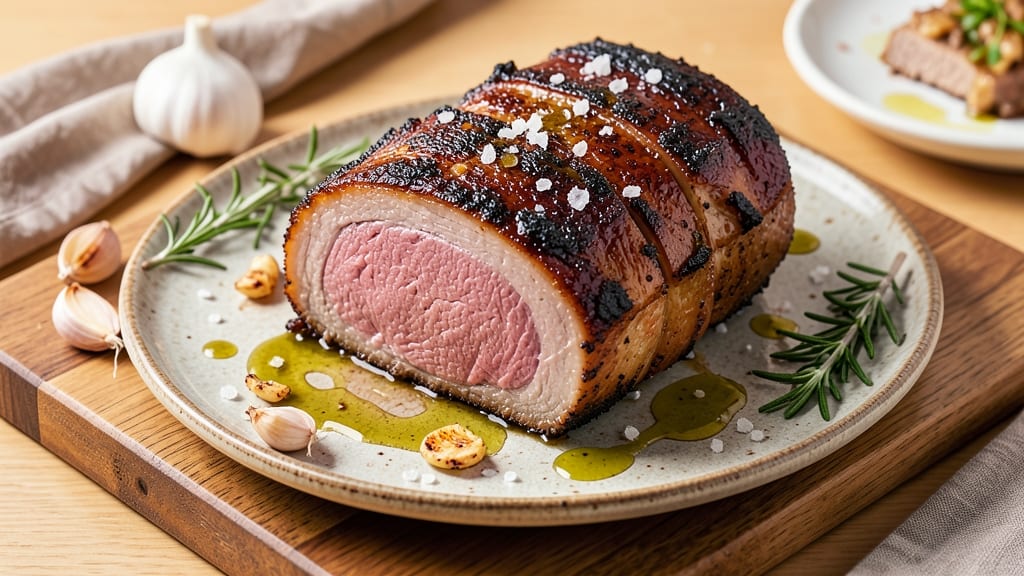
This boneless pork ribeye roast delivers restaurant-quality tenderness with a perfect crispy bark—all in your home oven. After years of testing, I’ve perfected a method that transforms tough cuts into melt-in-your-mouth perfection, guaranteed to impress even skeptical meat lovers.
The secret lies in precise seasoning and controlled roasting, ensuring juicy centers and caramelized edges every time.
What sets this recipe apart is the foolproof technique that works with minimal prep—no fancy equipment needed. A simple dry rub of salt, pepper, and garlic powder creates the foundation, while high-heat roasting builds that coveted crust.
The key? Cooking to an internal temperature of 145°F for medium-rare, then letting it rest before slicing to lock in those juices.
By the time you’re done, you’ll have a roast so tender it practically falls apart, with a crust that’s crisp enough to stand up to fork tests. The aroma alone will have everyone gathering at the table, and the first bite will silence any doubts about cooking pork at home.
This is comfort food at its finest—elegant enough for company but simple enough for weeknights.
Serve with roasted potatoes, caramelized onions, or a fresh green salad to complete the meal. The leftovers? Even better the next day, making this the ultimate crowd-pleaser for holidays or family dinners. Let’s get started on creating your perfect roast.
Ingredients for boneless pork ribeye roast recipe oven
Just 12 ingredients transform tough pork into melt-in-your-mouth perfection with that coveted crispy bark.
| Ingredient | Amount | Notes |
|---|---|---|
| Boneless Pork Ribeye Roast 🥩 | 3 lb | Center-cut for even cooking |
| Kosher Salt 🧂 | 1 ½ tbsp | Diamond Crystal preferred |
| Freshly Ground Black Pepper 🌶️ | 1 tbsp | Coarsely cracked for texture |
| Garlic Powder 🧄 | 1 tbsp | Freshly ground preferred |
| Extra-Virgin Olive Oil 🫒 | 2 tbsp | For coating roast |
| Fresh Rosemary 🌿 | ½ cup | Needles finely chopped |
| Fresh Thyme Leaves 🌿 | ¼ cup | Stems removed |
| Yellow Onion 🧅 | 1 whole | Thinly sliced for garnish |
| Butter 🧈 | 2 tbsp | Unsalted, softened |
| Fresh Parsley 🌿 | ¼ cup | Chopped for garnish |
| Red Wine 🍷 | ½ cup | Dry, for basting |
| Beef Broth 🥄 | ½ cup | Low-sodium preferred |
The pork cut is everything here. Look for boneless ribeye roast at your local butcher or Costco—the center-cut piece cooks most evenly. If your grocery store only carries pre-cut roasts, check the fat cap—it should be about 1/4-inch thick for that perfect crust. Taylor Farms or Hormel are reliable brands, but ask for the freshest cut possible. The herbs? Fresh is non-negotiable—dried just won't give you that same aromatic punch. I always buy extra rosemary because it keeps for months in the freezer, and those needles make this dish sing.
No red wine? Dry white wine or extra beef broth works in a pinch—just add a splash of balsamic for depth. Running low on fresh herbs? Dried thyme at one-third the amount gets you close, but you'll miss that bright, fresh flavor. The garlic powder can be swapped for minced fresh garlic (2 cloves) if you're feeling fancy. For the salt, Diamond Crystal flakes more dramatically than table salt—worth the splurge if you're doing this often. And if your roast is lean? Brush it with extra olive oil before seasoning to help build that crust.
This roast tastes even better the next day, so plan ahead. Store leftovers in an airtight container with a pat of butter on top to keep it moist—lasts 4-5 days in the fridge. For longer storage, slice and freeze portions for up to 3 months. I like to portion mine into individual servings so I can reheat just what I need. The crust gets even more intense after resting, so don't skip the 15-minute rest time before slicing—trust me on this.
Why You'll Love This Recipe
- Five-Ingredient Magic: I swear by this—just salt, pepper, garlic powder, olive oil, and that gorgeous ribeye roast. No fancy marinades or last-minute shopping runs. Honestly, the pantry version of this is still next-level.
- Crispy-Creamy Payoff: The olive oil sear locks in juices while the garlic powder adds a warm, toasty depth. That crispy crust with a melt-in-your-mouth center? My kids call it "the good stuff," and I don’t argue.
- Weeknight or Weekend: Slap it in the oven for lunch while you grade papers, or serve it at dinner when your in-laws ask, "What’s for dinner?" Either way, it’s the star without stealing the show.
- Leftovers That Don’t Suck: Slice the roast thin for sandwiches the next day—no one will guess it’s not fresh. (Yes, even on a Tuesday night.) Between us, this is how I feed my family for half the week without takeout.
Step-by-step instructions for boneless pork ribeye roast
Here's how to transform that 3 lb roast into a showstopping centerpiece with perfect juicy meat and irresistible crispy bark.
Prep the Roast for Maximum Flavor and Crisp
Take the 3 lb boneless pork ribeye roast out of the fridge and let it sit at room temperature for 30 minutes—this ensures even cooking. Pat it completely dry with paper towels, especially focusing on any moisture trapped in the crevices. I can't stress this enough: dry meat equals crispy bark.
In a small bowl, mix together the 1.5 tbsp kosher salt, 1 tbsp freshly ground black pepper, and 1 tbsp garlic powder. Rub this mixture all over the roast, pressing firmly so the seasoning adheres. Then, brush the roast generously with the 2 tbsp extra-virgin olive oil, making sure to coat every surface. This step creates the foundation for that perfect crust we're after.
Build the Herb Crust and Sear for Depth
Preheat your oven to 400°F with a rack positioned in the middle. While the oven heats, prepare your herb mixture by combining the 0.5 cup finely chopped fresh rosemary and 0.25 cup fresh thyme leaves with the 2 tbsp softened butter. Spread this mixture evenly over the roast, pressing gently to create a flavorful crust.
Heat a large oven-safe skillet over medium-high heat and add the roast. Sear for 3-4 minutes per side until you see deep golden-brown color developing—this creates a flavorful crust that locks in juices. Don't rush this step; you want that beautiful caramelization that signals perfect searing.
Roast to Perfect Doneness with Wine Basting
Transfer the seared roast to your preheated oven. Pour the 0.5 cup red wine into the skillet and scrape up all those delicious browned bits from the bottom. Let this reduce by half on the stovetop, then pour the pan sauce over the roast. Roast for 25-30 minutes until the internal temperature reaches 145°F on a meat thermometer.
Here's the thing—I like to baste the roast every 10 minutes during cooking. This keeps the meat moist and adds incredible flavor. For basting, simply spoon the accumulated juices and pan sauce over the top of the roast. You'll know it's done when the meat is tender and the internal temperature hits that perfect range.
Rest and Garnish for Presentation
Remove the roast from the oven and transfer it to a cutting board. Tent loosely with foil and let it rest for 15-20 minutes. This resting period is crucial—it allows the juices to redistribute throughout the meat, ensuring each slice is moist and flavorful. Don't skip this step, even though it's tempting to cut into it immediately.
While the roast rests, prepare the 1 whole yellow onion by thinly slicing it and the 0.25 cup fresh parsley by chopping it finely. When ready to serve, arrange the sliced onions and parsley on a platter. Slice the roast against the grain into ½-inch thick slices and arrange them beautifully on top of the onion and parsley bed. The contrast of colors makes this dish look absolutely stunning.
Pro Tips For Making Boneless Pork Ribeye Roast Recipe Oven
- Start High, Finish Slow: Blast that roast at 450°F (230°C) for the first 15 minutes—this sears the surface and locks in flavor before you drop the heat to 325°F (160°C). I used to cook it all at low temp, and the crust was always sad and pale. The high-heat kick gets you that golden crust without drying it out.
- Salt the Night Before: Generously coat the roast with kosher salt and let it sit uncovered in the fridge for at least 12 hours. This isn’t just about seasoning—it breaks down the surface proteins so the crust forms like a dream. (Yes, even if you’re impatient like me, this is the thing that matters most.)
- Skip the Overcrowding: When searing, resist the urge to add extra garlic or herbs to the pan at once. Crowding steams the meat instead of browning it, and you’ll end up with a soggy mess. Sear the roast first, then add minced garlic and a splash of olive oil to the pan for flavor—let it crisp for 30 seconds before basting.
- Test with a Thermometer: Pull the roast out of the oven when it hits 140°F (60°C) internally—it’ll carry over to 145°F (63°C), which is perfect for tender, juicy pork ribeye. I learned this the hard way by slicing into a dry, overcooked roast because I trusted the "finger test" too much. (Your future self will thank you.)
Wine and beer pairings for these flavors
Red Wine Pairings
This roast sings with dry red wines that complement its rich, herby crust. A Cabernet Sauvignon from Napa Valley—like Caymus Vineyards—brings bold tannins that stand up to the pork’s fat, while its blackcurrant notes mirror the rosemary’s earthiness.
For something lighter, try a Pinot Noir from Oregon—Domaine Serene is my go-to—its bright acidity cuts through the butter and garlic. 🍷
If you’re serving with red wine, decant it for 30 minutes before pouring to soften the tannins. The wine’s acidity helps cleanse your palate between bites of the pork’s juicy interior and crispy bark. Avoid heavy, oaked Chardonnays—they’ll overpower the delicate herb crust.
Beer Complements
For beer lovers, a Belgian-style Dubbel like Westmalle Trappist offers malty sweetness that balances the pork’s savory notes. The caramel and spice in the beer mirror the roast’s rosemary and garlic, creating a harmonious pairing.
If you prefer hoppier options, a German Helles Lager—like Weihenstephaner—provides crispness to contrast the dish’s richness. 🍺
Serve beer slightly chilled (around 50°F) to enhance its malt profile without muting the pork’s flavors. Avoid IPAs—their bitterness clashes with the roast’s buttery crust. For a local Boston touch, grab a Samuel Adams Noble Pils at your neighborhood market—it’s a crowd-pleaser with just the right balance.
Unexpected Pairings
Think beyond wine and beer: a sparkling rosé from Provence—like Whispering Angel—adds a refreshing contrast to the roast’s richness. The bubbles cleanse your palate, making each bite feel lighter.
For non-alcoholic options, a ginger beer—such as Brew Dr. Brown’s—echoes the dish’s herbal notes while adding a zesty kick. ✨
Pro tip: Garnish your wine or beer with a rosemary sprig for a visual and aromatic tie-in to the roast. The herb’s piney aroma bridges the gap between the meat and drink, creating a cohesive dining experience. Trust me, this small touch elevates the whole meal.
Nutrition facts
Frequently asked questions
Can I substitute fresh herbs with dried ones in this roast?
Yes, but adjust the amounts! Use 1/3 the quantity of dried herbs (so 1/3 tbsp dried rosemary and 1/8 tbsp dried thyme) instead of fresh. The flavor will be milder, but it still works in a pinch. For best results, crush the dried herbs between your fingers to release their aromatics before mixing with butter.
What if my oven doesn't go up to 400°F?
No problem! Cook at 375°F instead, but add 5-10 extra minutes to reach 145°F internally. The lower temp just means you'll need to baste more frequently to compensate. For even cooking, place a baking sheet on the lower rack to catch drips.
How do I know when the roast is done without a meat thermometer?
Press the center with your finger—it should feel very firm but still slightly springy (like pressing a ripe avocado). The juices should run clear when pierced, not pink. For extra confidence, cut into the thickest part: if it's opaque all the way through with no pink, it's done.
Can I make this roast ahead of time?
Cook it completely, then refrigerate uncovered for 24 hours to develop deeper flavors. Reheat slices in a 350°F oven for 10 minutes with butter and broth for moisture. The crust gets even better after resting overnight—just slice before reheating.
Why did my roast turn out dry?
Most likely you skipped the 15-minute rest or overcooked it. Always check internal temp with a thermometer (145°F max). For next time, try brining the roast for 1 hour in 1/4 cup salt per 4 cups water before cooking to keep it juicy.