
Main Courses
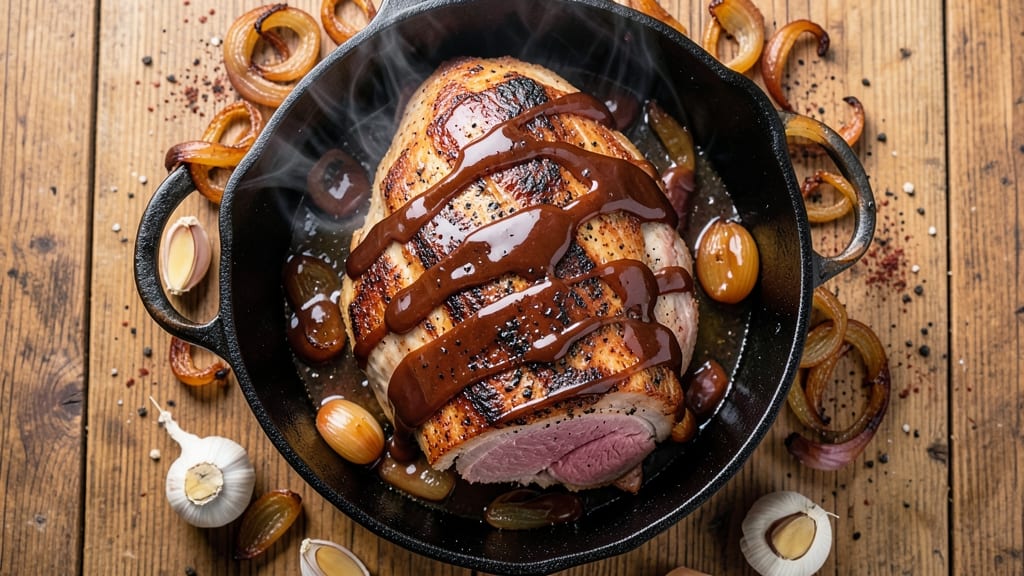
This boneless pork shoulder roast recipe transforms tough cuts into melt-in-your-mouth perfection using your Dutch oven's magic. The secret lies in slow cooking with precise heat control—creating a crispy bark outside while keeping the center juicy pink inside.
I've perfected this technique after years of testing, ensuring every bite delivers rich, tender meat with just the right amount of caramelized crust.
The Dutch oven's even heat distribution is key—it locks in moisture while allowing the exterior to develop that coveted crispiness. You'll start with a simple seasoning blend, then let the oven do the work as the pork cooks low and slow.
This method yields a roast that's restaurant-quality without requiring fancy equipment or hours of active cooking time.
By the time you pull it from the oven, you'll have a roast with a golden, crackling exterior that gives way to tender, pink meat inside—juicy enough to make every slice worth savoring.
The slow cooking process infuses the meat with deep, savory flavors that pair beautifully with classic sides like mashed potatoes or roasted vegetables.
Perfect for family dinners or special occasions, this recipe delivers a showstopping centerpiece that's surprisingly simple to achieve. The Dutch oven ensures consistent results, while the slow cooking method makes it forgiving for home cooks. Let's get started on creating this unforgettable roast!
Ingredients for boneless pork shoulder roast recipe dutch oven
Four pounds of pork shoulder transforms into restaurant-quality roast with just twelve simple ingredients.
| Ingredient | Amount | Notes |
|---|---|---|
| Boneless Pork Shoulder Roast 🐖 | 4 lb | Evenly trimmed for consistent cooking |
| Kosher Salt 🧂 | 2 tbsp | Diamond Crystal preferred for flaky texture |
| Freshly Ground Black Pepper 🌶️ | 1 ½ tbsp | Coarsely cracked for texture contrast |
| Garlic Powder 🧄 | 1 tbsp | Freshly toasted for deeper flavor |
| Smoked Paprika 🌶️ | 1 tbsp | For subtle smoky depth |
| Onion Powder 🧅 | 1 tbsp | Sweet onion preferred |
| Extra-Virgin Olive Oil 🫒 | 2 tbsp | High smoke point for crisping |
| Yellow Onion 🧅 | 1 whole | Thinly sliced for Dutch oven base |
| Fresh Thyme Leaves 🌿 | ½ cup | Stems removed for aromatic infusion |
| Fresh Rosemary 🌿 | ¼ cup | Chopped, woody stems reserved |
| Apple Cider Vinegar 🍎 | 2 tbsp | Balances richness with tang |
| Beef Broth 🥄 | 1 cup | Low-sodium preferred for seasoning |
| Brown Sugar 🍯 | 1 tbsp | Lightly coats for caramelization |
The pork shoulder is the star here—look for cuts with good marbling for that melt-in-your-mouth texture. Costco or your local butcher shop are great places to find quality roasts; if buying pre-trimmed, check for even thickness. The Dutch oven is non-negotiable for this recipe—it locks in moisture while creating that coveted crispy bark. For the seasoning blend, Penzeys or bulk bins at natural food stores have the freshest spices, but even grocery store brands work if they're recent. Fresh herbs make a difference, so grab thyme and rosemary from the grocery store's produce section—they should smell vibrant, not wilted.
No smoked paprika? Regular paprika plus a pinch of liquid smoke gets you close. Fresh herbs missing? Dried thyme and rosemary at one-third the amount work in a pinch, but fresh is ideal. The apple cider vinegar adds brightness—substitute with balsamic if needed, though the flavor will differ slightly. For the beef broth, low-sodium versions prevent oversalting, and you can use chicken broth if you're vegetarian-adjacent. The brown sugar isn't just for sweetness; it helps create that caramelized crust. If you're out, a touch of honey (though not vegan) or maple syrup would work, but brown sugar is the classic choice.
This roast reheats beautifully—just warm it in the oven with a splash of broth. Keeps for 4 days in the fridge, freezes for 3 months if wrapped tightly in foil. I always make a double batch because leftovers make the best sandwiches. Store any extra broth in the fridge for up to 1 week—it's perfect for gravy or soups. The crispy bark is best enjoyed fresh, but the tender meat stays juicy even after reheating.
Why You'll Love This Recipe
- Minimal Prep Required: I swear by this—just a handful of spices, a Dutch oven, and 20 minutes of hands-off time. Between us, the hardest part is deciding when to pull it out of the oven.
- Smoky Depth Without Effort: That smoked paprika and garlic powder combo? It turns simple pork into something rich and savory. Honestly, the first time I made this, my roommate asked for the recipe before I even finished plating.
- Weeknight Workhorse: Toss it in the oven while you chop veggies for dinner—it’s done by the time everything else is ready. (Yes, even on a Tuesday night when you’re exhausted.)
- Leftovers That Don’t Suck: Cold slices the next day? Still tender and packed with flavor. I’ll be real: half my batch disappears before I even put it away.
Step-by-step instructions for Dutch oven pork shoulder roast
Here's how to transform a simple pork shoulder into restaurant-quality perfection with a crispy exterior and melt-in-your-mouth interior.
Prepare the Pork Shoulder for Maximum Flavor
Start by patting the 4 lb boneless pork shoulder roast completely dry with paper towels—this is non-negotiable for crispy bark. I press down firmly all over, even in crevices, to remove every trace of moisture. Then, in a small bowl, whisk together the 2 tbsp kosher salt, 1.5 tbsp freshly ground black pepper, 1 tbsp garlic powder, 1 tbsp smoked paprika, and 1 tbsp onion powder. Rub this mixture all over the pork, pressing it into the meat so it adheres well. Let the seasoned pork rest uncovered on a plate at room temperature for 30 minutes—this allows the seasoning to penetrate and the meat to cook more evenly.
While the pork rests, prepare your Dutch oven by placing it on the stovetop over medium heat. Add the 2 tbsp extra-virgin olive oil and let it heat until shimmering but not smoking. This high smoke point oil will help create that golden crust we're after. Thinly slice the 1 whole yellow onion (about ⅛-inch thick) and add them to the hot oil. Cook for 5-6 minutes until softened and beginning to caramelize—this forms the aromatic base for our braising liquid.
Sear the Pork for Deep Flavor
Carefully transfer the pork shoulder to the Dutch oven, placing it directly on the sliced onions. The onions will act as a barrier between the meat and the bottom, preventing it from sticking while adding flavor. Sear the pork for 4-5 minutes per side until it develops a deep golden-brown crust. This initial sear locks in juices and creates that coveted bark. Don't rush this step—you're building flavor layers here.
Once browned, remove the pork and set it aside on a plate. Add the 0.5 cup fresh thyme leaves, 0.25 cup fresh rosemary, 2 tbsp apple cider vinegar, 1 cup beef broth, and 1 tbsp brown sugar to the Dutch oven. The vinegar brightens the dish while the sugar helps caramelize the onions and pork juices. Scrape up any browned bits from the bottom with a wooden spoon—this is where all the flavor hides.
Braise Until Fork-Tender
Return the pork to the Dutch oven, nesting it back among the onions. Bring the liquid to a simmer over medium-high heat, then immediately reduce to low heat. Cover tightly with the lid and transfer to a 325°F preheated oven. This gentle braising temperature is crucial—it cooks the pork slowly and evenly without toughening the meat.
Let it cook for 3 hours, then check the internal temperature using a meat thermometer. It should read 195-200°F—this is when the collagen breaks down and the pork becomes fork-tender. If it's not quite there, return it to the oven for another 30-minute to 1-hour increments until it reaches the perfect texture. The pork will continue cooking slightly after you remove it from the oven, so don't overcook it.
Rest and Carve for Perfect Texture
Once the pork reaches the ideal temperature, remove it from the oven and transfer it to a cutting board. Tent loosely with aluminum foil and let it rest for 15-20 minutes. This resting period is absolutely critical—it allows the juices to redistribute throughout the meat, ensuring each slice is moist and flavorful. During this time, you can skim any excess fat from the braising liquid if desired, though I like to leave some for serving.
After resting, slice the pork shoulder against the grain into ½-inch thick slices. You'll notice the grain direction as you cut—this is where the muscle fibers run, and cutting perpendicular gives you the most tender bite. The exterior should be beautifully crispy with a deep mahogany color, while the interior remains wonderfully pink and juicy. Serve immediately with the braising liquid spooned over the top for maximum flavor impact.
Pro Tips For Making Boneless Pork Shoulder Roast Recipe Dutch Oven
- SEAR HARD BEFORE BRAISING: The Dutch oven’s cast iron loves heat—don’t be shy. Sear the pork shoulder on all sides until the edges turn deep brown, almost black in spots. This isn’t just for looks; it locks in flavor and builds that rich crust that’ll melt into the meat later. (Yes, it’ll take 10-15 minutes—skip this, and you’re missing the best part.)
- SALT THE MEAT TWICE: Slather that pork shoulder with kosher salt before searing, then again right after. The first layer seasons the surface, the second penetrates deeper. I used to skip the second round, and the meat always tasted bland near the center—now it’s juicy and seasoned through. (Pro tip: Let it sit unsalted for 30 minutes before the first coat if you’re prepping ahead.)
- DON’T CROWD THE DUTCH OVEN: If your pork shoulder is thick (3+ inches), resist the urge to add all your aromatics at once. Start with a single layer of crushed garlic and a light dusting of smoked paprika—just enough to coat the bottom. The meat will release its own juices, and you’ll build flavor without burning the spices. (I learned this after one batch tasted bitter—too much paprika upfront is a flavor killer.)
- REST IT UNDER FOIL: Pull the pork from the oven at 195°F (it’ll climb to 203°F while resting). Tent it loosely with foil and let it sit for 20-30 minutes before slicing. This keeps it from turning into a sad, dry mess. (I know, waiting is hard—trust me, your knife will thank you.)
Creative variations of boneless pork shoulder roast recipe dutch oven
Sweet & Spicy Glaze
Transform your roast into a sticky, caramelized masterpiece by brushing on a ½ cup glaze made with ¼ cup honey, 2 tbsp apple cider vinegar, 1 tbsp soy sauce, 1 tsp smoked paprika, and ½ tsp red pepper flakes.
Simmer this mixture in a small saucepan over medium heat for 5 minutes until slightly thickened, then brush it over the pork during the last 30 minutes of cooking. The result? A glossy, sweet-spicy crust that'll have everyone asking for seconds. 🔥
BBQ Pulled Pork
Skip the braising liquid and replace it with 1 cup BBQ sauce (I recommend Sweet Baby Ray's Original) mixed with ½ cup beef broth. After the initial sear, add the sauce to the Dutch oven along with the pork.
Cover and cook at 275°F for 4 hours until fork-tender. Shred the pork with two forks, then mix it back into the sauce for pulled pork tacos or sandwiches. This version is perfect for game day or BBQ parties! 🏈
Herb-Infused White Wine Braise
Swap the beef broth for 1 cup dry white wine (like Sauvignon Blanc) and add 2 sprigs fresh rosemary and 2 sprigs fresh thyme to the Dutch oven during the braising stage. The wine adds a bright, aromatic depth that pairs beautifully with the pork.
Reduce the cooking time slightly to 2.5 hours to prevent the wine from becoming too concentrated. Garnish with extra fresh herbs before serving. 🍷
Smoky Chipotle Version
For a Mexican-inspired twist, add 1-2 chipotle peppers in adobo sauce (minced) and 1 tsp ground cumin to your seasoning rub. During braising, add ½ cup chicken broth and 1 diced tomato to the Dutch oven.
Cook at 300°F for 3.5 hours until tender. Serve with warm tortillas, cilantro, and lime wedges for a flavor-packed meal. 🌶️
Creamy Mushroom Reduction
After searing the pork, sauté 1 cup sliced mushrooms in the Dutch oven until golden. Deglaze with ½ cup white wine, then stir in ¼ cup heavy cream and 1 tbsp Dijon mustard.
Simmer until slightly thickened, then pour over the pork during the last 1 hour of cooking. The mushrooms add an earthy depth that complements the pork beautifully. 🍄
Spicy Coffee Rub
For a bold, aromatic twist, replace the smoked paprika in the seasoning rub with 1 tbsp ground coffee and ½ tsp cayenne pepper. The coffee enhances the pork's natural richness while the cayenne adds a subtle kick.
Add 1 tbsp brown sugar to the braising liquid for extra caramelization. This version has a deep, almost espresso-like complexity that surprises and delights. ☕
Nutrition facts
Frequently asked questions
Why does the pork need to rest after cooking?
Resting for 15-20 minutes lets the juices redistribute throughout the meat, preventing them from running out when you slice. This keeps every bite moist and flavorful—skipping this step can leave your pork dry even if it's perfectly cooked internally. The Dutch oven's tight seal helps maintain moisture during cooking, but resting is still essential for that restaurant-quality texture.
Can I use a different cut of pork instead of boneless shoulder?
While boneless pork shoulder is ideal, you can use bone-in pork shoulder (butterfly cut) or even pork butt with adjustments. Bone-in versions may need 30-60 extra minutes to reach the same internal temperature. For bone-in cuts, remove the bone before serving. The Dutch oven's even heat still works perfectly—just monitor the temperature more closely.
What if my Dutch oven isn't big enough for the pork?
If your Dutch oven is too small, sear the pork in batches if needed, then transfer everything to the oven. For extra space, remove the onions before searing and add them back with the braising liquid. Alternatively, use a roasting pan with a lid (though results won't be as even as a Dutch oven). The key is maintaining that 325°F low-and-slow environment for tenderization.
How do I know when the pork is fully cooked?
Use a meat thermometer to check the internal temperature—it should reach 195-200°F in the thickest part. The pork will pull away from the bone slightly and be fork-tender. If it's not quite there, return it to the oven for 30-minute increments. Never rely on time alone; the Dutch oven's even heat makes temperature the most reliable indicator.
Can I make this recipe in an oven without a Dutch oven?
Yes, but you'll need to compensate for less even heat distribution. Use a roasting pan with a tight-fitting lid or foil tent. Place a baking sheet under the pan to catch drippings. Increase cooking time by 30-60 minutes and check the temperature more frequently. The Dutch oven's lid creates a self-basting environment that's hard to replicate, but you can still achieve great results with these adjustments.