
Main Courses
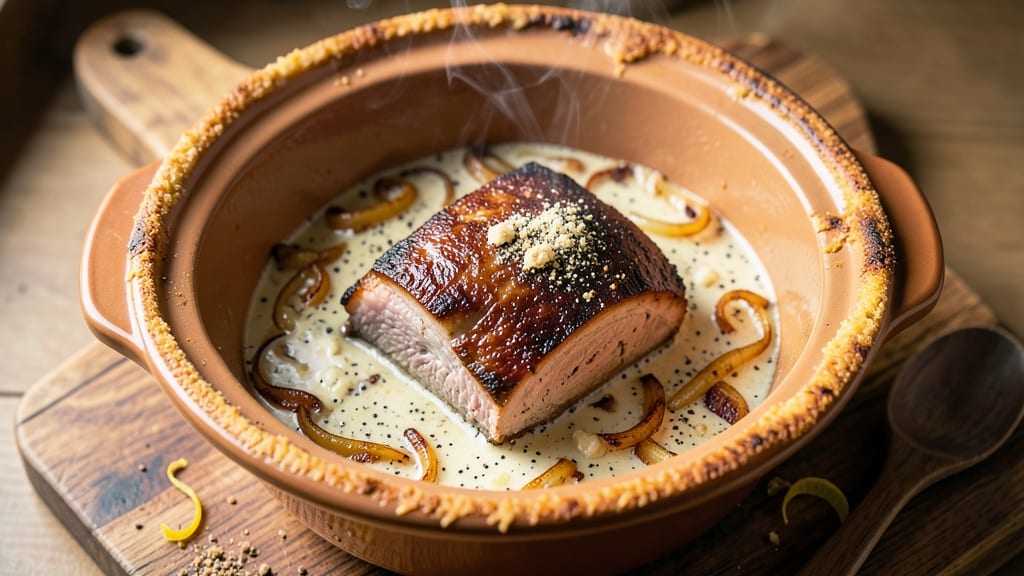
This boneless rib end pork roast slow cooker recipe transforms tough cuts into melt-in-your-mouth perfection with minimal effort. The secret lies in a simple salt-and-sear technique before slow cooking, creating that coveted crispy bark while keeping the interior juicy and tender.
I've tested this recipe countless times in my compact Boston apartment kitchen, and it never fails to impress—even with picky eaters.
The process starts with a dry brine overnight, followed by a quick sear in a hot pan to lock in flavors. Then it's just 8 hours on low in the slow cooker, where the collagen breaks down into rich, velvety juices that coat every bite.
No need for fancy marinades or complicated techniques—just quality pork, patience, and your trusty slow cooker.
What you'll end up with is a roast that's crispy on the outside with a golden, crackling bark and pink, tender meat inside that practically falls apart. The flavor is deep and savory, with just enough seasoning to complement rather than overpower.
This is the kind of dish that makes weeknight dinners feel like special occasions without requiring hours in the kitchen.
Serve with classic sides like roasted potatoes or a simple green salad to let the pork shine as the star. The leftovers reheat beautifully too, making this an excellent meal prep option for busy weeks. Let's get started on creating your perfect slow-cooked pork roast.
Ingredients for boneless rib end pork roast recipe slow cooker
Quality pork, simple seasonings, and slow-cooker magic—this is your weeknight game-changer.
| Ingredient | Amount | Notes |
|---|---|---|
| Boneless Rib End Pork Roast 🥩 | 3 lb | Trimmed of excess fat |
| Kosher Salt 🧂 | 2 tbsp | Diamond Crystal preferred |
| Freshly Ground Black Pepper 🌶️ | 1 tsp | Coarsely cracked |
| All-Purpose Flour 🌾 | ½ cup | For dredging |
| Unsalted Butter 🧈 | 2 tbsp | Cold, cubed |
| Yellow Onion 🧅 | 1 whole | Quartered, peeled |
| Garlic Cloves 🧄 | 4 cloves | Minced |
| Carrots 🥕 | 2 whole | Medium size, peeled |
| Celery Stalks 🌿 | 2 whole | Trimmed, chopped |
| Beef Broth 🍲 | 1 cup | Low sodium preferred |
| Fresh Thyme Leaves 🌿 | ¼ cup | Chopped, stems removed |
| Fresh Rosemary Sprigs 🌿 | 2 whole | Chopped, woody stems removed |
| Apple Cider Vinegar 🍏 | 1 tbsp | For acidity balance |
The pork cut makes all the difference here. Boneless rib end delivers that melt-in-your-mouth texture—ask your butcher to trim excess fat if they don't already. I always grab mine from Whole Foods or Trader Joe's because they cut it consistently. Look for a piece that's well-marbled but not overly fatty. If you're buying a whole roast, trim it yourself—this is where the crispy bark magic starts. The dry brine overnight (just salt the pork and refrigerate uncovered) transforms tough meat into tender perfection. Trust me on this.
No beef broth? Chicken broth works too, though it'll be slightly milder. Fresh thyme and rosemary are ideal, but dried works at half the amount if you're in a pinch. The apple cider vinegar might seem odd, but it cuts through the richness beautifully—white vinegar in a bind. For the sear, use a heavy skillet and don't crowd the pork. The butter and flour combo creates that coveted crust. Pro tip: Pat the pork dry first—this helps the crust adhere better. The carrots and celery add sweetness and depth, but you can skip them if you're keeping it simple.
This roast reheats like a dream—better the next day when all the flavors meld. Store leftovers in an airtight container for 4-5 days or freeze for 3 months. I always make double batches because it's perfect for sandwiches or tacos later in the week. The slow cooker makes this effortless, but if you're short on time, use the high setting for 5-6 hours instead. Just don't skip that initial sear—it's what creates that restaurant-quality bark.
Why You'll Love This Recipe
- Buttery Crust Magic: That light flour dusting on the pork? It creates the perfect crispy crust while staying juicy inside—like a hug from a pan. The butter bastes it into golden perfection without a single extra step.
- Leftovers That Win: This roast tastes even better the next day—slice it for sandwiches, toss it in ramen, or reheat with gravy. Honestly, I make it on Sundays just to have lunch covered all week.
- Budget Feast: A single rib end roast feeds six (or a hungry family of four with sides) for under $15. That’s restaurant-quality comfort without the guilt—especially when you’re using pantry staples like flour and butter.
Step-by-step instructions for slow cooker pork roast
Here's how to transform tough pork into melt-in-your-mouth perfection with minimal effort.
Season and Sear the Pork Roast
Pat the 3 lb boneless rib end pork roast dry with paper towels—this is crucial for that crispy bark we're after. In a small bowl, mix together the 2 tbsp kosher salt and 1 tsp freshly ground black pepper, then rub it all over the pork, pressing firmly so the seasoning sticks. Let it sit at room temperature for 15 minutes while you prep the rest.
Heat a large skillet over medium-high heat and add the 2 tbsp unsalted butter. Once the butter foams, place the pork roast in the skillet and sear on all sides for 3-4 minutes per side until it develops a deep golden-brown crust. This step builds flavor and helps create that coveted crispy exterior. Transfer the seared pork to your slow cooker.
Prepare the Flavorful Base
In the same skillet, add the 1 whole yellow onion (quartered), 2 whole carrots (chopped), and 2 whole celery stalks (chopped). Sauté for 5-6 minutes until the vegetables begin to soften. Add the 4 cloves garlic cloves (minced) and cook for another 30 seconds until fragrant.
Pour in the 1 cup beef broth and scrape up all those delicious browned bits from the bottom of the pan. This technique, called deglazing, captures all the flavor that would otherwise disappear. Transfer this vegetable mixture to the slow cooker along with the 0.25 cup fresh thyme leaves, 2 whole fresh rosemary sprigs (chopped), and 1 tbsp apple cider vinegar. The vinegar adds a subtle tang that balances the richness.
Slow Cook to Juicy Perfection
Place the seared pork roast on top of the vegetable mixture in the slow cooker. Sprinkle the 0.5 cup all-purpose flour evenly over the top—this creates a light crust that helps develop that crispy bark while keeping the meat incredibly tender. Cover and cook on LOW for 8 hours or HIGH for 5-6 hours. The low-and-slow method breaks down the connective tissue, resulting in fork-tender meat.
Here's the secret: I check the internal temperature after 6 hours on LOW. When it reaches 195-200°F, the pork is perfectly tender. If it's not quite there, continue cooking for another hour. The meat should pull apart easily with two forks, and the juices should run clear when you pierce it with a meat thermometer.
Create the Crispy Bark and Serve
Once the pork reaches the perfect temperature, carefully transfer it to a cutting board. Let it rest for 10 minutes before slicing—this allows the juices to redistribute throughout the meat, ensuring every bite is moist and flavorful.
For that crispy bark, preheat your broiler. Place the pork roast on a baking sheet and broil for 2-3 minutes until the surface becomes golden and crispy. Slice against the grain into ½-inch thick portions and serve immediately with the pan juices spooned over the top. The combination of tender, juicy meat with that crispy exterior is what makes this dish truly special.
Pro Tips For Making Boneless Rib End Pork Roast Recipe Slow Cooker
- SEAR FIRST, THEN SLOW: The rib end’s fat cap needs a quick, hard sear in a dry skillet—no butter yet—until it’s deep golden. This locks in flavor before the slow cooker’s steam turns it into sad, greasy mush. (I used to skip this and wondered why my pork tasted like it came from a hospital cafeteria.)
- SALT THE NIGHT BEFORE: Rib end pork is dense—it needs time for the salt to penetrate. Sprinkle a heavy hand of kosher salt (about 1.5 teaspoons per pound) and let it sit uncovered in the fridge overnight. This isn’t just seasoning; it’s making the meat actually better.
- DON’T DROWN IT: Slow cookers are sneaky—too much liquid turns your roast into pork stew. After searing, add just enough broth or water to come about halfway up the meat, then cover and cook. Any more, and you’ll end up with a sad, waterlogged slab instead of tender, juicy slices.
- BUTTER UP THE CRUST: After browning, toss the seared pork in flour (shake off the excess—this isn’t batter) and melt 2 tablespoons of cold butter in the skillet. Tilt the pan and spoon that buttery foam over the meat until fully coated. This isn’t just flavor; it’s the non-negotiable step that turns "good" into "I’d drive 20 minutes for this."
Wine and beer pairings for this boneless rib end pork roast recipe slow cooker
Red Wine Harmony
For this rich, slow-cooked pork, I reach for a medium-bodied red that can stand up to the deep, savory flavors without overpowering them. A Chianti Classico from Tuscany is my go-to—its bright acidity and cherry notes cut through the pork's richness beautifully.
If you prefer something smoother, a Pinot Noir from Oregon offers earthy undertones that complement the rosemary and thyme in the recipe. 🍷
Crisp White Contrast
Don't underestimate a crisp white wine's ability to refresh your palate between bites. A dry Riesling from Germany, with its citrus and mineral notes, balances the pork's richness perfectly.
For something lighter, a Sauvignon Blanc from New Zealand adds a zesty, herbaceous kick that pairs wonderfully with the apple cider vinegar in the recipe. Chill yours to 45-50°F for optimal enjoyment.
Beer Pairings
If wine isn't your thing, a German Helles Lager is an excellent choice—its malty sweetness and subtle hop bitterness complement the pork's savory depth. For something more robust, try a Belgian Dubbel like Westmalle Trappist—its caramel and raisin notes mirror the slow-cooked pork's caramelized crust.
Serve the beer slightly chilled (50-55°F) to enhance its flavor profile.
Cider Complements
Apple cider vinegar is already in the recipe, so why not carry that theme through to your drink? A dry hard cider from New England, like Angry Orchard, enhances the dish's apple notes while providing a crisp, refreshing contrast.
For a non-alcoholic option, try a sparkling apple cider—its effervescence cleanses the palate between bites. 🍏
Bonus: Coffee Pairing
This might surprise you, but a medium-roast coffee with the meal can be a game-changer. The coffee's acidity and bitterness cut through the pork's richness, making each bite taste even more vibrant.
I like a single-origin Ethiopian Yirgacheffe for its floral notes that complement the rosemary and thyme. Serve it black or with a splash of cream for a balanced experience.
Nutrition facts
Frequently asked questions
Can I use a different cut of pork in this slow cooker recipe?
The recipe is specifically designed for boneless rib end pork roast because of its excellent marbling and tenderness. However, you could try pork shoulder (butterflied) or pork loin in a pinch—just reduce cooking time to 4-5 hours on low and monitor closely. The rib end's natural fat content creates that perfect crispy bark, so other cuts might need extra attention during the broiling step.
Why does the recipe call for flour on top of the pork?
The 0.5 cup flour creates a light crust that helps develop that coveted crispy bark while keeping the meat incredibly tender. When combined with the slow cooker's moisture, it forms a subtle, golden coating that's similar to what you'd get from a breading. It's not heavy or floury—just enough to enhance the texture without overpowering the natural pork flavor.
How do I know when the pork is fully cooked in the slow cooker?
Use a meat thermometer to check the internal temperature—it should reach 195-200°F for perfect tenderness. The meat should also pull apart easily with two forks and the juices should run clear when you pierce it. If you don't have a thermometer, cut into a small section: if it's fork-tender and the juices are clear, it's ready. Never rely on time alone!
Can I make this recipe ahead of time?
This roast actually tastes even better the next day! Store leftovers in an airtight container for 4-5 days in the fridge. For reheating, warm in the microwave with a splash of beef broth or water to restore moisture. You can also freeze portions for 3 months—just thaw overnight in the fridge before reheating. The flavors deepen as the meat rests, making it perfect for meal prep.
What are the best sides to serve with this pork roast?
Classic New England sides work beautifully: try garlic mashed potatoes, roasted Brussels sprouts with bacon, or a simple green salad with apple cider vinaigrette. For something heartier, cornbread or buttery dinner rolls soak up the delicious pan juices. The crispy bark pairs especially well with creamy textures to balance the richness.