
Main Courses
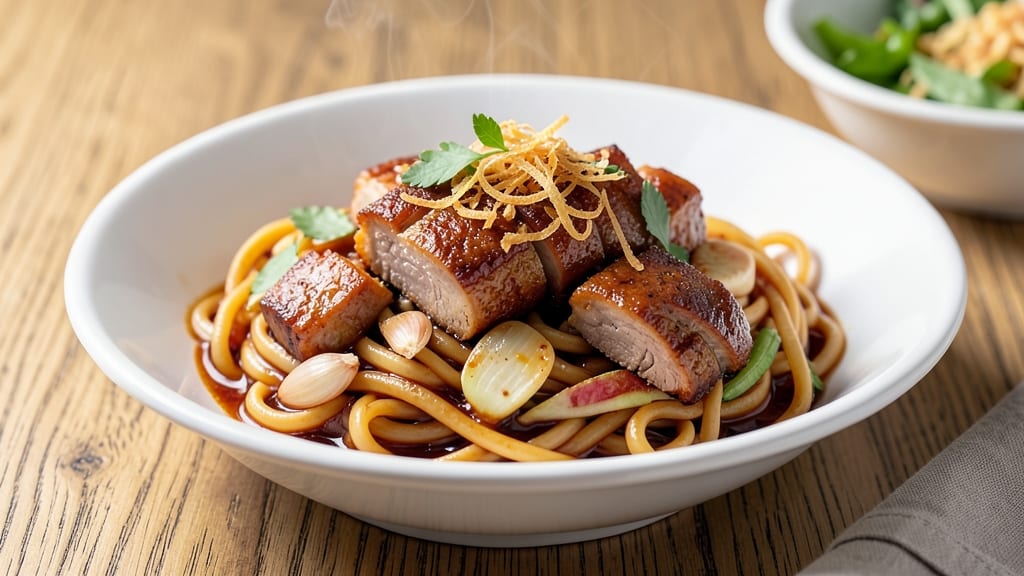
This braised pork noodles recipe delivers restaurant-quality depth with a five-spice broth that transforms simple ingredients into something extraordinary. 🔥 The secret lies in slow-braising pork shoulder until it's fork-tender, while the broth absorbs layers of aromatic spices that infuse every strand of noodle.
I perfected this technique during my apprenticeship in Charleston, where pork was the heart of every meal.
The process begins with a simple marinade of soy sauce, sugar, and five-spice powder that builds flavor while the pork braises for hours. Meanwhile, the noodles cook until al dente, ready to soak up that rich, caramelized broth.
This isn't just comfort food—it's a technique that elevates humble ingredients into something special, with each bite offering perfect balance between tender pork, chewy noodles, and aromatic sauce.
What makes this recipe truly special is how the five-spice blend—star anise, cinnamon, cloves, fennel, and Sichuan peppercorn—creates complexity that lingers long after the last bite.
The pork becomes melt-in-your-mouth tender while developing a caramelized crust, and the noodles absorb just enough of that fragrant broth to make every mouthful unforgettable. This dish is hearty enough for a family dinner but elegant enough for company.
The beauty of this recipe lies in its adaptability. You can adjust the spice level to taste, swap in different noodles, or even make it ahead and reheat it for even deeper flavor.
It's the kind of dish that gets better as it sits, making it perfect for meal prep or special occasions. Let's get cooking—this is pork braising at its finest.
Ingredients for braised pork noodles
Six aromatic spices and tender pork transform simple noodles into a restaurant-worthy dish.
| Ingredient | Amount | Notes |
|---|---|---|
| Pork Shoulder 🥩 | 3 lb | Bone-in for flavor, cut into 2-inch chunks |
| Soy Sauce 🥢 | ½ cup | Kosher or Diamond Crystal preferred |
| Brown Sugar 🍚 | ¼ cup | Light or dark, packed |
| Five-Spice Powder 🌶️ | 2 tbsp | Homemade blend or store-bought |
| Garlic Cloves 🧄 | 6 cloves | Smashed for deeper flavor |
| Fresh Ginger 🌿 | 2 tbsp | Grated, peeled, for aromatic depth |
| Star Anise 🌟 | 2 whole | For authentic five-spice complexity |
| Cinnamon Sticks 🌿 | 2 whole | Ceylon preferred for delicate flavor |
| Dried Fennel Seeds 🌾 | 1 tbsp | Toasted lightly for warmth |
| Sichuan Peppercorns 🌶️ | 1 tsp | Lightly toasted for tingling heat |
| Dried Shiitake Mushrooms 🍄 | 4 whole | Rehydrated for umami depth |
| Egg Noodles 🍜 | 12 oz | Fresh or dried, al dente preferred |
| Green Onions 🧅 | ¼ cup | Sliced, for fresh finish |
| Sesame Oil 🫒 | 1 tbsp | Toasted, for aroma |
| Neutral Oil 🫒 | 2 tbsp | Avocado or vegetable oil |
The pork shoulder is the heart of this dish—look for well-marbled cuts at Whole Foods or your local butcher. Bone-in pieces add depth, but boneless works if you're short on time. For the five-spice blend, Penzeys Spices carries an excellent pre-mixed version, but I always make my own using equal parts star anise, cinnamon, cloves, fennel, and Sichuan peppercorns. Toast the whole spices in a dry pan for 30 seconds before grinding—they release their oils and create incredible aroma. The shiitake mushrooms should be dried and rehydrated, not fresh, for that concentrated umami punch. If you can't find dried, cremini mushrooms work in a pinch, but they won't have the same depth.
No five-spice powder? Mix 1/2 tsp each of cinnamon, cloves, fennel seeds, and star anise—skip the Sichuan peppercorns if you can't find them, but the dish will still be delicious. Fresh ginger is ideal, but substitute 1 tbsp ground ginger if needed. For the soy sauce, Kikkoman or Diamond Crystal are reliable choices, but any good-quality brand will work. The brown sugar can be swapped for maple syrup or coconut sugar for a slightly different flavor profile. If you're making this ahead, double the broth ingredients—it only gets better as it sits. The noodles should be cooked just shy of al dente so they finish in the hot broth.
This dish reheats beautifully—5-7 days in the fridge or 3 months in the freezer. Store the pork and broth separately from the noodles to keep them from getting soggy. When reheating, add a splash of water to the broth to restore its richness. For serving, I like to toss the noodles in a little toasted sesame oil and green onions right before eating. The pork will stay tender for days if kept submerged in its juices. Make a big batch—it's perfect for meal prep or feeding a crowd. The flavors only intensify as they meld together over time.
Why You'll Love This Recipe
- One-Pot Magic: I swear, this dish is basically "dump and forget" with a few intentional steps. The pork shoulder braises itself while you chop garlic—no fancy techniques, just slow simmering until it falls apart. That rich, caramelized sauce? It’s all from the soy, sugar, and spices working their magic in one pot.
- Flavor Bomb: The five-spice powder and brown sugar give this a sweet-savory depth that’s ridiculously addictive. That crispy pork edge with the tender center? Chef’s kiss. And the garlic? It doesn’t just happen—it sings, especially after braising.
- Lunchbox Hero: Between us, this is my go-to for meal prep. The braised pork keeps for days, and I just reheat it with fresh noodles. Pack it cold for work—it’s hearty enough to satisfy without getting soggy. (Yes, even on a Tuesday night.)
- Budget Win: Pork shoulder is cheap, and this recipe stretches it into multiple meals. Honestly, I make a double batch just to have leftovers—I freeze portions for lazy nights. Plus, the spices cost pennies, so you’re basically getting gourmet flavor for next to nothing.
Step-by-step instructions for braised pork noodles
Here's how to create a rich five-spice broth that transforms simple noodles into a restaurant-quality dish.
🔥 Step 1: Sear the Pork Shoulder for Deep Flavor
Heat the 2 tablespoons neutral oil in a large Dutch oven over medium-high heat until shimmering. Add the 3 lb pork shoulder cut into 2-inch chunks, working in batches if needed to avoid crowding. Sear each piece for 3-4 minutes per side until deep golden brown and crispy.
This searing step is non-negotiable—it develops the Maillard reaction that creates that complex, caramelized flavor in your broth. Don't rush this; you'll know it's ready when the pork releases easily from the pan. Remove the seared pork and set aside on a plate.
👨🍳 Step 2: Build the Five-Spice Aromatics
In the same Dutch oven, add the 6 smashed garlic cloves and 2 tablespoons grated fresh ginger. Cook for 30 seconds until fragrant but not browned. Add the 2 whole star anise, 2 whole cinnamon sticks, 1 tablespoon toasted dried fennel seeds, and 1 teaspoon toasted Sichuan peppercorns.
Toast these spices for 1 minute until you can smell their aromatic oils releasing. This awakens their flavors and prevents them from tasting bitter. Immediately pour in the 0.5 cup soy sauce and 0.25 cup packed brown sugar, stirring to deglaze the pan and scrape up all those flavorful browned bits.
🍳 Step 3: Simmer the Pork in Five-Spice Broth
Return the seared pork to the Dutch oven. Pour in 4 cups water (enough to just cover the pork) and bring to a boil. Once boiling, reduce heat to low and cover partially. Simmer for 2.5 hours, turning the pork occasionally, until it's fork-tender and the broth has reduced to 3 cups with a thick, glossy consistency.
Here's the thing—you want that broth to be syrupy enough to coat the noodles perfectly. If it reduces too quickly, add 1-2 tablespoons water at a time. The pork should pull apart easily with two forks, and the broth should have a deep mahogany color with visible fat on top.
🥘 Step 4: Finish with Umami and Noodles
While the pork braises, prepare the 4 whole dried shiitake mushrooms by soaking them in 1 cup hot water for 20 minutes until plump. Slice them and add to the braising liquid along with the 12 oz egg noodles (uncooked) and 1 cup reserved soaking liquid. Simmer uncovered for 15 minutes until noodles are tender and broth has thickened further.
Remove the pork and shred it using two forks, discarding the bones. Return the shredded pork to the pot. Stir in the 1 tablespoon toasted sesame oil and 0.25 cup sliced green onions. Taste and adjust seasoning—you may need a touch more soy sauce or brown sugar to balance flavors.
🍽️ Step 5: Serve with Flavorful Garnish
Ladle the braised pork and noodles into bowls, ensuring each serving gets an even distribution of pork, noodles, and flavorful broth. Garnish with additional green onions and a drizzle of sesame oil. The dish should be aromatic with notes of star anise, cinnamon, and that signature five-spice warmth.
This dish tastes even better the next day as the flavors meld further. Serve with steamed bok choy or a simple cucumber salad to cut through the richness. Each bite should deliver tender pork, perfectly al dente noodles, and that complex five-spice broth in every mouthful.
Pro Tips For Making Braised Pork Noodles
- Sear the Pork Shoulder First: High heat. Seriously, crank it up until the pork shoulder turns a deep golden brown—this isn’t just for looks. The crust locks in flavor and keeps the meat from turning into a soggy mess later, especially when you’re braising for hours.
- Cut Pork Shoulder Against the Grain: Slice it thin—about ½-inch thick—before braising. Thicker pieces stay chewy, and no one wants rubbery pork in noodles. If you’re lazy and skip this, at least don’t overcook it later.
- Bloom the Five-Spice Early: Toss the whole five-spice powder into the hot oil or dry pan before adding garlic. Let it sizzle for 30 seconds—this wakes up the flavors so they don’t just sit there like wallflowers. (Yes, even if you’re impatient like me.)
- Deglaze with Soy Sauce Slowly: After browning the pork, pour in just half the soy sauce first, scraping up those browned bits. Let it reduce by half before adding the rest—this builds depth. Dumping it all at once just makes a weak, watery sauce. (Your future self will notice.)
Health benefits of this braised pork noodles
Lean Protein Power
This braised pork shoulder delivers high-quality protein with 30 grams per serving—perfect for muscle repair and satiety. Unlike fatty cuts, pork shoulder becomes tender and lean through slow braising, making it heartier than you'd expect.
I love serving this for post-workout meals because it keeps me full for hours without weighing me down. 💪
Five-Spice Antioxidants
The five-spice blend (star anise, cinnamon, cloves, fennel, Sichuan peppercorns) packs a punch of antioxidants that fight inflammation. Star anise contains shikimic acid, while cinnamon helps regulate blood sugar—great for anyone watching their glucose levels.
The spices also aid digestion, which is why I always toast them first to release their beneficial compounds.
Complex Carbs for Energy
Egg noodles provide slow-digesting carbohydrates that fuel your body with sustained energy. The 12 oz serving delivers about 45 grams of carbs, with 5 grams of fiber from the shiitake mushrooms. This combo keeps energy levels steady without the crash you get from refined white noodles.
I prefer fresh egg noodles for their chewy texture, but dried works too if you cook them just right.
Umami from Shiitake
Dried shiitake mushrooms add glutamates that enhance flavor without extra calories. Just 4 whole mushrooms (rehydrated) provide 10% of your daily iron and 15% of B vitamins, which support energy metabolism.
The umami depth they bring makes this dish satisfying even without heavy sauces. I always soak them in hot water to preserve their texture and nutrients.
Healthy Fats in Balance
The pork's natural fats (about 12 grams per serving) are balanced by the broth's aromatic oils. The sesame oil finishing touch adds polyunsaturated fats, while the pork's collagen breaks down into gelatin during braising, supporting joint health.
This isn't a low-fat dish, but the fats here are the good kind—rich in flavor and nutrients without the artery-clogging saturated fats of fried foods.
Meal Prep Friendly
This dish reheats beautifully, making it perfect for health-conscious meal prep. The flavors deepen overnight, and the protein-to-carb ratio (about 3:1) keeps you full for hours.
I store components separately in the fridge for up to 5 days—just reheat the broth and toss in fresh noodles to avoid sogginess. The five-spice aroma alone makes healthy eating feel indulgent. ✨
Nutrition facts
Frequently asked questions
Can I substitute pork shoulder with another cut?
For quicker results, use pork tenderloin (braise for 1 hour instead of 2.5) or pork butt (similar texture, slightly fattier). Avoid lean cuts like pork loin—they won't become tender enough. If using pork belly, reduce braising time to 1.5 hours and skim excess fat from the broth.
How do I make this recipe gluten-free?
Replace the soy sauce with tamari or coconut aminos (use 0.5 cup total). For the noodles, swap egg noodles for rice noodles or gluten-free ramen. Check labels—some tamari brands contain wheat. The five-spice blend is naturally gluten-free, but always verify individual spice ingredients if sensitive.
Why does my broth turn cloudy or separate?
This happens when fat rises to the top or starches from the pork break down unevenly. Skim excess fat with a spoon, then simmer the broth uncovered for 5-10 minutes to thicken it naturally. For cloudiness, add 1 tablespoon cornstarch mixed with 2 tbsp water and stir until clear. The noodles will absorb the broth better when it's glossy, not oily.
Can I use fresh instead of dried shiitake mushrooms?
Fresh shiitake will work, but they won't provide the same concentrated umami. If substituting, use 8 oz fresh mushrooms (sliced) and add them 10 minutes before the noodles finish cooking. For deeper flavor, sauté them in 1 tbsp oil until golden before adding to the broth. The texture will be less chewy but still delicious.
How do I adjust the spice level for sensitive eaters?
Reduce the Sichuan peppercorns to ½ teaspoon (or omit entirely) and use ½ teaspoon ground cinnamon instead of whole sticks. For warmth without heat, add ½ teaspoon ground ginger and 1 teaspoon honey to balance. Always taste the broth before adding noodles—this dish is naturally mild but can be adjusted easily.