
Main Courses
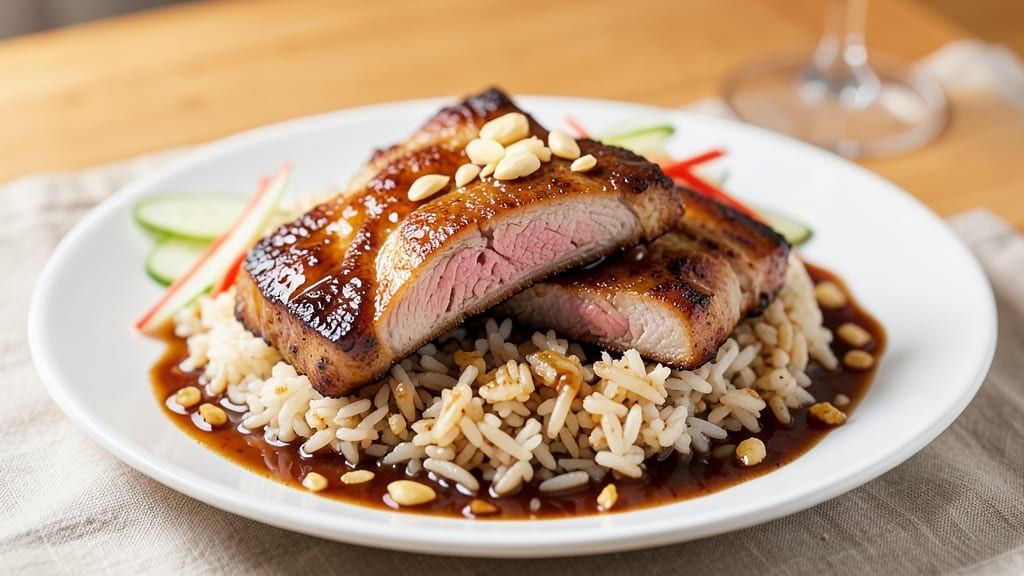
This broken rice pork chop recipe transforms simple ingredients into a dish where tender pork chops melt in your mouth under a sticky tamarind glaze that caramelizes into irresistible sweetness.
The secret lies in balancing textures—crispy edges on the pork, fragrant broken rice, and a sauce that clings like liquid gold. I perfected this after years of experimenting with Asian-inspired one-pan meals, where every bite delivers both savory depth and bright, tangy contrast.
The technique is straightforward: marinate the pork chops in soy, ginger, and garlic, then sear them until golden before tossing with broken rice and tamarind reduction. The broken rice absorbs the glaze beautifully, creating a dish that’s restaurant-quality without requiring fancy equipment.
Serve with steamed greens or a quick cucumber salad to cut through the richness—this recipe delivers a complete meal in under 45 minutes with minimal cleanup.
Ingredients for broken rice pork chop
Four tender pork chops, aromatic broken rice, and a tamarind glaze that transforms simple ingredients into restaurant-quality comfort.
| Ingredient | Amount | Notes |
|---|---|---|
| Pork Chops 🥩 | 4 whole | Bone-in, 1-inch thick, center-cut |
| Broken Rice 🍚 | 1 ½ cups | Uncooked, medium-grain preferred |
| Tamarind Paste 🍈 | ½ cup | Unadulterated, thick consistency |
| Soy Sauce 🍶 | ⅓ cup | Kosher salt-reduced preferred |
| Fresh Ginger 🧅 | 2 tbsp | Grated, aromatic variety |
| Garlic Cloves 🧄 | 4 cloves | Minced, fresh preferred |
| Sesame Oil 🫒 | 1 tbsp | Toasted, not flavored |
| Brown Sugar 🍯 | ¼ cup | Packed, light variety |
| Vegetable Oil 🫒 | 2 tbsp | High smoke point for searing |
| Green Onions 🧅 | ¼ cup | Sliced, white and green parts |
| Salt 🧂 | 1 tsp | Diamond Crystal kosher salt |
| Black Pepper 🌶️ | ½ tsp | Freshly cracked, coarse grind |
| Sesame Seeds 🌾 | 1 tbsp | Toasted, for garnish |
The pork chops are the foundation—bone-in for flavor, center-cut for even cooking. Look for chops with good marbling at Whole Foods or your local butcher shop; pre-cut options at Trader Joe's work in a pinch. Fresh ginger and garlic should be vibrant and aromatic—no shriveled roots or brown spots. Tamarind paste can be found in the international aisle at most supermarkets, or order online for the thickest consistency. Penzeys Spices carries premium options if you prefer imported varieties. For the broken rice, jasmine or medium-grain white works best—avoid long-grain varieties that stay separate.
No tamarind paste? Substitute 3 tbsp lime juice plus 2 tbsp brown sugar for tangy brightness, though the depth won't be identical. Running low on sesame oil? Use 1 tsp toasted sesame seeds plus 1 tbsp neutral oil—toast the seeds in a dry pan until fragrant. The brown sugar can be swapped for coconut sugar or even maple syrup (reduce by 1 tbsp to account for moisture). For the glaze, reduce the tamarind mixture to a thick syrup—simmer uncovered until it coats the back of a spoon. If your rice is pre-cooked, rinsed before adding to the pan prevents mushiness. The green onions add freshness; use scallions if that's what you have—just chop both white and green parts.
Pork chops sear best at room temperature—take them out of the fridge 30 minutes before cooking. The glaze keeps for 5 days refrigerated in an airtight container, or 3 months frozen in ice cube trays. For meal prep, cook the rice and pork separately, then combine with the glaze when reheating—this prevents sogginess. Garnish with toasted sesame seeds just before serving to maintain crispness. Leftovers reheat beautifully in a skillet with a splash of water to restore moisture. Store components separately if prepping ahead for maximum texture control.
Why You'll Love This Recipe
- Pantry Magic: I swear by this one—no special ingredients, just what’s probably already in your cupboard. Broken rice soaks up the tamarind-soy glaze like a sponge, turning tough pork chops into melt-in-your-mouth bites with zero fuss.
- Tangy-Savory Balance: That tamarind paste? It’s the MVP here. The sour punch cuts through the richness of the pork while the ginger adds a zesty kick—like a cross between a stir-fry and a tangy rice bowl. Honestly, the first time I tasted it, I grabbed a second chop without thinking.
- Lunchbox Hero: Between us, this is my go-to for meal prep. Cook a big batch, portion the rice and pork separately, and you’ve got a week’s worth of lunches that taste fresh, not sad. (Yes, even on a Tuesday night.) The leftovers actually get better the next day—crispier edges, deeper flavor.
- Budget Win: Pork chops on sale? Broken rice cheaper than white? This recipe stretches every dollar without sacrificing taste. I’ll be real: my grocery bill dropped when I started making it regularly, and my family never complains about the meals. That’s a rare combo.
Step-by-step instructions for broken rice pork chops with tamarind glaze
Master this fusion technique combining tender pork with aromatic broken rice and caramelized tamarind.
Prepare the Glaze and Cook the Broken Rice
In a small saucepan, combine the 0.5 cup tamarind paste, 0.33 cup soy sauce, 0.25 cup brown sugar, and 2 tbsp grated fresh ginger. Bring to a gentle simmer over medium heat for 8-10 minutes until the mixture thickens slightly and develops a rich, caramelized aroma. This is your glaze foundation—reduce it until it coats the back of a spoon.
While the glaze simmers, toast the 1.5 cups broken rice in a dry skillet over medium heat for 2-3 minutes until fragrant. Transfer to a bowl and cover with 2 cups hot water (or enough to cover by 1 inch). Let it soak for 15 minutes—this jumpstarts the cooking process and prevents mushy texture. Drain any excess water before using.
Sear the Pork Chops for Maximum Flavor
Pat the 4 whole pork chops completely dry with paper towels—this ensures a perfect sear. Heat 2 tbsp vegetable oil in a heavy skillet over high heat until shimmering. Season the pork chops generously with 1 tsp salt and 0.5 tsp black pepper on both sides.
Sear the pork chops for 3-4 minutes per side until they develop a deep golden-brown crust. The edges should pull away from the pan easily, and the internal temperature should reach 145°F when measured with an instant-read thermometer. Remove the chops and set aside on a plate to rest while you prepare the rice mixture.
Combine Glaze with Rice and Pork
In the same skillet (no need to clean it—the fond adds flavor), add the toasted broken rice and stir to coat evenly with any remaining rendered fat. Pour the reduced tamarind glaze over the rice and toss gently to combine. Cook over medium-low heat for 5-6 minutes, stirring occasionally, until the rice absorbs the glaze and becomes slightly sticky.
Return the seared pork chops to the skillet, spooning the rice mixture over and around them. Cover and cook for an additional 4-5 minutes on low heat, allowing the pork to finish cooking gently in the aromatic rice. The rice should be tender but still hold its shape, and the pork should reach an internal temperature of 150°F—just shy of well-done.
Garnish and Serve with Finishing Touches
Transfer the pork chops and rice to a serving platter. Drizzle with an additional 1 tbsp toasted sesame oil and sprinkle evenly with 1 tbsp toasted sesame seeds. Garnish with 0.25 cup sliced green onions, both white and green parts, for a fresh contrast.
Serve immediately while the pork is still juicy and the rice maintains its slight stickiness. The tamarind glaze should have caramelized into a glossy sheen, balancing the savory pork with sweet-tart complexity. Pair with steamed bok choy or a simple cucumber salad to complement the rich flavors.
Pro Tips For Making Broken Rice Pork Chop
- Sear Pork Chops First: The rice and sauce can hide a lot, but nothing beats a quick sear in a hot pan with oil before adding the tamarind-soy mix. I used to skip this, and the pork always tasted underwhelming—now I swear by 2-3 minutes per side until golden, even if it means pulling them out early to finish in the sauce.
- Toast the Broken Rice: No, you don’t need to fry it like nuts, but a 3-minute dry toast in the same pan you seared the pork—just until it smells nutty—adds depth the raw rice can’t match. I learned this after a batch tasted bland; the extra effort makes the rice taste like it belongs in the dish, not just as filler.
- Dilute Tamarind Paste: Store-bought paste is thick and clumpy—mix it with 2 tablespoons of warm water first to smooth it out before adding to the sauce. I’ve burned my tongue trying to scrape lumps off my spoon, and the sauce never emulsifies right if you don’t prep it properly.
- Simmer Low and Slow: This isn’t a race. After combining everything, reduce heat to a gentle simmer and let it bubble just enough to keep the rice from turning mushy. I used to crank the heat, and the rice would turn to glue—now I walk away and let it do its thing for 15 minutes, and the texture is perfect every time.
Essential equipment for this dish
Skillet Essentials
Your heavy-bottomed skillet is the MVP here—I swear by a 10-inch Lodge cast iron for even heat distribution and that perfect crust. If you don’t have cast iron, a stainless steel skillet like All-Clad works too, but preheat it longer to prevent sticking.
The key is medium-high heat for searing, so avoid nonstick unless you’re in a hurry—it won’t build that flavorful fond. 🔥
Thermometer Must-Have
An instant-read thermometer (like ThermoWorks ThermoPop) is non-negotiable for pork chops. You need to hit 145°F for medium doneness, and 150°F when finished with the rice.
Without one, you’re guessing—and overcooked pork is dry pork. I keep mine in my kitchen drawer for quick checks during any protein cooking. ⏰
Saucepan for Glaze
Use a small, heavy saucepan (like Cuisinart’s MultiClad) for the tamarind glaze—it heats evenly and prevents scorching. If you’re short on time, a stainless steel saucepan works best; avoid aluminum as it reacts with acidic tamarind.
A wooden spoon helps stir without scratching the pan while reducing the glaze. 🍶
Rice Toasting Tool
Toast the broken rice in the same skillet you sear the pork—no extra equipment needed! Just use a spatula to stir constantly over medium heat until fragrant.
If you’re nervous about burning it, lower the heat slightly. A fine-mesh strainer helps drain excess water after soaking, keeping the rice light and fluffy. 🍚
Garnish Gear
Toast sesame seeds in a small dry pan over low heat for 1-2 minutes until golden—no need for fancy tools. A sharp knife and cutting board are all you need for green onions.
For extra flair, use tweezers to place sesame seeds precisely on each chop. A serving platter with a rim keeps everything contained during plating. ✨
Optional Upgrades
Want to level up? A mortar and pestle lets you grind whole spices for the glaze instead of pre-minced garlic. For meal prep, glass airtight containers keep the rice and pork separate until reheating. If you’re making this often, a digital kitchen scale ensures precise measurements for the glaze. 💡
Nutrition facts
Frequently asked questions
Can I use regular rice instead of broken rice?
Broken rice is key for this recipe—its smaller pieces absorb the tamarind glaze beautifully and create a sticky texture. If you must substitute, use short-grain white rice (like sushi rice) and reduce the cooking liquid by 25%. Long-grain rice will stay separate and dry. For best results, toast the rice first to enhance its nutty flavor.
How do I prevent the pork chops from drying out?
Start with room-temperature chops (pat dry first!) and sear them over high heat for 3-4 minutes per side—this creates a flavorful crust while keeping the inside juicy. Use an instant-read thermometer to stop cooking at 145°F internal temp. Let them rest 5 minutes before serving to redistribute juices.
What if I don't have tamarind paste?
Mix 3 tbsp lime juice with 2 tbsp brown sugar for a quick substitute—it won't be identical but adds tangy brightness. For deeper flavor, try 1 tbsp soy sauce + 1 tbsp honey + 1 tsp vinegar. The glaze will be less complex, but the dish will still taste delicious.
Can I make this recipe ahead of time?
Cook the pork chops and rice separately, then store them in airtight containers in the fridge for up to 3 days. Reheat in a skillet with a splash of water to restore moisture. The glaze can be made 5 days ahead—store it in the fridge and warm gently before combining with the rice.
What's the best way to serve this dish?
Pair with steamed bok choy or a quick cucumber salad to balance the richness. For extra flair, serve with pickled red onions or a drizzle of chili crisp on the side. The tamarind glaze shines best with fresh, crisp vegetables that cut through its sweetness.