
Main Courses
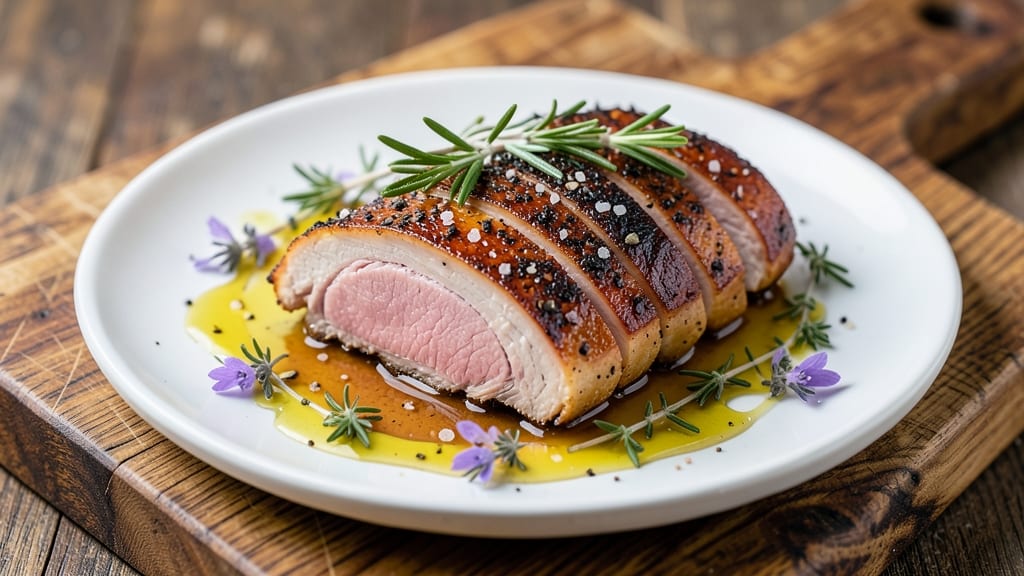
This butterflied pork loin recipe delivers restaurant-quality results with crispy edges and juicy centers—perfect for special occasions or weeknight dinners. 🔥 As a pitmaster who's cooked thousands of pounds of pork, I know the secret lies in proper butterflying, high-heat searing, and precise timing to lock in moisture while building flavorful crusts.
The technique starts with carefully slicing the pork loin to create a flat surface that cooks evenly, then seasoning generously with salt, pepper, and herbs before searing in a hot pan. This method ensures the exterior develops that coveted caramelized crust while the interior remains tender and moist.
The key is working in batches to maintain consistent heat and avoid overcrowding the pan.
What you'll achieve is a perfectly cooked pork loin with a golden-brown crust that shatters at the touch, revealing succulent pink meat within. The edges will be crisp enough to stand up to rich sauces or glaze, while the center maintains that ideal 145°F internal temperature for juicy perfection.
This is the kind of dish that makes guests ask for seconds—and the recipe.
Serve with classic sides like roasted potatoes, caramelized onions, or a fresh herb salad to complete the meal. The crispy edges pair beautifully with tangy mustard or a sweet apple glaze, while the juicy interior stands up to bold flavors.
Let's get cooking—this pork loin will be the star of your table.
Ingredients for butterflied pork loin
Twelve ingredients for a showstopping pork loin with restaurant-worthy crispy edges and juicy centers.
| Ingredient | Amount | Notes |
|---|---|---|
| Pork Loin (Center Cut) 🍖 | 2 lb | Bone-in, butterflied to 1-inch thickness |
| Kosher Salt 🧂 | 2 tbsp | Diamond Crystal preferred, coarse grain |
| Freshly Ground Black Pepper 🌶️ | 1 tbsp | Cracked peppercorns preferred |
| Fresh Rosemary 🌿 | ½ cup | Finely chopped, stems removed |
| Fresh Thyme 🌿 | ¼ cup | Leaves only, stems discarded |
| Extra-Virgin Olive Oil 🫒 | ½ cup | High smoke point, fruity variety |
| Unsalted Butter 🧈 | ¼ cup | Cold, cubed, European-style preferred |
| Garlic Cloves 🧄 | 6 cloves | Minced, fresh preferred |
| Heavy Cream 🥛 | ¼ cup | Full-fat for optimal texture |
| Dijon Mustard 🍯 | 1 tbsp | High-quality, grainy texture |
| Granulated Sugar 🍚 | 1 tbsp | For crust development |
| Apple Cider Vinegar 🍎 | 1 tbsp | For glaze acidity |
The pork loin is non-negotiable—center-cut, bone-in ensures maximum flavor and even cooking. Look for a uniformly thick cut (1.5-2 inches) at Whole Foods or your butcher shop, as they often carry higher-quality cuts than standard grocery stores. If buying frozen, thaw overnight in the fridge—never at room temperature. The rosemary and thyme should be vibrant green with no brown stems; farmers markets typically offer the freshest herbs. For the olive oil, California extra-virgin brands like Corto or Lucini provide the best balance of heat resistance and flavor complexity.
No Dijon mustard? High-quality yellow mustard works, but reduce by half. Substituting butter for olive oil in searing? Use European-style unsalted—it has a higher smoke point. The garlic can be roasted ahead for deeper flavor (350°F for 10 minutes), but fresh minced works just as well. For a gluten-free option, swap the Dijon for gluten-free mustard or white wine vinegar with a pinch of sugar. The heavy cream is essential for the glaze—full-fat is critical for proper emulsification; light cream will separate during cooking.
Store whole herbs in airtight containers with a damp paper towel for up to 5 days. The pork loin can be butterflied and seasoned 1 day ahead, then refrigerated uncovered on a wire rack to dry-brine. For long-term storage, freeze the butterflied loin (unseasoned) for up to 3 months—thaw overnight before cooking. The glaze ingredients keep indefinitely at room temperature, but fresh garlic and herbs should be added just before serving for peak flavor. Leftovers reheat beautifully in a 350°F oven for 10-12 minutes, covered with foil.
Why You'll Love This Recipe
- Minimal Prep Required: I’ll be real—this butterflied pork loin is the kind of dish where the hardest part is slicing the loin in half. No dicing, no mincing, no fuss. Just a few slashes with a knife, a quick rub of salt and pepper, and you’re done. Honestly, it’s the kind of recipe that makes me feel like a hero when the kids are starving at 6:30.
- Herb-Crusted Magic: That rosemary and thyme? They don’t just hint at flavor—they take over in the best way. The crispy edges from the butterflying? They’re the perfect contrast to the juicy, herb-infused center. It’s not just pork; it’s ridiculously good pork.
- Weeknight to Dinner Party: I make this for Tuesday dinners, but it’s also the star of my holiday spread. Slice it thin for sandwiches, serve it whole for a showstopper, or cut it into medallions for a fancy-ish weeknight meal. It’s the chameleon of pork dishes—works everywhere.
- Leftovers That Don’t Suck: Between us, most pork leftovers turn into sad, dry mystery meat. Not this. Butterflying keeps it tender, and the herbs make it taste fresh even reheated. I’ll pack half for lunch the next day, and no one bats an eye—because it’s still solid flavor, not regret.
Step-by-step instructions for butterflied pork loin
Master this technique for restaurant-quality results every time.
🔪 Step 1: Butterfly and Season the Pork Loin
Place the 2 lb pork loin (center cut) on a cutting board with the bone side facing down. Using a sharp boning knife, carefully cut through the thickest part of the muscle, stopping just before the bone. Repeat on the opposite side to create a flat, even surface. The loin should now be butterflied to about 1-inch thickness—this ensures even cooking.
Pat the butterflied loin dry with paper towels, then season both sides generously with 2 tablespoons kosher salt and 1 tablespoon freshly ground black pepper. Press the seasoning firmly into the meat so it adheres well. Let it sit at room temperature for 30 minutes before cooking. This step is critical for developing a flavorful crust and preventing uneven cooking.
👨🍳 Step 2: Create the Herb Butter Rub
In a small bowl, combine ½ cup finely chopped fresh rosemary, ¼ cup fresh thyme leaves, 6 minced garlic cloves, 1 tablespoon granulated sugar, and 1 tablespoon Dijon mustard. Add the ¼ cup cold cubed unsalted butter and mix with your fingers until fully incorporated. The sugar and mustard help create a caramelized crust during searing.
Spread the herb butter mixture evenly over both sides of the seasoned pork loin. Press it gently into the meat so it adheres well. Let the loin sit for another 15 minutes at room temperature. This resting period allows the seasoning and herbs to penetrate the meat, ensuring maximum flavor in every bite.
🔥 Step 3: Sear the Pork Loin to Perfection
Heat a cast-iron skillet over medium-high heat until very hot. Add ½ cup extra-virgin olive oil and let it shimmer for 1 minute. Place the pork loin in the skillet, oiled-side down, and sear for 3-4 minutes until the edges are deep golden brown and crispy. Flip the loin and sear the other side for another 3-4 minutes.
Here's the thing—don't move the pork once it's in the pan. Let it develop that beautiful crust undisturbed. You'll know it's ready to flip when the edges release easily from the pan and the underside is uniformly browned. The high heat and rendered fat will create that coveted crispy exterior while keeping the interior juicy.
🍳 Step 4: Finish with Cream and Vinegar Glaze
Remove the pork from the skillet and transfer it to a warm plate. Reduce the heat to medium and add ¼ cup heavy cream and 1 tablespoon apple cider vinegar to the skillet. Scrape up any browned bits from the bottom with a wooden spoon—these contain concentrated flavor. Simmer for 2-3 minutes until the sauce thickens slightly.
Return the pork to the skillet and spoon the cream-vinegar sauce evenly over the top. Let it cook for another 1-2 minutes to heat through and allow the sauce to penetrate the meat. The acidity from the vinegar brightens the flavors while the cream adds richness. The pork should reach an internal temperature of 145°F when measured in the thickest part—this ensures perfect doneness.
⏰ Step 5: Rest and Slice for Maximum Juiciness
Transfer the pork to a cutting board and tent loosely with aluminum foil. Let it rest for at least 10 minutes before slicing. This resting period is crucial—it allows the juices to redistribute throughout the meat, preventing them from running out when you cut into it. Real talk: Skipping this step results in dry, disappointing slices.
Slice the pork loin against the grain into ½-inch thick medallions. The butterflying technique ensures each slice is tender and uniform. Serve immediately with the pan sauce spooned over the top. Each bite should deliver crispy edges, juicy centers, and layers of herbaceous, savory flavor that complement the rich cream sauce.
Pro Tips For Making Butterflied Pork Loin
- Score the Bone First: I learned this the hard way—skipping this step means your butterflied pork won’t lay flat, no matter how hard you press. Use a sharp boning knife to slice through the T-shaped bone at the center, then wiggle it out with your fingers before splitting the loin into two even cutlets.
- Salt the Meat Twice: Don’t just salt once before cooking. After butterflying, give the pork another generous coat of kosher salt and let it sit uncovered on a rack for 20 minutes—this guarantees a deep, even seasoning and prevents dryness. (Yes, even if you’re impatient like me.)
- Sear Over High Heat: The crust on butterflied pork is everything, so crank your pan to medium-high and wait until it’s screaming hot before adding oil. A 3-4 minute sear on each side locks in juices and gives you that golden, caramelized finish everyone craves.
- Rest Under Foil: As soon as the pork hits 145°F, pull it from the heat and tent it loosely with foil for 5-10 minutes. This keeps the meat juicy while the internal temp rises another 5 degrees—no more dry, overcooked slices. (Your future self will thank you.)
Pro cooking tips for this dish
Precision Butterflying
This is where most home cooks mess up—using the wrong knife or cutting too aggressively. I swear by a flexible boning knife (like the Victorinox 12-inch) because it glides through pork loin without tearing the muscle fibers.
Start at the thickest point and cut just until you see the bone, then repeat on the opposite side. The goal is a uniform 1-inch thickness—any thicker and the center won't cook through properly. 🔪
Dry Brining Secret
Skipping the 30-minute room temp rest after salting is a rookie mistake. The salt needs time to break down muscle proteins and draw out moisture from the surface, which creates that perfect crust.
Pro tip: Pat the meat extra dry with paper towels before seasoning—moisture is the enemy of crispy edges. I like to use two layers of paper towels for maximum absorption.
High-Heat Searing
Your pan needs to be smoking hot before the pork hits it—test with a drop of water that sizzles violently. I use my Lodge 12-inch cast iron preheated for 8-10 minutes on medium-high. The key is never moving the pork once it's in the pan.
Those crispy edges form from the Maillard reaction, which needs undisturbed contact. If you flip too soon, you'll get steamed pork instead of caramelized perfection.
Batch Cooking
Even with a large skillet, I cook pork loin in two batches when possible. Crowding the pan steams the meat instead of searing it. After the first side is golden brown (about 3-4 minutes), flip carefully with a fish spatula.
The second side should take the same time—no rushing. If your pan isn't hot enough, add another minute of preheating before starting.
Internal Temp Check
Use a meat thermometer (I love the Thermoworks Smoke) inserted into the thickest part of the loin—not touching bone. The magic number is 145°F internal temperature, which should take about 6-8 minutes total searing time for a properly butterflied 2 lb loin.
If you're using a thick-cut loin, you might need 10-12 minutes—but never exceed 150°F or you'll dry it out.
Resting Like a Pro
The 10-minute rest is non-negotiable—this is when the juices redistribute. I like to tent the pork loosely with heavy-duty aluminum foil and place it on a wire rack over a baking sheet to catch any drips.
Some chefs swear by resting on a cutting board, but the rack prevents soggy bottoms. And for heaven's sake, don't slice into it early—that's how you ruin all your hard work. 💪
Nutrition facts
Frequently asked questions
Why does butterflying the pork loin matter?
Butterflying creates a uniform 1-inch thickness, ensuring even cooking and crispy edges throughout. Without it, thicker sections cook unevenly, leaving some parts undercooked or dry. This technique also maximizes surface area for flavor development and crust formation. Think of it as unlocking the pork's full potential!
Can I use a different cut of pork instead of loin?
This recipe is specifically designed for center-cut pork loin because of its tender meat and even cooking properties. While you could try a pork tenderloin, it's much smaller and would cook too quickly. For larger cuts like pork shoulder, you'd need to adjust cooking times and methods significantly.
What if my pork loin is thicker than 1 inch?
If your butterflied loin exceeds 1.25 inches, slice it thinner or cook it at 375°F in the oven for 5-8 minutes after searing to finish cooking. Always check with a meat thermometer—145°F is your target. Thicker cuts need extra attention to avoid dryness while developing crispy edges.
How can I make this recipe ahead of time?
You can prep the butterflied, seasoned pork loin 1 day ahead and refrigerate it uncovered on a wire rack. This dry-brining method enhances flavor and texture. For the full meal, cook the pork fresh, but you can make the cream sauce ahead and reheat it gently. The glaze ingredients can also be mixed in advance and stored separately.
What are the best sides to serve with this dish?
This crispy, juicy pork loin pairs beautifully with roasted garlic mashed potatoes, caramelized onions, or a spring vegetable salad. For a Southern touch, try collard greens with smoked bacon or cornbread. The rich pork flavor stands up well to both earthy and fresh accompaniments.