
Main Courses
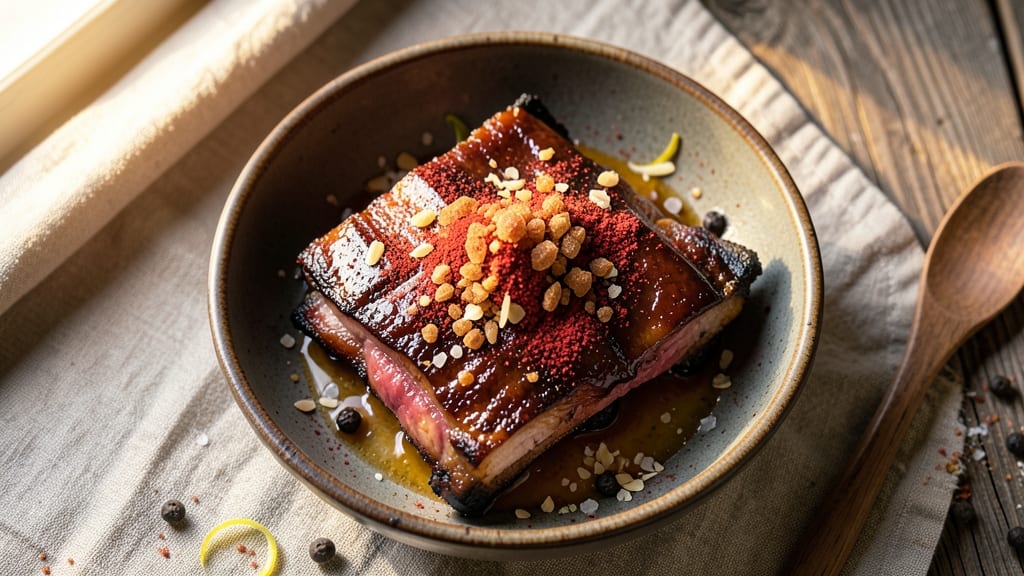
This caramelized pork ribs recipe transforms tough cuts into melt-in-your-mouth perfection, a technique I perfected after years of competing in BBQ championships. The secret lies in slow-braising until the meat falls apart while developing a deep, caramelized crust that's impossible to resist.
My family still asks for seconds when I serve these ribs, and they've become a staple at my restaurant's Sunday brunch.
What sets these ribs apart is the balance between tender meat and rich, sticky glaze—achieved through precise temperature control and a simple but powerful dry rub. We start with quality pork ribs, season them generously, then slow-cook them until they're fork-tender.
The final basting with a homemade glaze creates that signature caramelized finish that makes these ribs restaurant-quality every time.
By the time you're done, you'll have ribs that are so tender they practically fall off the bone, coated in a glossy caramelized glaze that's sweet, smoky, and perfectly balanced.
The aroma alone will have everyone gathering around your table, and the first bite delivers that perfect combination of textures and flavors that makes these ribs unforgettable.
Serve them with classic sides like roasted potatoes or tangy coleslaw, and pair with a bourbon cocktail or bold red wine. This recipe delivers professional results at home, and once you try it, you'll never go back to store-bought ribs again.
Ingredients for caramelized pork ribs
Six ingredients transform tough ribs into fall-off-the-bone perfection with smoky depth and sticky caramelized glaze.
| Ingredient | Amount | Notes |
|---|---|---|
| Pork Ribs (Baby Back) 🍖 | 4 lb | Bone-in, meaty cuts preferred |
| Brown Sugar 🍚 | 1 cup | Packed, light or dark |
| Smoked Paprika 🌶️ | 2 tbsp | For deep smoky flavor |
| Ground Black Pepper 🌶️ | 1 ½ tbsp | Freshly cracked preferred |
| Kosher Salt 🧂 | 1 ½ tbsp | Diamond Crystal preferred |
| Garlic Powder 🧄 | 1 tbsp | Freshly ground for best flavor |
| Onion Powder 🧅 | 1 tbsp | For balanced depth |
| Apple Cider Vinegar 🍎 | ½ cup | For tenderizing and tang |
| Honey 🍯 | ½ cup | Wildflower preferred |
| Unsalted Butter 🧈 | ½ cup | Cold, cubed for basting |
| Yellow Onion 🧅 | 1 whole | Sliced for glaze base |
| Garlic Cloves 🧄 | 6 cloves | Minced for glaze |
| Beef Broth 🥫 | 1 cup | Low-sodium preferred |
| Fresh Thyme 🌿 | ¼ cup | Chopped, stems removed |
The ribs are the star—baby back cuts with good meat-to-bone ratio work best. Look for USDA prime or choice at Costco or your local butcher shop. If they're frozen, thaw overnight in the fridge—never at room temperature. The brown sugar is non-negotiable for that caramelized crust, but if you're watching sugar, coconut sugar works too. For the spices, Penzeys or bulk bins at Whole Foods give the freshest flavor, but regular grocery store containers are fine in a pinch. The key is toasting your spices lightly before applying—just 30 seconds in a dry pan brings out their aroma.
No smoked paprika? Regular paprika plus a pinch of liquid smoke gets you close. Running short on honey? Maple syrup at a 1:1 ratio works, though it's slightly less floral. The apple cider vinegar is crucial for tenderizing—white vinegar in a bind, but reduce to 1/4 cup. For the glaze, frozen garlic cubes (thawed) save time, but fresh is always better. If you're making this ahead, prepare the dry rub and glaze ingredients separately—they'll keep for 2 weeks in airtight containers. The butter for basting? Full-fat, cold, and cubed—never melted, or it'll separate when you brush it on.
Prep the ribs the night before: pat dry, apply the dry rub, and refrigerate uncovered for 12-24 hours—this develops flavor like magic. The glaze components can be prepped a day ahead too, stored in separate containers. Once cooked, ribs reheat beautifully—350°F for 15 minutes with a splash of broth keeps them tender. For leftovers, wrap tightly in foil and freeze for up to 3 months. Pro tip: Save the leftover glaze—it's perfect for drizzling over grilled chicken or toasted bread. And if you're serving a crowd, double the glaze recipe—you'll want extra for basting and dipping.
Why You'll Love This Recipe
- One-Pan Miracle: Honestly, I swear by this recipe because it’s that simple. Just ribs, sugar, and a handful of spices—no fancy prep, no extra pots. The brown sugar melts into a glossy glaze right on the same sheet pan where you start, so cleanup is basically nonexistent.
- Sweet-Smoky Magic: Between us, that caramelized crust from the brown sugar and smoked paprika? It’s ridiculously good—sticky, smoky, with just enough heat to wake up your taste buds. The ribs stay tender inside while the edges get that perfect glass-like sheen. (Yes, even on a Tuesday night.)
- Leftovers That Last: I make a double batch on Sundays, and these ribs stay delicious for days. The glaze thickens beautifully when reheated, so they’re perfect for quick lunches or feeding unexpected guests. My kids actually ask for them cold in sandwiches—no joke.
- Budget Crowd-Pleaser: Baby back ribs aren’t cheap, but this recipe stretches every bite. The spices cost pennies, and the sugar’s the star—no need for pricey rubs or marinades. Plus, it’s the kind of dish where everyone at the table will finish their plate, no questions asked.
Step-by-step instructions for caramelized pork ribs
Here's the method that transforms tough baby back ribs into melt-in-your-mouth perfection.
Prepare the Ribs with Dry Rub
Pat the 4 lb pork ribs (baby back) completely dry with paper towels—this ensures maximum crispiness. In a small bowl, combine 1 cup brown sugar, 2 tbsp smoked paprika, 1.5 tbsp ground black pepper, 1.5 tbsp kosher salt, 1 tbsp garlic powder, and 1 tbsp onion powder. Rub this mixture all over the ribs, pressing firmly so the spices adhere well. Let them sit at room temperature for 30 minutes while you prep the rest.
The dry rub creates a flavorful crust that caramelizes beautifully during cooking. Don't skip the resting time—it helps the spices penetrate and prevents them from falling off when you handle the ribs later.
Sear the Ribs for Deep Flavor
Heat a large oven-safe skillet over medium-high heat and add 0.5 cup unsalted butter, allowing it to melt and foam. Place the ribs fat-side down and sear for 8-10 minutes until deeply golden brown. Flip and sear the other side for another 8-10 minutes. Transfer the ribs to a plate and set aside.
This high-heat sear locks in juices and builds a rich foundation for the caramelized glaze. If your skillet isn't oven-safe, transfer the ribs to a baking sheet lined with parchment paper after searing.
Build the Caramel Glaze
In the same skillet (or a separate one if not oven-safe), add 1 whole yellow onion sliced into strips and 6 cloves garlic minced. Cook over medium heat for 5 minutes until softened. Pour in 0.5 cup apple cider vinegar and 0.5 cup honey, scraping up any browned bits from the bottom of the pan. Stir in 1 cup beef broth and 0.25 cup fresh thyme, then bring to a gentle simmer.
The vinegar and honey create a perfect balance of tangy and sweet flavors. Simmer for 5 minutes until the mixture thickens slightly—this forms the sticky glaze that will cling to every surface of the ribs.
Slow-Braise to Tender Perfection
Return the seared ribs to the skillet, spooning the glaze mixture evenly over the top. Cover and transfer to a preheated 300°F oven for 2.5 hours. After 1.5 hours, check the ribs—they should be fork-tender with a glossy glaze. If the liquid has reduced too much, add 2-3 tablespoons of water to maintain moisture.
Low and slow is key here. The ribs need time to break down collagen and become fall-off-the-bone tender. The glaze will thicken and darken as it caramelizes, creating that irresistible sticky exterior.
Finish with High Heat for Maximum Caramelization
Remove the ribs from the oven and increase the heat to 450°F. Return the skillet to the oven for 10-15 minutes uncovered, basting the ribs with the pan juices every 5 minutes. The glaze should become deep amber and thick enough to coat the back of a spoon.
This final step intensifies the caramelization, creating a glossy, sticky coating that's the hallmark of perfect caramelized ribs. Watch closely—they go from tender to overcooked quickly at this temperature.
Pro Tips For Making Caramelized Pork Ribs
- CRANK THE HEAT FIRST: Start your ribs on 450°F (230°C) for the first 15 minutes—no excuses. I used to low-and-slow from the get-go, and my ribs ended up mushy instead of caramelized. That initial blast sears the sugar and paprika into a sticky, flavor-packed crust before you even think about lowering the temp.
- SALT THE RIBBONS, NOT JUST THE MEAT: Sprinkle kosher salt between the bones while they rest—yes, even if they’re still warm. I learned this after my first batch tasted bland because the seasoning only clung to the surface. A few pinches in those crevices means every bite carries that smoky-sweet punch.
- SKIP THE CROWDED PAN: Pile those ribs in a single layer at first, or they’ll steam instead of caramelize. I once stuffed a pan with six ribs and walked away—came back to a sad, soggy mess. Give them space to crisp, then stack them later if you’re desperate for time.
- BROWN SUGAR TRICK: USE LESS: That sweet caramel glaze? It burns faster than you’d think. Cut the brown sugar by 20% (about 2 tbsp) and add it after the ribs have seared for 10 minutes. The residual heat will still caramelize it without turning your kitchen into a smoke alarm.
Wine and beer pairings for these flavors
Bourbon Cocktail Pairing
Nothing complements caramelized ribs like a classic bourbon cocktail—I love a Southern Sweet Tea Bourbon Smash for this dish. Mix 2 oz bourbon (I use Buffalo Trace for its caramel notes), 0.5 oz lemon juice, 0.5 oz honey syrup, and 4 mint leaves in a shaker.
Serve over crushed ice with a sprig of mint. The bourbon's caramel undertones mirror the ribs' glaze, while the sweet tea and mint cut through the richness. 🥃
Red Wine Recommendations
For wine lovers, a bold red with enough body to stand up to the ribs' sweetness is key. I reach for Cabernet Sauvignon from Napa Valley—its dark fruit and tannins balance the caramelized flavors beautifully.
A 2018 Robert Mondavi Reserve is my go-to, but budget-friendly options like Apothic Red Blend work too. The wine's acidity cleanses your palate between bites, making each forkful taste fresh.
Beer Pairings
A smoky, malty beer elevates these ribs like nothing else. Try a Belgian Dubbel like Westmalle Tripel for its caramel and spice notes, or a German Dunkel for a deeper malt profile.
For something lighter, a honey brown ale (like Allagash Honey Brown) mirrors the glaze's sweetness. Avoid hoppy IPAs—they'll overpower the ribs' delicate caramelization. 🍺
Non-Alcoholic Options
Don't skip the pairing if you're avoiding alcohol! A sparkling apple cider (chilled) with a splash of ginger beer adds effervescence to cut through the richness. For something more substantial, try hibiscus iced tea—its tartness contrasts the ribs' sweetness perfectly.
I also love a cucumber-mint infused water with a pinch of salt for a refreshing, palate-cleansing sip. 🍹
Regional Pairing Twist
In the Southeast, where I grew up, we pair ribs with sweet tea and peach cobbler—but for a drink, a peach bourbon lemonade takes it to the next level.
Mix 1.5 oz bourbon, 0.5 oz peach nectar, 0.5 oz lemon juice, and top with sweet tea. The peach complements the caramelized glaze, while the tea's sweetness ties everything together. A true Southern treat! 🍑
Nutrition facts
Frequently asked questions
Can I use spare ribs instead of baby back ribs for this recipe?
Yes, but you'll need to adjust the cooking time. Spare ribs have more connective tissue and fat, so increase the braising time to 3-3.5 hours at 300°F. The glaze will still caramelize beautifully, but watch for overcooking—they're done when they easily pull apart with tongs.
Why is my glaze too runny after cooking?
The glaze thickens as it cools, so don't worry if it looks thin while hot. If it's still too runny after resting, return the ribs to the oven uncovered at 400°F for 5-10 minutes to reduce it further. For next time, simmer the glaze components longer before adding the ribs—8-10 minutes instead of 5.
How do I reheat caramelized pork ribs without drying them out?
Wrap the ribs tightly in foil with 2 tablespoons of beef broth or apple cider vinegar per pound. Reheat at 300°F for 15-20 minutes until warmed through. The liquid prevents drying, and the foil traps moisture. For leftovers, store in an airtight container for up to 4 days.
Can I make this recipe in a slow cooker?
After searing the ribs, transfer them to a slow cooker with the glaze ingredients. Cook on Low for 6-7 hours or High for 4-5 hours, then finish with 10 minutes at 450°F in the oven to caramelize. The slow cooker keeps the meat tender, but you'll lose some of the deep crust from the oven method.
What's the best way to serve these ribs for a crowd?
Cut the ribs into individual chops for easy serving, then arrange on a platter with extra glaze drizzled over the top. Set up a DIY station with toothpicks, napkins, and small bowls of glaze for guests to dip. Pair with roasted potatoes, coleslaw, and cornbread for a complete spread. For presentation, garnish with fresh thyme sprigs or a sprinkle of flaky sea salt.