
Main Courses
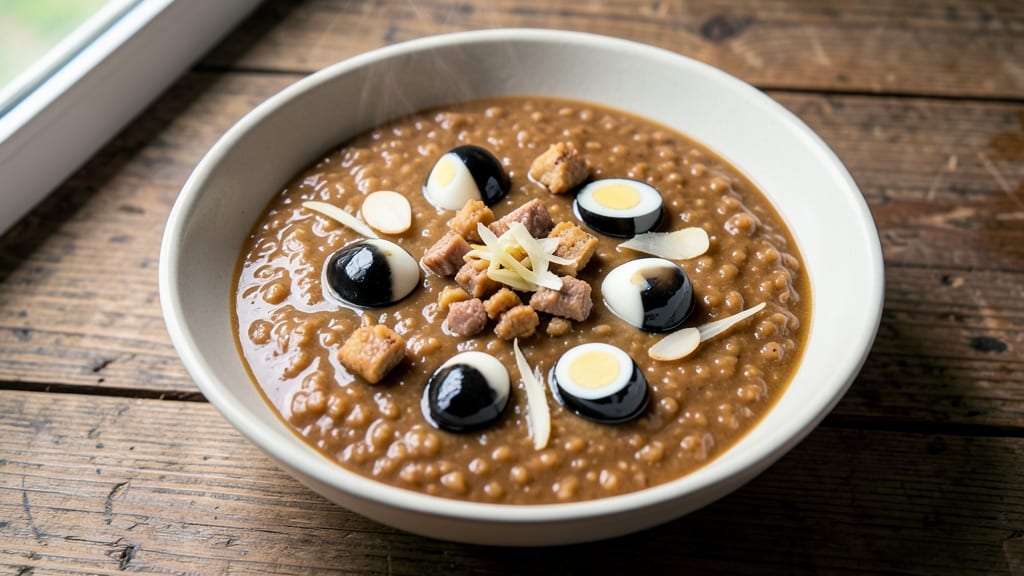
This century egg minced pork porridge delivers a perfect balance of textures and flavors—silky rice noodles cradling tender pork and the distinctive, umami-rich century egg.
The secret lies in carefully peeling the century eggs to preserve their jelly-like center while cooking the pork with just the right amount of garlic, ginger, and chili to enhance their natural depth.
I developed this recipe after years of perfecting the harmony between the pork’s richness and the century egg’s bold, slightly pungent character.
The foundation of this dish is the porridge itself—a delicate blend of rice flour and broth that creates a smooth, comforting base. Cooking the minced pork with aromatics until just tender ensures it stays juicy, while the century eggs add a luxurious, almost custard-like texture that elevates every bite.
The key is balancing the flavors so the pork’s savory notes complement rather than overpower the century egg’s unique depth.
What you’ll end up with is a bowl of porridge that’s both hearty and refined—silky noodles wrapped around tender pork, punctuated by the creamy jelly of century eggs and finished with bright green onions and a drizzle of chili oil.
This dish is perfect for a comforting meal, especially on cooler evenings, and pairs beautifully with steamed greens or a simple side salad.
Whether you’re making this for a special occasion or a weeknight dinner, the technique is straightforward once you understand the balance of ingredients. The result is a dish that feels luxurious yet approachable, with every spoonful offering a symphony of textures and flavors.
Let’s get started on creating this authentic, restaurant-quality porridge at home.
Ingredients for century egg minced pork porridge
Four silky century eggs and tender pork meet rice noodles for a bowl of umami comfort.
| Ingredient | Amount | Notes |
|---|---|---|
| Century Eggs 🥚 | 4 whole | Peel carefully to preserve jelly |
| Ground Pork 🐷 | ½ lb | Freshly minced preferred |
| Rice Flour 🌾 | ½ cup | For silky porridge texture |
| Pork Bone Broth 💧 | 3 cups | Homemade or quality store-bought |
| Garlic Cloves 🧄 | 3 cloves | Minced finely for aroma |
| Fresh Ginger 🧅 | 1 tbsp | Grated finely (about 1-inch piece) |
| Dried Chili Flakes 🌶️ | ½ tsp | Adjust for heat preference |
| Soy Sauce 🍶 | 1 tbsp | Light or dark variety |
| Sesame Oil 🫒 | 1 tsp | For finishing aroma |
| Green Onions 🌱 | 2 whole | Thinly sliced for garnish |
| Chili Oil 🌶️ | 1 tbsp | Store-bought or homemade |
| Salt 🧂 | ½ tsp | Adjust to taste |
Century eggs are the star here—look for plump, dark-skinned ones at Asian markets or specialty stores. The jelly inside should be firm yet creamy; if it's too runny, the eggs are past their prime. Costco or H Mart usually carry them year-round, but check the freezer section if fresh aren't available. For the pork, freshly minced (not pre-ground) makes all the difference—it stays juicier. If you can't find century eggs, salted duck eggs are a decent substitute, but the texture won't be identical.
No fresh ginger? Powdered works at half the amount, but it lacks that bright zing. The chili flakes can be swapped for Sichuan peppercorns if you want a different kind of heat. For the broth, store-bought pork bone broth is fine, but homemade tastes richer. If you're making a big batch, double the rice flour and broth—this porridge reheats beautifully. The soy sauce can be light or dark, but dark adds a deeper color. Sesame oil is non-negotiable for that nutty aroma, though.
Century eggs keep 2-3 weeks in the fridge once peeled, but use them within 3 days for best texture. The porridge reheats well—just add a splash of broth to loosen it up. Store leftovers in airtight containers for 3 days. For extra richness, stir in a spoonful of peanut butter when serving (trust me, it works). The chili oil and green onions should be added fresh—don't skip this part, it's what ties everything together.
Why You'll Love This Recipe
- No-Chop Needed: I swear by this trick—just crumble the century eggs straight from the jar and mix them into the pork. No peeling, no fuss. The rice flour thickens the broth in minutes, so you’re really just stirring while it simmers.
- Umami Bomb: That first bite? The century eggs bring this dish to life—creamy, funky, and rich all at once. The pork bone broth adds depth, and a handful of minced garlic? It’s like a flavor hug you didn’t know you needed.
- Leftovers That Shine: This porridge actually improves the next day. Reheat it, add a splash of water, and it’s even thicker and more satisfying. Pack it for lunch or freeze portions—it’s my go-to for lazy mornings or post-work slump.
- Budget Meal Magic: Century eggs and pork bones stretch this recipe further than you’d think. A single jar of eggs and a bag of ground pork feed my family for days, and the broth freezes beautifully. Frugal? Absolutely. Delicious? Even more so.
Step-by-step instructions for century egg minced pork porridge
Here's how to make this comforting porridge with rich flavors and perfect texture.
Prepare the Century Eggs and Ground Pork
Start by carefully peeling the 4 whole century eggs, preserving the jelly inside. I like to use a spoon to gently scrape away the outer skin while keeping the jelly intact. This jelly is what gives the porridge its signature depth of flavor and silky texture.
In a separate bowl, combine the 0.5 lb ground pork with the minced 3 cloves garlic, grated 1 tbsp fresh ginger, 0.5 tsp dried chili flakes, 1 tbsp soy sauce, and 0.5 tsp salt. Mix well with your hands until the pork is evenly coated and the aromatics are fully distributed. This seasoning step is crucial—it ensures every bite has balanced flavors.
Cook the Pork Mixture
Heat a clean skillet over medium heat and add the seasoned pork mixture. Cook for 3-4 minutes, stirring constantly, until the pork loses its raw color and becomes lightly browned. You'll know it's ready when the mixture releases easily from the pan and has a slightly crispy texture in spots.
Remove the skillet from heat and let the pork cool for 2 minutes. This resting period helps set the flavors and prevents the pork from overcooking when we add it to the porridge later. Meanwhile, prepare the porridge base by whisking together the 0.5 cup rice flour with 1 cup of the 3 cups pork bone broth until smooth.
Create the Silky Porridge Base
In a clean pot, combine the remaining 2 cups pork bone broth with the rice flour mixture. Place over medium heat and stir constantly with a wooden spoon or silicone spatula. You'll want to cook this for 3-5 minutes until it begins to thicken and forms a smooth, glossy paste.
Here's the thing—this step is all about patience. The mixture should thicken enough to coat the back of a spoon but still remain pourable. If it thickens too quickly, add a splash of hot broth to loosen it. Once it reaches the right consistency, remove from heat and let it cool slightly for 1 minute.
Combine and Finish the Porridge
Return the pork mixture to the pot and stir in the peeled century eggs, breaking them gently to distribute the jelly throughout. Add the remaining 1 cup pork bone broth and bring to a gentle simmer over low heat. Cook for 5-7 minutes, stirring occasionally, until the porridge reaches a creamy, pudding-like consistency.
In the final minute of cooking, stir in the 1 tsp sesame oil and 1 tbsp chili oil. The sesame oil adds a nutty aroma, while the chili oil brings just the right amount of heat. Taste and adjust seasoning if needed—you might want to add a bit more soy sauce or salt to balance the flavors.
Serve with Fresh Garnishes
Ladle the porridge into bowls and immediately top with thinly sliced 2 whole green onions. The freshness of the green onions cuts through the richness of the century eggs and pork. Serve immediately while hot—this porridge is best enjoyed fresh from the pot when it's at its most comforting and creamy.
This dish is all about balance: the silky texture of the rice flour base, the rich umami from the century eggs, and the savory depth of the pork. Each spoonful should deliver a perfect harmony of flavors and textures that make this porridge truly special.
Pro Tips For Making Century Egg Minced Pork Porridge
- Bloom the Rice Flour: Mix your rice flour slurry with cold broth first—then heat it. I learned this the hard way: pouring it into hot broth makes lumps like concrete. Stirring into cold broth and bringing it to a simmer gives you that silky, cloud-like texture without the grit.
- Sear the Pork First: Cook the ground pork until it’s just browned—no need to fully cook it. The residual heat will finish it in the broth, and the caramelized bits add depth. Overcooking here turns the porridge into a muddy mess.
- Peel Century Eggs Last: Keep the century eggs whole until the very end—peeling them early turns the broth an unappetizing gray. Drop them in unpeeled, then peel and slice them right before serving. The contrast of creamy yolk and dark yolk is the star.
- Simmer, Don’t Boil: Keep the broth at a gentle simmer—tiny bubbles, not a rolling boil. I used to rush it, and the rice flour would break apart like sad dumplings. Low and slow keeps everything tender and cohesive.
Serving suggestions for this dish
Bowl Presentation
Serve this porridge in deep, wide bowls to showcase its luxurious texture. I use warm stoneware bowls from Le Creuset—they retain heat beautifully and elevate the dish’s presentation.
Arrange the porridge in the center, then create a swirl pattern with a spoon to highlight the century egg jelly’s creamy strands. 🥣
For an extra touch, place a small spoon on the side of each bowl. This isn’t just practical—it signals to guests that this is a dish meant to be savored slowly.
The spoon also helps with the porridge’s thick consistency, preventing messy bites. Trust me, this small detail makes all the difference in how the dish feels.
Side Dish Pairings
Steamed bok choy or Chinese broccoli adds a bright, crisp contrast to the rich porridge. Blanch the greens for 2-3 minutes in salted water, then finish with a drizzle of light soy sauce and a sprinkle of toasted sesame seeds. The bitterness cuts through the pork’s richness beautifully. 🥬
For a heartier meal, serve with pan-fried dumplings or siu mai. The crispy exterior and tender filling add a satisfying crunch that balances the porridge’s silkiness. I like to keep the dumplings simple—just pork and shrimp with a touch of shaoxing wine in the filling.
Warm them in a steamer basket for 3-4 minutes before serving.
Beverage Matchings
A jasmine green tea with a hint of honey is my go-to pairing. The floral notes complement the century egg’s umami without overpowering it. Brew the tea at 180°F for 3 minutes to avoid bitterness.
For a more robust option, try a lightly chilled Chinese baijiu—its herbal notes harmonize with the dish’s complex flavors. 🍵
If you prefer coffee, a strong, dark roast like Sumatra Mandheling works surprisingly well. The earthy, slightly smoky profile stands up to the pork’s richness. Avoid overly sweet lattes—they’ll clash with the porridge’s savory depth. A small cup of black coffee on the side lets the dish’s flavors shine.
Garnish Variations
Swap the green onions for thinly sliced scallions and cilantro for a fresher, herby note. Toss them with a pinch of salt and a splash of rice vinegar before sprinkling over the porridge. This combo adds a bright, almost citrusy contrast that’s especially refreshing in summer. 🌿
For a smoky twist, top the porridge with crispy fried shallots and a drizzle of hoisin sauce. The caramelized shallots add a sweet, crunchy element that pairs perfectly with the century egg’s jelly.
I like to fry the shallots in neutral oil until golden and drain them on paper towels to keep them crisp. Just 1 tablespoon of hoisin per bowl is enough to tie everything together.
Nutrition facts
Frequently asked questions
What's the secret to peeling century eggs without breaking the jelly?
Use a spoon to gently scrape away the outer skin while keeping the jelly intact. Start at the top and work your way down—never force it. The jelly should remain whole and creamy, which is what gives this porridge its signature texture. If you're nervous, practice with one egg first!
Can I substitute ground pork with another protein?
Yes, but the texture and flavor will change. Ground chicken works well for a lighter option, while shrimp adds a delicate sweetness. For authenticity, stick with pork—its fat content keeps the porridge rich and satisfying. If using shrimp, cook it just until pink (2-3 minutes) to avoid toughness.
Why does my porridge turn out too thick or too thin?
Too thick? Add 1-2 tablespoons of hot broth and stir gently. Too thin? Cook the rice flour mixture longer over medium heat until it reaches a paste-like consistency. The key is patience—stir constantly and watch closely. For extra insurance, whisk the rice flour with broth first to prevent lumps.
How do I make this porridge ahead of time?
Prepare the pork mixture and century egg jelly separately, then refrigerate in airtight containers for up to 2 days. When ready to serve, simply reheat the pork gently, combine with fresh broth, and stir in the eggs. The porridge reheats best on low heat with a splash of broth to loosen it. Garnish fresh to keep it vibrant.
What if I can't find century eggs?
Use salted duck eggs as a substitute—they provide a similar rich, creamy texture. For extra depth, add 1 tsp of black vinegar to the porridge when serving. If you're feeling adventurous, try quail eggs for a smaller but equally flavorful bite. Just adjust the quantity to 6-8 quail eggs for the same serving size.