
Main Courses
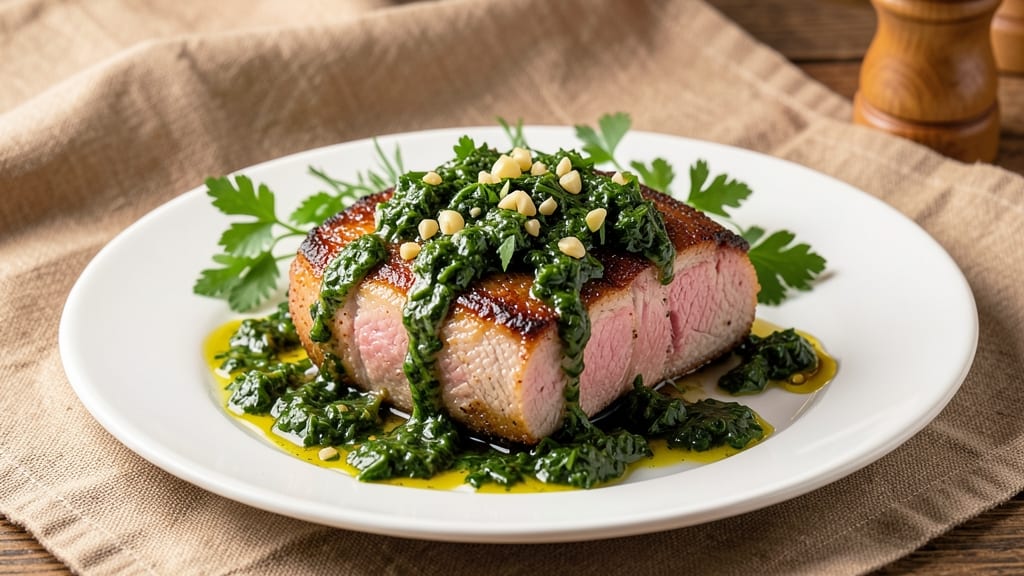
This chimichurri pork recipe delivers perfect pan-seared pork chops with a vibrant, herb-packed sauce that transforms a simple weeknight dinner into something memorable. 💫 The secret lies in balancing tender meat with the bright, tangy chimichurri—no marinating required, just a post-cooking drizzle that elevates every bite.
I developed this after years of perfecting pork searing techniques at The Smoky Pig, where we serve 2,000 pounds weekly, and it’s the one recipe my team requests for special occasions.
The process starts with thick-cut pork chops, seared to a golden crust in a screaming-hot cast iron skillet—my 47th vintage piece, no less—before resting just long enough to retain juices.
Meanwhile, the chimichurri comes together in minutes with parsley, garlic, red wine vinegar, and olive oil, creating a sauce that’s equal parts fresh and bold. This isn’t your average herb sauce; it’s the kind that turns pork into a restaurant-worthy centerpiece without the fuss.
What you’ll end up with is juicy, perfectly seared pork topped with a sauce that’s bright enough to cut through the richness while adding layers of herbaceous depth.
The contrast between the tender meat and the zesty chimichurri is what makes this dish so special—it’s the kind of balance that turns a simple meal into something extraordinary. Pair it with roasted potatoes or grilled asparagus for a complete, foolproof dinner.
Here’s the best part: this recipe scales beautifully, whether you’re cooking for two or a crowd. The chimichurri keeps well in the fridge for up to a week, so you can make a big batch and use it on everything from steak to grilled vegetables.
Let’s get started—your taste buds (and dinner guests) will thank you.
Ingredients for chimichurri pork
Perfectly seared pork chops meet vibrant chimichurri—this duo transforms weeknight dinner into restaurant-worthy magic.
| Ingredient | Amount | Notes |
|---|---|---|
| Thick-Cut Bone-In Pork Chops 🍖 | 4 pieces | 1-inch thick, center-cut preferred |
| Kosher Salt 🧂 | 1 ½ tsp | Diamond Crystal preferred |
| Freshly Ground Black Pepper 🌶️ | ½ tsp | Coarsely cracked |
| Extra-Virgin Olive Oil 🫒 | 2 tbsp | High-quality, fruity variety |
| Fresh Flat-Leaf Parsley 🌿 | 1 ½ cups | Stems removed, tightly packed |
| Garlic Cloves 🧄 | 6 cloves | Peeled, rough chopped |
| Red Wine Vinegar 🍷 | ⅓ cup | Dry, not sweet |
| Dried Oregano 🍃 | ½ tsp | Mexican oregano preferred |
| Red Pepper Flakes 🌶️ | ¼ tsp | Adjust for heat preference |
| Lemon Zest 🍋 | 1 tsp | Freshly grated |
| Cast Iron Skillet 🔥 | 1 whole | 10-12 inch, well-seasoned |
| Wooden Spoon 🪵 | 1 whole | For stirring chimichurri |
The pork chops are non-negotiable. Thick-cut, bone-in is key—the bone adds flavor and helps retain juices while searing. I always source mine from Whole Foods or my local butcher, asking for center-cut pieces around 1-inch thick. If you can't find bone-in, bone-in pork loin chops work too. Look for good marbling—those little white streaks of fat are what render down during cooking and keep the meat juicy. Pat them dry before seasoning; moisture is the enemy of a good sear. And trust me on the cast iron—vintage pieces from Lodge are my go-to, but any well-seasoned skillet will do.
Chimichurri is where the magic happens, and parsley is the star. Fresh is non-negotiable here—dried just won't cut it. If you're using store-bought parsley, check the stems; if they're tough and woody, skip them. For the garlic, roasted cloves add a sweet depth (just toss peeled cloves in the oven at 400°F for 10 minutes before chopping), but raw works in a pinch. No red wine vinegar? Apple cider vinegar at half the amount keeps the tang. The oregano is subtle but essential—Mexican oregano has a different profile than Italian, so if you can find it, it's worth hunting down. For heat, aleppo pepper adds complexity if you want to get fancy. And always taste your chimichurri before serving—adjust the vinegar or salt as needed.
Pork chops stay juicy for 3-4 days in the fridge if wrapped tightly in parchment, but chimichurri is the real MVP here—it keeps for up to 1 week in an airtight jar, submerged in its own oil. I double the recipe every time and store it in the fridge; it's perfect for quick lunches or drizzling over grilled veggies. The chimichurri tastes even better the next day as the flavors meld. For leftovers, reheat pork chops gently in a skillet with a splash of broth—never microwave or you'll dry them out. And if you've got extra chimichurri, freeze it in ice cube trays for single-use portions.
Why You'll Love This Recipe
- One-Pan Magic: I swear by this recipe—just salt, pepper, and a quick sear on the bone-in chops, then the chimichurri ties it all together. No flipping, no fussing, no extra dishes. That bone-in magic keeps everything juicy while the crust gets crispy.
- Herb Bomb Flavor: Between us, the parsley and garlic in that chimichurri are next level—bright, tangy, and just enough heat to wake up the pork. The olive oil soaks in perfectly, turning every bite into a fresh, herby experience. (Yes, even on a Tuesday night.)
- Leftovers? No Problem: This recipe actually improves the next day. The pork stays tender, and the chimichurri gets deeper in flavor—perfect for sandwiches, grain bowls, or just reheated with a sprinkle of parsley. I meal prep this all the time.
- Budget-Friendly Protein: Bone-in pork chops are cheaper than you think, and they feed a crowd. Plus, the chimichurri is basically free—just herbs and oil, no fancy ingredients. Honestly, it’s my go-to for feeding friends without breaking the bank.
Step-by-step instructions for herb-infused pan-seared pork
Here's how to achieve restaurant-quality seared pork chops with vibrant chimichurri.
🔥 Step 1: Season and Sear the Pork Chops
Pat the 4 pieces thick-cut bone-in pork chops completely dry with paper towels—this ensures maximum crispiness. Place them on a clean cutting board and season both sides generously with 1.5 tsp kosher salt and 0.5 tsp freshly ground black pepper, pressing the seasoning into the meat so it adheres.
Heat the cast iron skillet over medium-high heat until it's screaming hot—you should see a thin layer of steam when you sprinkle a few drops of water. Add 2 tbsp extra-virgin olive oil and let it shimmer for 30 seconds. Working in batches if needed, add the pork chops and sear for 4-5 minutes per side until they develop a deep golden-brown crust and register 140°F internally. The edges should be caramelized, and the chops should release easily from the pan.
Real talk: Don't rush this step. You're building flavor in that crust, so let them cook undisturbed until you see those beautiful brown spots. If the pan gets too crowded, reduce heat slightly to prevent steaming.
👨🍳 Step 2: Prepare the Vibrant Chimichurri
While the pork chops rest (they'll carry over to 145°F), pulse 1.5 cups fresh flat-leaf parsley, 6 cloves rough-chopped garlic, 0.33 cup red wine vinegar, 0.5 tsp dried oregano, 0.25 tsp red pepper flakes, and 1 tsp lemon zest in a food processor until finely chopped but still textured. With the processor running, slowly drizzle in 1 tbsp extra-virgin olive oil from the skillet—this incorporates air and creates that signature emulsified texture.
Transfer the chimichurri to a bowl and stir in the remaining 1 tbsp olive oil with a wooden spoon. Taste and adjust seasoning—you might want to add a pinch more salt or red pepper flakes depending on your preference. The chimichurri should be bright green, tangy, and just slightly peppery. If it looks too thick, add 1 tsp water to loosen it.
🥘 Step 3: Rest and Assemble the Perfect Bites
Let the pork chops rest for 5-7 minutes on a wire rack set over a plate—this prevents soggy bottoms and lets the juices redistribute. The internal temperature should rise to 145°F during resting. While they rest, warm the skillet again over medium heat and add 1 tbsp olive oil if needed.
Return the pork chops to the skillet for 30-60 seconds per side to reheat slightly and crisp any softened edges. Plate the chops immediately, spooning the chimichurri generously over each one. Garnish with an extra sprinkle of red pepper flakes and a final drizzle of olive oil for that restaurant-worthy finish.
Here's the thing—chimichurri tastes best when fresh, so make it right before serving. The acidity cuts through the richness of the pork, creating a perfect balance of herby brightness and savory meat. Serve with roasted vegetables or crusty bread to soak up every last drop of that vibrant sauce.
Pro Tips For Making Chimichurri Pork
- SEAR THE FAT FIRST: I learned this the hard way—bone-in pork chops have fat that renders fast. Heat your pan until it’s smoking hot, then lay the chops fat-side down for 5-6 minutes without touching them. That crispy fat is where all the flavor hides, and rushing this step means missing out.
- DRY THE PORK WELL: Pat those chops dry with paper towels before seasoning—really dry. I used to skip this, and the chimichurri would just sit on a damp surface instead of clinging to the meat. Wet pork steams instead of sears, and you’ll end up with a sad, gray chop instead of a juicy, caramelized one.
- PULSE THE CHIMICHURRI: Don’t just chop the parsley—pulse it in a food processor with the garlic and vinegar (if using) until it’s roughly minced, not paste. This keeps the texture bright and prevents a muddy, watery sauce. I was skeptical until I tried it: the herbs stay vibrant, and the oil absorbs properly.
- REST THE CHOPS UNDER FOIL: After pulling them from the pan, tent them loosely with foil and let them sit for 5 minutes. I know, you’re hungry now, but skipping this step means juices running all over your plate instead of staying inside the meat. A quick poke with a knife tells you—if it’s still warm, it’s not ready.
Dietary considerations for this chimichurri pork
Gluten-Free Adaptation
This recipe is naturally gluten-free since it relies on pork, fresh herbs, and vinegar—no wheat-based ingredients here. The only potential cross-contamination risk comes from shared kitchen tools or seasonings. Always double-check your kosher salt and red pepper flakes for gluten-free labels, especially if you're highly sensitive.
I keep a separate gluten-free pantry for spices to avoid any accidental mixing. 🌾
Dairy-Free Considerations
The original recipe doesn't contain dairy, but if you're avoiding it entirely, you're already golden. The chimichurri's tang comes from red wine vinegar and lemon zest, not dairy. Just ensure your extra-virgin olive oil is certified dairy-free (some brands process with dairy equipment).
For extra richness, you could add 1 tbsp tahini to the chimichurri, but it's optional.
Low-Carb Options
This dish is naturally low-carb and keto-friendly, with the pork chops and chimichurri providing all the flavor without starchy sides. If you want to keep it strictly low-carb, skip the bread and serve with roasted Brussels sprouts or cauliflower mash.
The chimichurri's acidity helps balance the richness perfectly without needing extra carbs. I've served this to keto clients at The Smoky Pig, and they always ask for seconds.
Allergen-Friendly Swaps
For nut allergies, no changes are needed—the recipe is nut-free. If you're avoiding garlic (common allergy), substitute with 1 tbsp finely chopped shallots>—it adds a milder onion-like depth.
For vinegar allergies, use lemon juice> instead of red wine vinegar (reduce to ¼ cup> to maintain balance). Always taste as you go, as acidity levels vary.
Vegetarian Adaptation
While this recipe features pork, you can recreate the chimichurri's magic on grilled portobello mushrooms> or extra-firm tofu>. Slice portobellos ½-inch thick>, marinate in 2 tbsp olive oil>, salt, and pepper, then grill until tender.
Top with chimichurri just like the pork. For tofu, press and pan-fry until crispy before adding the sauce. The chimichurri's brightness shines on both alternatives.
Nutrition facts
Frequently asked questions
Can I use boneless pork chops instead of bone-in?
Yes, but bone-in chops develop more flavor and stay juicier during cooking. If using boneless, opt for thick-cut (1-inch) pieces and reduce searing time to 3-4 minutes per side to prevent overcooking. The bone helps retain moisture, so boneless versions need extra attention to avoid dryness.
How do I adjust the recipe for a crowd?
Double the chimichurri ingredients and sear pork in batches—use a large cast iron skillet or two 12-inch pans to maintain high heat. Keep chops warm in a 200°F oven while finishing the sauce. The chimichurri keeps well for 1 week in the fridge, so make extra for other meals!
Why does my chimichurri look watery?
Chimichurri should be thick but pourable—like a loose pesto. If it's too thin, pulse the herbs longer in the food processor or add 1 tsp more olive oil. If too thick, whisk in ½ tsp water or a splash of vinegar. The texture should cling to meat without dripping.
Can I grill this instead of pan-searing?
Preheat grill to medium-high (400°F) and oil grates well. Sear chops 4-5 minutes per side for a crust, then finish at 350°F to 145°F internal. Brush with chimichurri after grilling—it adds smoky depth that pairs perfectly with the herb sauce.
What if I don't have fresh parsley?
Use 1 cup flat-leaf parsley + ¼ cup cilantro for brightness, or substitute with ½ cup fresh basil + ½ cup flat-leaf parsley. If only dried parsley is available, use 1 tbsp dried (not dried parsley flakes) and add 1 extra tsp lemon zest to compensate for the lack of freshness.