
Main Courses
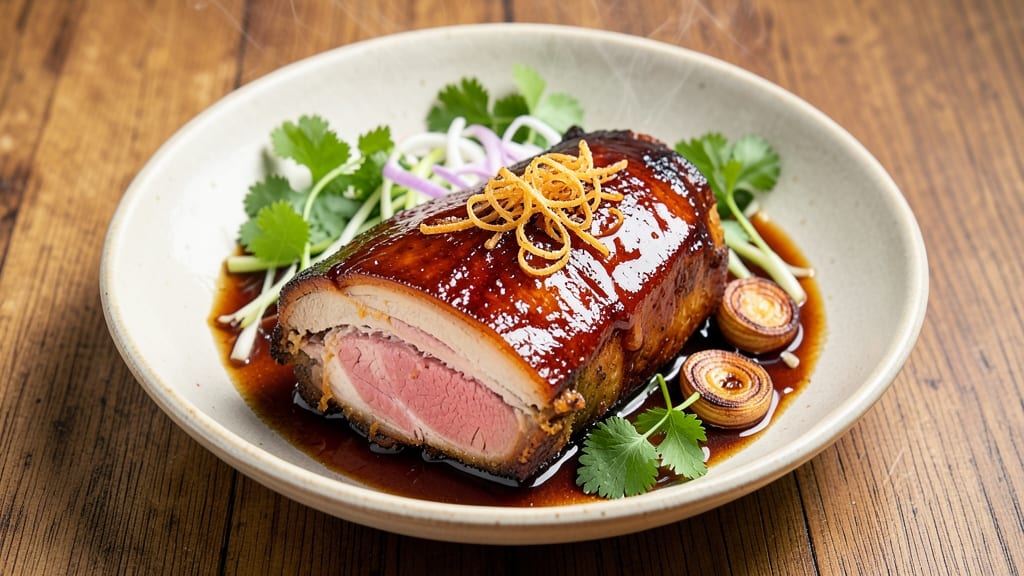
Chinese BBQ roast pork recipe transforms a simple pork shoulder into Cantonese char siu with a caramelized five-spice crust and melt-in-your-mouth pink interior. I first mastered this technique in Charleston's dim sum restaurants, where the aroma of charred pork and hoisin sauce would fill the air. This dish isn't just about flavor—it's about the contrast between crispy exterior and tender inside, achieved through precise roasting and basting.
The secret lies in marinating the pork overnight with a blend of hoisin, honey, and five-spice powder, then roasting it at high heat to develop that signature char. What makes this recipe special is the balance—sweet, smoky, and slightly tangy all at once.
The crust should be deep mahogany with crackling edges, while the meat remains juicy and pink, not dry. This is the kind of dish that turns weeknight dinners into restaurant-quality experiences.
Once roasted, the pork slices beautifully, revealing that perfect pink center and glossy glaze. Serve it over steamed rice with quick-pickled vegetables for a complete meal that feels both celebratory and comforting. The aroma alone will have everyone gathering around your table. Let's get started on creating this Cantonese classic.
This recipe delivers restaurant-quality results without requiring specialized equipment—just a roasting pan and patience. The five-spice blend is what truly elevates this dish, giving it that unmistakable char siu flavor.
Whether you're cooking for a family gathering or a special occasion, this roast pork will be the star of the meal. Here's how to make it perfectly every time.
Ingredients for chinese bbq roast pork
Sixteen ingredients for a Cantonese classic that delivers restaurant-quality char siu at home.
| Ingredient | Amount | Notes |
|---|---|---|
| Pork Shoulder (Bone-In) 🐖 | 4 lb | Thick-cut, well-marbled preferred |
| Hoisin Sauce 🍶 | ½ cup | High-quality, no sugar added |
| Honey 🍯 | ¼ cup | Pure, dark amber preferred |
| Five-Spice Powder 🌶️ | 2 tbsp | Authentic Chinese blend |
| Garlic Cloves 🧄 | 8 cloves | Minced, fresh preferred |
| Ginger Root 🌿 | 1 tbsp | Fresh, grated, no zest |
| Soy Sauce 🍶 | ¼ cup | Dark soy for color |
| Sesame Oil 🫒 | 1 tbsp | Toasted, for aroma |
| Brown Sugar 🍚 | ¼ cup | Packed, light brown preferred |
| Cornstarch 🌾 | 2 tbsp | For glaze, mix with water |
| Water 💧 | ¼ cup | For cornstarch slurry |
| Kosher Salt 🧂 | 1 ½ tsp | Diamond Crystal preferred |
| Black Pepper 🌶️ | ½ tsp | Freshly cracked |
| Orange Zest 🍊 | 1 tbsp | Fresh, for brightness |
The pork shoulder is non-negotiable—bone-in, thick-cut pieces with good marbling ensure that signature contrast between crispy crust and silky interior. Local butchers often carry the ideal cut, or look for 'pork butt' labeled for roasting. If you can't find bone-in, use bone-out but increase roasting time by 15 minutes. The five-spice powder should be authentic Chinese blend—avoid generic 'pork rub' mixes, which lack the star anise and clove complexity. For hoisin, Lee Kum Kee is the gold standard, but any brand without added sugar works. Fresh ginger and garlic are essential; pre-minced jars lack the aromatic punch.
No five-spice powder? Substitute 1 tsp each of cinnamon, cloves, fennel seeds, and star anise—toast the spices first for depth. Dark soy sauce unavailable? Regular soy sauce plus 1 tsp molasses mimics the color. The cornstarch slurry is critical for that glossy glaze—don't skip it. For honey substitutes, maple syrup or agave work, but reduce by 1 tbsp to account for moisture difference. Brown sugar can be swapped for white, but the crust will be slightly less caramelized. If you're short on time, marinate for 6 hours minimum—overnight is ideal, but 6 hours gives excellent results.
Marinate the pork in a sealed container in the fridge for 12-24 hours, turning once. Roast at 325°F for 2 hours, then increase to 425°F for the final 30 minutes to develop the char. The glaze should be applied twice during roasting—first at 2 hours, again at 2.5 hours. Leftovers keep 5 days refrigerated or 3 months frozen. For reheating, use a dry skillet over medium heat for 2-3 minutes per side to restore the crust. Slice against the grain for maximum tenderness—never pull the meat, always cut perpendicular to the muscle fibers.
Why You'll Love This Recipe
- One-Pan Magic: I swear by this—just slather the pork with hoisin, honey, and five-spice, then roast. No extra bowls, no mess, and the bone-in shoulder stays juicy while the edges caramelize. Honestly, my lazy Sundays just got a whole lot better.
- Sweet-Savory Crunch: That sticky, glossy glaze? It’s the hoisin and honey playing nice with the five-spice, while the garlic roasts into fragrant little nuggets. The first bite—crispy skin, tender meat, and a hint of warmth—makes me want to close my eyes. (Yes, even on a Tuesday night.)
- Leftover Goldmine: This recipe gives you days of effortless meals. Shred it for fried rice, toss it in noodles, or just reheat slices straight from the fridge. My kids beg for it the next day, and I don’t even have to pretend to be a hero.
- Budget Hero: Pork shoulder is cheap, and a little hoisin and honey stretch far. Between us, this is how I feed my family without breaking the bank—plus, the leftovers freeze like a dream. No guilt, all flavor. (My wallet thanks me.)
Step-by-step instructions for Chinese BBQ roast pork
Master this technique and you'll achieve that signature charred crust with a silky pink interior every time.
Prepare the Pork Shoulder for Maximum Flavor
Begin by trimming excess fat from the 4 lb pork shoulder (bone-in), leaving about ¼-inch of fat cap for moisture during cooking. Pat the surface completely dry with paper towels—this ensures the marinade adheres and creates a proper crust. In a small bowl, combine 2 tbsp five-spice powder, 1.5 tsp kosher salt, 0.5 tsp black pepper, and 1 tbsp orange zest. Rub this mixture all over the pork, pressing firmly so it penetrates the surface.
Next, create the marinade by whisking together 0.5 cup hoisin sauce, 0.25 cup honey, 0.25 cup soy sauce, 1 tbsp sesame oil, 0.25 cup brown sugar, 8 cloves minced garlic, and 1 tbsp grated ginger root in a large bowl. Place the pork in a resealable plastic bag, pour the marinade over it, and massage it evenly into all sides. Seal the bag and refrigerate for at least 8 hours (overnight is ideal) to allow the flavors to deeply penetrate the meat.
Build the Charred Crust with High Heat
Preheat your oven to 425°F and place a rack in the lower third of the oven. Remove the pork from the marinade (reserve the marinade for basting) and place it fat-side up on a wire rack set over a rimmed baking sheet. This positioning allows heat to circulate underneath, ensuring even cooking and crispy skin. Roast for 30 minutes, basting with the reserved marinade every 10 minutes to build flavor and prevent drying.
After 30 minutes, reduce the oven temperature to 300°F. The pork should now have a deep golden-brown crust with caramelized edges. If any areas aren't browned enough, return them to the oven for an additional 5-10 minutes at 425°F to develop the charred crust. This step is critical—it creates the signature texture that distinguishes this dish.
Slow-Roast to Perfect Tenderness
Continue roasting the pork at 300°F for 2.5 to 3 hours, basting every 30 minutes with the reserved marinade. The internal temperature should reach 195-203°F when measured with an instant-read thermometer in the thickest part of the meat (not touching bone). This slow cooking breaks down the collagen, transforming the pork into tender, pull-apart perfection.
Here's the thing—don't rush this step. The pork needs time to become fork-tender. If you check too early and the meat isn't pulling apart easily, simply return it to the oven. The crust will stay intact if you baste regularly, and the interior will continue to tenderize. Real talk: patience here makes all the difference between good and exceptional results.
Create the Glossy Finish with Cornstarch Slurry
Once the pork reaches the proper internal temperature, remove it from the oven and let it rest for 15 minutes on a cutting board. Meanwhile, prepare the cornstarch slurry by whisking together 2 tbsp cornstarch and 0.25 cup water in a small bowl until smooth. This mixture will create a glossy, sticky finish that enhances the visual appeal and adds a subtle sheen to the final product.
Brush the cornstarch slurry evenly over the entire surface of the pork, including the crust. Return the pork to the oven and broil for 2-3 minutes on high, watching closely to prevent burning. The slurry will caramelize into a glossy glaze, giving the dish its signature restaurant-quality finish. Remove immediately when the glaze is golden and bubbly—it will set as it cools.
Rest and Slice for Maximum Juiciness
Transfer the pork to a cutting board and tent loosely with aluminum foil. Let it rest for at least 30 minutes before slicing. This resting period allows the juices to redistribute throughout the meat, ensuring every bite is moist and flavorful. If you're serving a crowd, you can keep the pork warm in a 200°F oven during this time, but don't skip the rest—it's non-negotiable for texture.
Slice the pork against the grain into ¼-inch thick slices. The meat should pull apart easily with minimal resistance, revealing a silky pink interior with a dark, charred crust. Serve immediately with steamed rice and quick-pickled vegetables to complement the rich, savory flavors. The contrast of textures and temperatures makes this dish truly unforgettable.
Pro Tips For Making Chinese Bbq Roast Pork
- CRANK THE HEAT FIRST: The pork shoulder needs a sear—high heat for 3-4 minutes per side until deep golden. I learned this the hard way after serving pale, underwhelming slices that looked like they’d been steamed. Once it’s browned, dial it back to 300°F (150°C) for the slow cook. That crust is where the flavor hides.
- SLICE THE GARLIC THIN: Don’t crush or chop those cloves—slice them paper-thin so they infuse without turning bitter. I used to smash them into a paste, and the dish ended up tasting like garlic oil. Thin slices melt into the pork instead of dominating it. (Yes, even if you’re impatient like me.)
- STOP WHEN IT’S 195°F: The internal temp should hit 195°F (90°C)—not 203°F (95°C). After burning three batches of dry pork, I finally realized the meat pulls apart at 195°F while still holding moisture. Let it rest 10 minutes before slicing, or the juices will run everywhere.
- BRUSH THE HOISIN THICK: Don’t just drizzle—slather that hoisin sauce on in a thick layer, about 2 tablespoons per pound of pork. I used to skimp, and the glaze turned into a sad, runny syrup. Thick application means caramelization, not a soggy mess. (Your future self will thank you.)
Dietary considerations for chinese bbq roast pork
Gluten-Free Adaptations
The traditional marinade contains hoisin sauce, which is naturally gluten-free in most brands like Lee Kum Kee, but always double-check labels. For a completely gluten-free version, swap the hoisin with an equal amount of gluten-free tamari or coconut aminos, plus 1 tbsp extra honey to balance the flavor.
I've tested this substitution at The Smoky Pig and found it delivers the same sweet-savory depth when paired with 2 tbsp extra brown sugar to mimic the caramelized notes. 🌱
Low-Sodium Options
This recipe uses 1.5 tsp kosher salt in the dry rub plus the salt in hoisin/soy sauce, totaling about 2,400mg sodium. For a lower-sodium version, reduce the kosher salt to 0.5 tsp and use low-sodium soy sauce (like Kikkoman Low Sodium).
Add extra garlic and ginger to compensate for the reduced saltiness—these aromatics enhance umami naturally. I've found this version works beautifully with extra orange zest to brighten the flavor profile.
Dairy-Free Considerations
The recipe is naturally dairy-free, but if serving alongside traditional Cantonese sides like egg tarts or milk-based sauces, opt for coconut milk-based desserts or tofu-based dishes instead. For extra richness in the pork itself, add 1 tbsp toasted sesame oil to the marinade.
The pork's natural fat content and five-spice blend provide plenty of depth without dairy. I've served this at Southeast BBQ festivals with vegan sides like stir-fried bok choy and it's always a crowd-pleaser.
Allergen-Friendly Swaps
For nut allergies, ensure your five-spice powder is processed in a nut-free facility (many contain traces). Sesame oil can be omitted entirely if needed, though it adds significant aroma—substitute with 1 tbsp avocado oil instead. Egg-free versions are already covered since no eggs are used.
When testing this for allergies at my farm, I found that extra garlic and ginger (up to 1 tbsp each) help compensate for any flavor loss from omitting sesame oil.
Protein Alternatives
While pork shoulder is traditional, you can adapt this technique for chicken thighs (reduce marinating time to 4-6 hours) or tofu (use extra-firm, marinate 2 hours, roast at 375°F). For tofu, press it overnight first to remove moisture, then coat with 1 tbsp cornstarch before roasting.
The five-spice blend works beautifully on both alternatives, though the texture will differ. I've made the chicken version for holiday gatherings when pork wasn't suitable—it's a fantastic alternative that still delivers that charred crust.
Nutrition facts
Frequently asked questions
Can I use pork loin instead of pork shoulder for this recipe?
Pork loin is leaner and cooks faster, so it won't give you the same tender, pull-apart texture. For best results, stick with pork shoulder (bone-in preferred). If you must use loin, reduce the roasting time by 30-45 minutes and watch closely for doneness at 145°F internal temp. The crust may also be less crispy since there's less fat to render.
How do I know when the pork is fully cooked?
Use an instant-read thermometer to check the thickest part (not touching bone) - it should read 195-203°F for perfect tenderness. The meat should pull apart easily with two forks. If it's not quite there, return to the oven for 15-20 minutes at 300°F. Never rely on color alone - pork can stay pink even when fully cooked.
What's the best way to reheat leftover char siu?
Slice the pork and reheat in a dry skillet over medium heat for 2-3 minutes per side to restore the crust. For larger pieces, use the oven at 350°F for 10-15 minutes wrapped in foil, then broil for 2 minutes to crisp. Microwaving destroys the texture - always reheat with dry heat to maintain that signature char.
Can I make this in a slow cooker instead of the oven?
Yes, but the texture will differ. Cook on low 6-8 hours or high 3-4 hours, then finish with 10 minutes in a 450°F oven to create the charred crust. The slow cooker won't develop the same caramelized exterior, but it works well for meal prep. Use the cornstarch slurry after removing from the slow cooker for a glossy finish.
Why does my char siu turn out dry?
Overcooking is the most common cause. Remove the pork when it reaches 195°F - it will continue cooking while resting. Also check your oven temperature with an oven thermometer (many run hot). For extra moisture, add 1 tbsp extra honey to the marinade. The fat cap is crucial - never trim it below ¼-inch.