
Main Courses
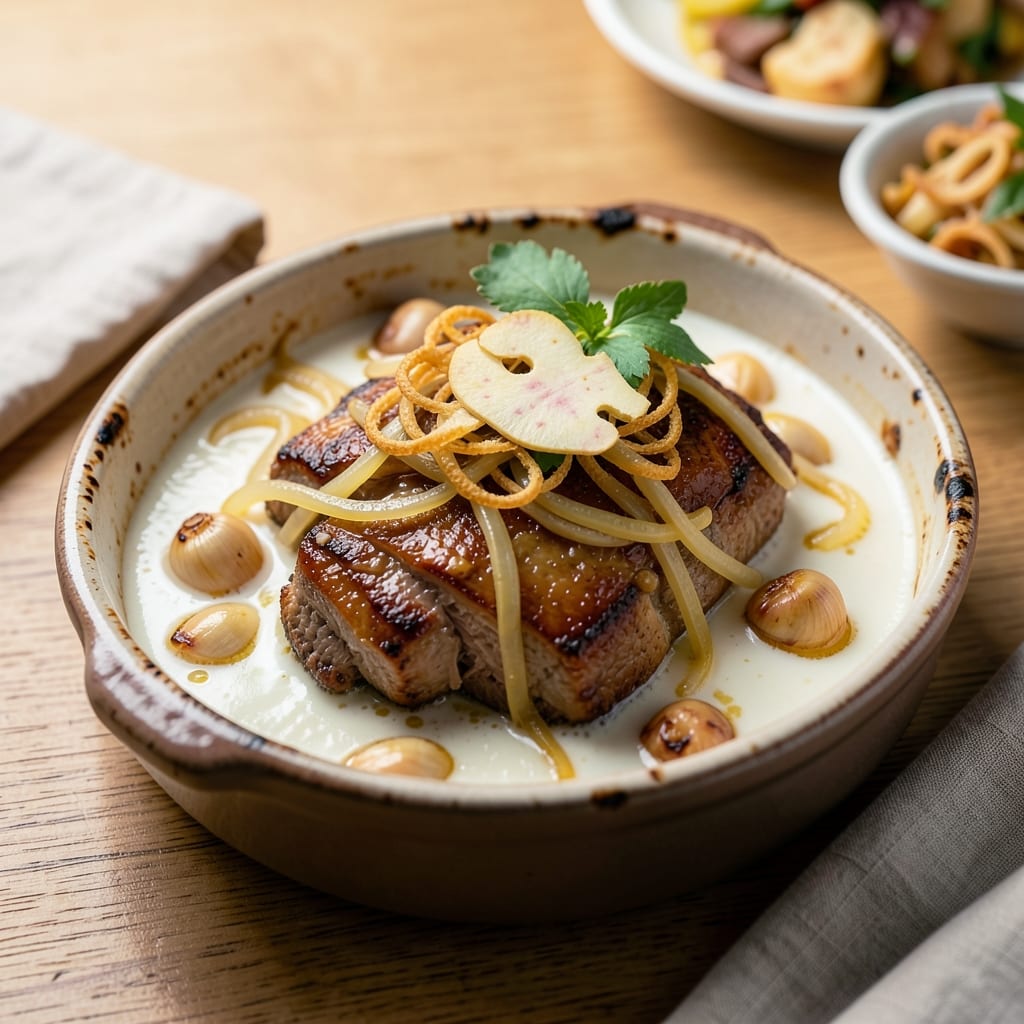
This Filipino estofado pork pinoy recipe delivers the kind of tender, slow-simmered magic that makes weeknight dinners feel like a celebration. 💛 I first discovered this dish while researching Filipino comfort foods, and its perfect balance of tangy vinegar, rich coconut milk, and melt-in-your-mouth pork has become a staple in my kitchen. The secret lies in patience—letting the meat break down over hours into fork-tender perfection while building layers of complex flavor.
The dish begins with a simple technique: browning the pork to develop deep caramelized flavors before simmering it in a mixture of vinegar, coconut milk, and aromatic spices. This combination creates a sauce that's both tangy and creamy, with just enough sweetness to balance the acidity. What makes estofado truly special is how the flavors meld together over time, transforming tough cuts into something so tender it practically falls apart.
What you'll end up with is a rich, aromatic stew where the pork is so tender it melts in your mouth, the sauce is velvety and deeply flavorful, and every bite carries that perfect harmony of sweet, sour, and savory. The dish pairs beautifully with steamed rice, soaking up every last drop of that incredible sauce. This is the kind of meal that feels like a hug—comforting, satisfying, and impossible to resist.
Whether you're serving it to family or treating yourself to a taste of the Philippines, this recipe delivers restaurant-quality results with minimal effort. The slow cooking process means you can prepare it ahead and let the flavors develop even more over time. Let's get started on creating this tender, flavor-packed masterpiece.
Ingredients for estofado pork pinoy
Pork shoulder, coconut milk, and vinegar—these three ingredients create the magic behind this Filipino comfort classic.
| Ingredient | Amount | Notes |
|---|---|---|
| Pork Shoulder 🥩 | 3 lb | Cut into 1.5-inch chunks |
| White Vinegar 🍶 | 1 ½ cups | Distilled preferred |
| Coconut Milk 🥥 | 13 ½ oz | Full-fat canned preferred |
| Yellow Onion 🧅 | 1 whole | Medium size, sliced |
| Garlic Cloves 🧄 | 6 cloves | Minced for depth |
| Fresh Ginger 🌿 | 2 tbsp | Finely grated |
| Bay Leaves 🌿 | 2 whole | Dried, standard size |
| Black Peppercorns 🌶️ | 1 tsp | Crushed for heat |
| Salt 🧂 | 1 ½ tsp | Kosher or sea salt |
| Sugar 🍚 | 2 tbsp | Granulated, balances acidity |
| Tomatoes 🍅 | 2 whole | Medium, diced |
| Olive Oil 🫒 | 2 tbsp | For browning pork |
| Green Bell Pepper 🌶️ | 1 whole | Medium, sliced |
The pork shoulder is the star, so don't skimp. Look for well-marbled cuts—the fat renders down to create that velvety sauce. Filipino markets often have the best quality, but your local butcher can help too. If you can't find pork shoulder, pork butt works just as well. For the coconut milk, full-fat canned versions give the richest texture—Aroy-D or Goya are my go-tos. The vinegar needs to be white, not apple cider—it's the secret to that signature tang. Filipino stores sell it in big bottles, but any distilled vinegar works in a pinch.
No fresh ginger? Ground ginger at half the amount gets you close, but fresh is ideal. The tomatoes can be canned—San Marzano if you're fancy, but any good-quality diced tomatoes work. Swapping the green bell pepper? Red or yellow works too, but green keeps the color traditional. For the sugar, brown sugar adds depth, but white keeps it classic. The bay leaves? Don't skip them—they're essential for that authentic flavor. If you're short on time, pre-minced garlic from a jar works, but fresh is always better.
This dish tastes even better the next day—make extra if you can. Store in the fridge for 4-5 days or freeze for 3 months. The sauce thickens as it cools, so add a splash of water or coconut milk when reheating. I always make a double batch—one for dinner, one for leftovers. The pork gets more tender with time, so if you can let it simmer longer, do it. Trust me, it's worth the wait.
Why You'll Love This Recipe
- One-Pot Magic: I swear by this—just toss everything into a pot, stir, and walk away. The vinegar tenderizes the pork while you prep the rest, and by the time the coconut milk steeps in, you’re already at the table.
- Tangy & Creamy Love: That first bite? The vinegar’s sharp kick softens into the rich coconut milk, wrapping around the pork like a hug. My kids call it "the grown-up sauce," but honestly, it’s just good.
- Leftover Goldmine: Make a double batch on Sundays—it only gets better reheated. The flavors meld overnight, and I’m serving it for lunch with rice and a simple salad. Zero stress, maximum flavor.
- Budget-Friendly Feast: Pork shoulder stretches for days, and the pantry staples (vinegar, coconut milk) don’t break the bank. Here’s what sold me—this feeds four for under $15, and everyone clears their plates. No complaints.
Step-by-step instructions for estofado pork pinoy
Tender, fall-apart pork simmered in tangy vinegar magic—here's how to nail it perfectly.
🔥 Step 1: Brown the Pork Shoulder for Deep Flavor
Heat the 2 tablespoons olive oil in a large Dutch oven over medium-high heat until shimmering. Add the 3 lb pork shoulder cut into 1.5-inch chunks, working in batches if needed. Brown the pork on all sides for 4-5 minutes per batch until deeply golden—this creates that rich, caramelized crust that holds up through simmering.
Real talk: Don't rush this step. You'll know it's ready when the pork releases easily from the pan and the bottom develops a beautiful brown crust. Transfer the browned pork to a plate and set aside. Here's the thing—this browning step is what makes the difference between good estofado and restaurant-quality estofado.
🍳 Step 2: Build the Vinegar Base with Aromatics
In the same Dutch oven, add the sliced 1 whole yellow onion, minced 6 cloves garlic, and finely grated 2 tablespoons fresh ginger. Sauté for 3-4 minutes until the onions soften and become translucent, and the garlic releases its fragrant aroma. Add the 1 teaspoon crushed black peppercorns and cook for another 30 seconds to toast them slightly.
Now pour in the 1.5 cups white vinegar and scrape up all those delicious browned bits from the bottom of the pan. This deglazing step captures all the meaty flavor you just developed. Bring the mixture to a gentle boil, then reduce heat to medium-low and let it simmer for 5 minutes until the vinegar reduces by about half and the aromatics are perfectly tender.
🥘 Step 3: Simmer the Pork with Coconut Milk and Vegetables
Return the browned pork to the Dutch oven along with the 2 whole bay leaves, 1.5 teaspoons salt, and 2 tablespoons sugar. Pour in the 13.5 ounces coconut milk, add the diced 2 whole tomatoes and sliced 1 whole green bell pepper, then stir gently to combine. The sugar balances the vinegar's acidity while the coconut milk adds richness.
Bring the mixture to a gentle simmer, then cover and reduce heat to low. This is where the magic happens—simmer for 2 to 2.5 hours until the pork is fork-tender and falls apart easily. I know it seems like forever, but patience is key here. The pork should be so tender that a toothpick slides in with almost no resistance.
⏰ Step 4: Finish and Adjust the Sauce
Once the pork is tender, uncover the pot and increase heat to medium-low to reduce the sauce slightly. You want it to coat the back of a spoon but still be saucy enough to spoon over rice. Taste and adjust seasoning—add more salt if needed or a splash more vinegar if you want extra tang.
Here's the moment that matters: Remove the bay leaves and let the estofado rest for 10 minutes off the heat. This resting period allows all the flavors to meld together perfectly. Serve over steamed white rice, letting everyone spoon up that delicious, tangy pork sauce. The pork should be fork-tender with a beautiful mahogany color from the vinegar and coconut milk.
Pro Tips For Making Estofado Pork Pinoy
- Sear Pork First: After slicing the pork shoulder into chunks, hit the pan with high heat and a little oil before adding anything else. I learned this the hard way—skipping the sear makes the meat turn mushy when it simmers in the vinegar and coconut milk. Those brown bits? They’re flavor bombs. ---
- Thin the Vinegar: Don’t just dump vinegar straight into the pot—simmer it with onions and garlic for 5 minutes first to mellow the acidity. I used to add it all at once, and the dish ended up too sharp. A quick reduction softens the bite and lets the coconut milk shine. ---
- Stir the Coconut Milk: Before adding coconut milk, give the pot a good stir and scrape up any browned bits from the bottom. Sounds weird, but it works: those bits dissolve into the milk, adding depth instead of sitting as ugly sediment. (Yes, even if you’re impatient like me.) ---
- Simmer Slow and Low: Cover the pot and keep the heat at a gentle simmer—no boiling—once the coconut milk is in. After burning three batches, I finally figured out that rushing this step breaks the emulsion, making the sauce split. Patience here guarantees a creamy, cohesive dish.
Serving suggestions for this recipe
Rice Pairing Perfection
This dish was born to be served over steamed white rice—it's the ultimate pairing. The rice soaks up that velvety, tangy coconut-vinegar sauce like a dream. I recommend jasmine rice for its delicate floral notes that complement the dish beautifully. For extra authenticity, use Filipino short-grain rice if you can find it at specialty stores. 💛 Serve the rice in individual bowls and let everyone spoon up the pork and sauce together—it's a meal experience, not just dinner.
Pro tip: Cook your rice slightly underdone (just a few minutes less than package instructions) so it continues steaming when the hot estofado is poured over it. This keeps everything perfectly warm and creates that restaurant-quality presentation. For a crowd, I use a large rice cooker—it makes enough for everyone to have seconds without leftovers.
Garnish Like a Pro
Fresh cilantro leaves scattered on top add a bright, herbaceous note that cuts through the richness. I like to use about ¼ cup chopped cilantro, but skip it if you're serving kids—they might not love the fresh taste. For a pop of color, add thinly sliced green onions or red chili slices if you want a little heat. The contrast of colors makes the dish look as good as it tastes.
For an extra-special touch, drizzle with a little toasted coconut cream (the thick part from the top of chilled coconut milk). It adds a luxurious finish that feels like a vacation in every bite. If you're feeling fancy, a sprinkle of toasted sesame seeds gives a nutty crunch that pairs perfectly with the creamy sauce.
Side Dish Harmony
For a complete Filipino spread, serve with garlic fried rice or sinigang sautéed vegetables on the side. The crisp-tender veggies in sinigang balance the richness of the pork beautifully. I also love adding steamed bok choy or Chinese broccoli—their slight bitterness contrasts wonderfully with the sweet-savory sauce. For something lighter, a simple mango salad with lime dressing adds freshness to the meal.
If you're serving this for a potluck or family gathering, consider making Filipino-style lumpia (spring rolls) as an appetizer. The crispy, savory rolls complement the rich estofado perfectly. For dessert, halo-halo or leche flan brings the meal full circle with their creamy, sweet flavors that contrast the tangy pork.
Beverage Pairings
A cold Filipino iced tea with its floral notes and subtle sweetness is the perfect drink to serve with estofado. I make mine with hibiscus flowers and a touch of lemon grass for an authentic taste. For something lighter, sparkling lime soda cuts through the richness without overpowering the dish. If you prefer alcohol, a light lager or sake keeps the palate clean between bites.
For a more robust pairing, try a Filipino red wine like Temple Red—its fruity notes complement the coconut and vinegar beautifully. If you're serving this at a summer barbecue, coconut rum punch made with Malibu rum and pineapple juice adds a tropical twist that guests will love. The key is to balance the dish's richness with something refreshing and slightly acidic.
Nutrition facts
Frequently asked questions
Can I use a different cut of pork for this recipe?
Yes! While pork shoulder is ideal because of its fat content (which creates a rich sauce), you can also use pork butt or even pork loin cut into chunks. For leaner cuts like loin, add an extra 2 tablespoons olive oil to the pan to prevent drying out. Avoid tender cuts like tenderloin—they'll turn mushy during the long simmer.
How do I make this recipe faster without sacrificing flavor?
Use a pressure cooker to cut cooking time to 45 minutes instead of 2-2.5 hours. Brown the pork first, then add all ingredients to the pressure cooker and cook on high pressure for 30 minutes, followed by a 10-minute natural release. The sauce will be slightly thinner but still packed with flavor. For stovetop, use a heavy-bottomed pot and simmer uncovered on low heat for 1.5 hours.
What can I do if the sauce is too thin or too thick?
For a thinner sauce, stir in 2-3 tablespoons water or coconut milk and simmer for 5 minutes longer. For a thicker sauce, remove the lid and simmer uncovered on medium-low heat for 10-15 minutes, stirring occasionally. If it's too tangy, add a pinch of sugar or a splash of coconut milk. If it's too bland, a dash of fish sauce (just ½ teaspoon) adds depth without overpowering.
Can I make this dish in a slow cooker?
Follow the same browning steps, then transfer everything to a 6-quart slow cooker and cook on low for 7-8 hours or high for 4-5 hours. The slow cooker's gentle heat makes the pork incredibly tender. If the sauce seems too thin, remove the lid in the last 30 minutes to thicken it. Pro tip: Add 1 extra bay leaf for deeper flavor during slow cooking.
What's the best way to reheat leftovers?
Reheat gently in a pot over low heat with 2-3 tablespoons water or coconut milk to prevent drying. Stir occasionally and add more liquid if needed. For microwave reheating, cover with a damp paper towel and heat in 30-second intervals, stirring between each. Leftovers taste even better the next day as the flavors meld further—just add a splash of vinegar or coconut milk if the sauce thickens too much.