
Main Courses
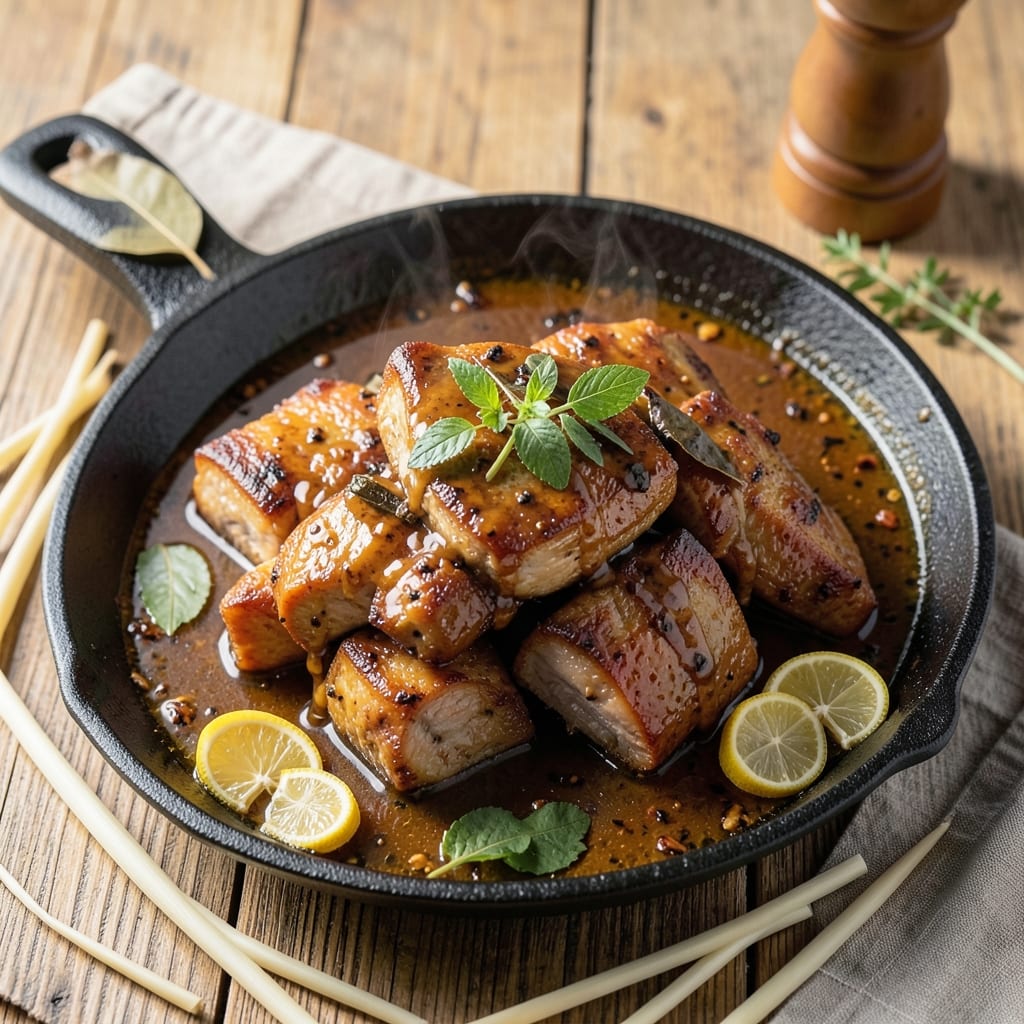
This Filipino pork shoulder adobo delivers melt-in-your-mouth tenderness through a perfect balance of tangy vinegar and deep, caramelized flavors. After years of perfecting braising techniques in both my CIA training and Atlanta kitchen, I've developed a method that transforms tough pork into fork-tender perfection—all in one pot. The secret lies in the slow vinegar bath, which tenderizes while building complex layers of sweet-savory sauce.
What sets this recipe apart is the careful balance of traditional Filipino ingredients: soy sauce for umami depth, brown sugar for natural caramelization, and bay leaves that infuse subtle earthy notes. Unlike many adobo recipes, this version uses pork shoulder—a cut that benefits from the long, gentle braising process. I've streamlined the technique while maintaining authenticity, so you get restaurant-quality results without the hours of active cooking.
The final dish features pork that practically falls apart at the touch, bathed in a glossy sauce that's tangy yet sweet, with just the right amount of heat. The aroma alone will have everyone gathering at your table, and the leftovers reheat beautifully for days. This is comfort food at its finest—simple ingredients, bold flavors, and a technique that delivers consistent results every time.
Serve with steamed jasmine rice to soak up every drop of that rich adobo sauce, or pair with garlic fried rice for a heartier meal. The recipe scales perfectly for gatherings, and the sauce freezes well for quick weeknight dinners. Let's get cooking!
Ingredients for filipino pork shoulder adobo
Pork shoulder, vinegar, and soy sauce transform into restaurant-quality adobo with just these twelve ingredients.
| Ingredient | Amount | Notes |
|---|---|---|
| Pork Shoulder 🍖 | 3 lb | Bone-in for flavor, cut into 2-inch chunks |
| White Vinegar 💧 | 1 ½ cups | Distilled preferred for clarity |
| Soy Sauce 🍶 | ½ cup | Filipino brands like Silver Swan preferred |
| Brown Sugar 🍚 | ½ cup | Packed, light or dark |
| Bay Leaves 🌿 | 4 whole | Dried, standard size |
| Fresh Ginger 🌿 | 2 tbsp | Grate finely, peel removed |
| Garlic Cloves 🧄 | 8 cloves | Peeled, smashed for infusion |
| Black Peppercorns 🌶️ | 1 tsp | Whole, lightly crushed |
| Olive Oil 🫒 | 2 tbsp | Extra-virgin for richness |
| Salt 🧂 | 1 ½ tsp | Kosher or sea salt |
| Water 💧 | 1 cup | For initial braise |
| Jasmine Rice 🍚 | 2 cups | Uncooked, for serving |
The pork shoulder is non-negotiable here—bone-in cuts develop deeper flavor during the long braise. Costco or Whole Foods carry excellent options, but any grocery store with a butcher section will have suitable cuts. Look for well-marbled meat with a vibrant red color. For the vinegar, distilled white vinegar is ideal—it's milder than apple cider vinegar and won't overpower the sauce. The soy sauce should be Filipino-style if possible (Silver Swan or Datu Puti are excellent choices), but regular soy sauce works in a pinch. Brown sugar adds caramel depth—pack it tightly into the measuring cup for accurate results.
No Filipino soy sauce? Double the regular soy sauce and add 1 tsp of sugar to compensate for the missing depth. Short on vinegar? Substitute with apple cider vinegar at the same amount, but reduce the sugar by 1 tbsp to balance the tartness. Fresh ginger and garlic are essential for authentic flavor—pre-grated ginger from the store works if you're in a hurry, but fresh is always better. The bay leaves infuse subtle earthiness; don't skip them. For extra heat, add a pinch of ground siling labuyo pepper (Filipino chili), but omit if you prefer a milder sauce. The olive oil helps create a glossy finish—use extra-virgin for the best flavor.
This dish tastes even better the next day as the flavors meld. Store in the fridge for up to 5 days—the sauce thickens beautifully over time. For longer storage, freeze the pork and sauce together for up to 3 months. Reheat gently on the stove with a splash of water to restore moisture. The jasmine rice should be cooked separately and served alongside to soak up the rich sauce. I always make double batches—the leftovers make incredible sandwiches** the next day with extra rice and a fried egg on top.
Why You'll Love This Recipe
- One-Pot Magic: I swear by this recipe because it’s literally hands-off after the initial sear. Toss the pork shoulder in a deep pan with vinegar, soy sauce, and sugar—then let the oven do the work while you stir in bay leaves for that deep, aromatic punch. No flipping, no fuss, just melt-in-your-mouth results.
- Sweet-Sour Obsession: That balance of tangy vinegar and caramelized brown sugar? It’s ridiculously addictive. The pork gets fork-tender with a glossy, sticky sauce that clings like it’s been braising for hours—even though we’re talking 2.5 hours, not all day. Honestly, the first bite makes me forget I’m not at my lola’s kitchen.
- Leftover Goldmine: This isn’t just dinner—it’s your new lunch for days. The sauce thickens beautifully when reheated, and the pork stays juicy, so I’m always sneaking extra slices into my bento. (Yes, even on a Tuesday night.) Plus, it freezes like a dream for when you’re too lazy to cook.
- Pocketbook Hero: Pork shoulder is cheap, and this recipe stretches it into generous portions. A single cut feeds four, with leftovers that won’t break the bank. Between us, I’ve served this at potlucks, family dinners, and even a last-minute date night—no one ever questions the ingredients, just the flavor.
Step-by-step instructions for Filipino pork shoulder adobo
This one-pot method delivers melt-in-your-mouth pork with deep, tangy flavors.
Prepare the Pork and Aromatics
Pat the 3 lb pork shoulder dry with paper towels—this helps the marinade penetrate better. Cut it into 2-inch chunks, removing any large fat deposits but leaving some for flavor. In a large Dutch oven, heat the 2 tbsp olive oil over medium-high heat until shimmering. Add the pork in a single layer and sear for 4-5 minutes per side until deeply browned. This step builds foundational flavor through the Maillard reaction.
Remove the pork and set aside. In the same pot, add the 2 tbsp fresh ginger and 8 cloves garlic cloves, cooking for 30 seconds until fragrant. This quick sauté releases their essential oils, which will infuse the final dish. Add the 4 whole bay leaves and 1 tsp black peppercorns, stirring for 10 seconds to toast lightly—this enhances their aromatic qualities without overpowering.
Build the Adobo Marinade
Pour in the 1.5 cups white vinegar and scrape up any browned bits from the bottom of the pot. These bits, called fond, contain concentrated flavor. Add the 0.5 cup soy sauce and 0.5 cup brown sugar, stirring to dissolve the sugar completely. The mixture should bubble gently—if it doesn't, reduce heat to medium-low and let it simmer for 2 minutes until slightly reduced.
Return the pork to the pot, along with the 1 cup water and 1.5 tsp salt. Stir gently to combine, ensuring all pork pieces are coated in the marinade. The vinegar will begin to work immediately, breaking down the tough connective tissue in the pork. This is why we use distilled vinegar—it's more consistent in acidity and won't leave a harsh aftertaste.
Simmer to Perfect Tenderness
Bring the mixture to a boil over high heat, then immediately reduce to low heat. Cover the pot and let it simmer for 1 hour 45 minutes, stirring occasionally. You'll notice the liquid reduces significantly, creating a thick, glossy sauce. The pork should become fork-tender—when you pierce a piece with a fork, it should slide in easily with no resistance.
Here's the thing—don't rush this step. The slow simmer is what transforms tough pork shoulder into melt-in-your-mouth bites. If the sauce reduces too quickly and the pork starts to stick, add 2-3 tablespoons of water to maintain moisture. The key is maintaining a gentle simmer—never a rolling boil, which can make the meat tough.
Finish and Serve with Jasmine Rice
Once the pork is tender, increase heat to medium-high and let the sauce reduce further for 5-7 minutes until it coats the back of a spoon. The sauce should be thick enough to cling to the pork but still pourable. Taste and adjust seasoning—you might want to add a splash more soy sauce for saltiness or a touch of vinegar for tang.
While the adobo simmers, prepare the 2 cups jasmine rice according to package instructions. Serve the pork hot over the rice, spooning the rich sauce generously over each portion. The aromatic rice will complement the deep, savory-sweet flavors of the adobo perfectly. For best results, let the dish rest for 5 minutes before serving—this allows the juices to redistribute throughout the pork.
Pro Tips For Making Filipino Pork Shoulder Adobo
- BROWN THE PORK FIRST: That crispy, caramelized crust on the pork shoulder? It’s not just for looks—it traps flavor. Sear the meat in a hot pan with a little oil until deep golden on all sides before adding the vinegar and soy sauce. I used to skip this, and the sauce never stuck as well.
- USE FRESH VINEGAR: Old, cloudy vinegar makes the sauce taste dull and sour. Buy white vinegar in small bottles and use it within 6 months—it’s cheaper than you think. If you’re worried, smell it: sharp and clean means it’s good. Skip the "vinegar substitute" shortcuts; they just don’t cut it.
- SIMMER LOW AND SLOW: Adobo isn’t a race. After the initial boil, drop the heat to a bare simmer—just enough to keep tiny bubbles breaking the surface. I learned this the hard way when I rushed it and ended up with a watery, vinegary mess instead of tender, caramelized pork.
- STIR THE SUGAR IN LAST: Brown sugar burns faster than you’d think. Wait until the pork is almost done and the sauce has reduced by half before adding it. Stir it in gently and let it melt into the sauce—no need to watch it like a hawk. This keeps the sauce glossy and balanced, not cloyingly sweet.
Best sauces and condiments for this filipino pork shoulder adobo
Classic Adobo Sauce
The core of this dish is the adobo sauce, a perfect balance of tangy, sweet, and savory flavors. The 1.5 cups white vinegar tenderizes the pork while creating that signature tang, while the 0.5 cup soy sauce adds umami depth. I always use Filipino-style soy sauce like Silver Swan for that authentic flavor, but regular soy sauce works in a pinch. The 0.5 cup brown sugar caramelizes beautifully during cooking, creating a glossy finish that clings to every bite. 🍶
Spicy Siling Labuyo Twist
For heat lovers, add 1-2 tbsp minced siling labuyo peppers (Filipino chilies) to the sauce during the final 5 minutes of cooking. These peppers pack serious heat without overpowering the dish. I like to toast them briefly in the pot to deepen their flavor. If you can't find siling labuyo, substitute with 1 tbsp red pepper flakes, but reduce to taste. The heat balances perfectly with the sweetness of the brown sugar. 🌶️
Caramelized Onion Garnish
Elevate your adobo with a simple but impactful garnish: caramelized onions. Sauté 1 cup thinly sliced yellow onions in 1 tbsp olive oil over low heat for 20-25 minutes until deep golden brown. The sweet, jammy onions add texture and depth to each bite. Sprinkle them over the finished dish just before serving—I love how they contrast with the tender pork. 💛
Coconut Milk Variation
For a richer, creamier version, stir in 1 cup coconut milk during the final 10 minutes of cooking. This transforms the dish into a creamy adobo that's perfect for serving with steamed rice or noodles. The coconut milk softens the acidity of the vinegar while adding a luxurious texture. I recommend using full-fat coconut milk for the best results. This variation is especially popular in Visayan-style cooking from the Philippines. 🥥
Pickled Vegetable Topping
Brighten the dish with quick-pickled vegetables. Thinly slice 1 carrot, 1 cucumber, and ½ red onion, then toss with ¼ cup rice vinegar, 1 tbsp sugar, and ½ tsp salt. Let sit for 15 minutes before draining. The crisp, tangy vegetables cut through the richness of the pork and add freshness. This topping is a staple in Filipino home cooking and pairs beautifully with adobo. 🥕
Garlic Fried Rice Pairing
Serve your adobo with garlic fried rice to use up any leftover rice. Sauté 3 cups cooked jasmine rice in 2 tbsp oil with 4 minced garlic cloves until fragrant. Add 1 egg and scramble lightly, then finish with 2 tbsp soy sauce and 1 tbsp green onions. The garlic fried rice soaks up the adobo sauce beautifully, creating a hearty meal. This combo is a Filipino comfort food classic. 🍚
Nutrition facts
Frequently asked questions
Can I use pork belly instead of pork shoulder?
Pork belly works but requires adjustments. The fat content is higher, so reduce the cooking time by 30 minutes (aim for 1 hour 15 minutes) to avoid rubbery meat. Also, skim excess fat from the surface during cooking to prevent greasiness in the sauce. The result will be equally tender but richer in flavor.
Why does my adobo sauce turn cloudy?
Cloudiness usually means the vinegar wasn't properly incorporated or the sauce reduced too quickly. Use distilled white vinegar (not apple cider) and simmer uncovered for the final 5-7 minutes to concentrate flavors. For extra clarity, strain the sauce through a fine-mesh sieve before serving.
How do I make this dish spicier?
Add 1-2 tbsp minced siling labuyo peppers (Filipino chilies) during the last 5 minutes of cooking, or 1 tbsp red pepper flakes if unavailable. For deeper heat, toast the peppers in oil for 30 seconds before adding. Start with less—Filipino chilies are potent!
Can I prepare this in a slow cooker?
Brown the pork first, then transfer everything to a slow cooker. Cook on low for 6-7 hours or high for 3-4 hours, adding ¼ cup water if needed. The slow cooker method yields even more tender meat with minimal effort—just adjust the sauce reduction time at the end.
What's the best way to reheat leftovers?
Reheat gently in a skillet with 1 tbsp water over medium-low heat for 5-7 minutes**, stirring occasionally. Microwaving can make the sauce watery. For extra flavor, add a splash of soy sauce or vinegar. Leftovers taste even better the next day as flavors meld!