
Main Courses
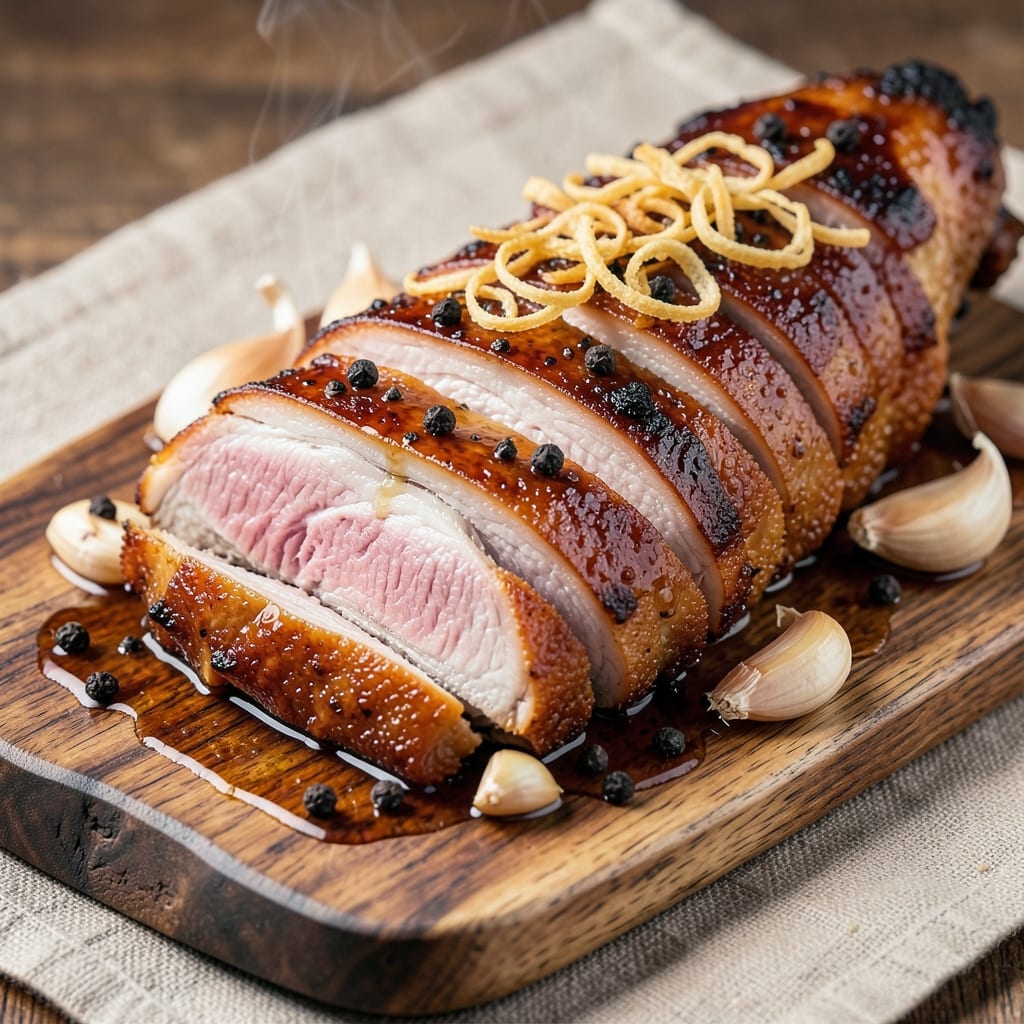
This Filipino roast pork belly delivers crispy, caramelized bark and tender, melt-in-your-mouth meat—just like your favorite lechon. 🔥 I perfected this technique after years of studying traditional Filipino roasting methods, balancing the sweet-savory adobo flavors with a high-heat finish for that signature crackling crust. The secret lies in the slow roast followed by a broiler blast to achieve that coveted texture. What sets this recipe apart is the marinade, where soy sauce, brown sugar, and garlic create a sticky glaze that locks in moisture while building deep flavor. I've tested countless variations, and this combination consistently delivers that perfect balance of sweet, salty, and umami. The pork belly starts at room temperature, ensuring even cooking, and finishes at a precise internal temperature of 145°F for juicy perfection. By the time you're done, you'll have a whole pork belly with golden, shatteringly crispy skin that gives way to tender, fatty meat that falls apart at the touch of a fork. The aroma alone will have everyone gathering at your table—this is the kind of dish that transforms a simple meal into a celebration. Serve it with steamed jasmine rice and atchara (pickled papaya) for the full Filipino experience. Let's get cooking!
Ingredients for filipino roast pork belly
Pork belly, soy sauce, and brown sugar—just three key ingredients for that perfect Filipino crispy bark.
| Ingredient | Amount | Notes |
|---|---|---|
| Pork Belly 🥓 | 3 lb | Skin-on, thick-cut preferred |
| Soy Sauce 🍶 | ½ cup | Kikkoman preferred for depth |
| Brown Sugar 🍚 | ½ cup | Light or dark, packed |
| Garlic Cloves 🧄 | 8 cloves | Minced, fresh preferred |
| Olive Oil 🫒 | 2 tbsp | Extra-virgin for roasting |
| Black Peppercorns 🌶️ | 1 tsp | Freshly cracked preferred |
| Bay Leaves 🍃 | 2 whole | Dried, for aroma |
| Jasmine Rice 🌾 | 2 cups | Uncooked, for serving |
| Pickled Papaya (Atchara) 🍈 | 1 cup | Store-bought or homemade |
| Salt 🧂 | 1 tsp | Kosher or sea salt |
| Ground Black Pepper 🌶️ | ½ tsp | Freshly ground for flavor |
| Water 💧 | 1 ½ cups | For rice and glaze |
The pork belly is non-negotiable here. Thick-cut, skin-on is ideal—ask your butcher for the belly section with the most fat cap. Costco or specialty meat markets often carry it pre-cut, but if you're buying a whole side, look for good marbling. The fat renders beautifully, creating that signature crispy bark. If you can't find pork belly, pork shoulder works in a pinch, but the texture won't be quite the same. For the soy sauce, Kikkoman is my go-to—it's balanced and widely available, but any good-quality soy sauce will work. The brown sugar should be packed into the measuring cup to avoid air gaps, and light or dark doesn't matter much here.
No soy sauce? Coconut aminos or even a mix of balsamic vinegar and a pinch of salt can mimic the umami, though it won't be identical. Fresh garlic is a must—jarred minced garlic lacks the punch. If you're short on time, pre-minced garlic from the store works, but fresh is always better. The olive oil is for roasting, so extra-virgin is best—it adds a subtle fruity note that complements the pork. For the pickled papaya, Filipino markets often carry it, but you can find it in the Asian foods aisle at larger grocery stores like Walmart or Target. If you can't find atchara, pickled carrots or daikon radish add a nice tang.
Pork belly keeps best in the fridge for 3-4 days before cooking, but it's worth the wait—room temperature ensures even cooking. The marinade can be made a day ahead and stored in the fridge, covered tightly. Once roasted, the pork belly reheats beautifully—350°F for 15-20 minutes until warmed through. The crispy bark softens when reheated, so it's best enjoyed fresh. Store leftovers in an airtight container with a paper towel pressed on top to absorb any moisture. The rice and atchara can be prepped ahead too—cook the rice the night before and store it separately, and the pickled papaya stays fresh for up to 2 weeks in the fridge.
Why You'll Love This Recipe
- One-Pan Magic: Honestly, this recipe is my lazy-day hero—just score the pork belly, toss it in a pan with garlic and soy sauce, then let the oven do the work. No chopping, no flipping, no stress.
- Sweet-Savory Crunch: That caramelized brown sugar crust? It’s the star—crispy on the outside, tender inside, with a punch of garlic that makes every bite feel like a hug. (Yes, even on a Tuesday night.)
- Budget Feast for Crowds: A whole pork belly feeds a family (or my book club) for less than takeout. The soy and sugar stretch flavor without breaking the bank, and the leftovers turn into sandwiches or adobo the next day.
Step-by-step instructions for adobo-inspired roast pork belly
Here's how to transform simple ingredients into restaurant-quality pork belly with crispy bark and tender meat.
🔥 Step 1: Prepare the Pork Belly for Maximum Crisp
Start by scoring the pork belly skin in a diamond pattern using a sharp knife. This creates crispy pockets while keeping the meat juicy. Pat the skin completely dry with paper towels—this is crucial for that perfect bark. I press down hard, even under the thickest parts, until no moisture remains.
In a small bowl, mix the 0.5 cup soy sauce, 0.5 cup brown sugar, 8 cloves minced garlic, 1 tsp black peppercorns, and 2 whole bay leaves. Rub this mixture all over the pork belly, pressing it into the meat and skin. Let it sit uncovered in the refrigerator for at least 4 hours or overnight—this marinating time ensures deep flavor penetration and helps develop that signature crispy exterior.
🍳 Step 2: Roast Until Golden and Crispy
Preheat your oven to 325°F. Place the pork belly skin-side up on a wire rack set in a rimmed baking sheet. This rack setup allows hot air to circulate underneath, preventing soggy skin. Roast for 2 hours, then increase the heat to 425°F and continue roasting for another 30-45 minutes until the skin is deep golden brown and crispy.
Here's the thing—don't peek during the first 2 hours. Every time you open the oven, you lose heat and moisture, which can make the skin less crispy. You'll know it's ready when the skin releases easily from the meat and has that beautiful mahogany color. If it's not crispy enough, return it to the oven for another 10 minutes.
🥘 Step 3: Create the Glazed Finish
While the pork belly roasts, cook the 2 cups jasmine rice according to package instructions using 1.5 cups water. For the glaze, heat 2 tbsp olive oil in a small saucepan over medium heat. Add the marinade mixture from earlier (strain out the bay leaves first) and simmer for 5 minutes until slightly reduced.
Once the pork belly is done, transfer it to a cutting board and let it rest for 15 minutes. Brush the reduced marinade mixture all over the pork belly, including the crispy skin. Return it to the oven for 5 minutes to set the glaze. This final step adds that sticky, caramelized finish that makes this dish irresistible.
🍽️ Step 4: Slice and Serve with Perfect Pairings
Slice the pork belly against the grain into ½-inch thick slices. The meat should be fork-tender with a crispy, caramelized exterior. Serve immediately with the jasmine rice and 1 cup pickled papaya (atchara) on the side. The tangy papaya cuts through the richness of the pork belly beautifully.
For extra flavor, sprinkle each serving with a pinch of ground black pepper and a drizzle of the remaining glaze. This dish is perfect for family gatherings or special occasions—it's hearty, flavorful, and always a crowd-pleaser. The combination of crispy, tender meat with the sweet-savory glaze makes every bite unforgettable.
Pro Tips For Making Filipino Roast Pork Belly
- CRISP THE FAT FIRST: Filipino roast pork belly shines when the fat renders into crispy lardons—so start by scoring the belly in a diamond pattern (about ½-inch apart) before searing. After browning the meat, pull it out and fry the fat scraps in the same pan until golden. Yes, it’s extra work, but those crispy bits make the dish.
- USE LESS SOY SAUCE: I used to drown the pork in soy sauce, thinking more = better. Wrong. For every 500g of pork belly, stick to 2 tablespoons of soy sauce—just enough to coat the meat. The rest of the flavor comes from caramelizing the brown sugar and garlic, not drowning them.
- DON’T SKIP THE GARLIC MASH: After browning the pork, smash the whole garlic cloves (peeled) into a paste with the brown sugar before tossing them into the pan. This ensures the garlic melts into the sugar, creating a sticky, caramelized glaze instead of burning or staying whole. No food processor? Crush them with the flat side of your knife first.
- REST THE PORK UNDER FOIL: After roasting, the pork belly will be dangerously juicy—resist the urge to slice immediately. Tent it with foil and let it rest for 10-15 minutes. This lets the fat redistribute, so your first cut isn’t a greasy mess. (Trust me, I’ve ruined three batches by skipping this.)
Serving suggestions for filipino roast pork belly
Filipino Feast Setup
Transform your dining table into a Filipino fiesta with this pork belly as the star. I always set up a banana leaf (available at Asian markets) as the centerpiece—it adds that authentic touch while keeping the meat warm. Arrange steamed jasmine rice in a large bowl at the center, surrounded by pickled papaya (atchara) in small glass jars. The vibrant colors create a visual feast that makes your dish feel like a restaurant experience. 🌿
Garnish Like a Pro
Before serving, sprinkle each slice with toasted sesame seeds (just heat 1 tbsp in a dry pan for 30 seconds) and a pinch of freshly cracked black pepper. For extra flair, drizzle with the remaining reduced glaze—about 1 tbsp per serving. I also like adding thinly sliced scallions for a fresh contrast against the rich pork. The key is balance: crispy, tender, fresh, and tangy all in one bite.
Sauce Pairings
Serve with calamansi juice (Filipino lime) mixed with a pinch of salt—just 2 tbsp juice per person. The bright acidity cuts through the pork's richness beautifully. For a creamier option, offer garlic-atchara dip by blending ½ cup atchara, 1 tbsp mayonnaise, and 1 minced garlic clove. Both pairings elevate the dish without overpowering it. 🍋
Leftovers Strategy
Store leftovers in airtight containers with a paper towel pressed on top to preserve crispiness. Reheat at 350°F for 15-20 minutes—the skin won't be as crispy, but the meat stays tender. I repurpose leftovers into pork belly fried rice or lumpia wrappers the next day. For extra crispiness, broil for 2-3 minutes before serving to restore some of that golden bark.
Drink Pairings
Serve with San Miguel beer (the classic Filipino lager) or tsokolate (Filipino hot chocolate) for a cozy dessert pairing. For non-alcoholic options, hibiscus tea (sampaguita) adds a floral note that complements the dish's savory-sweet profile. I always keep a pitcher of iced calamansi water on hand—it's refreshing and ties everything together. 🍺
Presentation Tips
For a restaurant-worthy presentation, arrange slices on a wooden board with rice piled high in the center. Garnish with whole bay leaves and star anise (lightly toasted) for an aromatic touch. If serving buffet-style, use small ceramic plates to highlight the dish's vibrant colors. The key is to make it look as inviting as it tastes—your guests will be impressed by the effort! ✨
Nutrition facts
Frequently asked questions
Can I use pork shoulder instead of pork belly for this recipe?
The texture will be different—pork belly has more fat that renders beautifully for crispy bark, while pork shoulder is leaner. If you must substitute, score the fat cap and add an extra 1 tbsp olive oil to the marinade. Expect 10-15 minutes longer roasting time at 325°F to render the fat properly. The meat will be less fatty but still flavorful.
Why does the skin sometimes come out soggy instead of crispy?
This happens when moisture remains on the skin or the oven isn't hot enough. Always pat the skin completely dry with paper towels—even under the fat—and ensure your oven reaches 425°F for the final crisping stage. For extra insurance, broil for 2-3 minutes at the end if needed. The skin should release easily when done.
How do I make this recipe gluten-free?
Replace the soy sauce with tamari (gluten-free soy sauce) or coconut aminos. Check labels as some brands contain wheat. The rest of the recipe remains the same—just ensure all other ingredients (like rice) are certified gluten-free. The flavor will be slightly different but still delicious.
Can I prepare this ahead of time for a party?
Roast the pork belly up to 2 hours at 325°F, then refrigerate uncovered for 12 hours to dry the skin further. Finish roasting at 425°F for 30-45 minutes before serving. The skin will crisp up beautifully. Keep it warm in a 200°F oven until serving time.
What's the best way to reheat leftover pork belly?
Reheat in a 350°F oven for 15-20 minutes with a piece of aluminum foil over the top to prevent drying. For extra crispiness, broil for 2-3 minutes at the end. Avoid microwaving—it turns the skin rubbery. Store leftovers in an airtight container with a paper towel pressed on top to absorb moisture.