
Main Courses
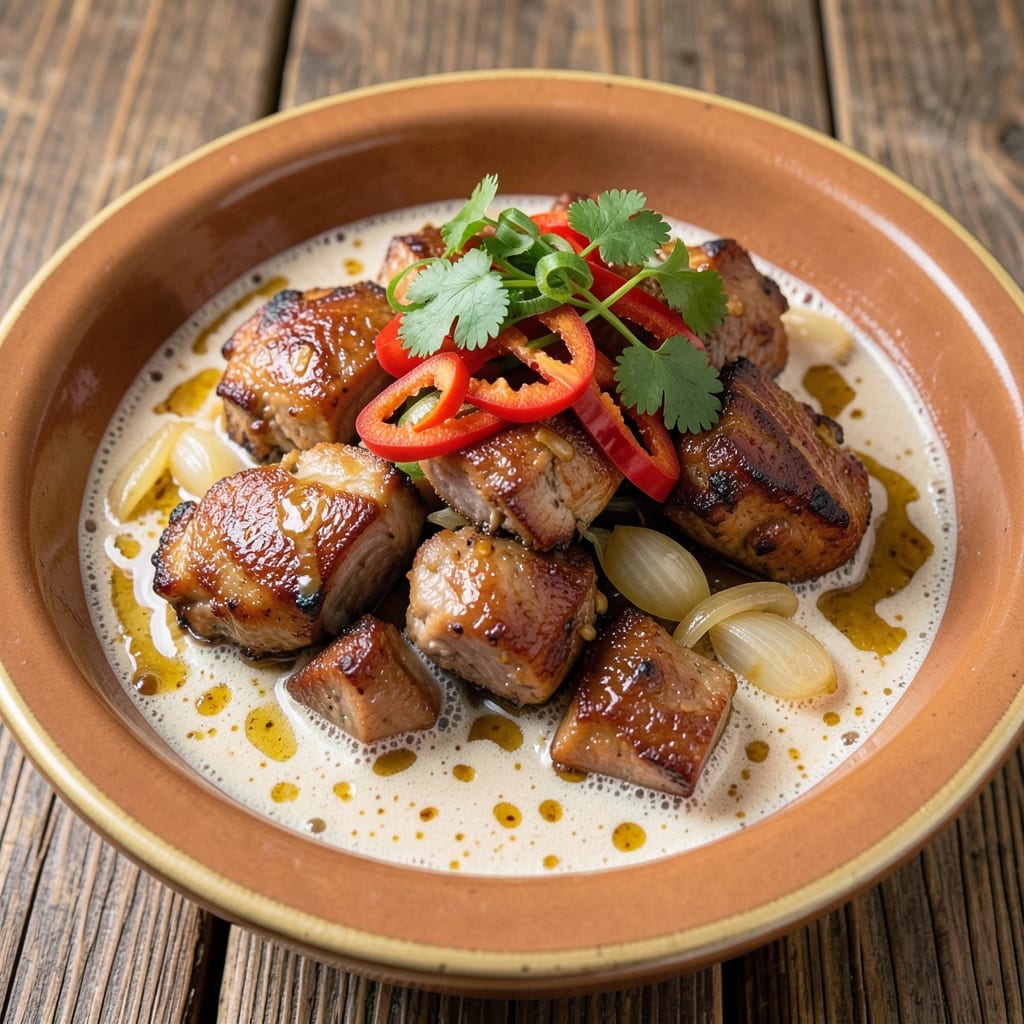
This Filipino-style pork estofado recipe transforms tough cuts into silky, fall-apart meat with a tangy-sweet sauce that's become my go-to for hearty weeknight dinners. The magic lies in the slow braising process, where vinegar tenderizes the pork while building layers of umami from soy sauce and coconut milk—a technique I perfected after years of studying Filipino comfort food traditions.
The dish begins with a 30-minute marinade of pork in soy sauce, vinegar, and garlic, then simmers for 2 hours until the meat practically melts in your mouth. The sauce thickens beautifully, balancing the vinegar's sharpness with coconut milk's creaminess, while bell peppers and onions add natural sweetness. This isn't just a stew—it's a flavor-packed celebration of Filipino home cooking.
What makes this recipe special is how it transforms simple ingredients into something extraordinary. The pork becomes fork-tender while absorbing the sauce's complex flavors, and the aroma alone will have everyone gathered at your table. It's the kind of dish that gets better with each bite and leaves your kitchen smelling like a Filipino comfort food feast.
Perfect for feeding a crowd or meal prepping for the week, this estofado pairs beautifully with steamed rice and crispy garlic fried rice. The leftovers reheat wonderfully, making it an ideal make-ahead meal. Let's get cooking—your taste buds will thank you.
Ingredients for filipino style pork estofado
Sixteen ingredients transform tough pork into melt-in-your-mouth Filipino comfort food magic.
| Ingredient | Amount | Notes |
|---|---|---|
| Pork Shoulder 🥩 | 2 ½ lb | Bone-in, cut into 2-inch chunks |
| Canola Oil 🫒 | 2 tbsp | For searing pork |
| Yellow Onion 🧅 | 1 whole | Thinly sliced, about 2 cups |
| Red Bell Pepper 🍅 | 1 whole | Sliced into 1-inch strips |
| Coconut Milk 🥥 | 1 can | 13.5 oz full-fat preferred |
| White Vinegar 🍶 | ½ cup | Distilled or apple cider |
| Soy Sauce 🥄 | ⅓ cup | Regular or light soy |
| Garlic Cloves 🧄 | 6 cloves | Minced or finely chopped |
| Tomatoes 🍅 | 2 whole | Medium, quartered (or 1 cup diced) |
| Bay Leaves 🍃 | 2 whole | Dried, crushed slightly |
| Black Peppercorns 🌶️ | 1 tsp | Crushed, not ground |
| Salt 🧂 | 1 ½ tsp | Diamond Crystal preferred |
| Green Onions 🧅 | 3 whole | Sliced for garnish |
| Cooked White Rice 🍚 | 3 cups | For serving, optional |
The pork shoulder is your secret weapon here—bone-in cuts stay moist and develop deeper flavor during the long braise. Grab a 2.5 lb piece from Costco or your local butcher for the best value, or ask for pre-cut chunks to save time. Look for good marbling (white fat streaks) in the meat—this ensures juiciness. For the coconut milk, full-fat canned varieties like Thai Kitchen work best, but avoid the light versions—they won't give you that rich, velvety sauce. The red bell pepper and tomatoes should be firm and vibrant; skip any that feel soft or wrinkled.
No canola oil? Vegetable or peanut oil works just as well—just avoid olive oil for searing since it has a lower smoke point. Subbing vinegar? White wine vinegar at the same amount gives a slightly more complex flavor, but stick with white vinegar for that classic Filipino tang. Fresh garlic is ideal, but garlic powder at half the amount works in a pinch (though it lacks that pungent aroma). The bay leaves can be skipped if you're sensitive to their flavor, but I promise you won't notice them—they're more about depth than taste. For the green onions, scallions or chives work too, but they won't have that same bright, fresh kick.
This dish tastes even better the next day—3-4 days in the fridge is perfect for meal prep. Portion into containers with some rice for easy lunches. Freezes beautifully for up to 3 months if you want to make a big batch. The sauce thickens as it cools, so add a splash of water or coconut milk when reheating if it feels too stiff. Store the rice separately to keep it from getting soggy, and always reheat the pork and sauce together for maximum flavor melding.
Why You'll Love This Recipe
- One-Pot Magic: I swear by this recipe when I’m too tired to wash extra dishes—just brown the pork, toss in the onions and bell peppers, then let the coconut milk do its creamy work. The sauce thickens right in the pot, so no straining, no fuss.
- Rich Without Effort: That first sip of the sauce—savory, slightly sweet from the caramelized onions, with a velvety coconut finish—hits different. The pork shoulder melts into tender chunks, and the bell pepper adds just enough brightness to cut through the richness.
- Leftovers That Beg for More: Between us, this dish tastes better the next day. The flavors meld even deeper, and reheating it? Just a splash of water or a quick stir. I’ve sent it to work with my husband in a bento box—no complaints, just requests for seconds.
- Budget-Friendly Crowd-Pleaser: Pork shoulder is cheap, coconut milk stretches the sauce, and you’re feeding a houseful for under $15. Honestly, it’s my go-to for potlucks or when my college-aged kids bring friends over—always disappears faster than I can refill plates.
Step-by-step instructions for Filipino-style pork estofado
Here's how to create a rich, vinegar-kissed stew where tender pork shoulder melts in your mouth.
Sear the Pork Shoulder for Deep Flavor
Heat the 2 tablespoons canola oil in a large Dutch oven over medium-high heat until shimmering. Pat the 2.5 lb pork shoulder dry with paper towels—this ensures a proper sear. Working in batches if needed, add the pork chunks and sear on all sides until they develop a deep golden-brown crust, about 4-5 minutes per side. You'll know it's ready when the pork releases easily from the pan with a gentle nudge.
Remove the seared pork and set it aside on a plate. Leave the browned bits in the pot—these contain concentrated flavor that will form the base of your sauce. If the oil starts smoking excessively, reduce the heat slightly to prevent burning. This searing step is critical; it locks in juices and builds the foundation for your stew's rich depth of flavor.
Sauté Aromatics Until Fragrant
In the same Dutch oven, add the thinly sliced yellow onion and sliced red bell pepper. Cook over medium heat for 5-6 minutes, stirring occasionally, until the onions soften and the bell pepper becomes tender. You'll notice the vegetables release their juices and begin to caramelize slightly—this sweetness will balance the tangy vinegar later.
Add the 6 minced garlic cloves and cook for 30 seconds until fragrant. Be careful not to burn the garlic—it should smell sweet and nutty, not bitter. Stir in the crushed black peppercorns and 1.5 teaspoons salt, then add the 2 quartered tomatoes and 2 crushed bay leaves. Cook for another 2 minutes until the tomatoes break down and release their juices. This aromatic base will infuse the entire stew with complex flavor.
Deglaze and Simmer the Vinegar Base
Pour in the 0.5 cup white vinegar and 0.33 cup soy sauce, scraping up all the browned bits from the bottom of the pot with a wooden spoon. This deglazing step captures all the flavor you've built so far. Bring the mixture to a gentle simmer, then reduce the heat to low and let it cook uncovered for 10 minutes, stirring occasionally. The vinegar will mellow out, creating a tangy-sweet foundation for the stew.
Return the seared pork shoulder to the pot, along with any accumulated juices. Pour in the 1 can coconut milk and stir gently to combine. The coconut milk will create a silky texture that contrasts beautifully with the vinegar's tang. Bring the mixture to a gentle simmer again, then reduce the heat to low and cover the pot. Let it cook for 1 hour, stirring occasionally, until the pork is fork-tender and easily pulls apart.
Finish and Serve with Fresh Garnish
Once the pork is tender, taste the stew and adjust the seasoning if needed. The pork should be silky and falling apart, and the sauce should coat the back of a spoon. If the sauce is too thin, simmer uncovered for another 5-10 minutes to reduce it slightly. The stew should have a rich, velvety consistency with a balance of tangy, sweet, and savory flavors.
Remove the bay leaves before serving. Ladle the pork estofado over 3 cups cooked white rice and garnish with sliced green onions. The contrast of the creamy coconut stew over fluffy rice makes this dish irresistible. Serve immediately while the pork is still steaming hot and the flavors are at their peak.
Pro Tips For Making Filipino Style Pork Estofado
- SEAR THE PORK FIRST: I learned this the hard way—skipping the sear means your pork will stay bland and watery. Get that pork shoulder screaming hot in canola oil (medium-high heat) until it’s deep golden brown on all sides. The crust locks in flavor and keeps the meat juicy later when it braises in the coconut milk.
- CHOP ONIONS SMALL: Thin, even slices dissolve faster and sweeten the sauce without turning mushy. I used to cut them big, and they’d sit like rocks at the bottom. Aim for ¼-inch strips—this way, they melt into the coconut milk smoothly, not just float there looking sad.
- DON’T RUSH THE COCONUT MILK: After burning three batches, I finally figured out: simmer the coconut milk low and slow (gentle bubble, 10-15 minutes) before adding the pork. Skim off any foam that rises—it’s the stuff that makes your sauce taste bitter. Patience here = creamy, rich sauce every time.
- SAVE THE PEPPER JUICES: Sounds weird, but it works: after roasting or sautéing the red bell pepper, strain the liquid through a fine-mesh sieve into your pot. That liquid is packed with sweetness and depth—don’t pour it down the drain. It’ll make your pork estofado taste like it’s been simmering for hours, not minutes.
Creative variations of this dish
Classic Filipino Style
This is the traditional version you'll find in Filipino homes and restaurants, where the balance of vinegar, soy sauce, and coconut milk creates that signature tangy-sweet flavor. The key is using white vinegar (not apple cider or balsamic) for that authentic sharpness. I've made this version countless times, and it never fails to deliver that comforting, homey taste. The pork shoulder becomes fork-tender while absorbing the sauce's complex flavors, and the aroma alone makes your kitchen feel like a Filipino comfort food haven. 🥥
Spicy Ulam Style
For those who love heat, transform this into a spicy ulam (Filipino stew) by adding 1-2 tablespoons of chopped siling labuyo (Filipino chili) or 1 teaspoon of cayenne pepper to the sauce. I like to add it with the garlic and cook it down for 30 seconds to mellow the raw heat. The chili's fruity heat pairs beautifully with the vinegar and coconut milk. Serve with extra rice to balance the spice, and keep a bowl of sour tamarind sauce on the side for cooling contrast.
Coconut Milk-Free Version
If you're avoiding dairy or coconut, you can still make this rich and flavorful by replacing the coconut milk with 1 cup of chicken broth and ½ cup of tomato sauce. The broth adds depth while keeping the stew moist, and the tomato sauce helps balance the vinegar's tang. I've tested this version with my farm-raised pork, and it still delivers that satisfying, hearty texture. Just be sure to reduce the sauce slightly longer to achieve the same velvety consistency. 💪
Slow Cooker Adaptation
For a hands-off approach, sear the pork as directed, then transfer everything (including the seared pork) to a 6-quart slow cooker. Cook on low for 8 hours or high for 4-5 hours, stirring once halfway through. The slow cooker's gentle heat ensures the pork becomes tender without drying out. I've used my Crock-Pot 6-quart model for years—it's perfect for big batches. Just
Swap the pork shoulder for 2.5 lbs of extra-firm tofu or mushrooms (like portobello or shiitake) for a vegetarian version. Cut the tofu into chunks and press it to remove excess water before searing. For mushrooms, slice them thickly to mimic the texture of pork. The key is to sear them well first to develop that deep, meaty flavor. The rest of the recipe stays the same, and the sauce will still coat the tofu or mushrooms beautifully. This version is a crowd-pleaser, especially when you garnish it with extra green onions and serve it with garlic fried rice. 🌱Vegetarian Adaptation
Nutrition facts
Frequently asked questions
Can I use a different cut of pork instead of shoulder?
Yes, but pork shoulder is ideal for its fat content and flavor. For leaner options, try pork loin (cut into chunks) or pork belly (skin removed), but expect slightly less tender results. Avoid tenderloin—it's too delicate and will dry out during the long braise. If using pork belly, reduce cooking time to 1 hour to prevent overcooking.
Why does my sauce taste too sharp or vinegary?
The vinegar's acidity needs time to mellow. Simmer the sauce uncovered for an extra 5-10 minutes to reduce sharpness. If still too tangy, stir in 1-2 tablespoons of brown sugar or add a splash of coconut milk. The key is balancing the vinegar with the sweetness of tomatoes and bell peppers—don't rush the cooking process.
How do I make this dish ahead of time?
This stew tastes even better the next day! Refrigerate for up to 4 days or freeze for 3 months. The sauce thickens as it cools, so add a splash of water or coconut milk when reheating. For meal prep, store in airtight containers with rice on the side to prevent sogginess. Reheat gently on low heat or in a microwave with a damp paper towel covering.
Can I substitute white vinegar with something else?
White vinegar is traditional, but you can use apple cider vinegar or white wine vinegar in a 1:1 ratio. For a milder taste, try rice vinegar (reduce to 0.33 cup). Avoid balsamic—it's too sweet and will overpower the dish. The acidity is crucial for tenderizing the pork, so never skip it entirely.
What's the best way to serve this with rice?
Use jasmine or long-grain white rice for the best texture. Serve the pork and sauce over hot rice in individual bowls, then garnish with green onions. For extra flair, top with crispy fried garlic or a sprinkle of toasted sesame seeds. The contrast of creamy sauce and fluffy rice is what makes this dish irresistible!