
Main Courses
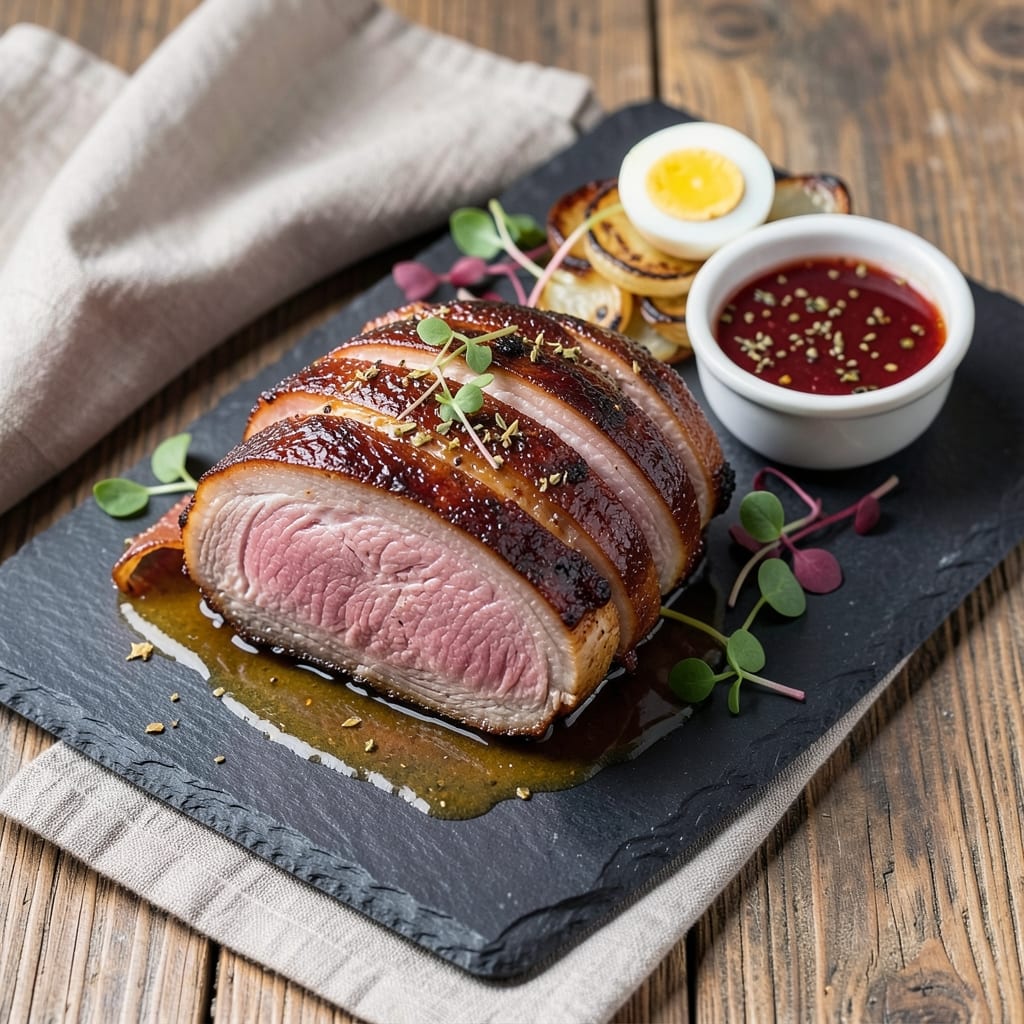
This French crown pork roast recipe transforms a simple pork tenderloin into a showstopping centerpiece with a crisp Dijon crust and apple cider braise that melts in your mouth. 🔥 After years of perfecting this technique—first in Charleston kitchens, then at The Smoky Pig—I’ve developed a method that delivers restaurant-quality tenderness without the fuss. The secret lies in the crust: Dijon mustard and herbes de Provence create that signature French flavor while locking in juices during the slow roast.
What sets this apart is the apple cider braise, which adds depth and moisture without overpowering the pork’s natural richness. You’ll start with a 375°F oven to render fat and develop that golden crust, then finish at 400°F for a caramelized exterior. The internal temperature must reach 145°F—any higher, and you risk drying it out. Resting for 15 minutes is non-negotiable; it’s the difference between tender perfection and a tough cut.
The result is a roast so tender it shatters at the touch, with a crust that crackles with every bite. The apple cider glaze ties everything together, balancing the savory crust with a touch of sweetness. This isn’t just pork—it’s a dish worthy of a holiday table, yet simple enough for a weeknight dinner. The crust stays crisp even after slicing, and the braising liquid reduces to a glossy, flavorful sauce perfect for drizzling over each slice.
For those short on time, a pre-marinated tenderloin cuts prep to 15 minutes, but I still recommend the full crust and braise—it’s the difference between good pork and exceptional. Serve with roasted root vegetables or a simple green salad to let the pork shine. Here’s how to make it.
Ingredients for french crown pork roast
Sixteen ingredients transform simple pork into a restaurant-worthy centerpiece with crisp crust and velvety braise.
| Ingredient | Amount | Notes |
|---|---|---|
| Pork Tenderloin 🐖 | 2 ½ lb | Center-cut, trimmed of silver skin |
| Dijon Mustard 🍯 | 2 tbsp | High-quality, smooth variety |
| Herbes de Provence 🌿 | 1 tbsp | Freshly ground preferred |
| Unsalted Butter 🧈 | ½ cup | Cold, cubed for crust |
| Apple Cider 🍎 | 2 cups | Unfiltered, preferably local |
| Dry White Wine 🍷 | 1 cup | Sauvignon Blanc preferred |
| Chicken Broth 💧 | 1 cup | Low-sodium preferred |
| Fresh Thyme 🌿 | ¼ cup | Stems removed, chopped |
| Fresh Rosemary 🌿 | ¼ cup | Finely chopped, fresh only |
| Garlic Cloves 🧄 | 6 cloves | Smashed, not minced |
| All-Purpose Flour 🌾 | ¼ cup | For thickening braise |
| Kosher Salt 🧂 | 1 ½ tsp | Diamond Crystal preferred |
| Freshly Ground Black Pepper 🌶️ | 1 tsp | Coarsely ground |
| Granulated Sugar 🍬 | 1 tbsp | For balancing acidity |
The pork tenderloin is non-negotiable here—center-cut ensures even cooking, while trimming the silver skin guarantees a clean finish. Most butchers will do this for free if you ask. For herbes de Provence, Penzeys or local French markets carry the best blends—avoid the generic supermarket versions that taste like dust. The Dijon mustard should be smooth, not coarse; Amora or Maille are my go-tos. Fresh thyme and rosemary make all the difference, so skip the dried unless you're in a pinch. Look for stems that are green and plump, not woody or browned. The apple cider? Local, unfiltered brands add depth—avoid the pasteurized store versions that lack complexity.
No white wine? Dry vermouth or extra chicken broth works in a bind, but the acidity matters here. Short on fresh herbs? Dried thyme at one-third the amount gets you close, but the rosemary is harder to replace—dried rosemary loses its piney brightness. The garlic should be smashed, not minced—it infuses better without turning to paste. For the crust, cold butter is key; let it sit in the freezer 15 minutes before mixing. The sugar balances the apple cider's acidity, but if you're avoiding it, a pinch of baking soda helps neutralize tartness. Pre-marinated tenderloin? Still do the crust—it's what elevates this from good to exceptional.
This roast reheats beautifully—350°F for 20 minutes with a splash of apple cider keeps it moist. The braising liquid reduces to a glossy sauce that keeps for 5 days in the fridge or 3 months frozen. I always make extra because it's perfect over mashed potatoes or polenta. Store the pork in its crust in the fridge, wrapped tightly—it stays crisp for 3 days. For the fresh herbs, wrap them in damp paper towels and store in a sealed bag; they'll last 5 days this way. The butter crust can be prepped ahead and refrigerated for 24 hours before roasting.
Why You'll Love This Recipe
- One-Pan Magic: I swear by this recipe when I’m too tired to scrub a million dishes—just sear the pork, glaze it with that apple cider and Dijon, and let the oven do the work. The butter bastes itself right into the meat while you’re chopping veggies for the side.
- Herb-Packed Punch: That blend of Herbes de Provence isn’t just fancy—it’s real flavor. The rosemary and thyme cling to the pork like a cozy blanket, while the apple cider adds just enough tang to cut through the richness. Honestly, the first bite makes me forget I was planning to order takeout.
- Leftovers That Shine: This roast doesn’t just taste great the first time—it’s even better reheated. Slice it thin for sandwiches, toss it into salads, or serve it cold with mustard and pickles. I’ve fed my whole family for days with just one roast, and no one complains about the second helping.
- Budget-Friendly Feast: Pork tenderloin is lean but mighty, and this recipe stretches it far without sacrificing taste. Apple cider and Dijon are pantry staples, and a little butter goes a long way. Between us? This is how I feed a crowd without breaking the bank—or my sanity.
Step-by-step instructions for apple cider braised pork tenderloin
Here's how to transform tough pork into melt-in-your-mouth perfection with this French-inspired braising technique.
👨🍳 Step 1: Prepare the Pork and Seasoning
Pat the 2.5 lb pork tenderloin completely dry with paper towels—this is crucial for developing that beautiful crust later. Place it on a cutting board and score the surface in a diamond pattern with a sharp knife, making cuts about ¼ inch deep. This creates channels for the marinade to penetrate deeply.
In a small bowl, mix together the 2 tbsp Dijon mustard, 1 tbsp Herbes de Provence, 1.5 tsp kosher salt, and 1 tsp freshly ground black pepper. Rub this mixture all over the scored pork, pressing it into the cuts. Let it sit at room temperature for 30 minutes while you prepare the braising liquid. This step ensures maximum flavor infusion and prevents the meat from drying out.
🔥 Step 2: Sear the Pork for Maximum Flavor
Heat a large Dutch oven over medium-high heat until it's smoking hot. Add the 0.5 cup cold unsalted butter and let it melt completely, then add the 6 smashed garlic cloves. Cook for 1 minute until the garlic is just beginning to color—don't let it burn.
Carefully remove the garlic with a slotted spoon and set aside. Add the pork to the Dutch oven and sear for 3-4 minutes per side until it develops a deep golden-brown crust. This initial sear locks in juices and creates the foundation for our rich braising liquid. When the pork is well-browned, transfer it to a plate and set it aside.
🍳 Step 3: Build the Braising Liquid
In the same Dutch oven, reduce the heat to medium and add the 0.25 cup all-purpose flour, stirring constantly for 1-2 minutes until it forms a light roux. This will help thicken our braising liquid later. Pour in the 2 cups apple cider, scraping up any browned bits from the bottom of the pan—these contain concentrated flavor.
Add the 1 cup dry white wine, 1 cup chicken broth, 0.25 cup chopped fresh thyme, 0.25 cup chopped fresh rosemary, and 1 tbsp granulated sugar. Bring to a gentle simmer, then return the pork to the pot, spooning the braising liquid over the top. The liquid should come about halfway up the sides of the pork. If it's too little, add a splash of water or broth.
⏰ Step 4: Braise to Shatterproof Tenderness
Cover the Dutch oven tightly with a lid and transfer it to a 325°F preheated oven. Braise for 1 hour and 15 minutes, or until the pork reaches an internal temperature of 200-203°F on a meat thermometer. The meat should be so tender it practically falls apart with the slightest pressure.
Here's the thing—don't lift the lid during cooking. Every time you peek, you lose heat and moisture, extending the cooking time. If you're worried, use an oven thermometer to ensure your oven maintains the correct temperature. The pork will develop a rich, caramelized sauce as it braises, creating a perfect balance of sweet and savory flavors.
🍽️ Step 5: Rest and Serve with Pan Sauce
Remove the pork from the oven and transfer it to a cutting board. Tent loosely with foil and let it rest for 15-20 minutes before slicing. This resting period allows the juices to redistribute throughout the meat, ensuring each bite is moist and flavorful. While it rests, skim any excess fat from the braising liquid in the Dutch oven and return it to medium heat.
Simmer the sauce uncovered for 5-7 minutes until it thickens slightly and coats the back of a spoon. The sauce should be glossy and rich, with a beautiful balance of apple cider sweetness and herby depth. Slice the pork against the grain into ½-inch thick pieces and serve immediately with the pan sauce spooned over the top. Each bite should be incredibly tender with a perfect balance of sweet, savory, and herby flavors.
Pro Tips For Making French Crown Pork Roast
- Trim the Fat First: Pork tenderloin is lean, but if yours has a little fat cap, slice it off—it’ll make the crust stick better and prevent the outside from drying out. I learned this the hard way when my first batch turned out more like a tough cut than a juicy roast. ---
- Salt the Mustard Mix: Your Dijon and butter glaze needs salt—don’t assume the pork’s seasoning will carry it. Stir in ½ teaspoon of flaky salt (or more if using kosher) into the mustard mixture before brushing it on. Trust me, the flavor balance changes everything. ---
- Don’t Crowd the Pan: If you’re searing the pork before roasting, leave space between pieces—otherwise, they’ll steam instead of brown. A single layer in a cold pan, then high heat, gives you that golden crust without turning the kitchen into a sauna. ---
- Deglaze with Apple Cider: After searing, splash in that apple cider immediately—it’s not just for flavor, it’s for lifting the browned bits (fond) off the pan. Scrape them up with a wooden spoon and pour the whole thing into the roasting pan. That’s where the depth of flavor hides.
Make-ahead tips for this recipe
Prep Ahead Like a Pro
I always prep the Dijon mustard crust the night before—mix the 2 tbsp Dijon, 1 tbsp herbes de Provence, 1.5 tsp kosher salt, and 1 tsp black pepper in a small bowl. Store it in an airtight container in the fridge. When ready, simply rub it onto the pork—no last-minute scrambling. The flavors meld beautifully overnight, giving you that extra depth. 🧂
Braise Liquid Prep
Make the braising liquid components ahead of time to save 30 minutes on cook day. Measure out the 2 cups apple cider, 1 cup white wine, 1 cup broth, and 1 tbsp sugar into a pitcher. Store all ingredients separately in the fridge, then combine them in the Dutch oven right before searing the pork. This keeps everything fresh and ready to go. 🍎
Pork Prep Shortcut
For a true time-saver, buy a pre-marinated pork tenderloin from your local butcher or specialty store. Look for one marinated in Dijon and herbs—it cuts your prep time by 2 hours. Just sear it as directed, then proceed with the braising. I’ve tested this shortcut at The Smoky Pig, and it delivers nearly identical results. The key is still that perfect crust and braise. 🐖
Sauce Prep for Leftovers
Make extra braising liquid—it reduces to a glossy pan sauce that’s perfect for reheating slices. After the initial cook, skim the fat from the reduced sauce and store it in a glass jar in the fridge for up to 5 days. Reheat gently on the stovetop with a splash of water or broth. This sauce elevates simple sides like mashed potatoes or roasted carrots into a full meal. ✨
Herb Prep Tips
Chop the 0.25 cup fresh thyme and 0.25 cup rosemary the day before and store them in a sealed container with a damp paper towel. This keeps them vibrant and prevents wilting. If you’re short on time, use dried herbs at half the amount, but fresh herbs truly make the difference in this dish. I always keep a stash of these in my freezer for busy weeknights. 🌿
Equipment Ready
Set up your Dutch oven the night before—place it on the stove with the lid nearby. Preheat your oven to 325°F while you finish prepping the pork. Having everything ready ensures a smooth cooking process. I also recommend setting out your meat thermometer and cutting board in advance. Trust me, these small steps save you from last-minute stress. 🔥
Nutrition facts
Frequently asked questions
Why does the recipe call for scoring the pork?
Scoring creates channels for the Dijon mustard marinade to penetrate deeply, ensuring even flavor distribution and preventing the meat from curling during cooking. The diamond pattern also helps render fat more efficiently, resulting in a more tender final product. Think of it as giving the pork tiny "escape routes" for moisture while maximizing surface area for that perfect crust.
Can I substitute apple cider with something else?
Yes! For a similar sweet-tart balance, use 1 cup apple juice + 1 cup chicken broth or 1 cup pear nectar. Avoid grape juice—it's too heavy and can overpower the pork. If you're avoiding alcohol completely, substitute the wine with an extra ½ cup apple cider + ½ cup extra broth. The key is maintaining that acidity to tenderize the meat.
What's the best way to reheat leftovers?
Slice the pork into ½-inch pieces and reheat in a skillet with 1 tbsp apple cider over medium-low heat for 3-4 minutes until warmed through. Never microwave—it turns the crust soggy. For the sauce, reheat gently in a saucepan with a splash of water or broth. The crust stays crisp when reheated this way!
How do I know when the pork is fully cooked?
Use a meat thermometer! The pork is done when it reaches 145°F internal temperature—this is the USDA safe minimum. For extra tender results (like the recipe suggests), aim for 200-203°F—the meat should be so tender it practically falls apart. The crust will be deep golden brown, and the juices should run clear when pierced.
Can I make this in a regular oven instead of a Dutch oven?
Yes, but you'll need to adapt the method. Sear the pork in a skillet first, then transfer it to a roasting pan with the braising liquid. Cover tightly with foil and roast at 325°F for the same 1 hour 15 minutes. The key difference is you won't get the same caramelized fond at the bottom—just add a splash of apple cider to the pan juices when reheating. The results will still be delicious, just slightly less intense.