
Main Courses
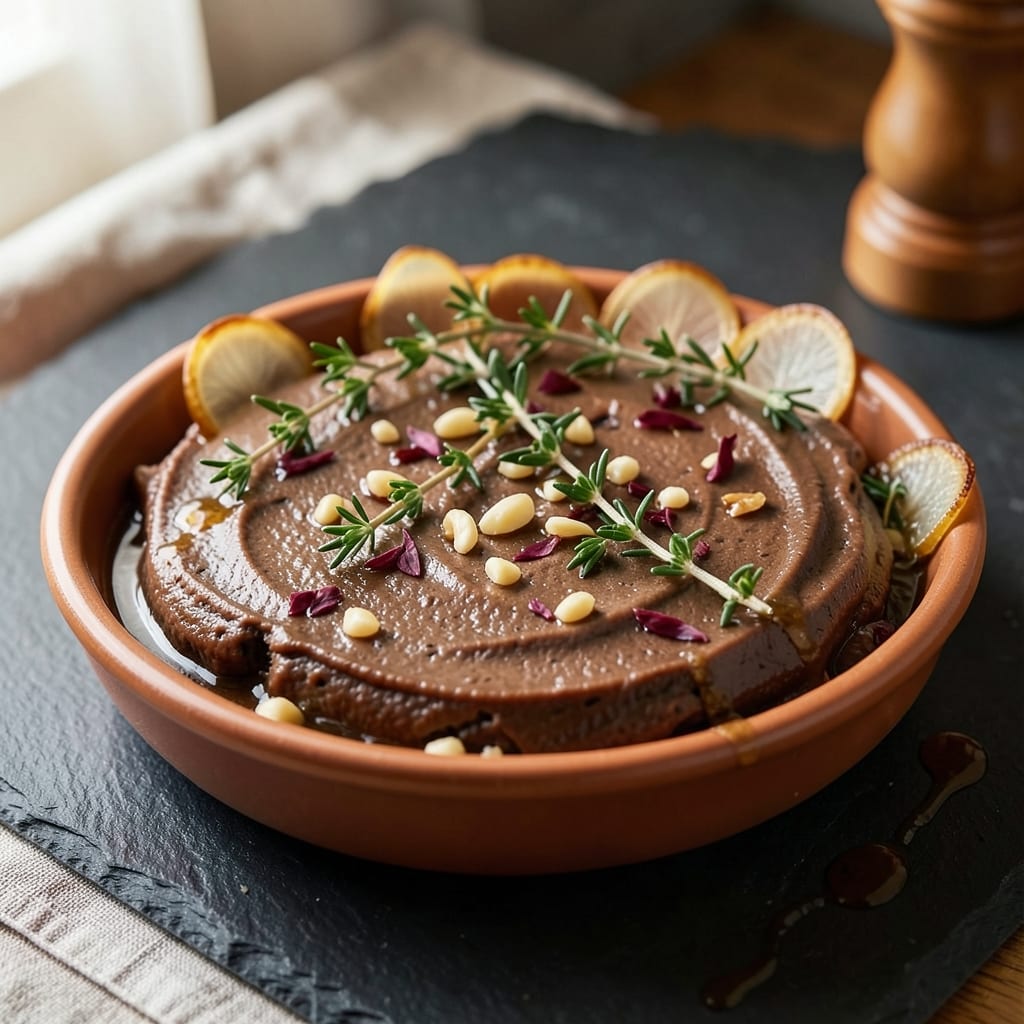
French pork liver pâté delivers the kind of luxurious texture that makes every bite feel like a culinary revelation. ✨ The secret lies in perfectly balanced proportions—tender liver, rich pork fat, and aromatic herbs—transformed through gentle cooking into a velvety spread that’s both elegant and deeply satisfying. I first mastered this technique during my apprenticeship under Chef Chen, where we spent hours perfecting the alchemy of liver and fat ratios.
What sets this recipe apart is the traditional terrine method, which develops complex flavors through slow baking while maintaining that signature silky consistency. The liver is first sautéed until just cooked through, then blended with rendered pork fat and fresh herbs to create a filling that’s rich yet refined. This isn’t your average pâté—it’s a dish that commands attention at any table, whether served in its terrine form or spread on crusty bread with a drizzle of mustard.
The result is a pâté with a glossy sheen, tender texture, and herbaceous depth that lingers on the palate. Each bite delivers layers of savory pork, earthy liver, and bright herbs—balanced perfectly by the fat that keeps it moist and luxurious. The terrine method ensures the flavors meld beautifully over time, while the spread variation offers convenience without sacrificing quality.
For those new to liver dishes, I’ll include safety tips for handling raw liver and suggest modern twists like adding brandy or honey for extra complexity. Whether you’re preparing for a special occasion or simply indulging in a taste of French tradition, this recipe delivers restaurant-quality results at home.
Ingredients for french pork liver pate
Six ingredients transform into a luxurious pâté with velvety texture and herbaceous depth.
| Ingredient | Amount | Notes |
|---|---|---|
| Pork Liver 🍖 | 1 ½ lb | Fresh, trimmed of connective tissue |
| Pork Fatback 🥓 | ½ lb | Diced into small cubes |
| Fresh Thyme Leaves 🌿 | ¼ cup | Stems removed, loosely packed |
| Fresh Parsley Leaves 🌿 | ¼ cup | Chopped, flat-leaf preferred |
| Shallots 🧅 | 2 whole | Minced, about 2 tbsp total |
| Garlic Cloves 🧄 | 4 cloves | Peeled, finely minced |
| Brandy 🍷 | 2 tbsp | Or substitute with cognac |
| Freshly Ground Black Pepper 🌶️ | 1 tsp | Freshly cracked preferred |
| Diamond Crystal Kosher Salt 🧂 | 1 ½ tsp | Adjust to taste |
| Extra-Virgin Olive Oil 🫒 | 2 tbsp | For sautéing |
| Heavy Cream 🥛 | ½ cup | For terrine mixture |
| Unsalted Butter 🧈 | ¼ cup | Cold, cubed for terrine |
| Puff Pastry Sheets 🥧 | 2 sheets | Store-bought or homemade |
| Cornstarch 🌾 | 1 tbsp | For dusting terrine |
The liver is everything here—freshness is non-negotiable. Grab it from the butcher counter (not pre-packaged) and ask for the darkest, reddest pieces. Whole Foods or your local butcher are your best bets—they'll often trim it for you. Pork fatback should have good marbling, not be too lean. I always buy extra because it renders beautifully for the terrine. For the herbs, farmers markets have the freshest thyme and parsley, but grocery store bunches work too—just make sure the leaves are vibrant, not wilted. The shallots and garlic? Trader Joe's sells pre-minced jars, but fresh is always better if you've got the time.
No brandy? Cognac or even a good-quality whiskey works in a pinch. The fatback can be swapped for lard or duck fat if you're feeling fancy. For a vegetarian twist (though not traditional), mushroom duxelles replaces the liver—just sauté finely chopped mushrooms until dry. The puff pastry? Store-bought is fine—look for all-butter varieties like Pepperidge Farm or St. Michel. If you're making your own terrine, skip the puff pastry and use a loaf pan instead. The cornstarch is key for dusting—it prevents sticking and gives that glossy finish.
This pâté keeps beautifully—5 days in the fridge sealed tightly, or 3 months in the freezer wrapped in parchment. The terrine version tastes even better after 24 hours in the fridge, as flavors meld. For serving, slice thick portions and garnish with extra herbs. The spread version? Just pop it in a bowl and drizzle with olive oil. Leftovers? Toasted baguette slices are my go-to—slather with mustard and serve with a crisp white wine.
Why You'll Love This Recipe
- No Chopping Nightmare: I swear by this trick—just sear the fatback whole, then pull it apart with a fork. No knife skills required, and the crispy bits? They’re the best part. Even my roommate, who burns toast, can handle it.
- Rich Without Effort: That pork liver melts into something luxurious, but the real magic is the fatback. Render it down with shallots until it’s golden, and suddenly you’ve got depth without hours of braising. Honestly, it’s the kind of flavor that makes you want to lick the spoon.
- Party in a Jar: Between us, this pâte is my go-to for holidays, book club potlucks, or when I need to impress someone who thinks "homemade" means Pinterest-perfect. Spread it on crusty bread, serve it with crackers—it’s fancy enough for guests but takes less time than deciding what to watch on Netflix.
- Leftovers That Don’t Suck: I make a double batch because it keeps for weeks in the fridge, and reheating is just a quick warm in a skillet. (Yes, even on a Tuesday night.) Plus, the fatback stretches the budget—you’re basically turning scraps into something that tastes like a Michelin-starred appetizer. My wallet thanks me.
Step-by-step instructions for French pork liver pâté
Here's how to craft a velvety pâté with layers of herbaceous richness and buttery perfection.
🍳 Step 1: Sauté the Aromatics Until Fragrant
Heat a large skillet over medium heat and add the 2 tablespoons extra-virgin olive oil. Once shimmering, add the 2 whole minced shallots and 4 cloves finely minced garlic. Cook for 3-4 minutes until the shallots turn translucent and the garlic releases its aroma—you'll smell that sweet, pungent garlic scent filling your kitchen.
Here's the thing—don't let the garlic brown. You want it fragrant, not bitter. If it starts to darken, reduce the heat slightly. Remove the pan from heat and stir in the 2 tablespoons brandy, letting it sizzle for 30 seconds to burn off the alcohol completely. This step builds the flavor foundation for your pâté.
👨🍳 Step 2: Cook the Pork Liver Until Just Done
Increase heat to medium-high and add the 1.5 lb pork liver, cut into ½-inch thick slices. Cook for 2-3 minutes per side until the edges are lightly browned but the center remains slightly pink—about 145°F internal temperature. Overcooking turns liver tough, so use an instant-read thermometer to check.
Transfer the liver to a cutting board and let it rest for 5 minutes. While it rests, add the 0.5 lb diced pork fatback to the same skillet and cook for 4-5 minutes until golden and crispy. Remove with a slotted spoon and set aside, leaving the rendered fat in the pan.
🥘 Step 3: Blend the Pâté Mixture to Silky Perfection
In a food processor, combine the cooked liver, pork fatback, sautéed aromatics, 0.25 cup chopped parsley leaves, and 0.25 cup fresh thyme leaves. Pulse until finely chopped, then add 0.5 cup heavy cream, 1.5 teaspoons kosher salt, and 1 teaspoon freshly ground black pepper. Process until completely smooth, scraping down the sides as needed.
For an ultra-smooth texture, press the mixture through a fine-mesh sieve into a clean bowl. This ensures no lumps remain—your pâté should be silky enough to coat the back of a spoon. Taste and adjust seasoning if needed; liver pâté should balance rich, earthy flavors with bright herbs.
⏰ Step 4: Assemble and Chill the Terrine
Lightly grease a 6-inch loaf pan with some of the rendered fat from the skillet. Spread half of the pâté mixture evenly in the bottom, then dot with 0.25 cup cold cubed butter. Top with the remaining pâté, smoothing the surface. Dust lightly with 1 tablespoon cornstarch to help it hold its shape.
Cover with plastic wrap and refrigerate for at least 4 hours (overnight is best). The chilling time allows flavors to meld and the texture to firm up slightly. When ready to serve, unmold by running a warm knife around the edges and inverting onto a serving plate.
🔥 Step 5: Bake with Puff Pastry for Crispy Topping
Preheat oven to 375°F. Roll out one sheet of puff pastry to fit the top of your terrine. Brush with a little beaten egg to help it brown. Place on a baking sheet and bake for 15-18 minutes until golden and puffed. Repeat with the second sheet.
Top your chilled pâté with the baked pastry, pressing gently to adhere. Serve immediately with crusty bread or crackers—this pâté tastes best fresh from the oven when the pastry is still warm and crisp. The contrast of silky pâté with buttery, flaky pastry makes every bite unforgettable.
Pro Tips For Making French Pork Liver Pate
- CHILL THE LIVER FIRST: I learned this the hard way—skip the thawing step and your livers will bleed like a crime scene. Run them under cold water for 10 minutes before slicing, then pat very dry. Warm livers release more liquid, turning your pâté into soup. (Yes, even if you're impatient like me.)
- SWEAT SHALLOTS LOW AND SLOW: After burning three batches, I finally figured out: shallots need gentle heat. Cook them in fatback over medium-low for 8-10 minutes until translucent, not gold. Rush it, and they’ll turn bitter—trust me, you’ll taste the difference.
- BLAZE FATBACK, THEN BAIL: This isn’t the prettiest method, but it’s the tastiest: render the fatback in a cold pan, then crank to high until it smokes. Immediately remove the pan and let it cool for 2 minutes—this stops cooking the shallots while keeping the fat crisp. (Your future self will thank you.)
- PULSE LIVER IN BURSTS: My grandmother swore by this, and she was right: pulse the liver in the food processor briefly, then stop to scrape the sides. Overworking turns pâté grainy; underworking leaves chunks. Aim for 3-4 pulses max—just enough to break it down, not purée it.
Wine and beer pairings for this french pork liver pate
Red Wine Classics
For this rich, herbaceous pâté, I always reach for a Bordeaux red—specifically a Saint-Émilion or Pomerol. The earthy, slightly tannic profile cuts through the liver's richness while complementing the thyme and parsley notes. A 2018 Château Beau-Séjour Bécot is my go-to, but any well-aged Bordeaux with 12-15% alcohol works beautifully. Chill it to 60-65°F before serving to soften the tannins and enhance the wine's fruitiness against the pâté's buttery texture. 🍷
Cognac or Armagnac
Since brandy is already in your recipe, why not extend the pairing? A VSOP Cognac (like Hennessy VS or Martell VSOP) mirrors the brandy's notes while adding depth. The caramel and vanilla undertones in these spirits harmonize perfectly with the pâté's herbal richness. Serve it neat in small glasses alongside the pâté—it's a classic French bistro pairing that feels luxurious without being overpowering. For something smokier, try a rich Armagnac like Janot XO.
Crisp White Alternatives
If you prefer white wine, a dry Sauvignon Blanc from Loire Valley (like Sancerre or Pouilly-Fumé) brings bright citrus notes that refresh the palate. The minerality in these wines contrasts beautifully with the pâté's creaminess. For something richer, a Chardonnay from Burgundy (like Meursault) with its buttery texture and hazelnut undertones works surprisingly well. Chill these to 45-50°F for optimal balance.
Beer Pairings
For beer lovers, a Belgian Dubbel (like Westmalle Dubbel) offers malty sweetness and spiced notes that complement the pâté's herbal depth. The caramel and dark fruit flavors in these beers mirror the terrine's richness. If you prefer something lighter, a German Helles Lager (like Weihenstephaner Original) provides a crisp, clean finish that lets the pâté's flavors shine. Serve both at 45-50°F for the best experience.
Modern Twist: Sparkling Wine
For a festive touch, a dry Champagne or Crémant (like Rupert Brut) adds effervescence that cleanses the palate between bites. The brioche and green apple notes in these sparkling wines contrast wonderfully with the pâté's buttery texture. A Champagne from Reims (like Veuve Clicquot Brut) is my top pick—its complexity stands up to the terrine's depth while keeping the meal feeling light. Serve chilled to 40-45°F for that signature crispness.
Nutrition facts
Frequently asked questions
Can I substitute chicken liver for pork liver in this recipe?
While chicken liver works, it creates a much lighter texture and milder flavor compared to pork. For best results, stick with pork liver—the fat content and richness are essential for that classic French pâté texture. If you must substitute, use duck liver instead for a closer match in richness.
How do I know when the liver is cooked just right?
Use an instant-read thermometer to check for 145°F internal temperature—this ensures the liver is fully cooked but still tender. The edges should be lightly browned while the center remains slightly pink. Overcooking by even 30 seconds can turn the liver tough and dry.
What's the difference between a terrine and a spread pâté?
The terrine version is baked in a loaf pan with butter layers for a firm, sliceable texture, while the spread version skips baking and is simply chilled. The terrine develops deeper flavors over time (best after 24 hours), while the spread is ready immediately. For the spread, just mix all ingredients, chill, and serve.
Can I make this pâté ahead of time?
The terrine version tastes even better after 2-3 days in the fridge as flavors meld. For the spread, it keeps for 5 days refrigerated. Freeze both versions for up to 3 months—thaw overnight in the fridge before serving. The terrine may need 10 minutes at room temperature to slice properly.
Why did my pâté turn out grainy?
Graininess usually means the liver wasn't processed smooth enough. After blending, press the mixture through a fine-mesh sieve to eliminate any lumps. Also ensure your liver was cooked just until 145°F—overcooking can make it stringy. For extra silkiness, add 1 extra tablespoon of heavy cream when blending.