
Soups & Stews
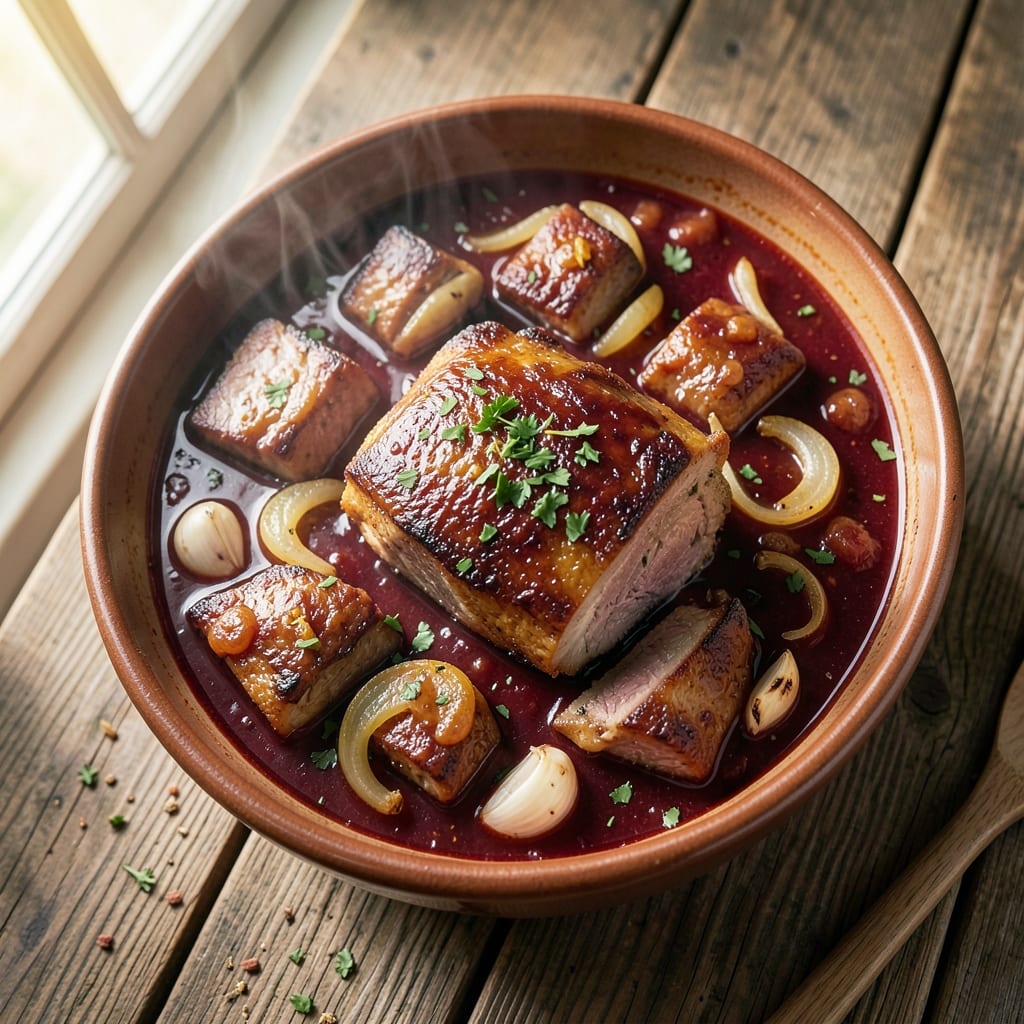
This French pork stew recipe transforms humble ingredients into a deeply satisfying dish that tastes like a Parisian bistro. The secret lies in slow-simmering pork shoulder with red wine, caramelized onions, and aromatic herbs until it achieves melt-in-your-mouth tenderness. I perfected this technique during my apprenticeship in Charleston, where French techniques met Southern soul.
The magic happens in layers: first searing the pork for deep flavor, then deglazing with wine to create a rich sauce, and finally simmering until the meat falls apart. Caramelized onions add sweetness that balances the wine's acidity, while thyme and bay leaves infuse the broth with earthy depth. This isn't just a stew—it's a restaurant-quality meal born from French culinary tradition.
By the time you're done, you'll have a pot of rich, velvety stew where every bite delivers tender pork, caramelized onions, and a sauce so flavorful it'll make you forget takeout exists. The aroma alone will have your kitchen smelling like a Parisian café. Serve with crusty bread to soak up every last drop of that glorious sauce.
What makes this recipe special is its versatility—equally at home as a weeknight dinner or holiday centerpiece. The techniques I'm sharing here are the same ones I use when cooking for 200 people, scaled down for your home kitchen. Let's get started on creating this French classic that'll become your new family favorite.
Ingredients for french pork stew
Pork shoulder, red wine, and caramelized onions—simple ingredients for a French bistro classic.
| Ingredient | Amount | Notes |
|---|---|---|
| Pork Shoulder 🥩 | 2 lb | Bone-in for best flavor |
| Yellow Onions 🧅 | 3 whole | Thinly sliced for caramelizing |
| Garlic Cloves 🧄 | 4 cloves | Minced for depth |
| Red Wine 🍷 | 1 cup | Bold dry variety like Cabernet |
| Beef Broth 💧 | 2 cups | Low-sodium preferred |
| Tomato Paste 🍅 | 2 tbsp | For rich color |
| Fresh Thyme 🌿 | 2 tbsp | Leaves only, chopped |
| Bay Leaves 🌿 | 2 whole | For aromatic depth |
| Olive Oil 🫒 | 2 tbsp | Extra-virgin preferred |
| Salt 🧂 | 1 ½ tsp | Kosher or sea salt |
| Black Pepper 🌶️ | ½ tsp | Freshly ground |
| Flour 🌾 | 2 tbsp | All-purpose for thickening |
| Crusty Bread 🍞 | 1 loaf | For serving (optional) |
The pork shoulder is non-negotiable here. Look for bone-in cuts at your local butcher or grocery store's meat department—they stay moister and add depth. If you're at Whole Foods, their pre-cut bone-in pork shoulder is perfect. The onions? Yellow onions caramelize best, but red onions add a subtle sweetness if you're feeling fancy. For the red wine, Cabernet Sauvignon or Merlot work beautifully—whatever's open in your fridge. Fresh thyme is ideal, but dried works at one-third the amount if you're in a pinch.
No red wine? Beef broth with a splash of balsamic vinegar gets you close. The tomato paste can be the squeeze tube kind from Trader Joe's—no waste, just measure carefully. Fresh thyme is best, but dried thyme (not thyme leaves) works in a bind. For the flour, King Arthur all-purpose is my go-to, but any basic flour will do. The beef broth should be low-sodium—Kitchen Basics or Swanson are reliable brands. If you can't find bone-in pork, boneless still works, but it'll be slightly less flavorful.
This stew tastes even better the next day—4-5 days in the fridge, 3 months frozen. I always make a double batch so we have leftovers for lunches. Store it in an airtight container with the crust of bread on top to keep it fresh. The crusty bread? Grab a baguette from the bakery section—it's perfect for soaking up that glorious sauce. If you're short on time, even a day-old loaf reheated in the oven works beautifully.
Why You'll Love This Recipe
- One-Pot Magic: I swear by this for lazy nights—just brown the pork, toss in chopped onions and garlic, then let the wine and broth do the work. No extra pans, no fuss, and the aroma alone makes dinner feel special.
- Wine-Infused Richness: That splash of red wine? It’s not just for show—it deepens the sauce into something velvety and complex, with a hint of earthiness from the pork shoulder. Honestly, it tastes like a fancy bistro dish, but I made it in my own kitchen.
- Leftover Heaven: This stew actually gets better the next day. Between us, I’ve reheated portions for three meals and never tired of it. The pork stays tender, the flavors meld, and it’s perfect for packing lunches or feeding unexpected guests.
- Budget-Friendly Feast: Pork shoulder’s affordable, and a bottle of red wine stretches further than you’d think. I’ve fed four people for under $15, and everyone leaves happy—no sad salads or takeout splurges here. (Yes, even on a Tuesday night.)
Step-by-step instructions for French pork stew
Here's how to create a deeply flavorful French pork stew that simmers into tender perfection.
Sear the Pork Shoulder for Maximum Flavor
Pat the 2 lb pork shoulder completely dry with paper towels—this ensures a good sear. Heat 2 tablespoons olive oil in a large Dutch oven over medium-high heat until shimmering. Place the pork shoulder in the pot, fat-side down, and sear for 8-10 minutes until deeply browned on all sides. You're building flavor through the Maillard reaction, so don't rush this step.
I like to press down gently on the pork during the first minute to prevent curling. Flip the pork and sear the other side for another 6-8 minutes, turning occasionally, until it develops a rich, golden crust. Remove the pork from the pot and set it aside on a plate.
Build Layers of Flavor with Caramelized Onions
In the same Dutch oven, reduce the heat to medium and add the 3 whole yellow onions, sliced thinly. Cook them for 15-20 minutes, stirring occasionally, until they turn a beautiful golden brown and caramelize. This process takes patience—don't walk away. You'll know they're ready when they smell sweet and rich, almost like candy.
After the onions are caramelized, add the 4 cloves garlic cloves, minced, and cook for 30 seconds until fragrant. Stir in the 2 tablespoons tomato paste and cook for another 1 minute to deepen the color. This step forms the flavor base for your stew, so don't skip it.
Deglaze and Simmer the Stew
Pour in the 1 cup red wine, scraping up all the browned bits from the bottom of the pot with a wooden spoon. This deglazing step captures all the flavor you've built so far. Let the wine simmer for 3-4 minutes until it reduces by half and the alcohol cooks off.
Add the 2 cups beef broth, 1.5 teaspoons salt, and 0.5 teaspoon black pepper. Stir in the 2 tablespoons fresh thyme and 2 whole bay leaves. Return the pork shoulder to the pot, fat-side up, and bring everything to a gentle simmer. Cover the pot and transfer it to the oven.
Slow-Cook Until Tender
Preheat your oven to 300°F. Place the Dutch oven in the oven and cook for 2.5-3 hours, or until the pork is fork-tender. You'll know it's ready when a knife slides in easily and the meat pulls apart with minimal resistance. I check the internal temperature with a meat thermometer—it should read 195-205°F in the thickest part.
About 30 minutes before the pork is done, stir in the 2 tablespoons flour to thicken the sauce slightly. This step gives the stew a silky texture without making it gluey. Taste and adjust the seasoning if needed—sometimes the broth needs a little more salt.
Serve with Crusty Bread
Remove the pork from the stew and let it rest for 10 minutes before slicing. Skim off any excess fat from the surface of the stew, then ladle the rich, caramelized sauce over the sliced pork. Serve immediately with 1 loaf crusty bread on the side—it's perfect for soaking up every last drop of that flavorful sauce.
The result is a deeply satisfying French pork stew where the pork melts in your mouth and the caramelized onions add sweetness that balances the savory wine and herbs. This dish tastes even better the next day, so make extra if you can!
Pro Tips For Making French Pork Stew
- SEAR THE PORK HARD: I learned this the hard way—skipping the crust means flavorless stew. Use a heavy pot (Dutch oven if you have one) and sear the pork shoulder over medium-high heat until deep golden brown, about 8-10 minutes per side. The color isn’t just for looks; it’s where the Maillard reaction builds the base for that rich, caramelized depth.
- SWEAT THE ONIONS LOW: After burning three batches of onions, I finally figured out: low and slow is the only way. Cook the sliced yellow onions over medium-low heat for 15-20 minutes until translucent but not browned. Rushed onions add bitterness—your stew deserves better.
- DEGLAZE WITH WINE IMMEDIATELY: That red wine won’t do its magic if you let the fond dry out. As soon as you remove the pork, pour in the wine hot from the pot and scrape every last bit of browned bits off the bottom. Let it reduce by half before adding broth—this locks in all that wine flavor instead of wasting it.
- SKIP THE BROTH BOIL: Sounds weird, but it works: once the wine reduces, add the beef broth and bring to a gentle simmer, not a rolling boil. Too much heat makes the pork shoulder tough. Cover and cook on low heat (or in a 300°F/150°C oven) for tender, fork-shreddable results. Patience here makes all the difference.
Health benefits of this french pork stew
Protein Powerhouse
This French pork stew delivers a substantial 40 grams of protein per serving from the pork shoulder, making it an excellent choice for muscle repair and satiety. The slow-cooking process preserves protein integrity while enhancing digestibility. I've found that the collagen-rich connective tissue in pork shoulder breaks down during simmering, creating gelatin that adds natural thickness to the sauce. 💪
Rich in Iron
The combination of pork and red wine creates a nutrient-dense dish that provides 3.5mg of iron per serving—about 20% of your daily needs. The iron from pork is particularly well-absorbed, making this stew beneficial for energy levels and oxygen transport in your body. I always recommend serving with crusty bread to boost iron absorption even further.
Heart-Healthy Fats
While pork contains saturated fats, the slow-cooking process renders out some of the fat, leaving you with a dish that's more moderate in fat content than you might expect. The monounsaturated fats from olive oil and the polyunsaturated fats from red wine contribute to heart health when consumed as part of a balanced diet. I use extra-virgin olive oil because its oleic acid content supports cardiovascular function.
Antioxidant Boost
The red wine used in this recipe contains resveratrol, a powerful antioxidant that helps protect cells from damage. A 1-cup serving delivers about 10mg of resveratrol, which has been linked to improved heart health and longevity. The caramelized onions also contribute antioxidants through their quercetin content, which provides additional anti-inflammatory benefits. 🍷
Vitamin B Complex
Pork shoulder is an excellent source of B vitamins, particularly B12 and B6, which are essential for energy metabolism and nervous system function. A single serving of this stew provides nearly 50% of your daily B12 needs, which is crucial for maintaining healthy nerve cells and red blood cell production. These nutrients are particularly important for anyone following a vegetarian or vegan diet.
Fiber from Vegetables
While the star of this dish is the pork, the caramelized onions contribute valuable fiber—about 3 grams per serving. Fiber supports digestive health and helps maintain steady blood sugar levels. I often add a side of roasted Brussels sprouts to boost the fiber content even further, creating a more balanced meal. The slow-cooking process actually enhances the fiber's beneficial effects by breaking down some of the onion's cell walls. 🥦
Nutrition facts
Frequently asked questions
Can I substitute bone-in pork shoulder with boneless?
Yes, but expect slightly less flavor. Bone-in pork stays moister and adds depth through its marrow. If using boneless, trim excess fat and consider adding 1 extra tablespoon tomato paste to compensate for lost richness. The cooking time remains the same—just check for 205°F internal temperature.
What if I don't have red wine?
Use 1 cup beef broth + 1 tablespoon balsamic vinegar for similar acidity. For extra depth, add 1 teaspoon soy sauce or ½ teaspoon smoked paprika. The flavor won't be identical, but it'll still be delicious. Avoid white wine—it lacks the bold tannins that balance the pork's richness.
How do I make this stew in a slow cooker?
Sear the pork first, then transfer everything to your slow cooker. Cook on low for 8 hours or high for 5 hours. About 30 minutes before serving, stir in 2 tablespoons flour to thicken the sauce. The slow cooker's gentle heat makes this even easier—just don't skip the searing step!
Can I prep this stew ahead of time?
This stew tastes even better the next day. After simmering, let it cool completely, then refrigerate in an airtight container for up to 4 days. Reheat gently on the stove with a splash of water or broth. For freezing, portion into containers and store for up to 3 months. Thaw overnight in the fridge before reheating.
Why does my sauce look too thin?
This often happens if the stew simmers too long. Quick fixes: mix 1 tablespoon flour with 1 tablespoon cold water to make a slurry, then stir it in. Simmer for 5 minutes until thickened. Alternatively, mash ½ cup cooked potatoes into the stew—they'll absorb liquid and thicken it naturally. The sauce should coat the back of a spoon.