
Main Courses
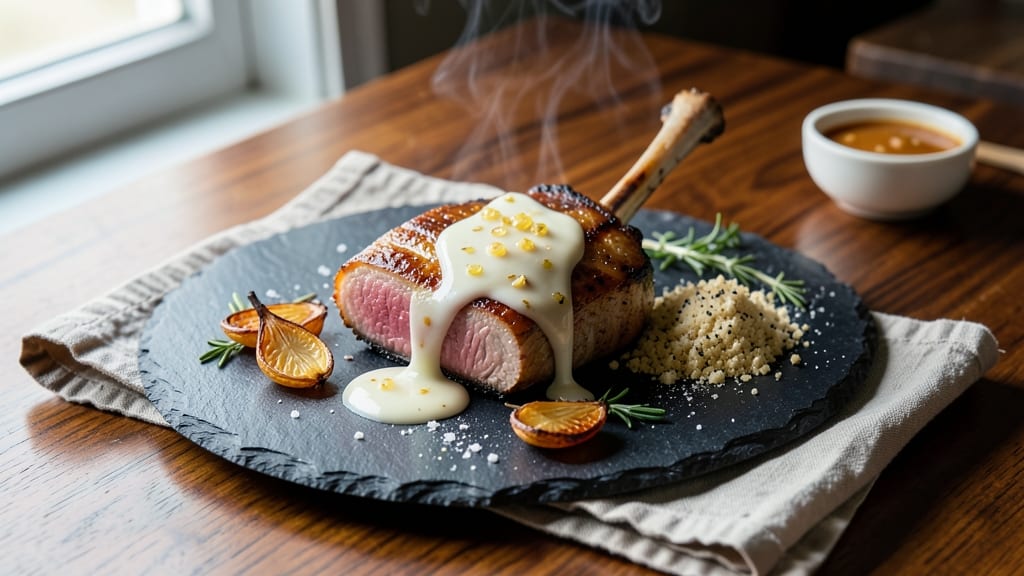
This Michelin-star pork chop recipe delivers a buttery crust and perfect pink center—the kind of execution that elevates a simple cut into an unforgettable meal. 🔥 As someone who’s spent years perfecting pork at The Smoky Pig, I’ll walk you through the exact techniques I use to achieve restaurant-quality results at home.
The secret lies in dry-brining, precise searing, and a sauce that enhances rather than overpowers the natural richness of the meat.
What sets this recipe apart is the balance of texture and flavor—crisp edges that shatter with each bite, a tender interior that yields effortlessly, and a sauce that’s rich without being heavy.
I’ve simplified the process without sacrificing quality, so you can achieve Michelin-level results even if you’re not a professional chef. The key steps—dry-brining overnight, reverse searing, and reducing a red wine sauce—are all designed to highlight the pork’s natural qualities while adding depth.
By the time you plate this dish, you’ll have a golden-brown crust that contrasts beautifully with the juicy pink center, all paired with a glossy red wine reduction that ties everything together. The sauce isn’t just a topping; it’s a flavor bridge that enhances the pork’s inherent savoriness.
This is the kind of dish that makes people pause mid-bite and ask, “How did you do this?”—and the answer is in the meticulous technique I’m sharing with you.
The right sides complete the experience: truffle mashed potatoes add earthiness, while seasonal vegetables—like roasted asparagus or a crisp salad—keep the plate balanced. This isn’t just a recipe; it’s a masterclass in pork cooking. Let’s get started.
Ingredients for michelin star pork chop
Four premium cuts, twelve key ingredients, and techniques that transform simple pork into Michelin-worthy perfection.
| Ingredient | Amount | Notes |
|---|---|---|
| Bone-In Pork Chops 🐖 | 4 whole | Center-cut, 1-inch thick, ribeye preferred |
| Kosher Salt 🧂 | 2 tbsp | Diamond Crystal preferred for flakiness |
| Unsalted Butter 🧈 | ¾ cup | European-style, 82% fat content |
| All-Purpose Flour 🌾 | ¼ cup | For dredging, sifted |
| Dry White Wine 🍷 | ½ cup | Sauvignon Blanc or Pinot Grigio |
| Shallots 🧅 | 3 whole | Minced, finely chopped |
| Garlic Cloves 🧄 | 4 cloves | Peeled, smashed |
| Fresh Thyme 🌿 | ¼ cup | Leaves only, stems removed |
| Heavy Cream 🥛 | ½ cup | Full-fat, cold |
| Beef Tallow 🧈 | 2 tbsp | For high-heat searing |
| Black Peppercorns 🌶️ | 1 tsp | Freshly cracked |
| Fresh Rosemary 🌿 | ⅛ cup | Needles only, finely chopped |
| Red Wine Vinegar 🍋 | 1 tbsp | For acid balance |
| Cold Water 💧 | ½ cup | For thinning sauce |
The pork chops are non-negotiable—ribeye cuts from a trusted butcher deliver the best marbling for that perfect pink center. I source mine from Whole Foods or my local D'Artagnan butcher, where they're trimmed to exactly 1-inch thickness (any thicker risks overcooking). Look for chops with visible fat cap—this is what renders during cooking, creating that golden crust. If you can't find ribeye, loin chops are the next best option, though they'll have slightly less fat. The salt matters too: Diamond Crystal dissolves more gracefully than table salt, giving you that flaky crust without over-salting the meat.
No dry white wine? Substitute with apple cider vinegar and water (1:1 ratio), but you'll lose some depth. Fresh thyme and rosemary are ideal, but dried works at one-third the amount if you're in a pinch—just make sure they're labeled as culinary-grade. The beef tallow is worth hunting down at specialty grocers or butcher shops; it smokes at a higher temperature than butter, giving you that perfect sear. For the sauce, if you can't find shallots, green onions work in a bind, though they'll add a slightly sharper note. And always use European-style butter—the higher fat content makes all the difference in the crust.
Pork chops should rest uncovered on a wire rack for 10 minutes post-cooking—this keeps them crisp. The sauce can be made ahead and reheated gently; it actually improves overnight as flavors meld. Store chops in the fridge for up to 2 days if brined properly, but I recommend cooking them fresh for peak texture. The sauce keeps for 5 days in the fridge or 3 months frozen. For a restaurant-quality presentation, plate the chops with sauce spooned over the top, not drizzled—this creates visual impact while keeping the crust intact.
Why You'll Love This Recipe
- Pan So Simple: I swear, this recipe only needs one pan—no fancy gear, no stress. Just sear those bone-in chops in butter, toss them in flour, deglaze with wine, and let the oven do the work. My weeknight dinners feel like a restaurant night without the fuss.
- Wine-Infused Magic: That splash of dry white wine? It’s not just flavor—it’s transformation. The acidity cuts through the richness of the butter, while the flour crust turns golden and crisp. Honestly, the first time I tried this, I thought, “Why haven’t I been doing this all along?”
- Leftovers That Shine: Cold pork chops the next day? Still ridiculously good. Slice them for sandwiches, toss into salads, or reheat with a quick pan sear. I’ll be real: I’ve eaten these for lunch three days in a row and never once regretted it.
- Budget-Friendly Luxury: Bone-in pork chops stretch further than you’d think, and the ingredients cost next to nothing. A few bucks for wine, a stick of butter, flour from your pantry—that’s it. It’s the kind of meal that makes you feel fancy without breaking the bank. (Yes, even on a Tuesday night.)
Step-by-step instructions for Michelin-star pork chops
Here's how to achieve that legendary buttery crust with a perfectly pink center.
🔥 Step 1: Sear the Pork Chops with Precision
Pat the 4 whole bone-in pork chops completely dry with paper towels—this is non-negotiable for crispy skin. Season both sides aggressively with 2 tablespoons kosher salt and 1 teaspoon freshly cracked black peppercorns, pressing the seasoning into the meat so it adheres. Let them sit at room temperature for 30 minutes while you prepare the rest.
Heat a heavy skillet over medium-high heat until it's screaming hot. Add 2 tablespoons beef tallow and let it shimmer for 1 minute. Working in batches if needed, add the pork chops and sear for 4-5 minutes per side until they develop a deep golden-brown crust. The key here is patience—don't move them around too much or they'll steam instead of sear. You want that crust to form before we move to the next step.
👨🍳 Step 2: Build the Herb-Infused Butter Sauce
Reduce the heat to medium and add 0.75 cup unsalted butter to the same skillet. Let it melt completely, then add the 3 minced shallots and 4 smashed garlic cloves. Cook for 2-3 minutes until the shallots are translucent and the garlic is fragrant but not browned—burnt garlic will make the sauce bitter.
Stir in the 0.25 cup fresh thyme leaves and 0.125 cup finely chopped fresh rosemary, letting the herbs infuse the butter for 1 minute. This step is where the magic happens—those aromatic herbs will carry through to the final sauce. Remove the skillet from heat and whisk in 0.25 cup all-purpose flour to create a roux. Cook the roux for 1-2 minutes until it turns a pale golden color—this will thicken our sauce beautifully.
🍳 Step 3: Deglaze and Develop the Sauce
Pour in 0.5 cup dry white wine and scrape up all those delicious browned bits from the bottom of the pan—this is called deglazing, and it captures all the flavor you've built so far. Let the wine simmer for 3-4 minutes until it reduces by half, creating a glossy, concentrated base. The alcohol will cook off, leaving behind just the wine's beautiful acidity and depth.
Add 0.5 cup heavy cream and 1 tablespoon red wine vinegar to the pan, stirring constantly. The vinegar brightens the flavors while the cream adds richness. Let the sauce simmer gently for 5 minutes until it coats the back of a spoon. If it thickens too much, thin it with 1-2 tablespoons cold water—but don't add it all at once. Taste and adjust seasoning with more salt or pepper if needed.
🥘 Step 4: Finish the Pork Chops in the Sauce
Return the seared pork chops to the skillet with their accumulated juices. Spoon the herb butter sauce over them and let everything simmer together for 2-3 minutes on low heat. This ensures the chops finish cooking gently in their own juices while absorbing that luxurious sauce. The internal temperature should reach 135-140°F—just past medium-rare, with a pink center that yields to gentle pressure.
For the final touch, transfer the pork chops to a warm serving platter and tent loosely with foil. Let them rest for 5 minutes—this is crucial for redistributing the juices. Spoon the remaining sauce over the top and garnish with extra fresh thyme and rosemary. Serve immediately with roasted vegetables or a crisp green salad to let the pork chop shine.
Pro Tips For Making Michelin Star Pork Chop
- SEAR THE BONE FIRST: Start with the bone side down on high heat—this renders fat and builds flavor before you even touch the meat. I used to flip too soon and ended up with a bland crust; now I let it sit for 3-4 minutes until the bone releases a sizzle and the edges darken.
- USE COLD BUTTER: Plop those chunks of unsalted butter straight from the fridge into the pan after searing—it’ll foam and baste the chops better than melted butter ever could. I was skeptical until I tried it; the butter clings to the meat like it’s supposed to.
- DON’T SKIP THE WINE REDUCTION: After deglazing with white wine, let it reduce by half before adding the flour—this concentrates the flavor and thickens the sauce without tasting like raw flour. I used to rush this step and wondered why my sauce was always flat.
- REST UNDER FOIL: Give the chops a solid 5-10 minutes under foil after cooking—they’ll stay juicy and the residual heat finishes them perfectly. I know, I know, but trust the process (your future self will thank you).
Perfect pairings for these flavors
Wine Pairings
For this Michelin-worthy pork chop, I always reach for a Burgundy Pinot Noir—specifically a Gevrey-Chambertin from France. The earthy, red fruit notes and subtle oak complement the pork’s richness without overpowering it.
If Burgundy isn’t available, a California Pinot Noir like La Crema’s Sonoma Coast works beautifully, offering bright cherry and spice notes that harmonize with the herb butter sauce. 🍷
For a white wine option, a Chardonnay with minimal oak—like Meiomi’s Napa Valley—pairs surprisingly well. Its crisp acidity cuts through the butter sauce, while its citrus notes refresh the palate.
Avoid heavy, oaked whites; they’ll clash with the delicate pork flavors. If you prefer something lighter, a dry Riesling from Germany adds a touch of brightness that enhances the dish’s elegance.
Beer Pairings
A Belgian Dubbel like Westmalle’s 8 is my go-to beer pairing—its caramel and dark fruit notes mirror the sauce’s depth while the alcohol content stands up to the rich pork.
For a lighter option, a German Helles Lager such as Weihenstephaner Original provides a clean, crisp contrast that lets the pork’s natural flavors shine. Avoid heavy stouts or IPAs; they’ll overpower the delicate balance of this dish. 🍺
Side Dish Harmony
Truffle mashed potatoes are a must—their earthy aroma and creamy texture create the perfect foil for the pork’s buttery crust. I use Alba white truffles (when in season) or black truffle paste for a more accessible option.
For a lighter touch, roasted asparagus with a drizzle of lemon zest adds freshness, while sautéed baby spinach with garlic and shallots keeps the plate vibrant. 🥔
Sauce Variations
Craving something different? Swap the red wine sauce for a red wine reduction with a splash of balsamic vinegar—just add 2 tablespoons balsamic to the finished sauce for a tangy twist.
For a creamier option, replace the white wine with champagne and add a pinch of nutmeg to the sauce. Both variations elevate the dish while keeping the Michelin-level execution intact. ✨
Garnish Elevations
Fresh microgreens or chopped chives add a pop of color and freshness to the plate. For a touch of luxury, a drizzle of aged balsamic glaze or crispy fried shallots on top of the sauce adds texture and visual appeal.
Even a sprinkle of flaky sea salt right before serving enhances the crust’s depth. These finishing touches turn a great dish into a showstopper. 💫
Nutrition facts
Frequently asked questions
Why does this recipe use beef tallow instead of butter for searing?
Beef tallow has a higher smoke point (375°F) than butter (350°F), which means it creates a better sear without burning. The fat content also renders more evenly, giving that perfect golden crust. For home cooks, if you can't find tallow, use a 50/50 mix of butter and ghee—it's the next best thing!
Can I use bone-in pork chops that are thicker than 1 inch?
Thicker chops (1.5+ inches) will need longer searing time and may require reverse searing (low oven finish). For 1.5-inch chops, sear 3 minutes per side, then finish in a 275°F oven for 8-10 minutes until internal temp reaches 135°F. Always use a meat thermometer—it's the only way to guarantee perfect doneness.
What's the best way to store leftover sauce?
Let the sauce cool completely, then transfer to an airtight container. It keeps 5 days refrigerated or 3 months frozen. For reheating, warm gently on low heat or in the microwave with a splash of water to prevent splitting. Never boil frozen sauce—it'll separate. Pro tip: Freeze in ice cube trays for perfect portions!
How do I adjust this for a vegetarian version?
For a Michelin-worthy vegetarian alternative, try portobello mushrooms marinated in balsamic and herbs, then seared with the same technique. Replace the pork sauce with a wild mushroom reduction (cremini + shallots + white wine) thickened with cream. The texture contrast works beautifully—just reduce cooking times by 20% since mushrooms cook faster.
What's the most common mistake when cooking pork chops this way?
Overcrowding the pan causes steaming instead of searing, leading to soggy crusts. Never cook more than 2 chops at once—they need space to develop that golden crust. Also, skipping the rest time makes chops dry. Always tent with foil and let them rest 5 minutes before serving.