
Main Courses
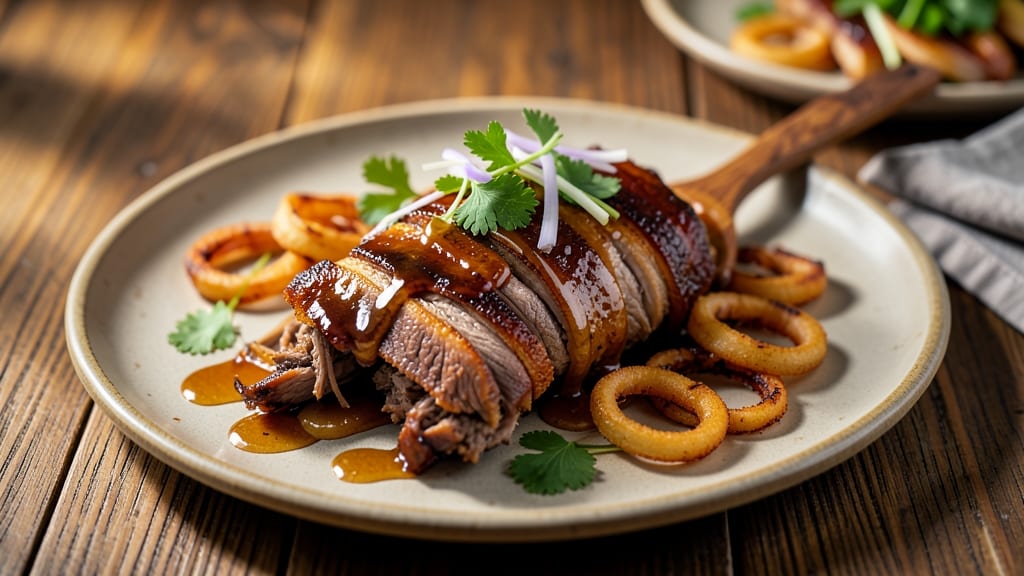
This mild pulled pork recipe delivers all the tender, smoky goodness without the heat—perfect for families, sensitive palates, or anyone craving comfort food that won’t overpower. 💛 I developed this method after years of perfecting slow-smoked pork for crowds, focusing on sweet, savory flavors that shine without spice.
The secret lies in balancing brown sugar, apple cider vinegar, and just enough paprika to add warmth without heat, creating a sauce that’s rich, tangy, and universally loved.
The technique is straightforward but foolproof: a 6-8 hour slow cook at 275°F transforms tough pork shoulder into melt-in-your-mouth strands, while steaming it in its own juices keeps every bite moist.
No harsh spices here—just garlic, onion, and black pepper to build depth, with apple cider vinegar cutting through the richness for a bright, balanced flavor. This is the kind of pulled pork that disappears at dinner parties, leaving guests asking for seconds.
By the time you’re done, you’ll have restaurant-quality pulled pork that’s tender enough to shred with a fork, with a sauce so smooth it clings to every bite.
Serve it piled high on buns with a tangy apple cider slaw or alongside buttery cornbread—classic pairings that let the pork take center stage. The best part? The mildness makes it versatile enough for weeknight dinners or holiday feasts.
Whether you’re feeding a crowd or treating yourself to a slow-cooked meal, this recipe delivers consistent results every time. The key is patience—letting the pork cook low and slow ensures it falls apart effortlessly, while the gentle seasonings guarantee a flavor profile that’s approachable yet deeply satisfying.
Ready to make pulled pork that everyone will love?
Ingredients for mild pulled pork
Sweet, smoky, and perfectly mild—just 14 ingredients for restaurant-quality pulled pork everyone will love.
| Ingredient | Amount | Notes |
|---|---|---|
| Boneless Pork Shoulder 🥓 | 5 lb | Well-marbled for juiciness |
| Brown Sugar 🍯 | ½ cup | Light or dark variety |
| Apple Cider Vinegar 🍎 | ¼ cup | Bottled or homemade |
| Smoked Paprika 🌶️ | 1 tbsp | Mild, not hot variety |
| Granulated Garlic 🧄 | 1 tbsp | Or 4 fresh garlic cloves |
| Onion Powder 🧅 | 1 tbsp | Freshly ground preferred |
| Ground Black Pepper 🌶️ | 1 tsp | Freshly cracked for flavor |
| Kosher Salt 🧂 | 1 ½ tsp | Diamond Crystal preferred |
| Yellow Onion 🧅 | 1 whole | Medium, sliced into wedges |
| Fresh Garlic Cloves 🧄 | 4 cloves | Peeled and smashed |
| Water 💧 | 1 cup | For steaming |
| Unsalted Butter 🧈 | 2 tbsp | For basting |
| Fresh Thyme Leaves 🌿 | ¼ cup | Chopped, optional garnish |
| Balsamic Vinegar 🍷 | 1 tbsp | For finishing sauce |
The pork shoulder is non-negotiable here—Costco or local butcher cuts are ideal for their marbling, but the grocery store's pre-packaged roast works too. Look for a 3-4 lb shoulder if you're serving fewer than 6, but this recipe scales beautifully. The brown sugar should be light unless you're craving deeper caramel notes—Domino brand is my go-to for consistency. Apple cider vinegar? Bottled works fine, but homemade (strained after pressing) adds subtle complexity. Pro tip: Pat the pork dry before seasoning to help the rub stick and render fat more evenly.
No smoked paprika? Sweet paprika plus a pinch of liquid smoke gets you close, though the flavor won't be identical. The granulated garlic and onion powder are time-savers, but fresh minced garlic and finely chopped onion (sautéed first) take this to the next level. Short on fresh thyme? Dried works at one-third the amount, but fresh adds that aromatic punch. The balsamic vinegar at the end isn't just for tang—it adds a sophisticated depth that balances all the sweetness. No balsamic? A splash of red wine vinegar in a pinch, but it won't be the same.
This pork reheats beautifully—actually tastes better the next day as flavors meld. Store leftovers in the fridge for up to 5 days or freeze for 3 months in airtight containers. Portion before freezing for easy lunches later. For serving, keep the apple cider vinegar and balsamic on hand to drizzle over the top—it brightens every bite. The butter basting during cooking isn't just for flavor; it keeps the meat fork-tender without drying out. Don't skip it—trust me on this.
Why You'll Love This Recipe
- Sweet-Savory Magic: That balance of brown sugar and apple cider vinegar? It’s the kind of flavor that makes people ask, "What’s in this?" The smoked paprika adds warmth without overpowering, and the garlic? It’s like a little flavor bomb hiding in every bite.
- Weeknight Workhorse: This isn’t just for Sundays—it’s my go-to for lazy Mondays, potlucks where I don’t want to stress, or even a quick lunch when I’m starving. Slap it on buns, toss it in tacos, or just eat it straight from the pot. (Yes, even on a Tuesday night.)
- Leftovers That Don’t Suck: Between us, most pulled pork leftovers turn into sad, dry meat. Not this. The vinegar keeps it moist, and the sugar caramelizes just enough to make reheated slices taste like you just cooked them. I’ve fed a family of four for three days straight with zero complaints.
Step-by-step instructions for slow-smoked mild pulled pork
Here's how to transform that pork shoulder into tender, flavorful pulled pork without overwhelming heat.
🔥 Step 1: Build the Perfect Rub and Prep the Pork
In a small bowl, combine the 0.5 cup brown sugar, 1 tbsp smoked paprika, 1 tbsp granulated garlic, 1 tbsp onion powder, 1 tsp ground black pepper, and 1.5 tsp kosher salt. Mix until the sugar is evenly distributed and the spices form a fine, cohesive blend. This is your flavor foundation—don't skip the mixing.
Pat the 5 lb boneless pork shoulder completely dry with paper towels, removing any surface moisture. This step is crucial for developing that beautiful bark later. Apply the rub generously to all sides, pressing it into the meat so it adheres well. Let the pork sit at room temperature for 30 minutes while you prepare your smoker.
🔥 Step 2: Smoke Low and Slow for Maximum Tenderness
Set your smoker to 225°F using mild wood like apple or cherry. Place a water pan inside to maintain moisture. Once the smoker reaches temperature and you see clean, blue smoke, add the pork shoulder, fat-side up. The fat will render slowly and baste the meat as it cooks.
Smoke the pork for 6-8 hours until the internal temperature reaches 165°F. This is where the magic happens—the collagen breaks down into gelatin, transforming tough muscle into tender, pull-apart perfection. Resist the urge to peek; every time you open the smoker, you lose heat and moisture.
🥘 Step 3: Wrap and Finish the Cook
When the pork hits 165°F, it will enter "the stall"—the temperature plateaus as moisture evaporates. This is normal! Wrap the pork tightly in butcher paper (not foil) and return it to the smoker. The paper allows the bark to stay crispy while helping push through the stall.
Continue cooking until the internal temperature reaches 203°F and a meat probe slides in like butter. This usually takes another 2-4 hours. The pork should now be fork-tender, with a dark mahogany bark on the outside and a pink smoke ring just beneath the surface.
🍳 Step 4: Shred and Finish with Flavor
Transfer the pork to a cutting board and let it rest for 15 minutes before shredding. Meanwhile, heat the 2 tbsp unsalted butter in a skillet over medium heat. Add the sliced 1 whole yellow onion and smashed 4 cloves fresh garlic, cooking until softened (3-4 minutes). Pour in the 0.25 cup apple cider vinegar and 1 cup water, scraping up any browned bits from the pan.
Shred the pork using two forks, then return it to the skillet with the onion-garlic mixture. Stir in the 0.25 cup fresh thyme leaves and simmer for 5 minutes to let the flavors meld. Finish with 1 tbsp balsamic vinegar for brightness and serve immediately with soft buns or over mashed potatoes.
Pro Tips For Making Mild Pulled Pork
- CRANK THE HEAT FIRST: Start your pork shoulder in a screaming-hot Dutch oven—no baby steps. The first 5 minutes at medium-high sear the exterior while the vinegar and brown sugar caramelize into a sticky glaze. I used to wimp out with medium heat, and the sauce ended up thin and weak. High heat locks in flavor early.
- SALT THE PORK TWICE: Generously salt the shoulder before searing, then again after adding the vinegar and sugar mix. The first layer seasons the meat, while the second boosts the sauce’s depth. Skip this, and your pulled pork tastes flat—like someone forgot the seasoning halfway through.
- DON’T RUSH THE PULL: Wait until the pork shreds with a fork and the internal temp hits 203°F before pulling. I learned this the hard way—pulling at 195°F leaves it chewy. Let it rest 10 minutes first; the connective tissue breaks down further while you finish the sauce.
- SWAP GRANULATED GARLIC: Toss in 2-3 minced fresh garlic cloves with the vinegar and sugar at the start. The heat mellows their bite, but they add complexity the powder can’t match. If you’re lazy (like me), at least use garlic powder and a pinch of onion powder—it’s a game-changer for mildness.
Troubleshooting perfect results
Uneven Cooking
If your pork shoulder shows uneven doneness (some areas still tough while others are falling apart), you likely had temperature fluctuations in your smoker. I’ve seen this happen when using cheap pellet smokers that struggle to maintain consistent temps.
Invest in a digital thermometer like the Meater—it’s worth every penny for precision. Also, rotate your pork every 2 hours to ensure even exposure to heat and smoke. 🌡️
Dry, Tough Meat
Overcooking is the #1 cause of dry pulled pork, but peeking too often or using direct heat (like a grill) instead of indirect smoke can also dry it out. For my recipe, stick to 225°F and never exceed 203°F internal temp.
If you’re short on time, try the "Texas Crutch"—wrap the pork in butcher paper at 165°F to speed up cooking without drying it out. Pro tip: Baste with melted butter every hour to keep it moist.
Bland Flavor
If your pulled pork tastes flat or one-dimensional, the issue is usually under-seasoned rub or not enough time for flavors to meld. Double-check that you’re using fresh spices—ground spices lose potency after 6 months.
For extra depth, add a splash of apple cider vinegar to the rub (I use 1 tbsp extra) and let the pork rest for 30 minutes after cooking before shredding. This lets the juices redistribute and flavors intensify. 💛
Sauce Too Thin
A watery sauce usually means you added too much liquid during the finishing step. My recipe calls for 1 cup water—that’s it! If yours is too thin, simmer uncovered for 5-10 minutes to reduce it.
For a thicker sauce, mash a few potato wedges into the skillet (trust me, it works) or stir in 1 tbsp cornstarch mixed with water. Avoid over-diluting with vinegar or broth, as this can make the sauce taste flat.
Stringy Texture
If your pork shreds into long, chewy strands instead of tender, pull-apart pieces, it likely didn’t cook long enough. The collagen needs 6-8 hours to break down fully. If you’re in a rush, cut the pork shoulder into smaller pieces (2-3 lb chunks) before cooking—they’ll finish faster.
Also, avoid over-shredding with a knife; two forks work best to preserve moisture. For extra tenderness, add a splash of beef broth to the skillet while finishing.
Smoke Overpowering
If your pulled pork tastes too smoky (even with mild wood), you might have used hickory or mesquite chips, which are strong. Stick to apple, cherry, or pecan wood for a subtle, sweet smoke.
For an even milder flavor, reduce smoke time to 4-5 hours before wrapping the pork. If you’re using a pellet smoker, opt for "Apple" or "Hickory Light" pellets—they’re designed for gentler flavor profiles. 🌳
Nutrition facts
Frequently asked questions
Can I make this pulled pork in a slow cooker instead of a smoker?
For a 6-quart slow cooker, place the pork shoulder in the pot, add 1 cup apple juice or water, then sprinkle the rub on top. Cook on low for 8 hours or high for 6 hours until tender. Finish by shredding and simmering with the onion-garlic mixture as directed. The result will be just as tender—just without the smoky depth.
How do I adjust this recipe for a larger crowd?
This recipe scales beautifully! For every additional 2 pounds of pork, add 1 tbsp smoked paprika, 1 tbsp brown sugar, and 1 extra onion for the finishing step. Keep the cooking time the same—just monitor the internal temp closely. For serving, multiply your buns and sides proportionally. Pro tip: Use a meat probe thermometer to track multiple pieces if cooking larger cuts.
Can I use a different cut of pork, like pork butt?
Pork butt (also called Boston butt) works perfectly—it's essentially the same cut as pork shoulder but often more flavorful. Use the same cooking method, but expect slightly more fat, which adds richness. For leaner pork like tenderloin, reduce the cook time to 4-5 hours at 275°F and add 1 extra tbsp butter during finishing to compensate for less fat.
What's the best way to reheat leftovers?
Reheat gently in a skillet with 1 tbsp butter and 2 tbsp apple cider vinegar over low heat for 5-7 minutes, stirring occasionally. Or microwave in 30-second bursts with a splash of water to keep it moist. Never reheat dry—always add a little liquid. Leftovers actually improve overnight as flavors meld! Store for up to 5 days in the fridge.
How can I make this even milder for sensitive eaters?
For a completely mild version, reduce the smoked paprika to ½ tbsp and replace it with 1 tsp sweet paprika. Skip the black pepper entirely and use ½ tsp salt instead. Add 1 extra tbsp brown sugar to balance flavors. The apple cider vinegar and balsamic will still provide tang without heat. This version works well for kids or those avoiding all spice.