
Main Courses
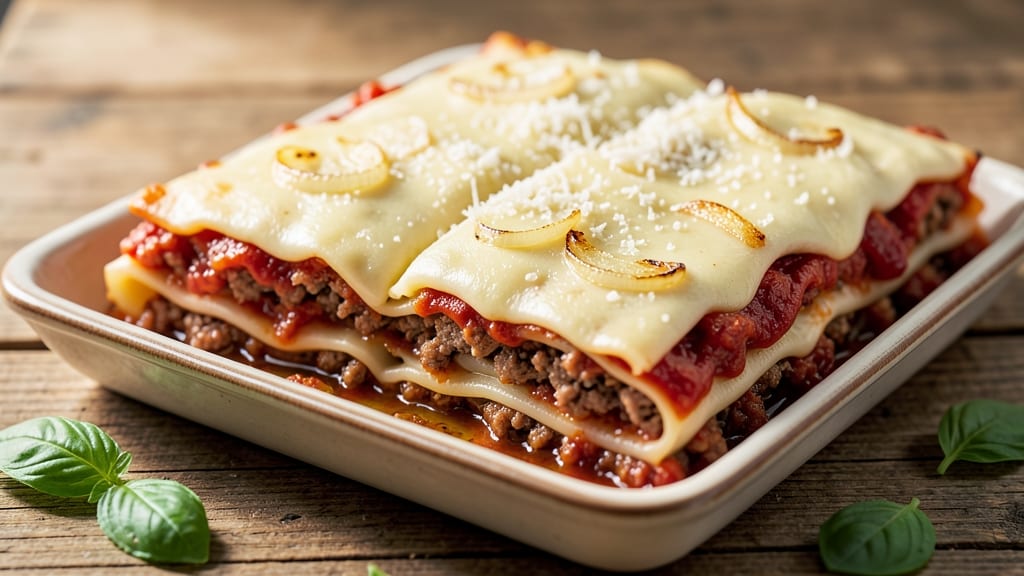
This minced pork lasagna recipe delivers restaurant-quality Italian flavor in 30 minutes of prep and 45 minutes of baking—no long simmering required. ✨ I developed it after years of perfecting pork-based Italian dishes, where the secret lies in properly browning the pork for deep, savory layers that replace the need for hours of braising.
The magic happens in the layers: tender, pre-cooked lasagna noodles (for foolproof assembly) alternate with a rich pork mixture—minced pork, caramelized onions, and a blend of San Marzano tomatoes and Parmesan. This creates a lasagna with tender, melt-in-your-mouth texture without the wait of traditional recipes.
What you'll end up with is a lasagna that's rich yet balanced—golden top layer, creamy béchamel that clings to every noodle, and pork so flavorful it stands up to the cheese. The dish stays moist and flavorful even when reheated, making it perfect for meal prep or holiday gatherings.
Serve with a simple arugula salad and crusty garlic bread to complete the Italian experience. Here's how to assemble it like a pro—no shortcuts that compromise quality, just smart techniques for restaurant-quality results at home.
Ingredients for minced pork lasagna
Pantry staples meet Italian tradition for this restaurant-quality lasagna—no simmering required.
| Ingredient | Amount | Notes |
|---|---|---|
| Ground Pork 🥓 | 1 ½ lb | Freshly minced for texture |
| Yellow Onions 🧅 | 2 whole | Finely diced, caramelized |
| San Marzano Tomatoes 🍅 | 28 oz | Crushed, high-quality canned |
| Lasagna Noodles 🍝 | 12 pieces | Pre-cooked, oven-ready |
| Parmesan Cheese 🧀 | 1 ½ cups | Freshly grated from block |
| Heavy Cream 🥛 | 1 cup | Full-fat for richness |
| All-Purpose Flour 🌾 | ¼ cup | For béchamel roux |
| Unsalted Butter 🧈 | ½ cup | Cold, cubed for roux |
| Garlic Cloves 🧄 | 4 cloves | Minced for depth |
| Dried Oregano 🍃 | 1 tbsp | Italian blend preferred |
| Ground Black Pepper 🌶️ | ½ tsp | Freshly cracked |
| Salt 🧂 | 1 ½ tsp | Kosher or sea salt |
| Mozzarella Cheese 🧀 | 2 cups | Shredded, low-moisture |
| Fresh Basil Leaves 🌿 | ¼ cup | Chopped for garnish |
| Olive Oil 🫒 | 2 tbsp | Extra-virgin for browning |
The pork is where the magic happens. Ground pork (not lean) gives that rich, meaty texture—Costco or Trader Joe's have the best quality. Caramelizing the onions takes patience (about 15 minutes), but it's worth it for that deep sweetness. San Marzano tomatoes are non-negotiable here—they're sweeter and less acidic, which balances the pork's richness. If you can't find them, Mueller or Cirillo brands are solid backups. For the Parmesan, buy a wedge and grate it yourself—pre-grated gets clumpy and lacks flavor. The lasagna noodles should be pre-cooked to save time, but if using regular ones, boil them al dente and drain well.
No heavy cream? Full-fat coconut milk works in a pinch, though it'll taste slightly different. Short on Parmesan? Pecorino Romano at half the amount gives a sharper flavor. The mozzarella can be fresh (drained well) or low-moisture shredded—Sargento or Booth brands melt beautifully. For the béchamel, European-style butter (like Plugrá) adds more flavor than regular. If you're making this ahead, assemble it up to a day early and refrigerate—just add extra baking time (about 15 minutes) when you bake it. The basil? Tear it fresh over the top right before serving—it wilts fast when baked.
This lasagna reheats beautifully—cover with foil and bake at 375°F for 20 minutes if served cold. Keeps in the fridge for 4-5 days (though it's best within 2 days) and freezes for 3 months. I always make a double batch—one for dinner, one for lunches. Store leftovers in an airtight container with parchment between layers to prevent sogginess. The béchamel sauce can be made ahead too—just reheat gently with a splash of milk to loosen it up.
Why You'll Love This Recipe
- One-Pan Magic: I swear by this recipe because it’s basically a lasagna that doesn’t require a dozen dishes. The ground pork and onions caramelize right in the same pan you’ll bake it in—no extra pots, no extra cleanup. Just layer, cover, and let the oven do the work.
- San Marzano Secret Weapon: That canned tomato sauce? Life-changing. The San Marzano tomatoes melt into a rich, sweet base that soaks into the noodles just right, while the Parmesan on top adds that salty, nutty crunch. It’s the kind of flavor that makes you pause mid-bite.
- Leftovers That Don’t Suck: Honestly, this recipe makes enough for leftovers that actually taste better the second day. The noodles soften perfectly, the pork stays juicy, and reheating it is zero effort—just slap it in the oven for 15 minutes. No sad, dry lasagna here.
- Budget-Friendly Feast: Ground pork is cheaper than beef, and San Marzano tomatoes last forever in the pantry. You’re feeding a crowd for less than takeout, and the Parmesan stretches far when you grate it yourself. My wallet and my family thank me every time.
Step-by-step instructions for minced pork lasagna
Here's how to build layers of rich pork ragù and creamy béchamel without the traditional 2-hour bake.
🍳 Step 1: Brown the Pork and Caramelize the Onions
Heat a large Dutch oven over medium-high heat and add the 2 tablespoons olive oil. Add the 1.5 lb ground pork and cook, breaking it apart with a wooden spoon, until it loses its raw color (5-6 minutes). You want those pork bits to brown deeply—that's where all the flavor lives.
Push the pork to one side of the pan and add the 2 whole yellow onions (finely diced) to the empty space. Cook the onions for 8-10 minutes until they turn a rich golden brown, stirring occasionally. This caramelization adds sweet depth that cuts through the richness of the pork. If the onions start sticking, add a splash of water and scrape up those browned bits—they're pure flavor.
🍳 Step 2: Build the Pork Ragù Base
Add the 4 minced garlic cloves to the pork mixture and cook for 30 seconds until fragrant. Pour in the 28 oz crushed San Marzano tomatoes and stir well. Season with 1.5 teaspoons salt, 0.5 teaspoon ground black pepper, and 1 tablespoon dried oregano.
Bring the mixture to a simmer, then reduce heat to low and let it cook uncovered for 20-25 minutes, stirring occasionally. You're looking for a thick, glossy sauce that coats the back of a spoon. If it gets too thick, add 2-3 tablespoons water to maintain the right consistency. This slow cook time lets the flavors meld beautifully without needing a long bake later.
🥘 Step 3: Prepare the Creamy Béchamel Sauce
While the ragù simmers, make the béchamel in a separate saucepan. Melt the 0.5 cup unsalted butter over medium heat, then whisk in the 0.25 cup all-purpose flour to form a roux. Cook for 1-2 minutes until the mixture turns a pale golden color—this is your flavor foundation.
Gradually whisk in the 1 cup heavy cream, a little at a time, until fully incorporated. Keep whisking constantly to prevent lumps from forming. Once all the cream is added, cook for another 3-4 minutes until the sauce thickens enough to coat the back of a spoon. Season with 0.5 teaspoon salt and 0.25 teaspoon black pepper. Remove from heat and stir in 1 cup parmesan cheese until melted and smooth.
🥘 Step 4: Assemble the Lasagna Layers
Preheat your oven to 375°F. Spread a thin layer of the pork ragù on the bottom of a 9x13-inch baking dish to prevent sticking. Arrange 4 lasagna noodles (no need to pre-boil—these are oven-ready) in a single layer, slightly overlapping if needed.
Spread half of the béchamel sauce evenly over the noodles, then sprinkle with 1 cup mozzarella cheese. Add another layer of noodles, then the remaining ragù, and the rest of the béchamel. Top with the final layer of noodles and remaining 1 cup mozzarella cheese. The cheese should be visible on top—this helps create that beautiful golden crust.
🔥 Step 5: Bake to Golden Perfection
Cover the baking dish tightly with aluminum foil and bake for 25 minutes. This covered bake ensures the noodles cook through without drying out. After 25 minutes, remove the foil and bake uncovered for another 10-15 minutes until the top is golden brown and bubbly.
Let the lasagna rest for 10 minutes before slicing—this gives the layers time to set and makes it easier to serve. Garnish with 0.25 cup chopped fresh basil leaves right before serving. The basil adds a bright, fresh contrast to the rich, savory layers. Cut into squares and serve immediately with a crisp green salad and garlic bread.
Pro Tips For Making Minced Pork Lasagna
- Brown the Pork Properly: Don’t just cook the ground pork—brown it. After breaking it up with your hands, let it sizzle in a hot pan until the edges turn golden and the meat loses its raw color. I used to skip this, and the lasagna tasted flat; now it’s rich and deep. Use medium-high heat, but don’t crowd the pan—work in batches if needed.
- Dice Onions Like You Mean It: Tiny, even dice (1/4-inch or smaller) melt into the sauce without leaving texture. If you’re lazy like me, I get it—but larger chunks make the lasagna taste uneven. Pulse them quickly in a food processor, or chop while watching TV. Trust me, your layers will thank you.
- Pre-Cook the Noodles Slightly: Boil lasagna noodles for 2 minutes less than package instructions, then drain and toss with olive oil. They’ll finish cooking in the oven, absorb sauce better, and stay al dente. Overcooked noodles turn mushy—this is the thing that matters most.
- Layer Cheese Like a Pro: Skip the top-heavy cheese blanket—it burns. Instead, sprinkle Parmesan between layers and add a final thin layer on top. Use mozzarella in the middle for gooeyness, but reserve the Parmesan for the finish. This guarantees a crispy crust without a rubbery mess.
Best sauces and condiments for this recipe
Classic Ragù Sauce
This rich pork ragù is the heart of your lasagna, where properly browning the 1.5 lb ground pork creates deep, caramelized flavors that stand up to the cheese. I always use San Marzano tomatoes—their natural sweetness balances the pork's richness.
The key is slow simmering for 20-25 minutes to develop those complex flavors without needing hours of baking later. 🍅
For extra depth, I add a splash of dry white wine (about ¼ cup) when deglazing the pan after browning the pork. This lifts the fond (browned bits) and adds a subtle acidity that brightens the sauce.
If you're short on time, you can reduce the simmer to 15 minutes, but the flavors won't be as developed.
Creamy Béchamel
The béchamel is where the magic happens—it's what makes lasagna creamy and luxurious. I use European-style butter (like Plugrá) for a richer flavor, and I never rush the roux. Cook it until it's a pale golden color before adding the 1 cup heavy cream—this prevents a floury taste.
The secret to a smooth sauce is whisking constantly while adding the cream. 🥛
For a lighter version, replace half the heavy cream with whole milk, but the texture will be slightly thinner. If you're making this ahead, let it cool completely before storing—it thickens as it cools, so you may need to add a splash of milk when reheating.
I also like to add a pinch of nutmeg (about ⅛ teaspoon) to the béchamel for a subtle warmth that pairs perfectly with the pork.
Cheese Layer Secrets
The cheese is what brings all the layers together, so don't skimp! I use a mix of 1 cup mozzarella (for meltiness) and ½ cup Parmesan (for sharpness) in each layer. The mozzarella should be shredded just before assembling—pre-shredded cheese gets clumpy and doesn't melt as smoothly.
For an extra touch, I sprinkle a little Pecorino Romano on top before baking for a sharper, saltier finish. 🧀
If you're worried about soggy lasagna, press the noodles gently into the sauce before adding the next layer. This ensures they absorb the flavors without turning mushy.
And always let the lasagna rest for 10 minutes before slicing—this helps the layers set and makes it easier to serve without everything sliding apart.
Finishing Touches
Fresh basil leaves are my go-to garnish—they add a bright, herbal note that cuts through the richness. Tear them by hand rather than chopping for a more delicate texture.
For a smoky twist, I sometimes add a pinch of smoked paprika to the ragù or sprinkle a little crumbled pancetta on top before baking. 🌿
For serving, I like to pair this lasagna with a simple arugula salad dressed with lemon and olive oil, and warm garlic bread. The acidity of the salad balances the richness, while the bread soaks up any extra sauce.
If you're making this ahead, assemble it up to a day in advance and refrigerate—just add 15 extra minutes to the baking time when you're ready to serve.
Nutrition facts
Frequently asked questions
Can I use ground beef instead of minced pork?
You can substitute ground beef, but pork gives a more authentic Italian flavor and tender texture. For a 1:1 swap, use 80/20 lean-to-fat ratio beef—the fat keeps the lasagna moist. If using beef, reduce the baking time by 5 minutes since it browns faster. For extra richness, add 1 teaspoon Italian sausage seasoning to the meat mixture.
Why does my lasagna turn out dry or rubbery?
Most commonly, this happens from overcooking or not using enough sauce. Cover with foil during the first 25 minutes of baking to trap steam, then uncover for the final 10-15 minutes only when you see bubbling. For extra moisture, add ¼ cup water or milk to the ragù before assembling. Also, never skip the béchamel—it's what keeps the noodles tender!
Can I make this lasagna ahead of time?
Assemble it up to 24 hours ahead and refrigerate uncovered. When ready to bake, add 15 extra minutes to the baking time (still covered for the first 30 minutes). For freezing, assemble completely, cover tightly with foil, and freeze for up to 3 months. Thaw overnight in the fridge before baking—no need to thaw before cooking.
What's the best way to reheat leftovers?
Cover with foil and bake at 375°F for 20-25 minutes until heated through. For microwave reheating, cover with a damp paper towel and heat in 30-second intervals on medium power, stirring between each interval. The foil method keeps the layers from drying out—never microwave uncovered lasagna!
Can I use regular lasagna noodles instead of oven-ready?
Yes, but you'll need to pre-cook them al dente (1 minute less than package instructions) and drain very well. The key is to start with cold noodles when assembling—this prevents them from getting mushy. For extra insurance, toss the cooked noodles with a little olive oil before layering to prevent sticking.