
Main Courses
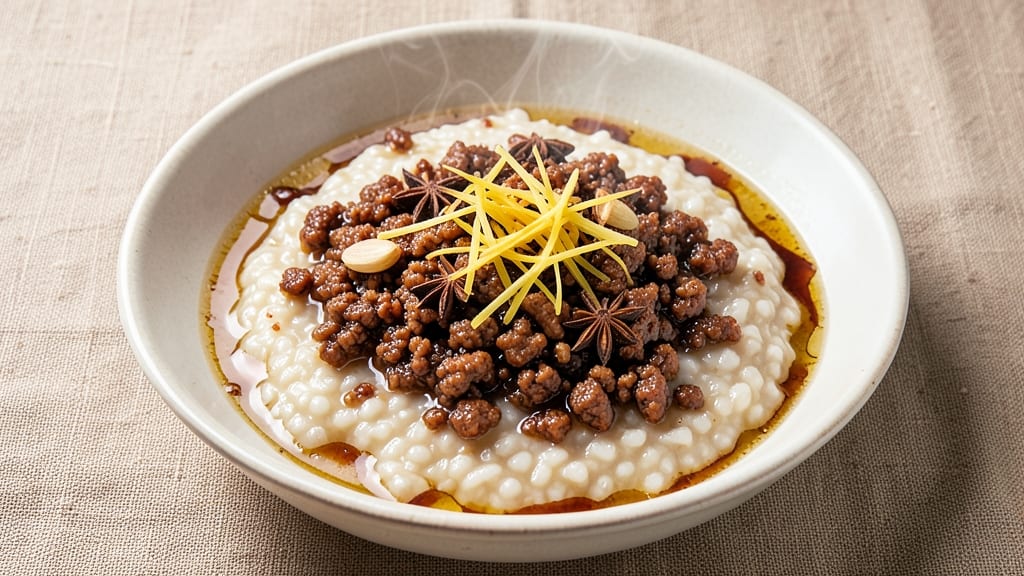
This minced pork porridge recipe transforms simple ingredients into a velvety, comforting bowl that balances tender pork with aromatic ginger and star anise. The secret lies in slow-simmering the rice until it dissolves into a silky texture while the pork develops deep, savory notes.
After years of perfecting this dish in my Atlanta kitchen, I've cracked the code for achieving that restaurant-quality consistency at home.
The foundation starts with properly minced pork that browns beautifully in the pot, releasing its rich flavors into the broth. Aromatic spices like ginger and star anise infuse the porridge with warmth, while a touch of soy sauce adds umami depth.
The slow cooking process allows all these elements to meld together, creating a dish that's both nourishing and deeply satisfying.
What you'll end up with is a steaming bowl of congee with perfectly cooked pork pieces suspended in the silky rice porridge. The texture is unmistakably smooth yet substantial, with each spoonful delivering layers of flavor from the tender pork to the fragrant spices.
This dish feels like a hug in a bowl - comforting enough for a cold day but sophisticated enough for dinner guests.
Serve it topped with fresh scallions, crispy fried shallots, and a drizzle of chili oil for added brightness. The recipe scales beautifully, making it perfect for family meals or when you need to feed a crowd. Let's create this comforting classic together.
Ingredients for minced pork porridge
Freshly minced pork and aromatic spices transform simple rice into restaurant-quality porridge.
| Ingredient | Amount | Notes |
|---|---|---|
| Ground Pork 🥩 | 1 lb | Freshly minced preferred |
| Jasmine Rice 🍚 | 1 cup | Uncooked, long-grain |
| Fresh Ginger 🧄 | 2 tbsp | Finely grated, aromatic |
| Star Anise 🌿 | 2 whole | Whole pods, crushed lightly |
| Light Soy Sauce 🥄 | 2 tbsp | Kikkoman preferred |
| Water 💧 | 6 cups | Filtered preferred |
| Garlic Cloves 🧄 | 3 cloves | Minced, fresh preferred |
| Sesame Oil 🫒 | 1 tbsp | Toasted, for aroma |
| Salt 🧂 | 1 tsp | Diamond Crystal kosher |
| White Peppercorns 🌶️ | ½ tsp | Freshly ground |
| Scallions 🧅 | 3 whole | Sliced thin, for garnish |
| Crispy Fried Shallots 🧅 | 2 tbsp | Store-bought or homemade |
| Chili Oil 🌶️ | 1 tbsp | For serving |
The pork is the heart of this dish. Ground pork from the butcher section—look for good marbling—browns beautifully and releases rich flavors. I always grab Kikkoman soy sauce for that authentic umami kick, but any light soy works. Jasmine rice is non-negotiable here; its delicate fragrance shines through the slow cooking. For star anise, Whole Foods or Asian markets carry the best quality—avoid those tiny, dusty pods. Fresh ginger and garlic are worth the extra minute to grate and mince; they make all the difference in that fragrant aroma.
No fresh ginger? Powdered works at half the amount, but it lacks the bright punch. Star anise too expensive? Anise seeds or even a pinch of fennel seeds can mimic the flavor. Short on time? Pre-minced garlic from the jar is fine, but fresh is always better. The rice-to-water ratio is key—1:6 gives that signature silky texture. For extra richness, add 1 tbsp pork fat when browning the pork. And if you don’t have sesame oil, neutral oil plus a pinch of toasted sesame seeds works in a pinch.
This porridge tastes even better the next day as flavors meld. Store leftovers in the fridge for 4-5 days, reheating gently with a splash of water. For freezing, portion into airtight containers—it keeps for 3 months. Garnishes like scallions and chili oil can be added fresh when serving. The crispy fried shallots? Make a batch ahead and store in an airtight jar; they crisp up perfectly every time.
Why You'll Love This Recipe
- One-Pot Magic: I swear by this recipe for lazy nights—just brown the pork, add rice and broth, then let it simmer. No chopping, no fuss, and that star anise perfume fills the kitchen like a warm hug.
- Ginger-Pork Bliss: The fresh ginger and light soy sauce make this pork ridiculously tender with a subtle kick. Honestly, I’ve tried other porridges, but this combo? It’s the one my family fights over.
- Leftovers That Don’t Suck: This porridge actually tastes better the next day—yes, really. I make a big batch on Sundays, and by Wednesday, it’s still the coziest, most satisfying bowl of rice I’ve had all week.
- Budget-Friendly Powerhouse: Ground pork stretches miles with jasmine rice, and a single star anise pod adds depth without costing a fortune. Between us, this is my go-to when I’m broke but still want to eat well.
Step-by-step instructions for silky minced pork porridge
Transform simple ingredients into a velvety porridge with deep aromatic layers and tender pork.
Sauté the Aromatics and Pork
Heat a heavy-bottomed pot over medium heat. Add the 1 tbsp sesame oil and swirl to coat the bottom. Immediately add the 2 whole star anise (lightly crushed between your palms) and 3 cloves garlic cloves (minced). Cook for 30 seconds until the garlic becomes fragrant but doesn't brown.
Increase heat to medium-high and add the 1 lb ground pork, breaking it apart with a wooden spoon. Cook for 4-5 minutes until the pork loses its raw color and begins to brown around the edges. This step develops the deep umami flavor that carries through the entire porridge. The pork should be fully cooked through but still moist—don't overcook or it'll turn dry.
Add Ginger and Soy Sauce
Reduce heat to medium and stir in the 2 tbsp finely grated fresh ginger. Cook for 1 minute until the raw ginger aroma transforms into a warm, spicy fragrance. This is where the dish starts building its signature aromatic profile.
Pour in the 2 tbsp light soy sauce and stir to combine. The sauce will sizzle briefly as it mixes with the pork and aromatics. Let it cook for 1 minute to allow the soy sauce to reduce slightly and deepen in flavor. This step balances the richness of the pork with the bright, salty notes of the soy.
Combine with Rice and Water
Add the 1 cup jasmine rice and stir for 30 seconds to lightly toast the grains. This brief toasting enhances the rice's natural aroma and prevents a pasty texture. Then pour in the 6 cups water and bring the mixture to a boil over high heat.
Once boiling, reduce heat to low and cover the pot with a tight-fitting lid. Let it simmer for 45 minutes without stirring. This long, gentle cooking time allows the rice to break down completely, creating that signature silky texture. The porridge should be thick but still spoonable—if it looks too thin, simmer uncovered for another 5-10 minutes to thicken.
Season and Finish
After 45 minutes, taste the porridge and adjust seasoning with the 1 tsp salt and 0.5 tsp freshly ground white peppercorns. The salt should enhance the pork's savoriness, while the pepper adds subtle warmth. Stir in the 1 tbsp sesame oil at the end to brighten the dish with its nutty aroma.
Remove from heat and let it rest for 5 minutes before serving. This resting period allows the flavors to meld completely. Ladle into bowls and garnish with 3 whole sliced scallions, 2 tbsp crispy fried shallots, and a drizzle of 1 tbsp chili oil. The contrast of textures—silky porridge, crispy shallots, and smooth chili oil—makes each bite perfect.
Pro Tips For Making Minced Pork Porridge
- Sear the Pork First: I used to just toss the minced pork into the pot with everything else, and it’d end up gray and bland. Now I brown it first in a dry pan—just until it loses its raw color—before adding the ginger and star anise. That caramelized crust makes the whole dish taste richer, even when you’re not looking.
- Slice the Ginger Thin: Skip the grating or chunky slices—this isn’t ginger tea. Use a mandoline or sharp knife to cut it into paper-thin slivers. They infuse the broth faster and dissolve just enough to perfume the porridge without turning it into a ginger soup. (Yes, even if you’re impatient like me.)
- Don’t Rush the Rice: After the pork and aromatics are done, I resist the urge to dump in the rice and walk away. Instead, I let the broth simmer for 5 minutes first—just until the star anise and ginger release their oils. This guarantees the rice absorbs flavor instead of turning out like plain white porridge with a side of seasoning.
- Use Less Soy Sauce: I learned this the hard way—adding the full tablespoon upfront makes the porridge taste salty and one-dimensional. Instead, start with half, taste as you go, and finish with a splash at the end. The pork will release its own saltiness as it cooks, so trust the process. (Your future self will thank you.)
Troubleshooting this recipe
Pork Too Dry
If your pork ends up dry and crumbly, you likely overcooked it during the initial browning. I see this happen when people crank the heat too high—keep it at medium-high and cook just until the pork loses its raw color (4-5 minutes).
For extra moisture, add 1 tbsp pork fat when browning the pork. This fat renders during cooking, keeping the meat tender. 💫
Porridge Too Thin
A watery porridge usually means the rice didn't break down enough. After the initial 45-minute simmer, uncover the pot and cook on low heat for another 5-10 minutes, stirring occasionally.
For a quicker fix, mix 1 tbsp cornstarch with 2 tbsp cold water, stir into the porridge, and simmer for 2 minutes until thickened. Always use jasmine rice—it has the right starch content for this texture.
Ginger Too Strong
Fresh ginger can dominate if not balanced properly. When adding the 2 tbsp grated ginger, cook it for only 1 minute—any longer and it turns bitter. To mellow the flavor, add ½ tsp sugar along with the ginger.
For a milder taste, reduce to 1 tbsp grated ginger next time. The key is letting the pork and star anise carry the aromatic profile. 🧄
Star Anise Bitter
Overcooked star anise develops a bitter, medicinal taste. Lightly crush the 2 whole pods between your palms before adding to release oils without breaking into tiny pieces. Remove the pods after 10 minutes of cooking—they’ve infused enough flavor by then.
If you forget, strain the porridge through a fine-mesh sieve before serving to avoid bitterness.
Rice Not Silky
For that signature velvety texture, use a heavy-bottomed pot and maintain a gentle simmer—never a rolling boil. If your rice turns pasty, you likely stirred too much. After adding water, stir just once to distribute the rice, then let it cook undisturbed.
For extra silkiness, rinse the 1 cup jasmine rice before cooking to remove excess starch. 🌟
Flavor Too Bland
Bland porridge usually means insufficient umami or salt. Boost flavor by adding 1 tbsp fish sauce when combining rice and water, or use 1 extra tbsp soy sauce. For depth, toast the 2 whole star anise in the dry pot for 30 seconds before adding oil.
Always taste and adjust seasoning at the end—porridge often needs ½ tsp extra salt or a splash of sesame oil for brightness.
Nutrition facts
Frequently asked questions
Can I substitute ground pork with another meat?
Ground chicken or turkey work well for a lighter version, but they'll be less flavorful. For authentic taste, use 1 lb ground pork belly—it renders fat beautifully and adds richness. If you prefer beef, try ground chuck, but reduce cooking time to 3 minutes to avoid toughness.
How do I make this porridge spicier?
Add ½ tsp chili flakes when cooking the pork or stir in 1 tbsp gochujang (Korean chili paste) at the end. For heat lovers, top with extra chili oil or a sprinkle of Sichuan peppercorns while serving. Start with small amounts—spice builds as flavors meld!
Can I make this porridge in an Instant Pot?
Yes! Sauté the pork and aromatics as directed, then add rice and water. Cook on high pressure for 15 minutes, followed by a 10-minute natural release. The texture will be slightly firmer—adjust with extra water if needed. For extra silkiness, mash 10% of the rice with a fork before cooking.
What's the best way to reheat leftovers?
Gently reheat on the stove over low heat with 1-2 tbsp water or broth to restore creaminess. Avoid microwaving—it makes the porridge gummy. For extra richness, stir in ½ tsp sesame oil while reheating. Leftovers actually improve overnight as flavors deepen!
Is this porridge gluten-free?
Yes, if you use tamari or gluten-free soy sauce instead of regular soy sauce. Double-check all ingredients—some brands of sesame oil or chili oil may contain wheat. For extra safety, serve with rice noodles on the side as a gluten-free alternative.