
Main Courses
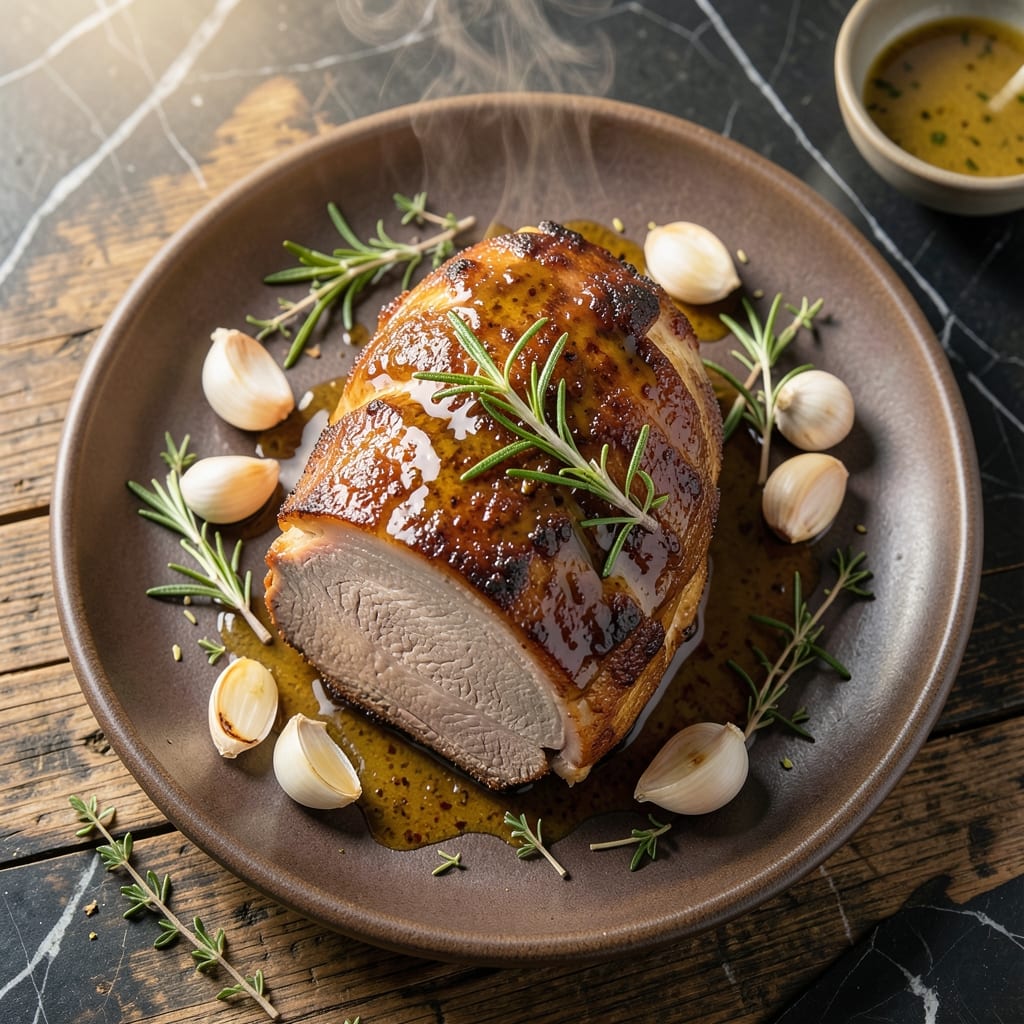
This 4 pound pork loin roast recipe delivers perfectly juicy results with minimal effort. Growing up in Georgia, I learned that pork deserves respect and proper technique.
The secret is a simple garlic and herb rub that forms a flavorful crust while sealing in moisture. A 4 pound roast cooks evenly at 375°F, creating tender meat with a golden exterior.
What emerges is a centerpiece worthy of Sunday dinner—tender, aromatic, and infused with garlic and herbs. The meat stays succulent throughout, never dry or tough.
Serve with roasted vegetables or mashed potatoes for a complete meal. This method works every time.
Ingredients for 4 pound pork loin roast
A 4-pound pork loin plus a handful of fresh herbs and spices. Simple, but never basic.
| Ingredient | Amount | Notes |
|---|---|---|
| Pork Loin Roast 🥩 | 4 lb | Bone-in or boneless, trimmed |
| Garlic Cloves 🧄 | 8 cloves | Peeled and minced finely |
| Fresh Rosemary 🌿 | 2 tbsp | Chopped, stems removed |
| Fresh Thyme 🍃 | 2 tbsp | Leaves stripped from stems |
| Kosher Salt 🧂 | 2 tsp | Diamond Crystal preferred |
| Ground Black Pepper 🌶️ | 1 ½ tsp | Freshly ground for best flavor |
| Olive Oil 🫒 | 3 tbsp | Extra-virgin for richer flavor |
| Dijon Mustard 🟡 | 2 tbsp | Smooth, not whole grain |
| Brown Sugar 🟤 | 1 tbsp | Light or dark variety |
| Dried Oregano 🌿 | 1 tsp | Rubbed between palms to release oils |
| Crushed Red Pepper Flakes 🔥 | ½ tsp | Optional for heat |
| Chicken Stock 🍲 | ½ cup | Low-sodium preferred |
The pork loin is the star here. Bone-in roasts stay juicier during cooking, but boneless works perfectly fine if that's what's available. Look for a roast with even marbling—this fat keeps the meat moist as it cooks. I source mine from Whole Foods or a trusted local butcher, where the quality is consistently high and the staff can offer cutting advice if needed.
Short on fresh herbs? Dried rosemary and thyme at one-third the amount will do the trick. No Dijon mustard? Substitute with whole-grain mustard for a slightly coarser texture. The brown sugar can be swapped for maple syrup or honey (1:1 ratio), though the caramelization differs slightly. Chicken stock can be replaced with vegetable stock or even water in a pinch.
Store the pork in the fridge for up to 3 days before cooking. The herb rub can be prepped a day ahead—just keep it refrigerated. Leftovers? They reheat beautifully and keep for 4-5 days in the fridge or 3 months frozen.
Why You'll Love This Recipe
- Set It and Forget It: I rub the pork with garlic, rosemary, and thyme, pop it in the oven, and let it do its thing—hardly any hands-on time.
- Herb-Crusted Perfection: The combination of fresh rosemary and thyme with garlic creates a crust so flavorful, it’s ridiculous.
- Feeds a Crowd: A 4-pound loin means plenty for Sunday dinner, plus leftovers for sandwiches or tacos later in the week.
- Budget-Friendly Centerpiece: Pork loin is affordable for its size, and with just a few herbs and garlic, it feels like a fancy meal without the price tag.
Step-by-step instructions for garlic and herb pork loin roast
Master the technique for a perfectly seasoned, juicy roast with minimal effort.
Prepare the Herb and Garlic Marinade
In a small bowl, combine the 3 tbsp Olive Oil, 2 tbsp Dijon Mustard, 1 tbsp Brown Sugar, 2 tsp Kosher Salt, 1.5 tsp Ground Black Pepper, 1 tsp Dried Oregano, and 0.5 tsp Crushed Red Pepper Flakes. Whisk until the mixture is smooth and the sugar dissolves completely.
Add the 8 cloves Garlic Cloves (minced), 2 tbsp Fresh Rosemary (chopped), and 2 tbsp Fresh Thyme (leaves stripped). Stir well to distribute the herbs and garlic evenly. The marinade should be fragrant with visible herb flecks throughout.
Coat and Marinate the Pork Loin
Pat the 4 lb Pork Loin Roast dry with paper towels to ensure the marinade adheres properly. Place the roast in a large baking dish or resealable plastic bag and pour the marinade over it, turning to coat all sides thoroughly.
Cover or seal and refrigerate for at least 2 hours, or preferably overnight. This allows the flavors to penetrate deeply into the meat. For best results, turn the roast once or twice during marinating to ensure even coverage.
Sear and Begin Roasting
Preheat the oven to 375°F. Remove the pork loin from the marinade (reserve the marinade) and place it in a roasting pan or oven-safe skillet. Sear the roast over medium-high heat on the stovetop for 2-3 minutes per side until the surface is golden brown.
This step develops a flavorful crust while locking in juices. Transfer the pan to the preheated oven.
Roast to Perfection
Pour the 0.5 cup Chicken Stock and any reserved marinade into the pan around the roast. Roast uncovered for 1 hour to 1 hour 15 minutes, or until the internal temperature reaches 145°F on an instant-read thermometer.
Baste the roast with the pan juices every 20-25 minutes to keep the meat moist and enhance the herb crust. The juices should be bubbling gently, and the top should develop a rich, caramelized exterior.
Rest and Serve
Transfer the pork loin to a cutting board, tent loosely with foil, and let it rest for 15 minutes. This allows the juices to redistribute, ensuring the meat stays moist when sliced. The internal temperature will rise slightly during resting.
Slice the roast against the grain into ½-inch thick pieces. Serve with the pan juices spooned over the top, garnished with any remaining fresh herbs from the marinade.
Pro Tips For Making 4 Pound Pork Loin Roast
- Preheat the Pan: I learned this the hard way—sear the pork loin in a screaming hot pan for at least 2 minutes per side to lock in juices before roasting.
- Score the Fat: Sounds weird, but it works: make shallow cuts in the fat cap so the rosemary, thyme, and garlic penetrate deeper rather than just sitting on top.
- Pull at 140°F: Skip waiting for 145°F—this lean cut keeps cooking while resting, and pulling it at 140°F guarantees a juicy, tender result every time.
- Use a Meat Thermometer: After burning three batches by guessing, I finally figured out that relying on color or time alone is a surefire way to overcook a 4-pound loin.
Troubleshooting this dish
Uneven Cooking
If your roast is browning too quickly on top but still raw inside, your oven may have hot spots. I recommend rotating the pan 180 degrees halfway through cooking. For consistent results, use an oven thermometer—I trust Taylor Precision models from my Charleston market days. 🌡️
Dry Meat
Overcooking is the main culprit for dry pork. Remember that 145°F is the target internal temperature. If you've accidentally overshot, try serving with a pan sauce made from the juices, ½ cup Chicken Stock, and 1 tbsp Dijon Mustard to add moisture back.
Weak Herb Flavor
If your crust lacks herb punch, you likely didn't marinate long enough. With a 4 lb roast, 2 hours is the bare minimum. For deeper flavor, I always marinate overnight. Also, ensure you're using fresh herbs—dried won't give the same vibrant taste.
No Crust Formation
For a proper crust, the searing step is crucial. Heat your pan until it's ripping hot before adding the roast. I use my vintage Lodge cast iron for this. Also, pat the pork completely dry before searing—any moisture prevents proper browning.
Resting Issues
If your roast loses too many juices when sliced, it didn't rest long enough. The 15 minutes is non-negotiable. I learned this the hard way during my first BBQ championship—slicing too soon sent all our work straight to the cutting board. 💪
Marinade Separation
If your marinade separates in the fridge, just stir it before using. The Olive Oil and Dijon Mustard will naturally separate over time. This doesn't affect flavor or safety. For better emulsion, whisk vigorously before pouring over the pork.
Nutrition facts
Frequently asked questions
What temperature should the pork loin reach?
Cook until the internal temperature hits 145°F. This ensures it's safe to eat while staying juicy. Use a meat thermometer for accuracy—don't guess!
How long should I marinate the pork?
Marinate for at least 2 hours, but overnight works best. The longer it sits, the deeper the garlic and herb flavors penetrate.
Can I use dried herbs instead of fresh?
Yes, but reduce the amount to 1/3 of the recipe's fresh herb quantity. Dried herbs are more concentrated, so adjusting prevents overpowering the dish.
Why does the pork need to rest before slicing?
Resting for 15 minutes lets juices redistribute, so they don't spill out when you cut into it. Skipping this step can leave your roast dry.