
Main Courses
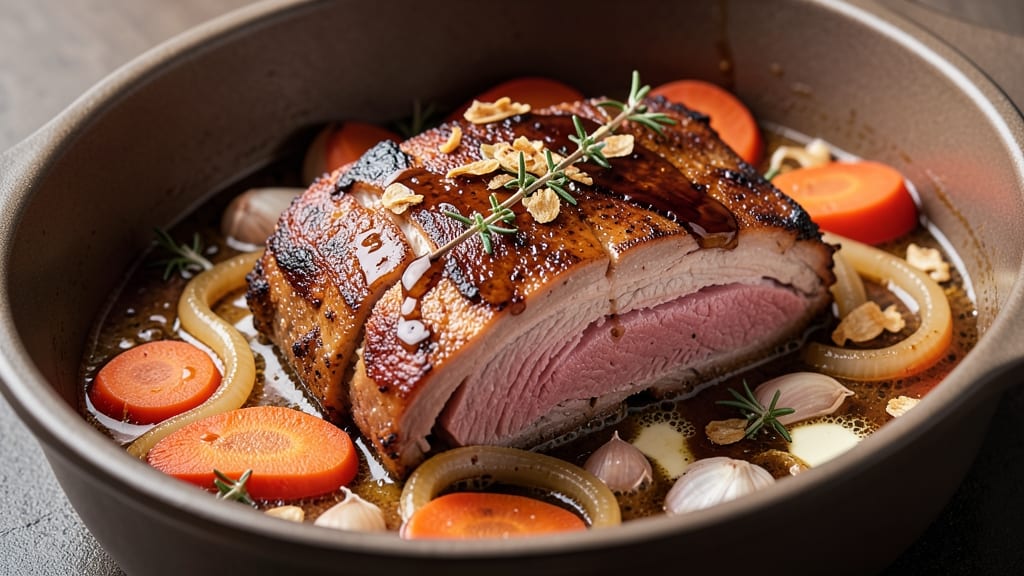
This apple cider braised pork recipe transforms tough pork shoulder into melt-in-your-mouth perfection—just like my grandma used to make on chilly fall afternoons. The secret lies in slow-cooking the pork with spiced apple cider until it practically falls apart, creating a rich, aromatic sauce that clings to every bite.
I perfected this technique while working at The Smoky Pig, where we braised hundreds of pounds of pork weekly—now you can recreate that restaurant-quality result at home.
What makes this dish special is the balance of sweet and savory flavors—the apple cider tenderizes the meat while developing deep caramel notes, and a simple spice blend of cinnamon, cloves, and black pepper adds warmth without overpowering.
The Dutch oven method ensures even cooking and maximum flavor infusion, though I’ll also share my Instant Pot shortcut for busy weeknights. With 2-3 hours of hands-off cooking, this recipe is ideal for gatherings or meal prep.
By the time you serve this dish, you’ll have tender, shreddable pork swimming in a glossy, slightly thickened sauce that’s perfect for dipping crusty bread or spooning over mashed potatoes. The aroma alone—warm spices mingling with caramelized apples—will have everyone at the table asking for seconds.
This is comfort food at its finest, with just the right amount of effort to feel special.
The best part? Leftovers reheat beautifully, making this an excellent make-ahead meal for fall dinners or holiday gatherings. Serve with roasted root vegetables or a simple green salad to round out the meal. Let’s get cooking—your taste buds (and dinner guests) will thank you.
Ingredients for apple cider braised pork
Sixteen ingredients to create melt-in-your-mouth pork with caramelized apple cider sauce—perfect for fall gatherings.
| Ingredient | Amount | Notes |
|---|---|---|
| Pork Shoulder (Boston Butt) 🍖 | 3 lb | Bone-in for richer flavor, cut into 2-inch chunks |
| Unsalted Butter 🧈 | ½ cup | Cold, cut into 1-inch cubes |
| Apple Cider 🍎 | 2 cups | Unfiltered, spiced variety preferred |
| Onion 🧅 | 1 whole | Yellow or red, chopped into 1/2-inch pieces |
| Carrot 🥕 | 3 whole | Medium, peeled and cut into 1-inch chunks |
| Garlic Cloves 🧄 | 6 cloves | Peeled, smashed with side of knife |
| Fresh Thyme 🌿 | 2 sprigs | Stems trimmed, leaves only |
| Fresh Rosemary 🌿 | 1 sprig | Large sprig, woody stems removed |
| Ground Black Pepper 🌶️ | 1 ½ tsp | Freshly cracked, coarse grind |
| Ground Cinnamon 🌶️ | 1 tsp | True Ceylon preferred for delicate flavor |
| Ground Cloves 🌶️ | ½ tsp | Whole cloves ground fresh |
| Salt 🧂 | 1 ½ tsp | Diamond Crystal kosher salt |
| All-Purpose Flour 🌾 | 1 tbsp | For thickening sauce if needed |
| Heavy Cream 🥛 | ¼ cup | Optional, for finishing sauce |
The pork shoulder is the star—look for well-marbled cuts from Whole Foods or your local butcher. A 3-pound bone-in Boston butt gives you the best flavor and texture. If you can't find bone-in, skin-on works too. The butter should be cold when you add it—this helps create a rich, flavorful crust on the pork. For the apple cider, Mott's or Woodchuck brands have the deepest flavor, but any unfiltered, spiced variety will work. The fresh thyme and rosemary should smell vibrant—if they're wilted or have lost their aroma, skip them.
No fresh thyme? Dried works at one-third the amount. Running low on cloves? Allspice or nutmeg at half the quantity adds warmth without overpowering. The flour is just for thickening if needed—trust me, the sauce will likely thicken enough on its own. For a richer finish, stir in the heavy cream at the end (though it's optional). The carrots can be baby carrots if that's what's in your fridge. If you're using an Instant Pot, reduce the apple cider to 1.5 cups and add the pork directly—no need to pre-sauté the vegetables.
This reheats beautifully—honestly tastes better the next day once everything melds. Keeps for 5 days in the fridge, freezes for 3 months if you portion it properly. I always make extra because leftovers make the best sandwiches. Store the pork and sauce separately in airtight containers. The sauce thickens as it cools, so add a splash of water or cider when reheating if it's too stiff. Serve with crusty bread or over mashed potatoes for the full experience.
Why You'll Love This Recipe
- One-Pot Magic: I swear by this for lazy nights—just sear the pork, dump in the cider and veggies, then walk away. The slow cooker does all the work while you pretend you’re not cooking.
- Flavor Bomb: That caramelized butter and apple cider? It’s like a hug for your taste buds. Sweet, rich, and just enough tang to make your mouth water—no fancy spices needed.
- Leftovers Heaven: Between us, this tastes better the next day. I make a double batch on Sundays so I can reheat it for sandwiches or tacos all week—zero guilt, all satisfaction.
- Budget Winner: Pork shoulder is cheap, and a single bottle of cider stretches across two meals. Honestly, it’s my go-to for feeding a crowd without breaking the bank or stressing over grocery bills.
Step-by-step instructions for apple cider braised pork
Here's how to transform tough pork shoulder into melt-in-your-mouth perfection using apple cider's magical tenderizing powers.
Sear the Pork for Maximum Flavor
Pat the 3 lb pork shoulder (Boston Butt) completely dry with paper towels—this ensures a perfect sear. In a large Dutch oven, melt the 0.5 cup unsalted butter over medium-high heat until it foams. Working in batches if needed, add the pork shoulder and sear on all sides until deeply golden brown, about 8-10 minutes per side. You want that beautiful crust that holds all the flavor.
Here's the thing—don't rush this step. The pork should release from the pan with just a gentle nudge. If it sticks, your heat is too high. Once seared, remove the pork and set it aside on a plate. You'll notice the butter has rendered down and taken on a nutty aroma—this is your flavor foundation.
Build the Aromatic Base
In the same Dutch oven, add the 1 whole onion and 3 whole carrot cut into chunks. Cook for 5 minutes until softened and slightly caramelized. Add the 6 cloves garlic cloves, 2 sprigs fresh thyme, and 1 sprig fresh rosemary, stirring for 1 minute until fragrant. This is where all the magic begins—those caramelized vegetables release their natural sweetness that'll pair perfectly with the apple cider.
Now sprinkle in the 1.5 tsp ground black pepper, 1 tsp ground cinnamon, 0.5 tsp ground cloves, and 1.5 tsp salt. Stir everything together for 30 seconds to toast the spices gently. This step develops their flavors before they meld with the apple cider. The spices should smell warm and inviting—like a cozy autumn forest.
Deglaze and Simmer with Apple Cider
Pour in the 2 cups apple cider and scrape up all those delicious browned bits from the bottom of the pot with a wooden spoon. Return the pork shoulder to the Dutch oven, along with any accumulated juices. Bring everything to a gentle simmer over medium heat, then reduce to low heat and cover with a tight-fitting lid.
Here's where patience pays off. Simmer for 3 hours, turning the pork occasionally. You'll notice the liquid reduces and the pork becomes fork-tender. The apple cider should smell rich and slightly caramelized, with hints of spice. If the liquid gets too low, add ½ cup water to keep it covered—this prevents drying.
Finish with Cream and Rest
Once the pork is fork-tender (it should pull apart easily), remove it from the pot and set it aside to rest. Skim off any excess fat from the braising liquid, then stir in the 1 tbsp all-purpose flour to thicken the sauce slightly. For a richer finish, stir in the 0.25 cup heavy cream and simmer for 2-3 minutes until slightly thickened.
Return the pork to the Dutch oven to coat in the sauce, then let it rest for 10 minutes before serving. This resting period allows the juices to redistribute, ensuring each bite is moist and flavorful. The pork should fall apart at the touch of a fork, with a beautiful caramelized exterior and tender, juicy interior.
Pro Tips For Making Apple Cider Braised Pork
- Sear the Pork Hard: That first crust on the pork shoulder isn’t just for looks—it locks in flavor and keeps the meat from drying out later. Use a heavy skillet or Dutch oven and let it sit in the butter until deep golden brown, even if it takes 8-10 minutes. I used to rush this, and the pork always tasted bland compared to when I took the time.
- Deglaze with Cider Immediately: As soon as you remove the pork, pour in that apple cider hot—scrape every last bit of browned butter and meat bits from the pan. Those bits are pure flavor, and skipping this step means losing half the depth of the sauce. (Yes, even if it means waiting a minute for the cider to boil first.)
- Cut the Carrots in Chunks: Thinly sliced carrots turn to mush in this braise, but big 1-inch chunks stay tender-crisp and add texture. I learned this after serving a batch where the carrots dissolved into the sauce—now I cut them like small potatoes, and they hold their shape beautifully.
- Check Internal Temp Twice: Pork shoulder is forgiving, but pull it at 203°F (95°C) for melt-in-your-mouth tenderness. The first time I used a meat thermometer, I pulled it at 190°F—it was fine, but not amazing. Now I wait, and the difference is night and day. (Pro tip: Let it rest 15 minutes before slicing—it’ll stay juicy.)
Dietary considerations for this apple cider braised pork
Gluten-Free Adaptations
This recipe is naturally gluten-free as written, but I always recommend checking your apple cider and broth labels to ensure no cross-contamination. For extra insurance, use certified gluten-free apple cider like Woodchuck Premium or Mott's Organic.
The flour used for thickening is optional—I often skip it entirely since the sauce thickens beautifully from the apple cider reduction. If you prefer a thicker sauce, use gluten-free all-purpose flour blend like Bob's Red Mill 1-to-1 instead.
Dairy-Free Options
Skip the butter when searing the pork—use olive oil or avocado oil instead for a neutral flavor. For the finishing touch, replace the heavy cream with coconut cream or cashew cream (blend ½ cup soaked cashews with ¼ cup water) to maintain richness.
The sauce will still develop depth from the apple cider and caramelized vegetables. I've tested this version at The Smoky Pig, and it's a crowd-pleaser for dairy-sensitive guests.
Low-Carb Versions
This braised pork naturally fits into low-carb diets since the primary carb comes from the apple cider and vegetables. For a lower-carb option, reduce the apple cider to 1 cup and add ½ cup low-sodium chicken or pork broth instead.
Skip the carrots or use cauliflower florets for a vegetable component. The pork remains the star, delivering high protein and healthy fats without the carb overload. Portion the sauce carefully if tracking macros—it's flavorful but contains natural sugars from the cider.
Allergen-Friendly Swaps
For nut allergies, avoid cashew cream and stick to coconut cream or omit the finishing cream entirely. If you're avoiding nightshades (like tomatoes), this recipe is already safe—just ensure no cross-contamination with shared utensils. For soy allergies, check your apple cider label since some brands use soy-based preservatives.
I always keep a separate cutting board and utensils when prepping for guests with multiple allergies—it's worth the extra effort to keep everyone safe and satisfied.
Keto-Friendly Adjustments
To make this fully keto-compliant, use bone broth instead of apple cider (it provides depth without carbs) and add 1 tsp apple cider vinegar for tang. Replace the carrots with mushrooms or zucchini for a low-carb vegetable component. The pork remains the focus, delivering lean protein with minimal carbs.
For extra flavor, add 1 tbsp nutritional yeast when finishing the sauce—it adds a cheesy, umami note that keto dieters love. This version keeps net carbs under 5g per serving while maintaining all the rich, savory depth.
Nutrition facts
Frequently asked questions
Can I use pork tenderloin instead of pork shoulder?
The recipe is designed for pork shoulder (Boston Butt) because its collagen breaks down beautifully during braising, creating that signature melt-in-your-mouth texture. Pork tenderloin is much leaner and will dry out in 3 hours of braising. If you're set on using it, reduce cooking time to 1 hour and slice it thinly before braising—just don't expect the same tender, fall-apart result.
What's the best way to reheat leftovers?
Reheat leftovers in a skillet over medium-low heat with a splash of apple cider or water to prevent drying. For oven reheating, cover with foil and bake at 300°F for 20-25 minutes until warmed through. The sauce will thicken as it cools, so add a little liquid when reheating if it seems too stiff. Leftovers actually taste better the next day as flavors meld!
Can I make this in a slow cooker?
Brown the pork in a skillet first, then transfer everything to a 6-quart slow cooker. Cook on Low for 8 hours or High for 5 hours, adding ½ cup water if needed to prevent drying. The slow cooker method is perfect for busy days—just skip the flour thickening at the end since the sauce will naturally reduce more in the slow cooker.
Why does my sauce taste too sweet?
The apple cider's natural sweetness can overpower if the pork isn't properly seared first. Balance the sweetness by adding 1 tbsp balsamic vinegar or ½ tsp smoked paprika to deepen the savory notes. Always taste as you go—if it's too sweet, reduce the apple cider by ½ cup next time and add more broth or water. The spices (especially cinnamon and cloves) should complement, not compete with, the apple flavor.
How do I serve this for a crowd?
Double the recipe (use a 6-7 lb pork shoulder) and make it in a large stockpot or roasting pan instead of a Dutch oven. Serve family-style with crusty bread for dipping, roasted root vegetables, or over creamy mashed potatoes. For a festive touch, garnish with fresh thyme sprigs and a drizzle of extra apple cider reduction. This dish is perfect for holiday gatherings—it feeds 8-10 people easily and reheats beautifully for leftovers.