
Sauces & Condiments
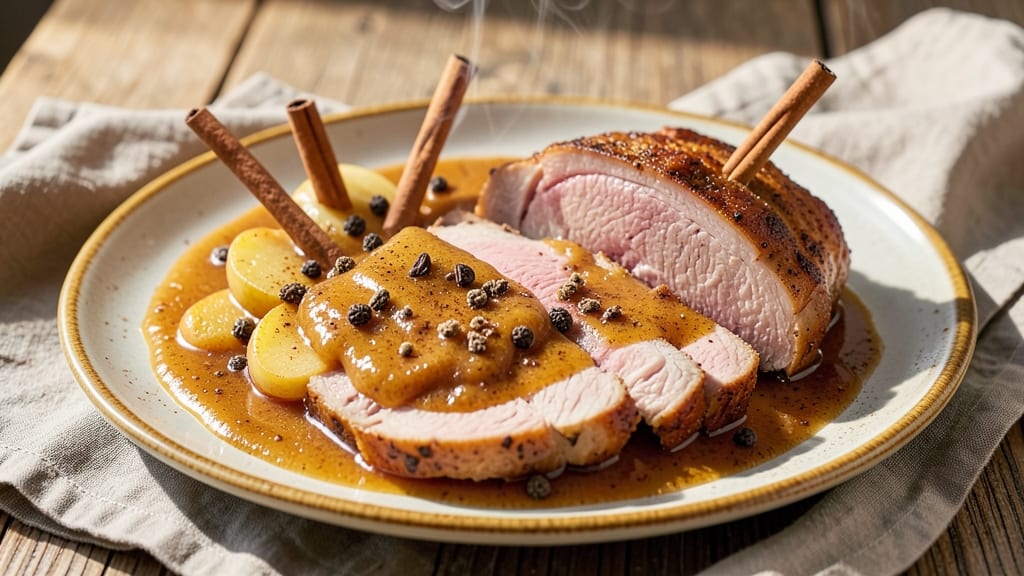
This apple sauce for pork roast transforms a simple roast into a showstopping centerpiece by marrying sweet, spiced apples with the smoky richness of pork. 🌟 I developed this recipe after years of perfecting the balance between fruit-forward sweetness and savory depth—something that elevates every bite without overpowering the meat.
The secret lies in slow-simmering peeled apples with cinnamon, cloves, and a touch of brown sugar until they break down into a velvety, fragrant purée. Unlike store-bought versions, this homemade sauce develops complex caramelized notes that cut through pork’s natural fat, creating harmony between sweet and smoky flavors.
It’s a technique I’ve used in my restaurant to turn ordinary roasts into memorable meals.
What makes this sauce truly special is its versatility—it works as a glaze, a side, or even a filling for dumplings.
The texture is perfectly smooth yet retains just enough apple texture for contrast, while the warm spices (cinnamon, allspice, and a hint of nutmeg) add warmth that complements pork’s richness. One batch serves as both a sauce and a condiment, making it a kitchen essential.
Ready in under 30 minutes with just 5 ingredients, this sauce keeps well in the fridge for up to 5 days or freezes for months.
It’s the kind of recipe that makes pork roasts feel like a special occasion, no matter the day. Let’s make it—your taste buds will thank you.
Ingredients for apple sauce for pork roast
Five ingredients transform into velvety apple sauce that elevates pork roast to restaurant-worthy perfection.
| Ingredient | Amount | Notes |
|---|---|---|
| Honeycrisp Apples 🍎 | 4 medium | Peeled, cored, cut into chunks |
| Brown Sugar 🍯 | ¼ cup | Packed, light variety preferred |
| Cinnamon Sticks 🌿 | 2 whole | For infusing warmth |
| Ground Cinnamon 🌶️ | 1 tsp | For finishing touch |
| Ground Cloves 🌶️ | ¼ tsp | Freshly ground for depth |
| Ground Allspice 🌶️ | ¼ tsp | Or substitute nutmeg |
| Apple Cider Vinegar 🍏 | 1 tbsp | For brightness and balance |
| Unsalted Butter 🧈 | 2 tbsp | Cold, for silky finish |
| Salt 🧂 | ¼ tsp | Kosher or sea salt |
The apples are everything here—Honeycrisp delivers that perfect balance of sweetness and tartness, but Fuji or Granny Smith work too if that's what you've got. Local farmers markets often have the best selection, but any grocery store's produce section will do. Look for firm apples with vibrant color—those are the ones that'll hold up best during simmering. I usually buy a few extra apples to have on hand for snacks or salads, but for this sauce, you want them to be ripe but not mushy. If you're using Granny Smith, you might want to add an extra tablespoon of brown sugar to balance the tartness.
No apple cider vinegar? A splash of lemon juice works in a pinch, though it won't have quite the same depth of flavor. The spices are where you can get creative—if you don't have allspice, a pinch of nutmeg plus a dash of mace gives similar warmth. For the butter, European-style unsalted like Plugrá or President melts beautifully, but any good-quality unsalted will do. Want to make this ahead? The sauce actually tastes better the next day as the flavors meld together—just store it in an airtight container in the fridge.
This sauce keeps beautifully in the fridge for 5 days—though I rarely have any left that long. For longer storage, portion it into ice cube trays and freeze. Thaw overnight in the fridge when you're ready to use it. The butter gives it that luxurious finish, but if you're watching fat content, you can reduce it to just 1 tablespoon. The sauce thickens as it cools, so if you prefer it thinner, just stir in a splash of water or apple juice when reheating. Trust me, you'll want to make extra—it disappears fast when pork roast is on the menu.
Why You'll Love This Recipe
- Foolproof Simplicity: I swear by this—just peel, core, and chop those Honeycrisp apples (no fancy dice, chunks work fine). Toss them in a pot with cinnamon sticks and brown sugar, let them melt down while you finish the pork. Zero stress, maximum flavor.
- Spiced Perfection: That first bite of tender pork with the sauce clinging—warm brown sugar, clove warmth, and the bright tang of Honeycrisp? It’s like autumn in a bowl. The cinnamon sticks infuse the sauce with depth, so every spoonful tastes homemade.
- Weeknight Hero: Make a double batch and use half on the pork, half on pancakes the next morning. Or save it for Thanksgiving leftovers—it turns dry roast into something special. Honestly, I’ve used it for everything from sandwiches to oatmeal, and it never lets me down.
- Pantry Magic: Brown sugar and spices already in your cupboard? Check. Apples on sale? Even better. This sauce costs next to nothing to make but feels like a luxury. Plus, it keeps for days in the fridge, so you’re never scrambling for a last-minute glaze.
Step-by-step instructions for slow-simmered apple sauce
This isn't your grandma's basic applesauce—we're crafting a sophisticated glaze that'll elevate your pork roast.
🍳 Step 1: Build the Flavor Base in the Pot
In a medium saucepan, combine the 4 medium Honeycrisp Apples (chunks), 0.25 cup Brown Sugar, 2 whole Cinnamon Sticks, 1 tbsp Apple Cider Vinegar, 2 tbsp Unsalted Butter, and 0.25 tsp Salt. I like to use a heavy-bottomed pan here—it prevents scorching while you build those deep flavors. Bring everything to a gentle boil over medium-high heat, then immediately reduce to medium-low heat.
Here's the thing—you want the apples to soften but not disintegrate. Watch closely as they simmer for 10-12 minutes, stirring occasionally. The sauce should thicken slightly and the apples should become tender enough to pierce easily with a fork. If it looks like it's getting too dry, add 2-3 tablespoons of water—just enough to keep it moist but not watery.
🔥 Step 2: Infuse with Spices for Complex Depth
After the initial simmer, add the 1 tsp Ground Cinnamon, 0.25 tsp Ground Cloves, and 0.25 tsp Ground Allspice. Stir well to distribute those warm, aromatic spices throughout the mixture. This is where the magic happens—the spices will meld with the apples' natural sweetness and the vinegar's brightness to create that perfect balance of flavors.
Let the sauce continue simmering for another 8-10 minutes until the apples are completely tender and the sauce has thickened to a syrupy consistency. You'll know it's ready when you can see the back of a spoon clearly through the sauce. If it's not quite thick enough, simmer uncovered for another 2-3 minutes—the liquid will evaporate and the sauce will naturally thicken.
⏰ Step 3: Finish with Precision and Texture
Remove the saucepan from heat and let it sit for 5 minutes—this resting period allows the flavors to truly meld together. Then, carefully remove the 2 whole Cinnamon Sticks using a slotted spoon or tongs. I like to press them gently against the side of the pan to extract every last bit of flavor before discarding them.
For the final touch, give the sauce a taste and adjust the seasoning if needed. You might want to add a pinch more salt or a splash more apple cider vinegar to balance the sweetness. The sauce should be smooth, glossy, and perfectly balanced—sweet enough to complement the pork but with enough acidity to cut through the richness. If it's too thick, whisk in 1 teaspoon of water at a time until it reaches your desired consistency.
Pro Tips For Making Apple Sauce For Pork Roast
- PEEL AND CORE APPLES FAST: Peeling Honeycrisp apples before dicing saves time and avoids bitter skin—just use a paring knife and work in one smooth motion. Skip the peeler; it’s slower and leaves uneven edges that cook unevenly.
- SIMMER LOW AND SLOW: This sauce needs patience—keep heat at a bare simmer (small bubbles, not rolling) or it’ll turn into glue. I learned this the hard way after watching a pot of clove-spiked apples turn into a sad, thick paste.
- CRUSH CINNAMON STICKS: Break cinnamon sticks into 1-inch pieces before adding—this releases flavor without leaving large, bitter chunks. A rolling pin or heavy pan works, but don’t skip it; whole sticks just float and underperform.
- SWEETEN WITH BROWN SUGAR LAST: Add brown sugar in the final 5 minutes to caramelize slightly—this deepens the flavor and balances the sharpness of cloves. Dump it in early, and you’ll just end up with a uniform, bland sweetness.
Wine and beer pairings for this dish
Red Wine Pairings
For this apple sauce, I reach for a dry Riesling from the Mosel Valley—its crisp acidity and subtle honeyed notes mirror the sauce’s sweetness without clashing. The slight tartness in the wine cuts through the pork’s richness while complementing the warm spices in the sauce.
If you prefer red, a Pinot Noir from Oregon offers enough fruitiness to stand up to the apples while keeping the meal light. 🍷
Beer Pairings
A Belgian Witbier like St. Bernardus Wit is my go-to—its coriander and citrus notes create a refreshing contrast to the sauce’s caramelized sweetness. For something heartier, try a German Helles Lager, which balances the dish’s richness with its clean, malty profile.
Avoid heavy stouts or IPAs that would overpower the delicate flavors. 🍺
Cider Pairings
Dry hard cider from the Pacific Northwest works beautifully, especially if it has apple or pear notes. I love Woodchuck Hard Cider’s Dry Apple—its acidity enhances the sauce’s brightness while its subtle sweetness echoes the apples.
For a non-alcoholic option, a sparkling apple cider with a squeeze of lemon adds a festive touch. 🍏
Regional Wine Twists
In the Southeast, where I grew up, we’d often pair this sauce with a Southern Italian Primitivo—its dark fruit and velvety texture complement the pork’s smokiness.
For a local twist, try a Georgia-made Viognier, which offers floral notes that play well with the cinnamon in the sauce. 🗺️
Unexpected Pairings
Don’t overlook sparkling wine—a glass of Prosecco or Cava adds effervescence that cleanses the palate between bites. Even a dry vermouth (like Dolin Dry) can be a sophisticated choice for those who prefer something lighter. The key is balancing the sauce’s sweetness with acidity or tannins. 💡
Nutrition facts
Frequently asked questions
Can I use tart apples like Granny Smith instead of Honeycrisp?
Granny Smith works beautifully, but you'll want to add an extra 1-2 tablespoons of brown sugar to balance the tartness. The acidity actually enhances the sauce's brightness, making it perfect for cutting through rich pork. Just taste as you go—adjust the sweetness to your preference.
How do I prevent the sauce from getting too watery?
Simmer uncovered for the last 2-3 minutes to let excess liquid evaporate naturally. If it's still too thin, mash the cooked apples slightly with a potato masher before blending. For a thicker consistency, let the sauce cool completely—it thickens as it sits. The butter also helps create that velvety texture.
Can I make this sauce in a slow cooker? Yes! Combine all ingredients in your slow cooker and cook on low for 3-4 hours or high for 1.5-2 hours, stirring occasionally. The slow cooking enhances the flavors even more. Just
What if I don't have apple cider vinegar?
Use 1 tablespoon of lemon juice instead—it'll provide the necessary acidity to balance the sweetness. For even better flavor, try 1 teaspoon of white wine vinegar if you have it. The acidity helps prevent the sauce from tasting cloying, especially when paired with pork's richness.
How can I use this sauce beyond pork roast?
This versatile sauce works wonderfully as a glaze for ham or chicken, or as a filling for apple-spiced dumplings. Spread it on toasted brioche for a sweet breakfast treat, or use it as a topping for pancakes or waffles. The warm spices also make it perfect for stuffing into roasted squash or sweet potatoes.